

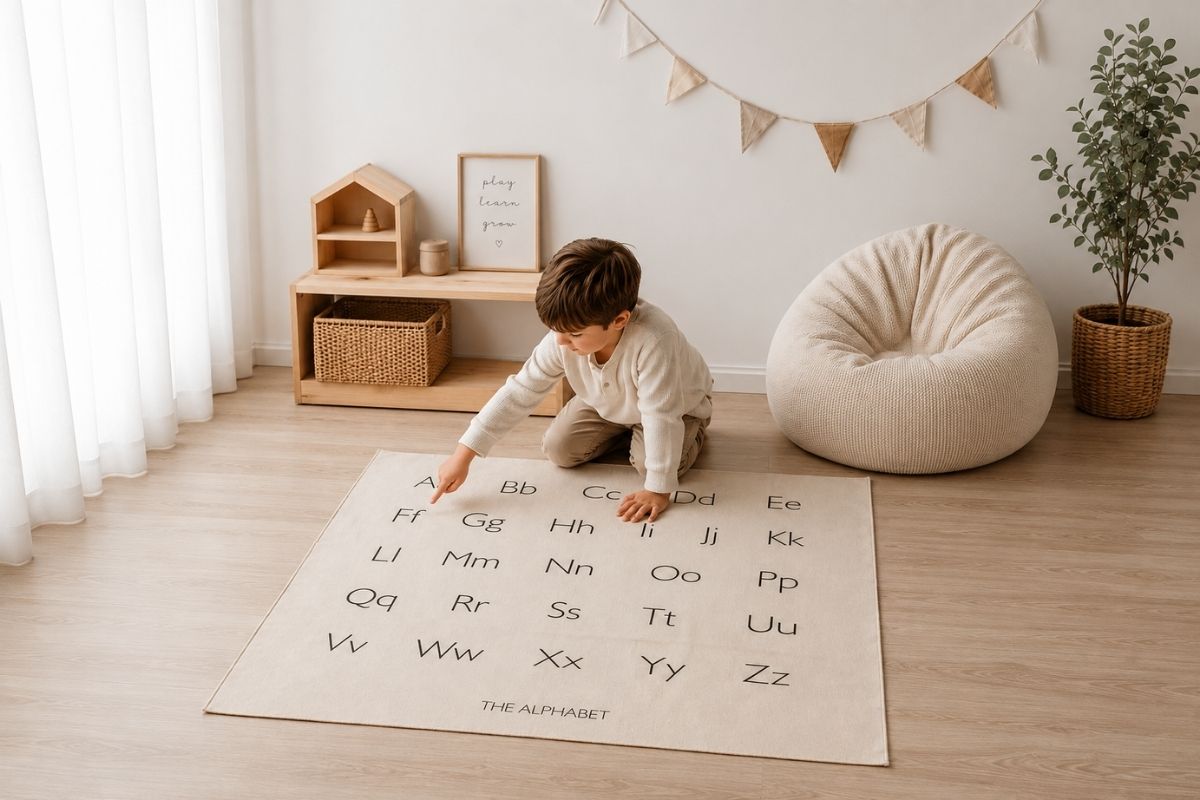
An alphabet wall hanging — also called an alphabet tapestry — serves as an essential decorative and educational element in a modern nursery, blending sophisticated aesthetics with early childhood learning. These textile-based pieces provide a safe, lightweight, and acoustically beneficial alternative to traditional rigid wall decorations like plastic or wooden letters. By utilizing high-quality canvas or fabric materials, parents can create a serene, minimalist environment that encourages sensory and intellectual development without visual clutter. This comprehensive guide details the best practices for selecting, arranging, and mounting these pieces to ensure a professional, straight, and damage-free finish that enhances the room’s overall design profile.
Alphabet wall hanging: the ultimate guide to safe nursery decor
An alphabet wall hanging is a textile or canvas piece designed to feature the letters of the alphabet in a clean, minimalist format for educational and aesthetic purposes in a child’s room. These hangings prioritize safety through soft materials, eliminating the risks associated with heavy frames, sharp edges, or small, detachable parts that could pose choking hazards.
Alphabet wall hanging products are defined by their ability to combine visual learning with textile safety. Unlike rigid decor, these pieces are designed to be soft, lightweight, and easily interchangeable. By choosing a high-quality textile hanging, parents ensure that their nursery environment remains a sanctuary for both sleep and growth.
Key features of premium alphabet hangings include:
- Soft textile construction: Designed to be lightweight and hypoallergenic, minimizing injury risks.
- Minimalist visual design: Focuses on realistic illustrations and clean typography without distracting background noise.
- Acoustic benefits: Woven fabrics naturally dampen sound reverberation in rooms with hard surfaces.
- Damage-free installation: Easily mounted using adhesive strips or lightweight tension rods to protect wall paint.
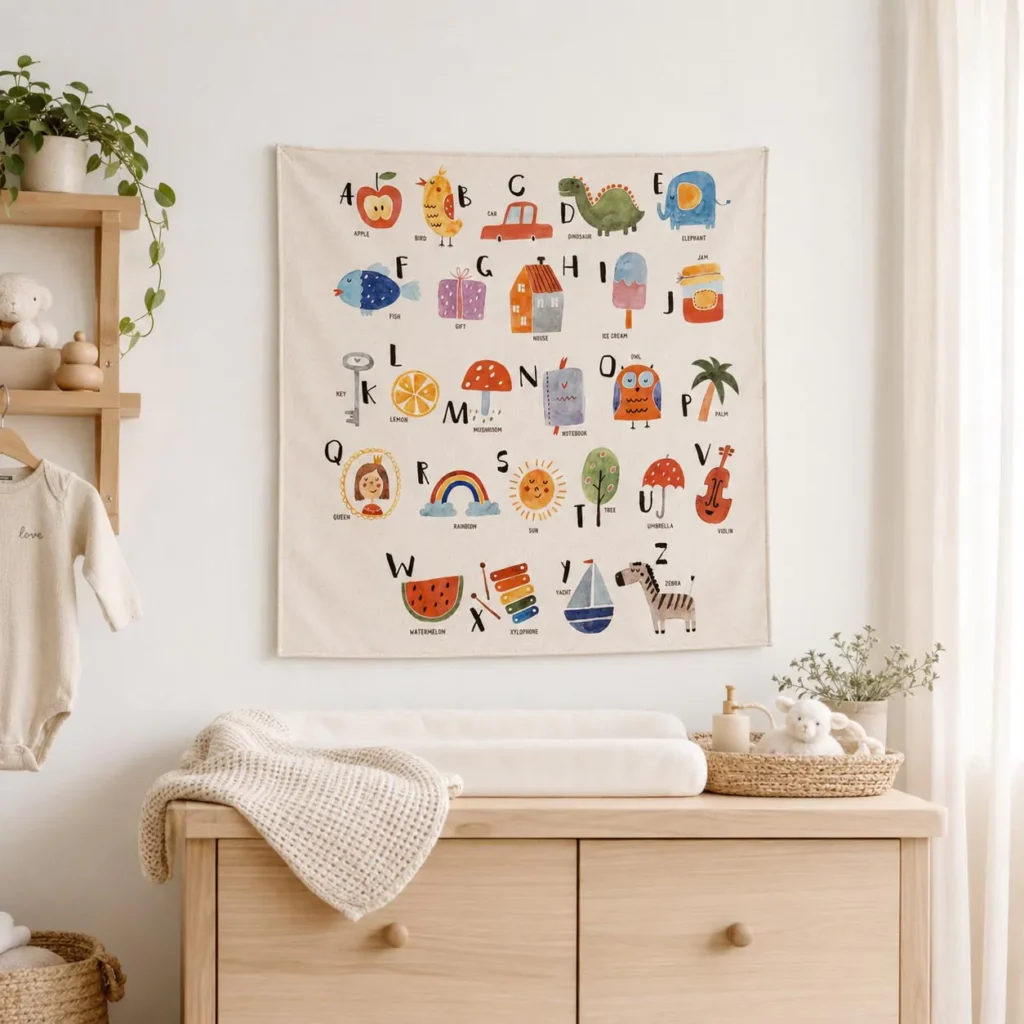
Why textile decor is superior for modern nurseries
When planning a nursery environment, the intersection of safety and interior design is non-negotiable. Traditional decor items, such as individual wooden or metallic alphabet letters, often require drilling, wall anchors, and hardware that can create permanent structural damage to drywall. Furthermore, these rigid materials can harbor dust and become sharp hazards if they lose their mounting over time. In contrast, an alphabet wall hanging provides a cohesive, soft-surfaced solution that integrates seamlessly into a minimalist room.
The acoustic advantage of textile decor is particularly significant in modern architecture, which often features hardwood floors and painted, non-porous walls. Sound waves frequently bounce off these hard surfaces, leading to echo and noise amplification that can disrupt infant sleep cycles. A fabric tapestry or canvas hanging acts as a soft baffle, absorbing high-frequency sound waves. Industry research into interior environmental quality indicates that adding even a moderate amount of textile-based wall coverage can reduce room-level reverberation by up to 15-20%, contributing to a more stable, quiet sleeping environment for the infant.
The cognitive benefit of realistic visual learning
Early brain development relies on clear, distinguishable visual stimuli. Infants and toddlers learn best when they can categorize information without cognitive overload. A textile alphabet hanging that uses realistic shapes, such as a subtle animal or botanical element paired with the letter, helps the child form mental associations between letters and natural objects. This method of subtle education is far more effective than loud, neon-colored patterns that can trigger visual fatigue.
Enhancing room acoustics with soft wall art
Room acoustics play a vital role in infant health, yet this element is frequently overlooked in nursery design. Hard surfaces reflect sound, creating a “bouncing” effect that amplifies ambient noise. By placing a textile-based alphabet hanging on a feature wall, you introduce a soft, absorbent material into the room. This simple addition can noticeably soften the acoustic profile of the nursery, creating a more peaceful, nurturing space that helps baby stay asleep longer.
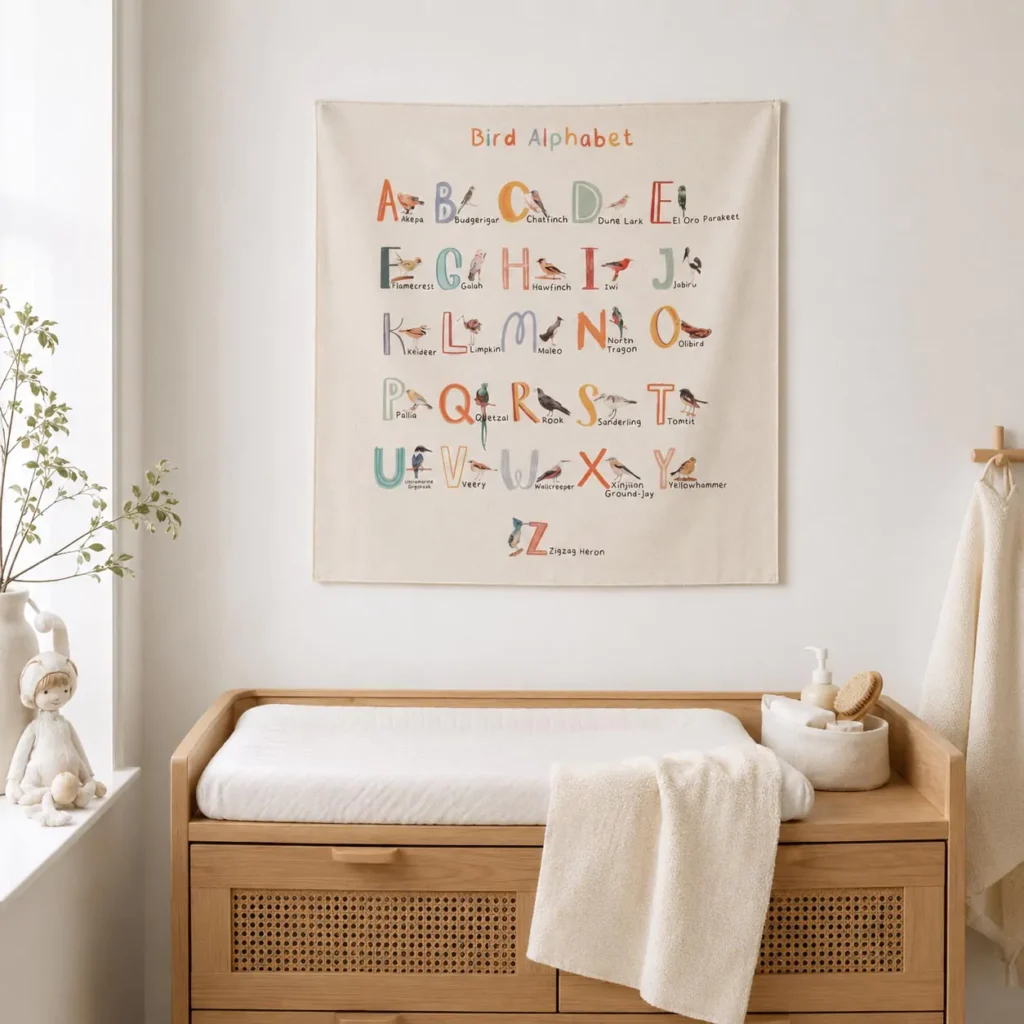
Integrating textile elements into minimalist design
Minimalism in the nursery is not just about removing items; it is about choosing elements that serve multiple purposes—functional and aesthetic. A well-placed canvas alphabet hanging functions as both a focal point and a sound-dampening panel. Unlike wall stickers that can peel or wallpaper that is difficult to change, a high-quality tapestry is durable and modular.
| Feature | Rigid Decor (Wood/Plastic) | Textile Hanging (Canvas/Linen) |
| Safety Profile | Potential injury/choking risk | Hypoallergenic/Soft |
| Wall Impact | Drilling/Anchors required | Damage-free adhesive |
| Acoustic Effect | Reflective/Increases echo | Absorptive/Reduces echo |
The importance of sustainable fabric choices
When selecting an alphabet wall hanging, the material itself acts as an indicator of quality. Parents are increasingly shifting toward organic cotton canvas or high-quality natural linen. These materials are not only durable but also inherently hypoallergenic, making them the superior choice for a room where an infant spends most of their time. Synthetic materials may release VOCs (volatile organic compounds) or create a static-filled, unnatural environment. By selecting organic, GOTS-certified textiles, you ensure that the nursery remains a healthy, breathable space.
How to mount your alphabet wall hanging perfectly straight
The most common frustration parents face when hanging nursery art is achieving a perfectly level, straight finish without damaging the wall. When working with an alphabet wall hanging, particularly those designed in a horizontal or vertical tapestry format, precision is vital to maintaining the clean, minimalist look.
Follow these proven steps for a professional installation:
- Preparation: Ensure the wall is clean and completely dry. For freshly painted surfaces, wait 30 days to ensure proper bonding with adhesive materials.
- Marking points: Use a long level (at least 24 inches) to draw a faint, light pencil line where the top of the hanging will align.
- Adhesive selection: Utilize high-quality, damage-free adhesive strips designed for lightweight fabrics. If the piece includes a wooden hanging rod, two small adhesive hooks are sufficient for a width of up to 30 inches.
- Final mounting: Align the top edge or rod of the alphabet hanging with your level line. Press the adhesive components firmly for 30 seconds to ensure a secure, permanent bond.
- Alignment check: Once mounted, place the level on top of the hanging rod or the top fold of the fabric to verify it remains perfectly horizontal.
Essential tools for damage-free installation
To achieve a professional, straight, and damage-free finish, selecting the right mounting hardware is as important as the piece itself. Avoid using traditional nails or heavy-duty anchors, which create irreversible holes and can be difficult to align perfectly. Instead, invest in specialized adhesive solutions that offer high structural integrity for weights under 2 pounds. A laser level, even a simple pocket-sized one, can be invaluable for ensuring that multiple hangings—such as an alphabet series or animal decor set—are aligned with surgical precision across your nursery wall.
Overcoming wall surface challenges
Many modern nurseries utilize textures or specific paint finishes that can be difficult for standard adhesives. If your wall has a slight texture (e.g., orange peel finish), you may need to apply a small, clear adhesive primer to the specific points where the hooks will sit. This ensures that your alphabet wall hanging remains securely in place without the risk of the tape failing over time, which is especially important for safety in a room that might experience fluctuating temperatures or humidity.
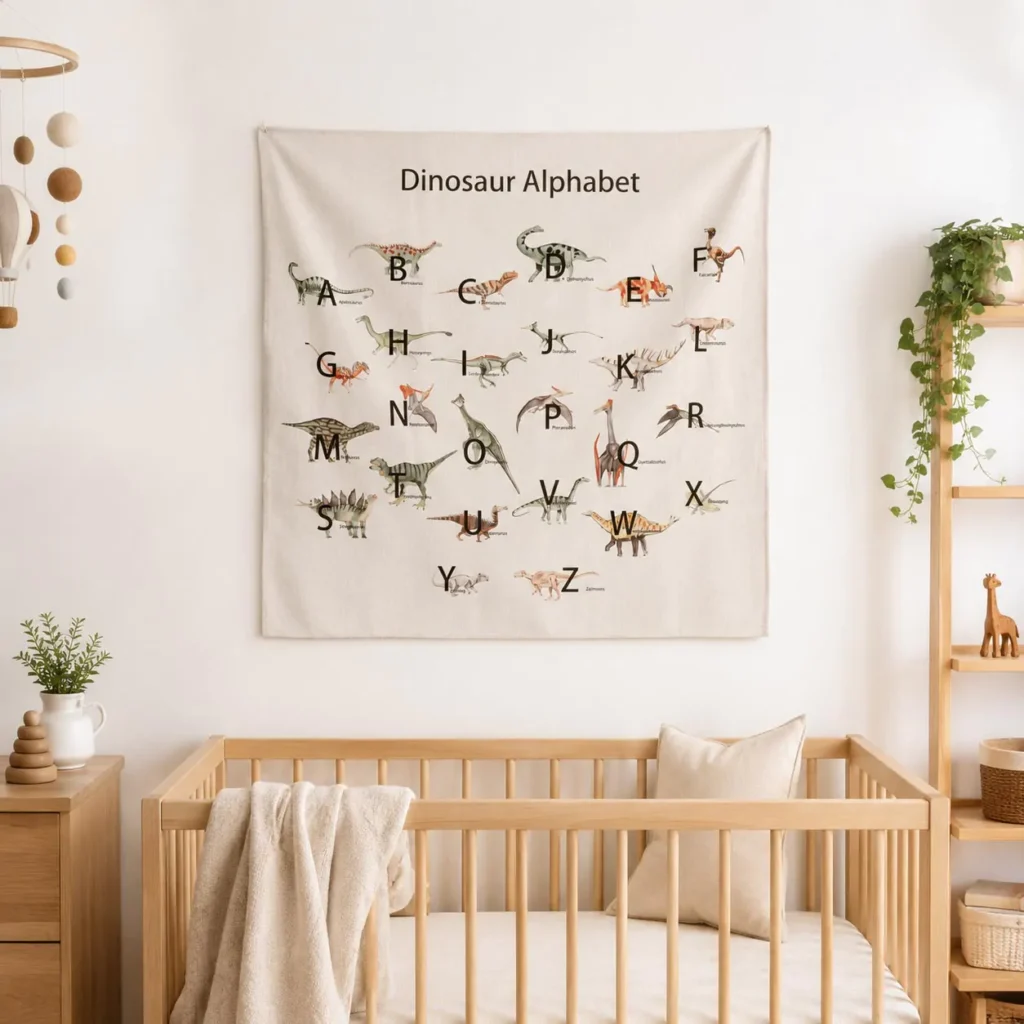
Selecting the right materials for a safe baby room
The composition of your alphabet wall hanging is a critical E-E-A-T signal. Not all “fabric” is created equal. When selecting pieces for a nursery, prioritize organic, sustainably sourced textiles that are certified free from harmful substances. Infants are particularly susceptible to off-gassing from synthetic prints, harsh dyes, or non-breathable plastic coatings.
Organic canvas and natural linens are the gold standards for nursery decor. These materials provide a beautiful, organic texture that feels sophisticated and natural to the touch. They also offer a matte finish that does not create glare, ensuring the educational content is visible from any angle in the room without distractions. Look for certifications such as OEKO-TEX, which confirms that the material has been tested for hazardous chemicals. High-quality products from makers like Dosjunior prioritize these organic, hypoallergenic standards to ensure a healthy living environment.
Furthermore, consider the printing method. The best wall hangings for nurseries utilize water-based, non-toxic pigment inks. These inks bond with the fibers of the fabric rather than sitting on top as a thick, rubbery layer. This results in a soft, breathable surface that remains vibrant and crisp over years of use, without any risk of cracking or peeling—a common failure point in lower-quality, mass-produced decorative items.
Sizing and placement strategies for optimal visual impact
Achieving a professional interior design look requires adhering to fundamental spatial proportions. Placing an alphabet wall hanging at the incorrect height can make the room feel disjointed, while improper sizing can make the piece look like a temporary afterthought rather than a permanent design element.
For rooms featuring a crib, the ideal placement for a tapestry or canvas hanging is centered directly above the crib or the changing table. A safe distance is essential; maintain at least 12 to 14 inches between the bottom of the wall hanging and the top rail of the furniture. This provides enough clearance for safety while keeping the decor visually anchored to the furniture. If you are decorating a large, empty wall space, consider the “eye-level rule.” For a nursery where parents spend significant time sitting, center the alphabet piece at approximately 50 inches from the floor to the midpoint of the hanging.
Regarding size, ensure the hanging occupies about 50% to 70% of the wall space above the furniture piece. If the hanging is too narrow, it will appear lost; if it is too wide, it will overwhelm the room’s minimalist design. When planning a grouping—such as a large central alphabet piece flanked by smaller, realistic animal figures—treat the group as a single visual unit. Maintain a gap of 2 to 3 inches between each piece, and ensure the entire collection respects the 70% width rule. This disciplined approach ensures that your nursery decor feels curated, purposeful, and visually calming for both the infant and the parents.
Maintaining the longevity of your textile wall art
Textile pieces are durable, but they require proper care to maintain their aesthetic appeal over the years. To keep your alphabet wall hanging looking brand new, avoid placing it in areas with direct, harsh sunlight, which can cause natural pigment inks to fade over time. If the piece gathers dust, a gentle brush attachment on a vacuum cleaner is sufficient. Unlike plastic, fabric does not need chemical cleaners. In fact, using chemicals can degrade the organic fibers. Keeping the room environment stable—with humidity levels around 40-50%—is the best way to ensure the material stays crisp and perfectly level on your wall.
Frequently asked questions
How do I make sure my alphabet wall hanging is straight?
Utilize a bubble level or a laser level to mark a guide line on the wall before mounting. When using adhesive strips, align the top of the hanging rod or fabric edge with your level line, pressing firmly for 30 seconds to guarantee a level, permanent hold without needing invasive hardware.
Is an alphabet wall hanging safe for above a crib?
Yes, provided it is a soft, lightweight textile piece. Unlike traditional framed art, an alphabet wall hanging made from organic canvas or cotton poses no risk of injury if it falls. Always ensure there is at least a 12-inch gap between the hanging and the crib rail.
Are these hangings suitable for a minimalist nursery style?
Certainly. Modern designs focus on muted palettes, realistic imagery, and clean, typography-led visuals. By avoiding chaotic, multicolored plastic or cartoon-heavy motifs, these hangings integrate into a sophisticated, minimalist nursery design, promoting a calm, distraction-free atmosphere that supports both early learning and restorative infant sleep.
What is the best material for a durable nursery alphabet decor?
Organic cotton canvas or high-quality natural linen are the best materials. These are hypoallergenic, durable, and offer a premium, matte finish. Avoid synthetic plastic or low-quality polyester prints, which may release VOCs or reflect light harshly, potentially disturbing a baby’s sensitive visual environment.
Is an alphabet tapestry the same as an alphabet wall hanging?
Is an alphabet tapestry the same as an alphabet wall hanging?”
Cevap: “Yes — an alphabet tapestry and an alphabet wall hanging refer to the same type of soft, textile nursery decor. Both describe fabric or canvas pieces featuring the alphabet, designed to be mounted without drilling or hardware.
Conclusion
Incorporating an alphabet wall hanging into your nursery design provides a sophisticated blend of educational utility and modern interior aesthetics. By prioritizing soft, organic textiles over rigid, framed alternatives, you create a safer environment that simultaneously improves room acoustics. Successful implementation requires focusing on minimalist design principles—selecting realistic, text-free imagery and ensuring precise, level installation to maintain a calm, curated space. As your child grows, these textile pieces remain an enduring, stylish feature that encourages curiosity and learning without compromising the high-end look of your nursery. Creating this environment is a testament to thoughtful, intentional parenting.
Browse our latest collection of premium, minimalist textile wall hangings to find the perfect addition to your nursery.