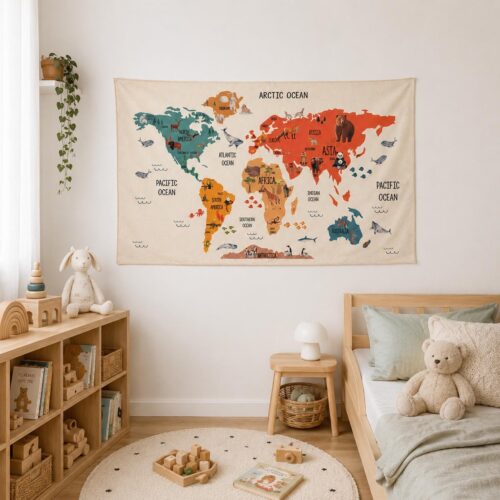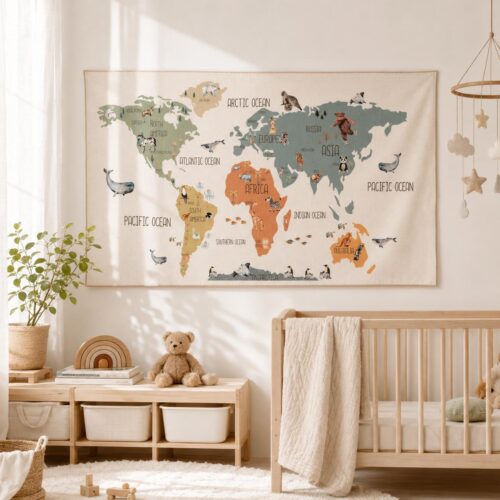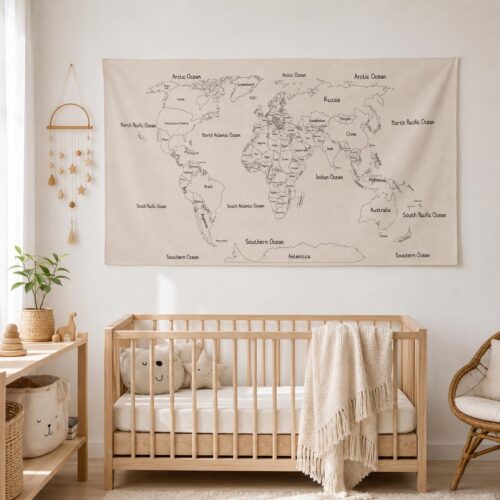
Finding the perfect balance between aesthetic appeal and child safety is the foundational step in modern nursery interior design. A world map wall hanging provides a stunning visual anchor that naturally grows with your child, transforming a simple room into an engaging environment. This comprehensive guide explores exactly how to select the right textiles, compare different formats, and implement secure installation techniques for beautiful, hazard-free nursery wall decor.

What Is a World Map Wall Hanging?
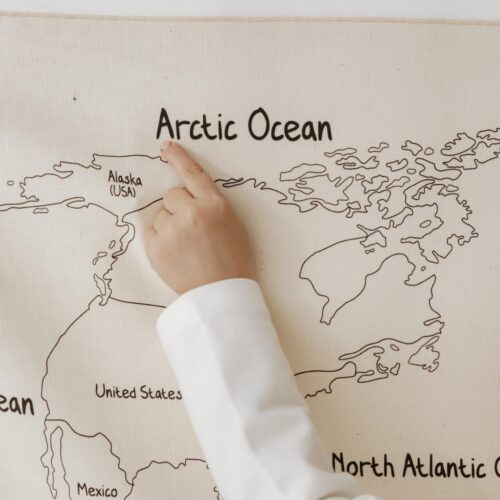
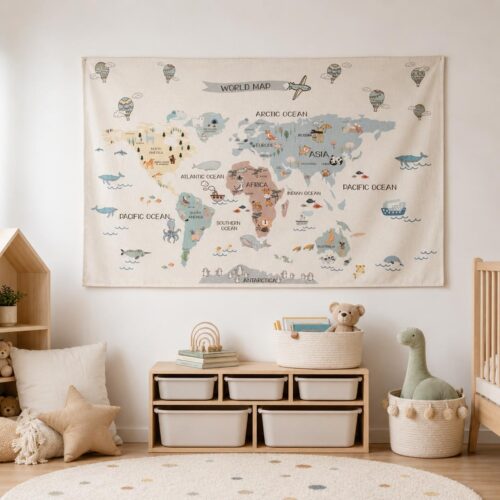
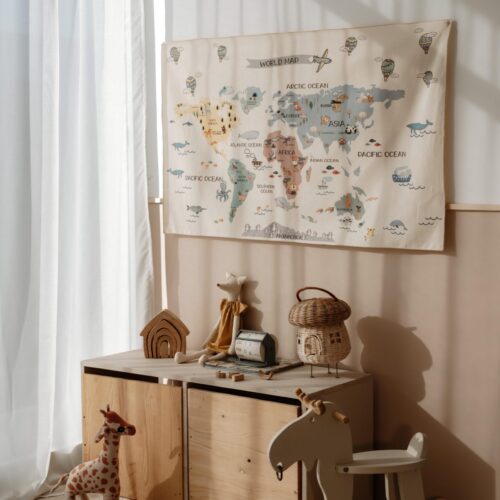
A world map wall hanging is a textile-based decorative piece featuring geographical illustrations, designed specifically to be suspended gracefully against an interior wall. Unlike rigid framed posters, these fabric pieces add warmth, texture, and a soft focal point to modern living spaces and children’s rooms.
- Soft tactile surface: Eliminates the hard edges and glare associated with glass frames.
- Acoustic softening: Fabric naturally helps absorb slight room echoes, creating a calmer environment.
- Easy portability: Can be quickly rolled up, moved, or stored without damage.
- Child-safe design: Inherently lightweight, removing the risk of heavy impact if accidentally dislodged.
Why Choose a Fabric World Map for Nursery Wall Decor?

When evaluating options for a baby’s room, interior designers and parents must prioritize materials that offer both longevity and safety. Traditional nursery wall decor often relies on heavy wooden frames, glass panes, or rigid plastic mounts. While these can be aesthetically pleasing in a hallway or living room, they introduce unnecessary risks when placed in proximity to a crib or a toddler’s play area. A fabric world map fundamentally solves this problem by utilizing soft, pliable textiles that pose absolutely no threat of shattering or causing injury.
Beyond the critical aspect of physical safety, textile decor introduces a crucial element of sensory warmth to a room. Empty drywall can make a space feel cold and sterile. High-quality fabrics introduce a subtle, inviting texture that softens the overall acoustics of the room. Unlike rigid surfaces that reflect sound waves sharply, fabric maps naturally soften ambient sounds. This gentle acoustic dampening contributes significantly to a more peaceful environment, which is highly beneficial for sleeping infants and easily startled newborns.
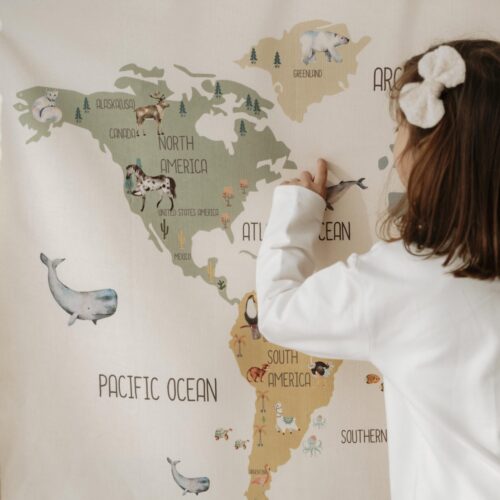
Furthermore, educational decor that utilizes soft textiles bridges the gap between early childhood development and sophisticated home design. A world map for wall hanging is not a temporary fixture that a child will outgrow in a matter of months. As the child develops spatial awareness and begins recognizing shapes, animals, and eventually continents, the tapestry serves as an interactive learning tool. Investing in high-quality textile art means choosing a piece that seamlessly transitions from a soothing baby nursery feature to a vibrant focal point in an older child’s study or reading nook.
World Map Tapestry vs. Canvas Wall Hanging: What’s the Difference?

Selecting the right material format is crucial for achieving your desired room aesthetic. Parents frequently debate between a world map tapestry and a canvas wall map, assuming they are functionally identical. However, their structural differences significantly impact how they hang and feel in a space.
A tapestry is typically woven or printed on lighter, more flexible materials like cotton, linen blends, or lightweight polyester. This construction allows the fabric to drape naturally, offering a relaxed, bohemian, or casual look. Tapestries are incredibly lightweight, making them the most renter-friendly option, as they can often be secured with simple push pins or minimal adhesive strips.
In contrast, a canvas wall hanging utilizes a much thicker, heavier, tightly woven fabric—often identical to the material used by traditional painters. Canvas provides a more structured, rigid appearance. It rarely ripples or flows and usually requires a solid wooden dowel at the top and bottom to maintain its strict rectangular shape.
| Feature | World Map Tapestry | Canvas Wall Map |
| Fabric Weight | Lightweight & flexible | Heavyweight & rigid |
| Drape Style | Relaxed, natural flow | Stiff, perfectly straight |
| Hanging Method | Pins, light hooks, or clips | Dowels and sturdy nails |
| Best Room Style | Bohemian, cozy, eclectic | Structured, modern, formal |
If your goal is to create a soft, inviting atmosphere typical of a gentle nursery environment, a tapestry offers the ideal blend of expansive visual coverage and effortless, breezy installation.
How to Integrate a Map Wall Hanging into a Minimalist Nursery?
The core philosophy of a minimalist nursery revolves around intentionality—keeping the space free from clutter while ensuring every item serves a distinct functional or aesthetic purpose. A map wall hanging aligns perfectly with this design ethos because it replaces the need for multiple, smaller decorative items that can make a wall feel chaotic. By serving as a single, large-scale statement piece, it allows the rest of the room to breathe, emphasizing clean lines and negative space.
Color palette selection is the defining factor in minimalist nursery art. To maintain a serene environment, avoid maps that feature overwhelming neon colors or hyper-detailed, cluttered typography. Instead, seek out world maps for wall hanging that utilize a muted, monochromatic, or earth-tone palette. A design featuring sage greens, soft terracotta, warm beige, or simple grayscale silhouettes complements natural wood cribs and neutral bedding perfectly. The goal is to provide visual interest without overstimulating the child’s developing sensory system.
Placement also dictates the success of minimalist integration. Rather than centering the fabric strictly in the middle of a wall, consider creating intentional zones. Hanging the map above a dedicated reading chair or alongside a low-profile wooden toy shelf establishes a specific “discovery area.” This strategic positioning ensures the artwork feels purposeful. When selecting the hanging hardware for a minimalist space, opt for a sleek, hidden magnetic frame or a simple, raw-finish wooden dowel suspended by a natural cotton cord, avoiding bulky metal brackets that disrupt the clean aesthetic.

Essential Safety Guidelines for Mounting a Nursery Wall Hanging
The primary concern when decorating a child’s room is ensuring that all installations are completely hazard-free. Even the softest fabric becomes a risk if the mounting hardware fails or if the cords used to suspend it are within a child’s reach. Proper installation of a nursery wall hanging requires a methodical approach, especially when the decor is placed anywhere near a sleep or play zone.
First, strictly observe the crib clearance rule. Official child safety guidelines strongly recommend that nothing should be hung directly above a crib if there is any potential for it to fall into the sleep space. If you must decorate the wall behind the crib, the bottom edge of the fabric world map must be completely out of reach of a standing toddler. Furthermore, never use long, dangling strings or low-hanging cords to suspend the map, as these present a serious strangulation hazard. Use flush-mount hardware or secure the hanging cord tightly to a high, inaccessible wall anchor.
When securing the piece to the drywall, bypass temporary, weak adhesives if the map utilizes heavy wooden dowels. Instead, use proper drywall anchors and securely driven screws. For renter-friendly applications using a lightweight world map tapestry, heavy-duty hook-and-loop command strips designed to hold at least twice the weight of the fabric are an excellent alternative. Ensure the wall surface is entirely clean and dry before applying any adhesive to guarantee a permanent bond. Regularly check the mounting points every few months to ensure the hardware has not loosened due to room vibrations or temperature changes.

Material Safety: Why OEKO-TEX Matters for Your Baby’s Room
When evaluating textiles that will live in an enclosed space with a developing infant, the chemical composition of the fabric is just as important as its visual design. Many inexpensive, mass-produced fabrics are treated with harsh chemical flame retardants, formaldehyde-based wrinkle resistors, or toxic heavy metals within the printing inks. These volatile organic compounds (VOCs) can off-gas into the room’s air over time, potentially irritating a baby’s sensitive respiratory system and delicate skin.
This is where independent, rigorous safety certifications become non-negotiable. When shopping for nursery interior design elements, always look for products certified by Standard 100 by OEKO-TEX. This globally standardized certification system goes far beyond standard national regulations. It guarantees that every single component of the product—from the raw cotton or polyester threads to the printed dyes, and even the stitching threads used in the hem—has been rigorously tested in independent laboratories and proven strictly free from harmful levels of over 100 known toxic substances.
Choosing a certified organic cotton or rigorously tested synthetic blend ensures that the fabric world map is completely hypoallergenic and safe to touch. Babies naturally explore their world through touch and occasionally by putting things in their mouths. Knowing that the vibrant colors mapping out the continents were achieved using non-toxic, water-based, certified inks provides invaluable peace of mind. Investing in clean, verified materials is an investment in the long-term indoor air quality of your home.

Cleaning and Maintaining Your World Maps for Wall Hanging
Nursery decor inevitably faces exposure to dust, ambient moisture, and the occasional accidental spill. Maintaining the pristine condition of your textile map ensures it remains a beautiful focal point for years. The specific cleaning protocol depends entirely on the fabric composition and the quality of the printing inks used during manufacturing.
For routine maintenance, aggressive washing is rarely necessary and should be avoided to preserve the fabric’s shape. Use a clean, soft-bristled upholstery attachment on your vacuum cleaner to gently remove surface dust once a month. Work from the top of the map downwards, using the lowest suction setting to avoid pulling or stretching the weave. If you notice a minor smudge or spot, immediate spot-cleaning is the most effective approach. Use a damp microfiber cloth and a tiny drop of mild, baby-safe detergent. Dab the stain gently without aggressive rubbing, which can cause the colors to bleed or the fabric to pill.
If a deeper clean is absolutely required due to a significant spill, always consult the manufacturer’s care label first. Many high-quality cotton tapestries can be hand-washed in cold water. Never use bleach or harsh chemical stain removers. After washing, never wring the fabric out by twisting it, as this destroys the structural integrity and causes permanent wrinkling. Instead, roll the wet tapestry inside a dry, clean bath towel to press out excess moisture, then lay it completely flat on a drying rack away from direct, intense sunlight, which can fade the geographical illustrations over time.
Decorating Alternatives: Decals Versus Textile Maps
While a fabric hanging piece offers exceptional warmth and texture, it is not the only way to introduce geography into a child’s space. Depending on your room’s layout, wall texture, and personal design preferences, a flush-to-the-wall solution might be more appropriate. Understanding the alternatives allows for a more informed interior design decision.
For parents who prefer a completely seamless, paint-like finish without any physical hardware, adhesive vinyl represents a fantastic alternative. Premium world map wall decals adhere directly to the drywall. This option is particularly advantageous for highly active playrooms where flying toys might accidentally snag a hanging fabric. Decals require zero drilling, no wall anchors, and completely eliminate any concern about dangling cords or falling dowels. They sit perfectly flat, integrating directly into the wall’s surface.
However, decals require relatively smooth walls to adhere properly; heavily textured drywall can cause the vinyl edges to lift. A map wall hanging, on the other hand, easily bypasses heavily textured walls, brick, or wood paneling, hanging gracefully regardless of the surface behind it. Ultimately, both options provide stunning, educational visuals. The choice simply depends on whether you prioritize the cozy, tactile drape of a textile or the sleek, integrated look of a modern decal.

frequently asked questions
Can I iron my fabric world map to remove shipping wrinkles?
Yes, but you must use extreme caution. Always iron on the reverse side (the unprinted back) using the lowest possible heat setting. Place a clean, dry cotton cloth between the iron and the map to act as a protective barrier, preventing accidental heat damage to the printed inks.
Is it safe to hang a textile map over a changing table?
While safer than heavy framed art, it requires strict precautions. Ensure the map is securely anchored to the wall studs and high enough that a baby cannot reach, pull, or grab the fabric or the hanging cord while lying on the changing pad.
What is the best way to hang a tapestry without damaging rental walls?
For lightweight tapestries, use heavy-duty adhesive hook-and-loop strips (like Command strips). Apply them to the top corners and along the top edge of the fabric. Press firmly against a clean wall. This secures the map flush against the wall without requiring any nails or leaving holes.
Do fabric wall maps attract a lot of dust and allergens?
Like any textile, they can hold ambient dust, but they do not actively attract it more than curtains or rugs. Regular light vacuuming with an upholstery brush attachment once a month is entirely sufficient to keep the fabric clean and hypoallergenic for your nursery.
Conclusion
Integrating a world map wall hanging into your child’s room is a brilliant way to merge sophisticated interior design with foundational educational elements. By choosing the right materials, prioritizing rigorous safety certifications like OEKO-TEX, and adhering to strict installation guidelines, you create a space that is as inspiring as it is secure. Whether you lean towards a relaxed tapestry or a structured canvas, the warmth of textile art elevates any modern nursery. Ready to find the perfect geographical centerpiece for your home? Explore our exclusive, child-safe collection of world map wall hangings to transform your space today.
Authored by the DOS Junior interior design team, specializing in safe, functional, and aesthetically inspiring nursery decor for modern families.