

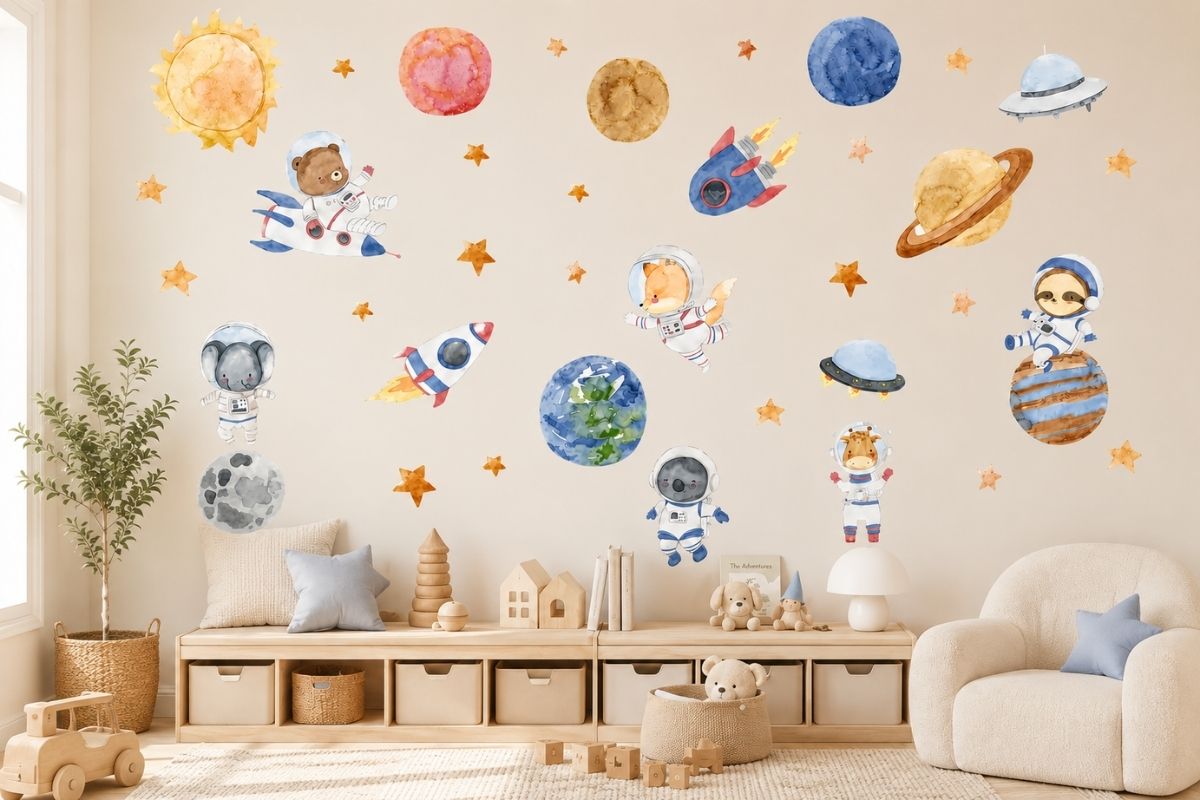
Space wall decals instantly transform any standard room into an immersive cosmic environment without the heavy chemical odors of fresh paint or the permanence of traditional wallpaper. Integrating these astronomical elements requires a calculated approach to material safety, surface preparation, and specific interior design principles. By selecting premium, VOC-free materials, parents can seamlessly craft a visually stimulating atmosphere while maintaining absolute respiratory safety for their children’s indoor spaces.
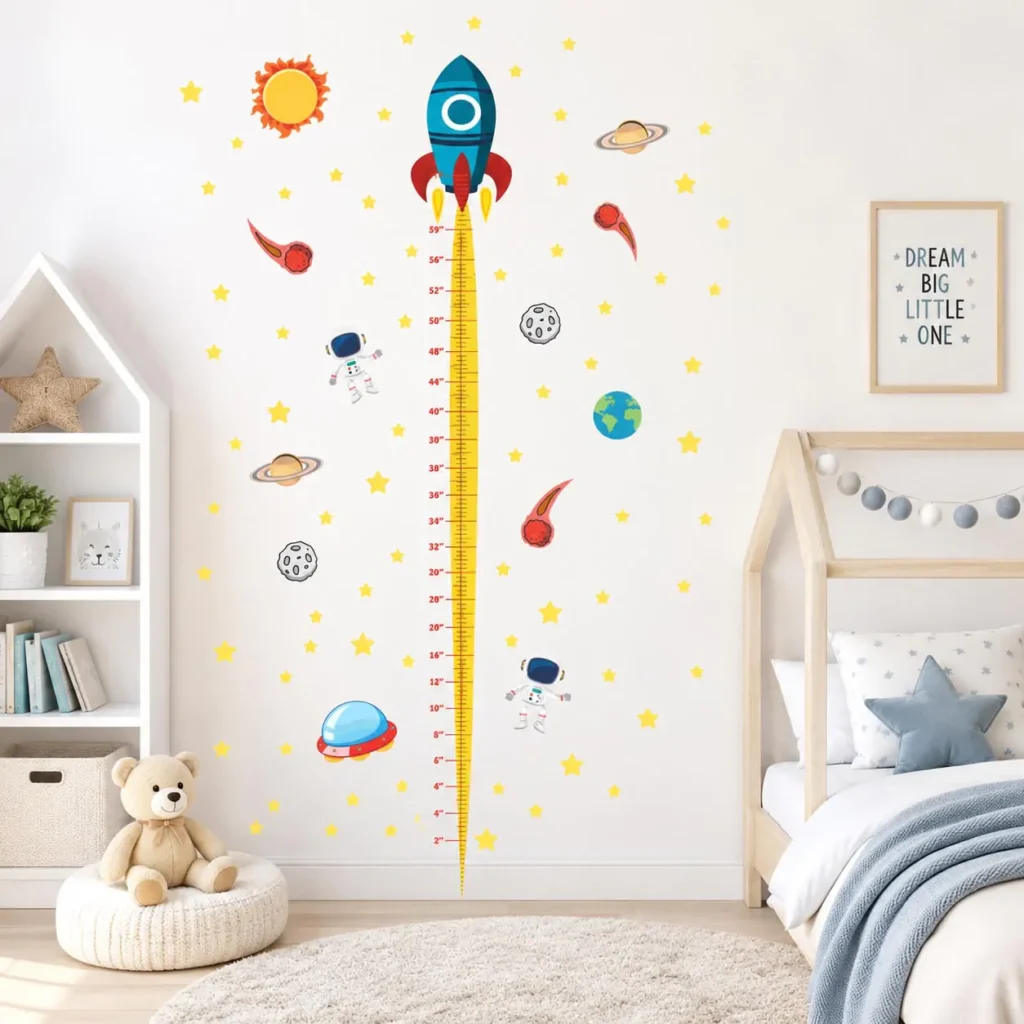
What are space wall decals and why are they crucial for modern interior upgrades? Space wall decals are precision-cut, self-adhesive graphics that adhere directly to indoor surfaces to create realistic astronomical scenes. The primary technical advantages include:
- Rapid application: Completely alters the room’s aesthetic in under an hour.
- Zero surface damage: Advanced adhesives preserve underlying interior latex paint.
- Non-toxic engineering: Premium variations utilize water-based inks and PVC-free substrates.
- Dynamic versatility: Allows for easy repositioning as the child transitions from a nursery to a toddler room.
Fabric vs vinyl planet wall decals for baby room: Which is safer?
Evaluating fabric vs vinyl planet wall decals for baby room environments is the most critical decision parents face regarding indoor air quality and long-term material performance. When establishing a space themed nursery, the underlying chemical composition of your decor dictates both the visual elegance of the artwork and the respiratory safety of the sleeping infant.
Traditional vinyl stickers are predominantly manufactured utilizing polyvinyl chloride (PVC), an inexpensive synthetic plastic polymer. According to indoor environmental safety protocols, PVC-based materials can release Volatile Organic Compounds (VOCs) into the air. This process, known as off-gassing, is particularly undesirable in a confined space nursery where an infant spends up to sixteen hours a day sleeping. In sharp contrast, premium fabric decals are constructed from woven polyester blends. These advanced substrates are entirely PVC-free and printed using eco-friendly, water-based ink. This rigorous engineering ensures the material is completely odorless and meets the strictest safety standards for pediatric respiratory health.
Beyond the vital safety metrics, the physical mechanics of the two materials differ drastically. Fabric decals employ an advanced peel-and-stick technology that inherently resists stretching or tearing. If a large Jupiter graphic accidentally folds onto itself during installation, a fabric decal can be gently pulled apart without distorting the circular shape. Standard vinyl, however, possesses high elasticity but low memory; once stretched, it remains permanently warped. Visually, fabric provides a sophisticated matte finish that absorbs ambient light, eliminating the harsh, reflective glare associated with glossy vinyl.
| Material Specification | Fabric Wall Decals | Traditional Vinyl Decals |
| Chemical Safety | PVC-free, zero VOC emissions | Contains PVC, potential VOC off-gassing |
| Surface Finish | Matte, light-absorbing | Glossy, highly reflective |
| Structural Integrity | Resists stretching, retains exact shape | High risk of warping and stretching |
| Repositionability | Excellent; can be moved multiple times | Poor; adhesive weakens rapidly |
Opting for fabric-based space wall decor guarantees a custom, hand-painted aesthetic while strictly adhering to the highest pediatric safety regulations, making it the definitive choice for conscientious parents.
How to apply large astronaut wall decal without wrinkles?
Mastering how to apply large astronaut wall decal graphics smoothly requires an understanding of fluid dynamics, proper surface curing times, and the disciplined use of a squeegee tool. Large, irregularly shaped decals—like an astronaut floating in zero gravity—present unique installation challenges because trapped air has a complex path to escape, making bubble and wrinkle prevention paramount.
The absolute foundation of a flawless application is the chemical state of your wall. Interior latex paint must undergo a complete curing process before any adhesive is applied. Industry standards dictate a strict 30-day waiting period for newly painted rooms. While paint may feel dry to the touch within hours, it continues to release microscopic chemical vapors (outgassing) for weeks. Applying a large, impermeable decal over uncured paint traps these vapors, which eventually pool together and form massive air bubbles that destroy the adhesive bond. Once you confirm the paint is fully cured, prepare the surface by wiping it down with a lightly damp microfiber cloth to remove microscopic dust particles, allowing it to dry perfectly.
To execute the installation, professionals rely entirely on the “hinge method.” Position your astronaut graphic on the wall and secure it by placing a strip of painter’s tape horizontally across the top edge. This creates a stable hinge. Carefully peel back the top few inches of the rigid backing paper, folding it downward. Using a felt-edged squeegee tool—or a standard credit card wrapped tightly in a soft, lint-free cloth—press the exposed adhesive onto the wall. Work systematically from the top-center point, sweeping outward to the left and right edges.
Slowly pull the backing paper downward with your left hand while executing overlapping, downward-sweeping motions with the squeegee in your right hand. This synchronized technique forces ambient air out of the sides before it can become trapped beneath the vinyl or fabric. If a minor wrinkle does occur, do not panic and do not pull the entire decal off. Gently lift just the affected edge, apply slight tension to flatten the material, and re-smooth it with the squeegee. This methodical approach ensures your space wall stickers look like seamless architectural elements rather than applied adhesives.
Are glowing galaxy wall decals safe for infant sleep?
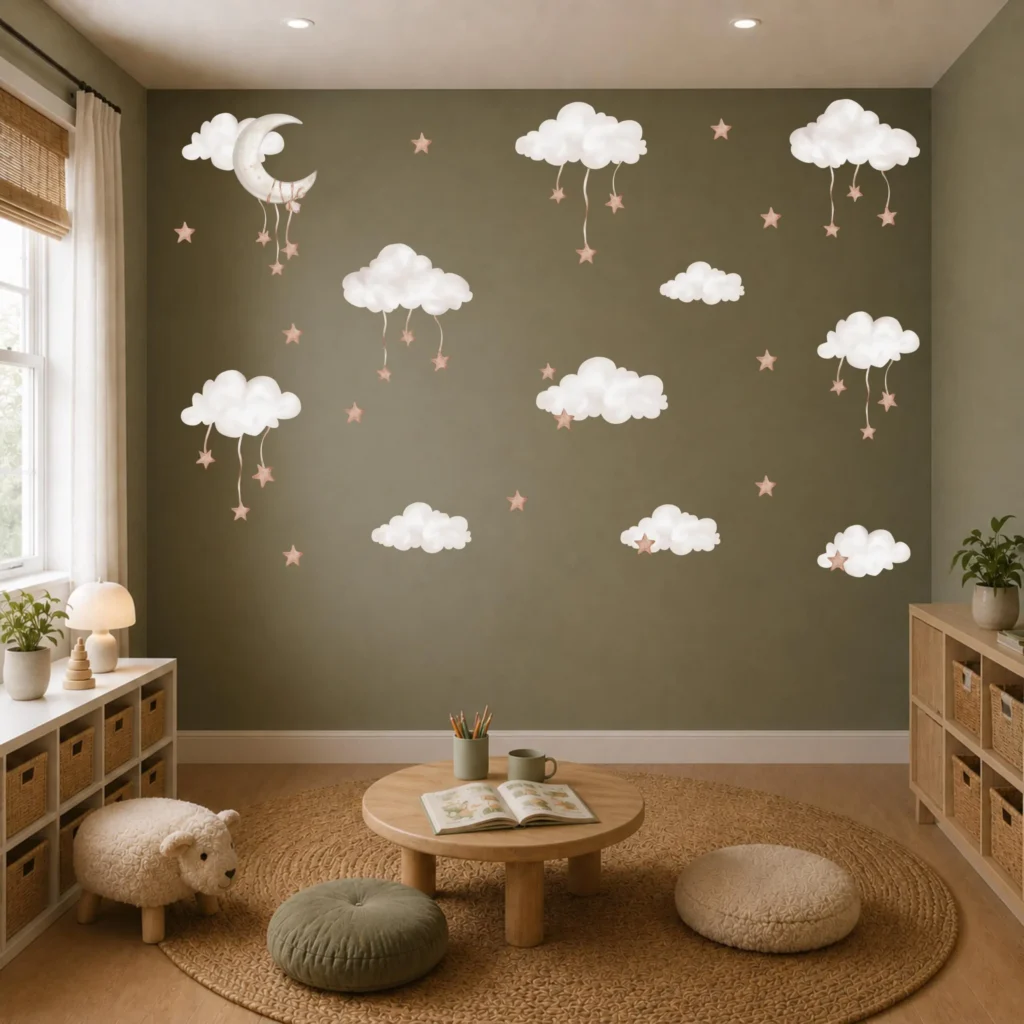
Understanding whether glowing galaxy wall decals are safe for infants involves analyzing the photoluminescence technology used in modern printing and its neurological impact on a baby’s developing circadian rhythm. Many parents want to recreate the magic of a starry night sky, but concerns regarding chemical toxicity and sleep disruption often arise.
Historically, glow-in-the-dark products relied on chemical compounds that raised toxicity concerns. However, modern, high-quality photoluminescent decor utilizes strontium aluminate. This advanced phosphor is biologically inert, non-toxic, and free of any radioactive properties. It functions strictly by absorbing ambient light photons during the day and slowly releasing them as a soft, ambient glow in complete darkness. When printed on PVC-free materials with water-based inks, these glowing elements pose zero chemical risk to children.
From a pediatric sleep perspective, the type of light emitted is crucial. Bright, artificial white or blue light suppresses melatonin production, making it difficult for an infant to settle. Fortunately, the soft, low-intensity green or blue luminescence emitted by high-grade galaxy wall decals mimics natural moonlight. This subtle glow acts as a comforting, built-in nightlight that slowly fades over several hours. As the light gradually dims, it naturally aligns with the infant’s transition into deep REM sleep without sudden environmental changes that might startle them awake. By choosing premium, biologically inert glowing decals, you provide visual comfort that actively supports, rather than disrupts, healthy sleep architecture.
Best removable outer space nursery decor for renters: Protecting paint
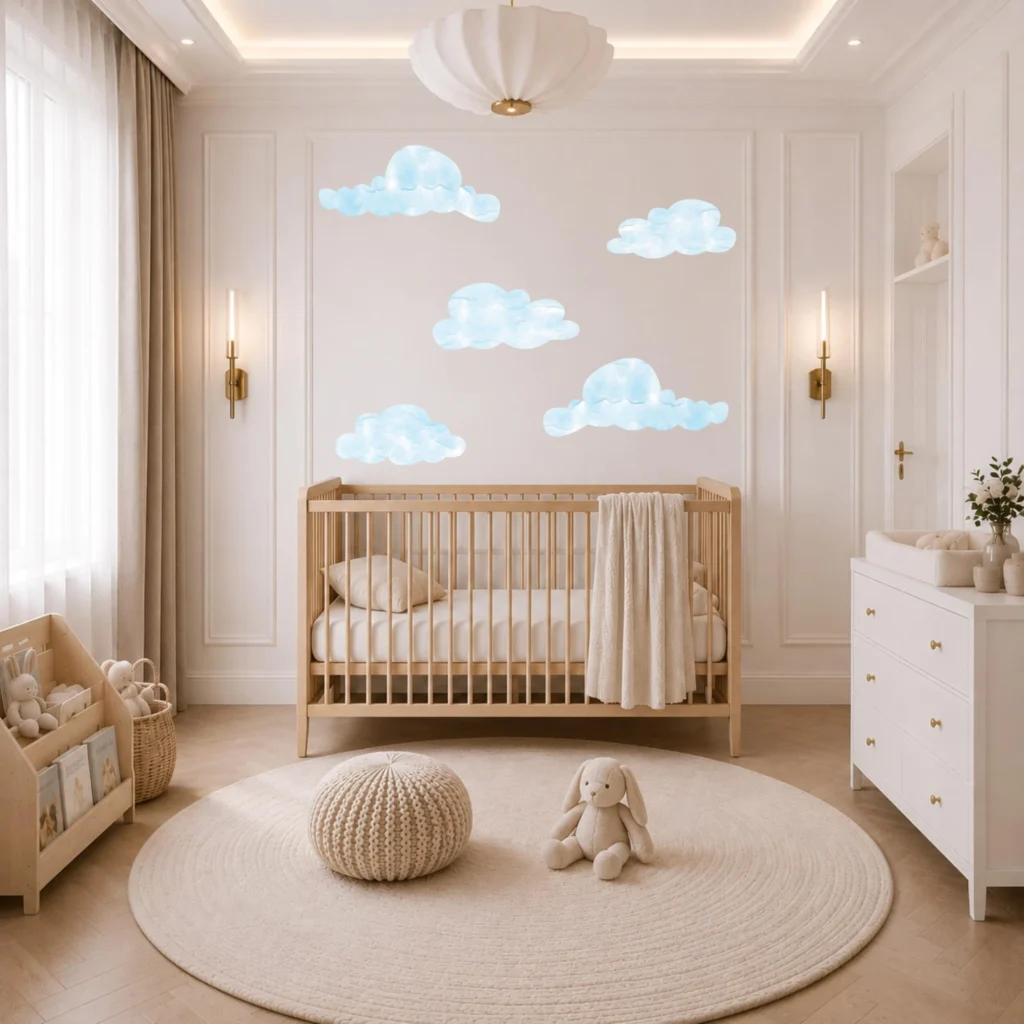
Sourcing the best removable outer space nursery decor for renters is a critical task for families who wish to highly personalize their living environment without forfeiting their security deposit. The engineering distinction between standard adhesives and renter-friendly adhesives lies in the delicate balance between shear strength and peel strength.
Renters must exclusively seek out products explicitly labeled as repositionable and low-tack. Standard permanent adhesives undergo a chemical cross-linking process over time, essentially fusing the decal to the microscopic pores of the interior latex paint. When you attempt to remove them, the adhesive’s bond is stronger than the paint’s bond to the drywall, resulting in torn paper and chipped walls. Premium fabric decals utilize a specialized microsphere adhesive. This technology relies on millions of tiny adhesive beads that create a strong shear bond—meaning the decal will not slide down the wall due to gravity—but maintain a very low peel resistance.
When the time comes to move out, the removal technique is just as important as the material. You must manipulate the thermal properties of the adhesive to ensure a clean release. Take a standard hairdryer and set it to medium heat. Hold the nozzle approximately six inches from the edge of the decal and apply heat for ten to fifteen seconds. The thermal energy temporarily softens the microsphere adhesive matrix. Begin at a top corner and slowly peel the material downward at a sharp, 45-degree angle. Keep your hand close to the wall, sliding parallel to the surface. Never pull the decal straight out toward your body, as perpendicular tension is exactly what causes paint to fracture. Utilizing premium removable decals and proper thermal release techniques guarantees your walls remain immaculate for the final landlord inspection.
Affordable space themed nursery decor under 100 dollars: Styling tips
Designing an affordable space themed nursery decor under 100 dollars requires strategic interior design choices, utilizing high-impact wall art to eliminate the need for expensive, specialized furniture. The most common mistake in budget decorating is purchasing numerous small, disparate items that clutter the room without establishing a cohesive theme.
To maximize a restricted budget, focus entirely on creating a single, powerful focal point. A premium set of space wall art can serve as a massive, wall-to-wall mural for a fraction of the cost of custom painting or traditional wallpaper. When selecting your color palette, avoid the stark black typically associated with deep space. Stark black can feel oppressive in a small nursery. Instead, opt for deep navy blues, warm charcoals, and soft silvers. These tones are psychologically calming and make a room feel larger and more expansive.
Allocate the majority of your budget to one large, high-quality statement piece—such as an oversized solar system or a prominent moon graphic. Once the large decal is placed, you can supplement the room with affordable, neutral textiles. A plain white crib and a standard gray rocking chair instantly become part of the “space” aesthetic when positioned beneath a sprawling galaxy decal. By using large-scale decals to carry the entire thematic weight of the room, you avoid the expense of novelty lamps, custom rugs, or themed bedding. This minimalist, high-impact approach ensures the space nursery decor remains sophisticated, visually striking, and strictly within your financial parameters.
Strategic placement for space wall art and moon wall decal
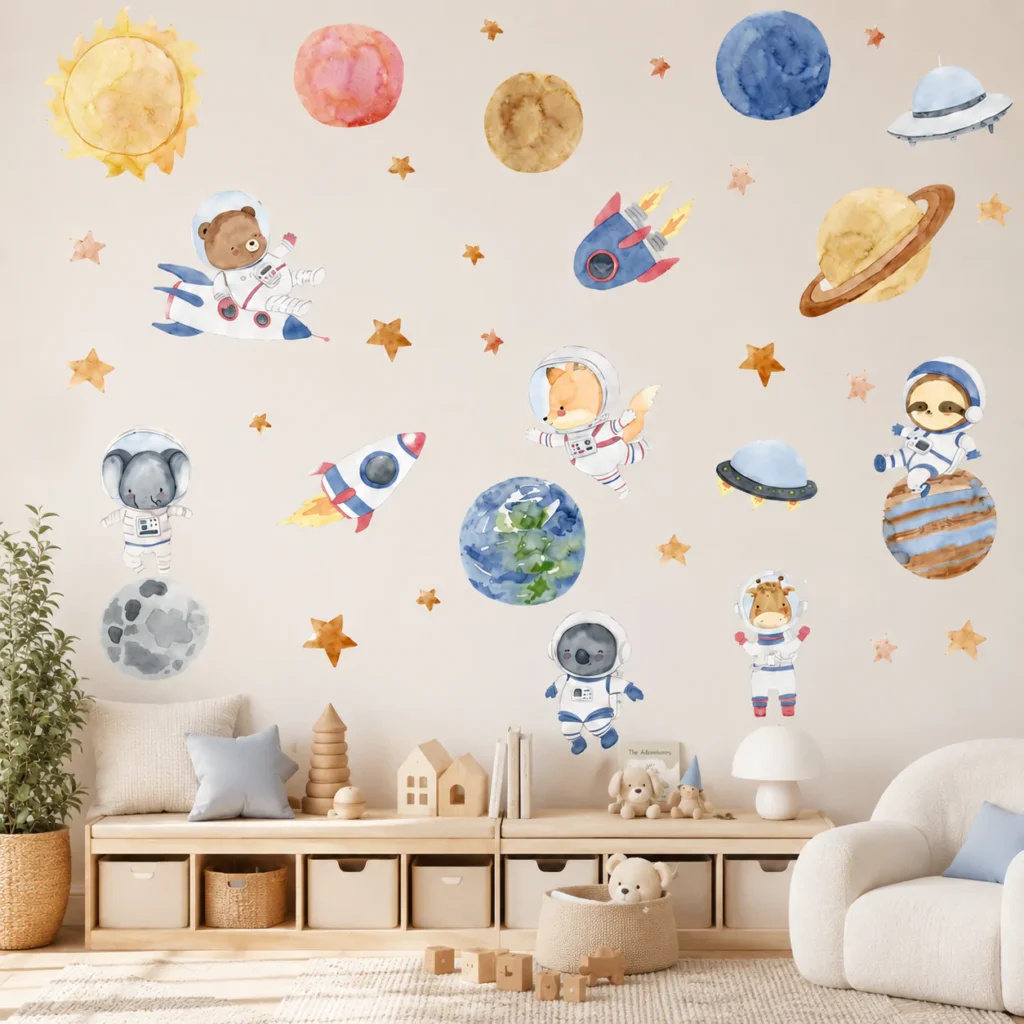
The effectiveness of your space wall art depends entirely on strategic spatial placement and adherence to the principles of visual hierarchy. Haphazardly placing a large moon wall decal in the dead center of an empty wall often makes the graphic look like it is floating aimlessly, disconnecting it from the room’s architecture.
Professional interior designers utilize the concept of “anchoring.” A wall decal should interact directly with the physical furniture in the room. For instance, instead of placing a massive moon graphic high up near the ceiling, position it so that the bottom third of the moon is slightly obscured by the back of the crib or the top of a changing table. This overlap creates depth, making the moon appear as though it is rising from behind the furniture, integrating the 2D art with the 3D environment.
Similarly, when applying smaller planet wall decals, utilize the “rule of thirds.” Do not arrange planets in a straight, predictable line. Instead, create an asymmetrical, cascading flow that guides the eye diagonally across the wall. Start with a large cluster near the upper left corner and trail smaller stars and planets down toward a reading nook in the lower right.
| Decal Type | Recommended Anchoring Point | Visual Effect Achieved |
| Large Moon/Sun | Slightly behind the crib or dresser | Creates 3D depth and grounding |
| Floating Astronaut | Above a reading chair or bookshelf | Suggests upward motion and exploration |
| Small Planets/Stars | Cascading diagonally across corners | Guides the eye, creates dynamic flow |
By consciously mapping out your cosmic layout before peeling the backing paper, you transform individual stickers into a cohesive, architectural mural. The advanced repositionability of premium space wall decals allows you to experiment with these anchoring techniques until the visual balance of the room is absolutely perfect.
Frequently asked questions
How do I clean my space wall decals without ruining the colors?
Use a slightly damp, ultra-soft microfiber cloth with plain lukewarm water to gently dab the surface. Never use harsh chemical solvents, bleach, or abrasive scrubbing pads, as these materials will immediately dissolve the water-based inks and destroy the matte finish of the graphic.
Can I apply a large moon decal to a heavily textured wall?
No. Decals require maximum surface contact to maintain their adhesive bond. Heavily textured surfaces, such as deep knockdown or popcorn finishes, create thousands of tiny air gaps. These gaps prevent the adhesive from gripping, inevitably causing the heavy edges to peel and fall over time.
How soon can I install decals after painting the nursery navy blue?
You must wait a strict minimum of 30 days before applying any adhesive decor to freshly painted walls. Interior latex paint requires this duration to completely cure and outgas chemical vapors. Applying decals prematurely traps these fumes, causing severe bubbling and immediate adhesive failure.
Are fabric planet stickers actually reusable if we move apartments?
Yes. Fabric-based, peel-and-stick decals maintain exceptional structural integrity and will not stretch or warp upon removal. If you carefully peel them off and place them back onto their original wax backing paper, they can be easily transported and seamlessly reapplied in your new home.
Conclusion
Creating a mesmerizing, cosmic environment for your child is a highly rewarding project that blends creative imagination with practical interior design. By understanding the distinct safety advantages of PVC-free fabric over traditional vinyl, mastering the physics of bubble-free squeegee applications, and utilizing strategic visual anchoring, your space wall decals will look like a professional, hand-painted mural. Whether you are aiming to protect a rental property’s paint or designing a serene, developmentally appropriate nursery on a strict budget, high-quality peel-and-stick decor provides the ultimate solution. Elevate your child’s room to the stars effortlessly; explore the premium, renter-friendly collections at dosjunior and start building your perfect cosmic sanctuary today.