

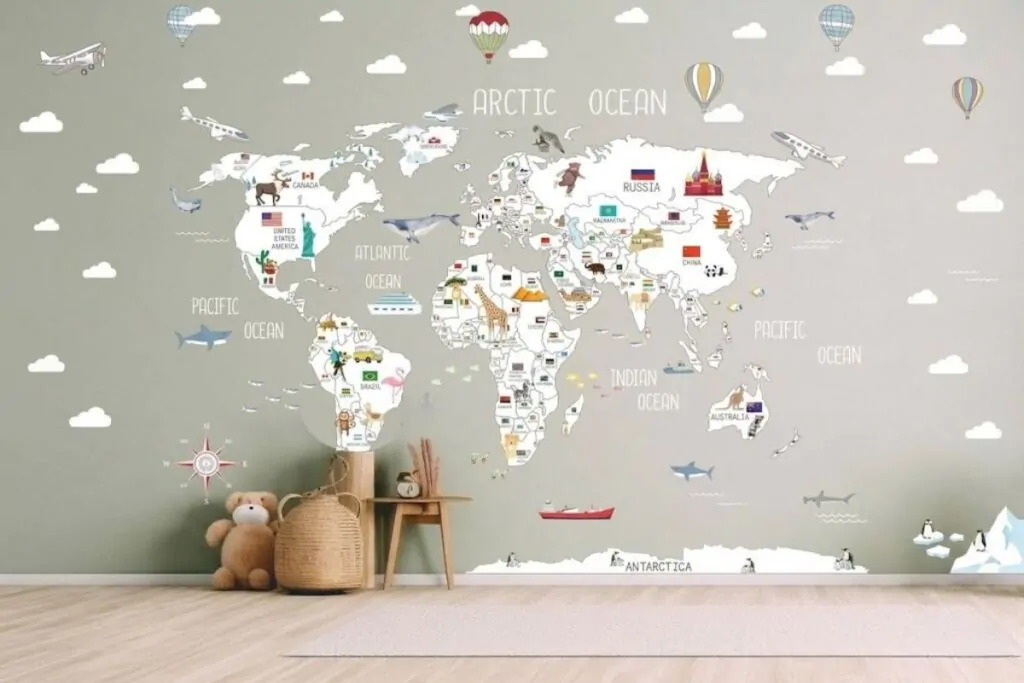
A world map rug provides a comfortable, engaging floor covering that beautifully combines interior design with geographical elements. Parents and decorators frequently seek out a reliable washable rug to ensure long-term hygiene and safety in active residential spaces. By selecting the correct materials, understanding maintenance protocols, and determining the appropriate room size, establishing a practical and inspiring foundation for any child’s room becomes a straightforward process.
What Is a World Map Rug?
A world map rug is a specialized floor covering featuring detailed geographical illustrations, specifically tailored to withstand the high traffic of children’s play areas. A high-quality washable nursery rug offers several core structural and practical benefits for modern households:
- Hygienic Maintenance: Easily cleaned in a standard home washing machine.
- Safe Play Surface: Provides a soft, cushioned barrier over hard flooring.
- Allergen Reduction: Low-pile construction minimizes trapped dust and pet dander.
- Visual Engagement: Introduces basic geographical shapes and colors to the room.
Why Choose a Washable Nursery Rug for Your Home?
The floor is the primary living space for an infant or toddler. From tummy time and learning to crawl, to building block towers and reading books, a child’s interaction with their environment happens mostly at ground level. This reality makes the selection of a nursery rug one of the most critical interior design decisions a parent will make. The surface must be exceptionally soft to protect delicate knees, yet durable enough to survive the inevitable daily spills, art project accidents, and muddy footprints.
Traditional floor coverings often fall short in these active environments. Spills on standard carpets require harsh chemical spot cleaners, and deep piles harbor invisible allergens, dust mites, and everyday dirt that standard vacuuming cannot fully extract. Incorporating a washable rug fundamentally resolves these hygiene challenges. When a significant mess occurs, the ability to simply roll up the floor covering and place it in a standard washing machine guarantees a level of sanitation that traditional carpets cannot match. This convenience significantly reduces parental stress and ensures the child’s play area remains consistently clean.
Furthermore, a dedicated play rug helps establish clear zones within a room. In open-concept spaces or shared bedrooms, a clearly defined floor boundary signals to the child where the play area begins and ends. A beautifully designed map motif acts as a large-scale visual anchor, drawing the room’s color palette together while simultaneously providing a functional, hypoallergenic boundary that protects expensive hardwood or laminate flooring from scratches caused by heavy wooden toys.
Washable Kids Rug vs. Traditional Wool Carpet: Which Is Better?
When outfitting a playroom or bedroom, consumers generally weigh the benefits of modern synthetic washable options against the classic appeal of traditional thick-pile or wool carpets. Understanding the distinct differences in maintenance, safety, and longevity is essential for making an informed investment.
The primary difference lies in the structural weave. Traditional wool carpets feature a high pile—meaning the individual fibers are long and densely packed. While this provides a luxurious feel underfoot, it acts as a trap for crumbs, liquids, and allergens. Modern washable options utilize a low-pile or flatweave construction. This tightly woven surface allows toy cars to roll smoothly and prevents sharp objects, like building blocks, from becoming dangerously hidden within the fibers.
| Feature | Washable Kids Rug | Traditional Wool Carpet |
| Cleaning Method | Machine washable at home | Professional steam cleaning required |
| Allergen Resistance | High (does not trap dust mites easily) | Low (dense fibers trap allergens) |
| Spill Recovery | Excellent (liquids wash out completely) | Poor (high risk of permanent staining) |
| Weight & Handling | Lightweight, easy to move and fold | Heavy, difficult to maneuver |
| Drying Time | Fast (can air dry in hours) | Slow (can take days, risking mildew) |
For a household with active toddlers and pets, a washable kids rug clearly outshines traditional alternatives in practical functionality. The ability to achieve a deep, sanitizing clean without hiring professional carpet services ensures the environment remains safe for children with asthma or environmental sensitivities.
How Does a Map Rug Support Early Learning Environments?
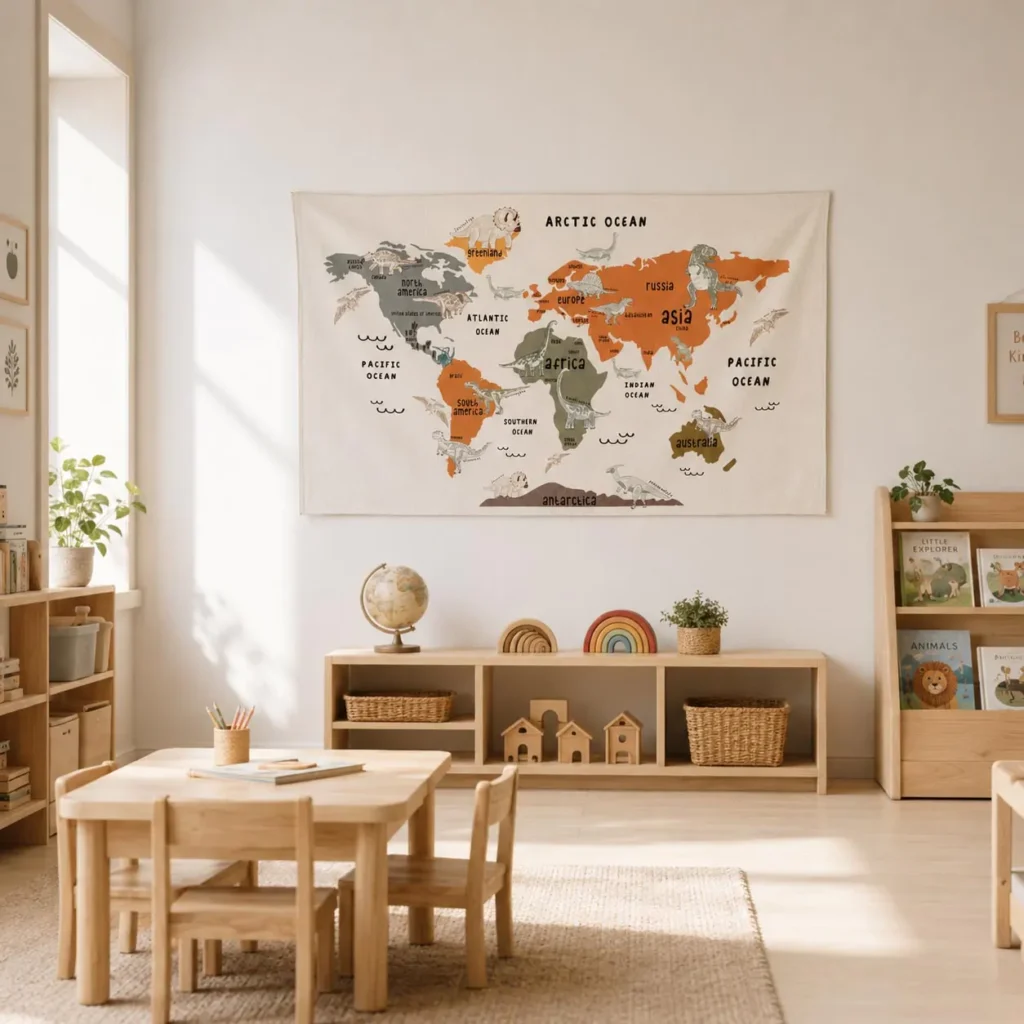
Integrating educational motifs into a child’s everyday environment provides a seamless backdrop for continuous, low-pressure discovery. A floor covering featuring continents, oceans, and regional animals acts as more than just decoration; it serves as an expansive, interactive canvas for open-ended play. Creating a visually stimulating space can provide a solid foundation for interactive play and basic geographical familiarity as children grow.
Rather than formal instruction, early childhood learning thrives on casual observation and curiosity. A large-scale geographical design on the floor naturally invites questions. When a child sits on a specific colored shape and asks what it is, parents have an immediate opportunity to introduce the concept of continents. Placing toy animals on their respective native landmasses—putting a toy lion on Africa or a kangaroo on Australia—transforms a simple sorting game into a spatial awareness exercise. This type of play encourages the development of fine motor skills while gently introducing a global perspective.
The physical layout of the design also aids in collaborative play. The sheer size of a floor map allows multiple children to interact with the design simultaneously without crowding. In preschool or daycare settings, educators often use these distinct visual boundaries to organize group activities, assigning different children to different colored “islands” or continents during storytime. This subtle environmental structure helps maintain order while keeping the atmosphere playful and engaging.
What Are the Best Materials for a Washable Kids Rug?
The longevity and safety of any floor covering depend entirely on the quality of its raw materials. For a product that will endure frequent machine washing and continuous physical contact with a child’s skin, the material composition must be exceptionally durable and strictly non-toxic.
The top layer—the surface the child touches—is typically crafted from high-grade cotton or advanced, tightly woven polyester blends. Organic cotton provides unparalleled breathability and a natural, soft texture, making it an excellent choice for infant nurseries. Polyester blends, on the other hand, offer superior color retention. This means the vibrant blues of the oceans and the distinct colors of the continents will not fade after multiple cycles in the washing machine. Furthermore, synthetic flatweaves naturally repel liquid spills slightly better than natural fibers, buying parents precious seconds to wipe up a juice spill before it completely sets into the fabric.
Safety certifications are crucial when evaluating these materials. High-quality textile products intended for children should ideally align with stringent global safety standards. For instance, materials certified by the Oeko-Tex standard ensure that the fabric, backing, and printed inks have been tested for harmful substances.
Equally important is the backing material. A rug placed on a smooth hardwood or tile floor presents a severe slipping hazard if it lacks proper grip. The most advanced washable rugs utilize a Thermoplastic Rubber (TPR) backing. Unlike traditional latex backings that dry out, crack, and peel off after exposure to hot water in a washing machine, TPR is highly flexible, heat-resistant, and provides exceptional anti-slip properties, ensuring the rug remains firmly anchored during vigorous play.
Choosing the Right Size: World Map Rug Dimensions Guide
Selecting the correct dimensions is a critical interior design step that directly impacts both the functionality and the visual balance of the room. A rug that is too small looks disconnected and floating, while one that is too large can overwhelm the space and make opening doors difficult.
As a general design rule, you should aim to leave at least 12 to 18 inches of bare floor exposed between the edges of the rug and the walls. This border frames the rug and makes the room appear more spacious. When placing the rug near furniture, such as a crib or a toddler bed, slipping the front legs of the furniture over the edge of the rug helps anchor the piece and creates a cohesive, connected layout.
| Room Type | Recommended Size | Ideal Usage Scenario |
| Small Nursery | 3’ x 5’ (90×150 cm) | Placed next to the crib or immediately in front of a changing table. |
| Standard Bedroom | 4’ x 6’ (120×180 cm) | Centered in the room or anchoring a dedicated play corner. |
| Large Playroom | 5’ x 7’ (150×210 cm) | Covering the central floor space to accommodate multiple children. |
| Classroom / Daycare | 6’ x 9’ (180×270 cm)+ | Providing a massive, communal surface for group activities and storytime. |
Taking precise measurements of your available floor space before purchasing prevents the common frustration of receiving a product that disrupts the room’s flow. Consider the swing radius of any doors and the placement of heavy, immovable furniture when visualizing the final layout.
How to Clean and Maintain Your Washable Rug Safely?
The primary appeal of a washable kids rug is its easy maintenance, but following proper cleaning protocols ensures the colors remain vibrant and the backing remains intact for years. Improper washing techniques can warp the fabric or degrade the anti-slip properties prematurely.
Routine daily maintenance requires nothing more than a standard vacuum cleaner. However, you must disable the rotating beater bar (the aggressive spinning brush) on your vacuum. The beater bar can snag the low-pile threads and cause fraying along the hemmed edges. Instead, use the hard floor setting or a simple suction attachment to safely remove crumbs, dust, and pet hair. For sudden liquid spills, immediately blot the area with a clean, dry microfiber cloth. Never rub a fresh stain, as this forces the liquid deeper into the fibers; press firmly to absorb the moisture.
When it is time for a deep clean, the washing machine is your best tool. First, take the rug outside and shake it vigorously to remove loose dirt. Place the rug in the washing machine on a delicate or gentle cycle using cold water (never exceeding 30°C or 85°F). Hot water can compromise the TPR backing and cause the fabric to shrink. Use a mild, non-bleach liquid detergent; powder detergents can sometimes leave a residue in the tight weave.
Drying the rug correctly is just as important as washing it. Air drying is always the safest method. Hang the rug over a sturdy clothesline or lay it completely flat in a shaded, well-ventilated area. Direct, intense sunlight can fade the geographical print over time. If you must use a tumble dryer, select the absolute lowest heat setting or the “air fluff” mode, removing it while it is still slightly damp to finish air drying.
Designing a Cohesive Space Around Your World Map Rug
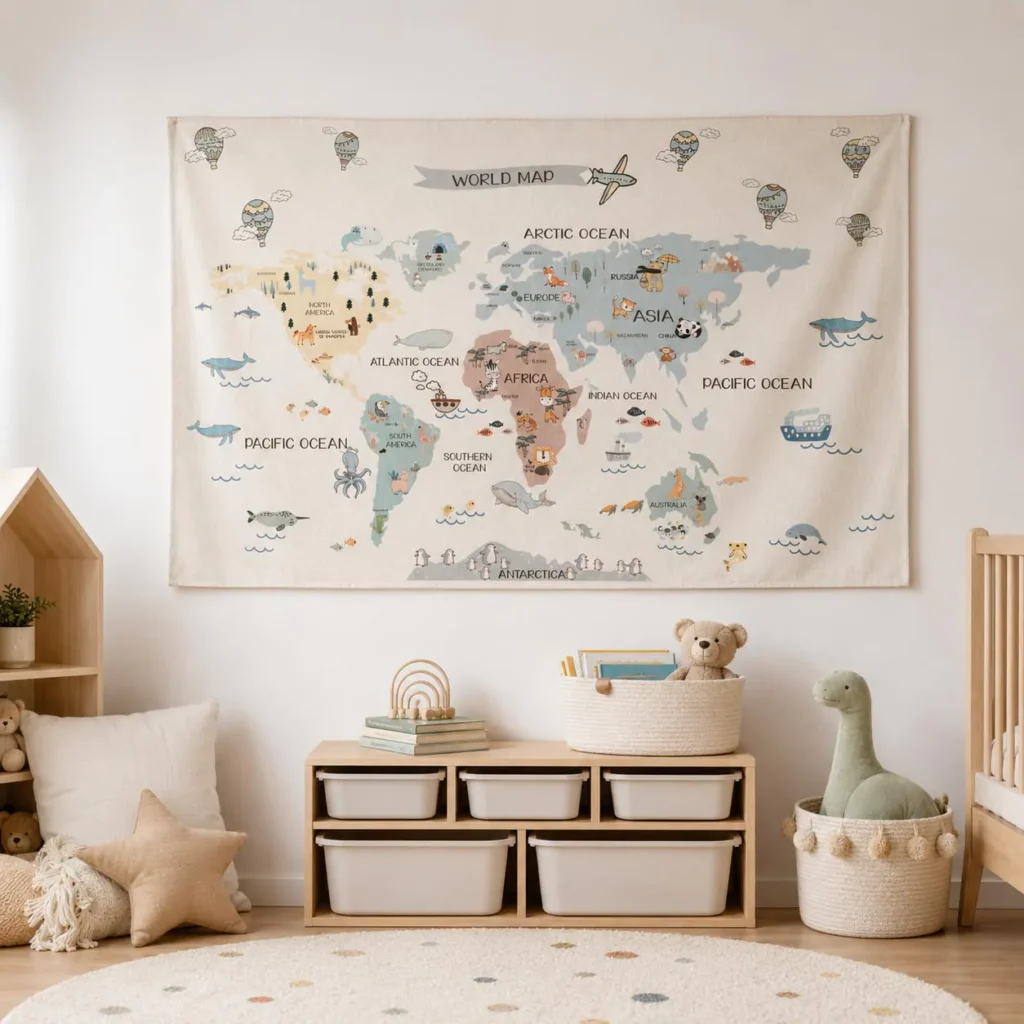
A striking floor map often serves as the thematic centerpiece of a room, dictating the surrounding decor choices. To prevent the space from feeling visually overwhelming, the key is balancing the colorful floor with complementary, understated elements on the walls and furniture.
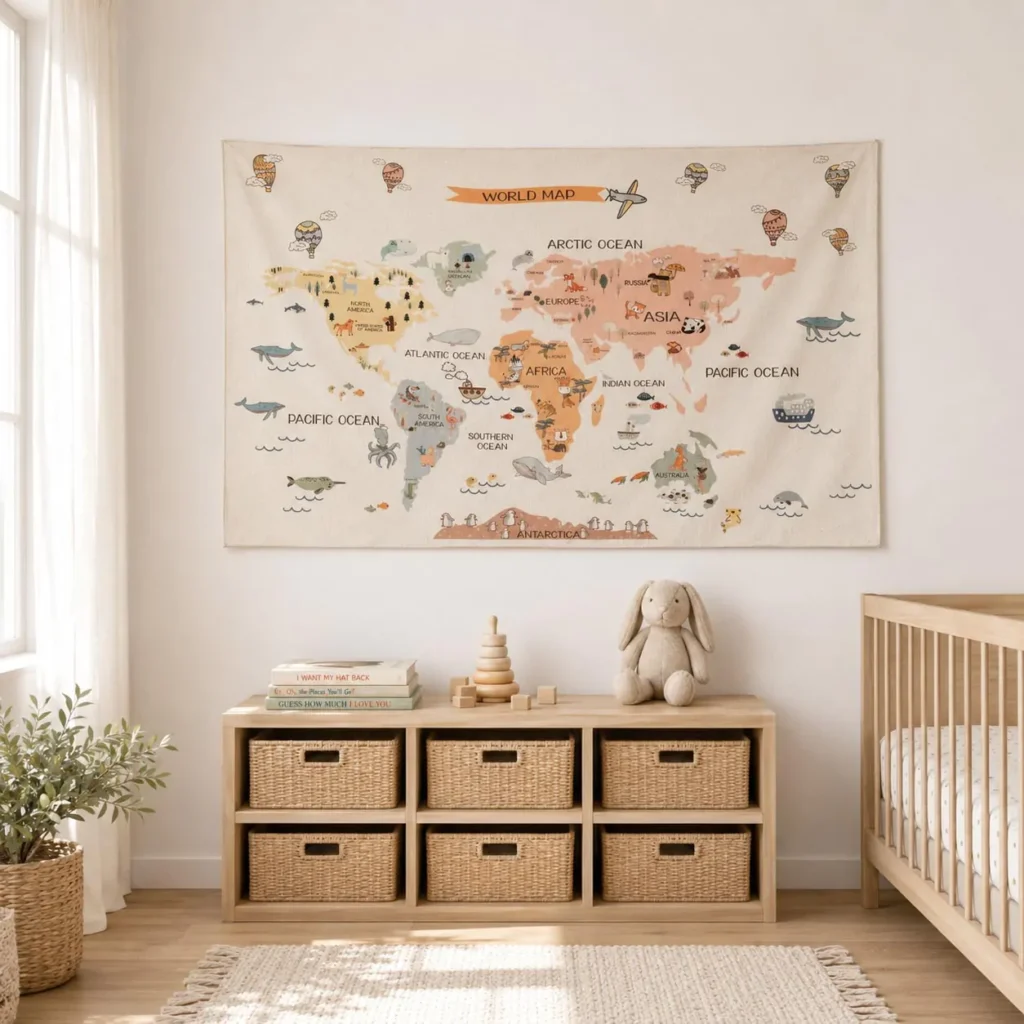
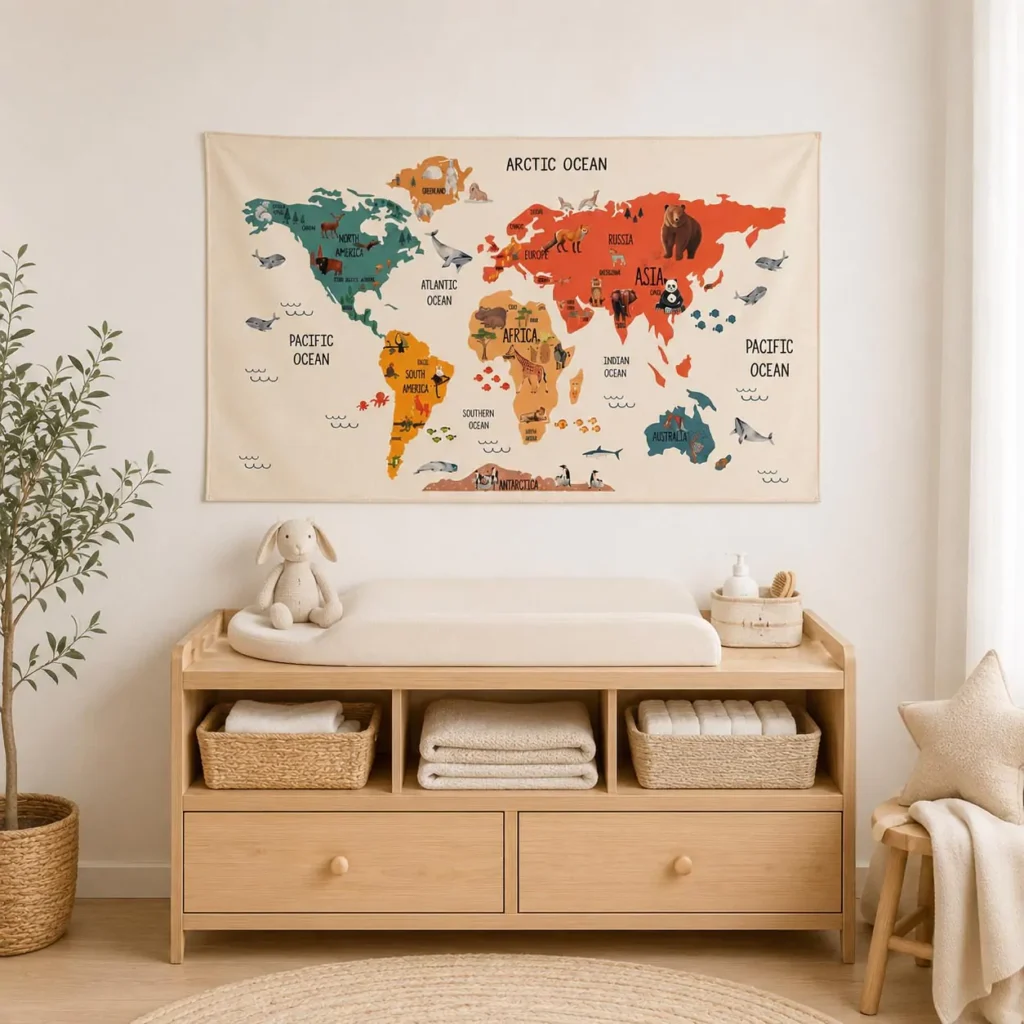
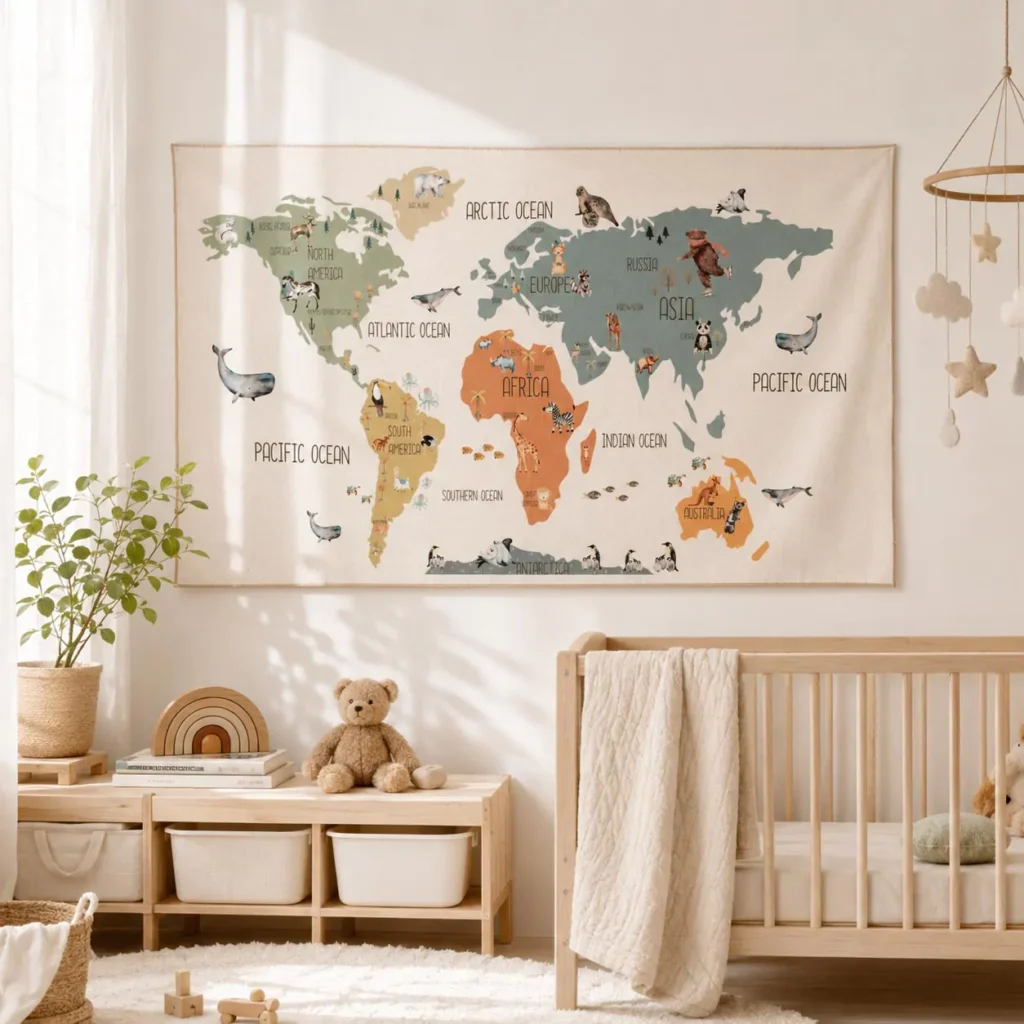
If your floor features a vibrant, multi-colored map, opt for neutral wall paint—such as warm beige, soft gray, or muted sage green. This allows the floor to stand out without clashing. You can easily create a layered, immersive environment by mirroring the geographical theme vertically. For instance, you can pair your rug with a matching world map wall decal to carry the theme upward without requiring heavy framed art. If you prefer a softer, more bohemian aesthetic, suspending a fabric world map wall hanging above the reading nook creates a beautiful, tactile synergy with the floor covering.
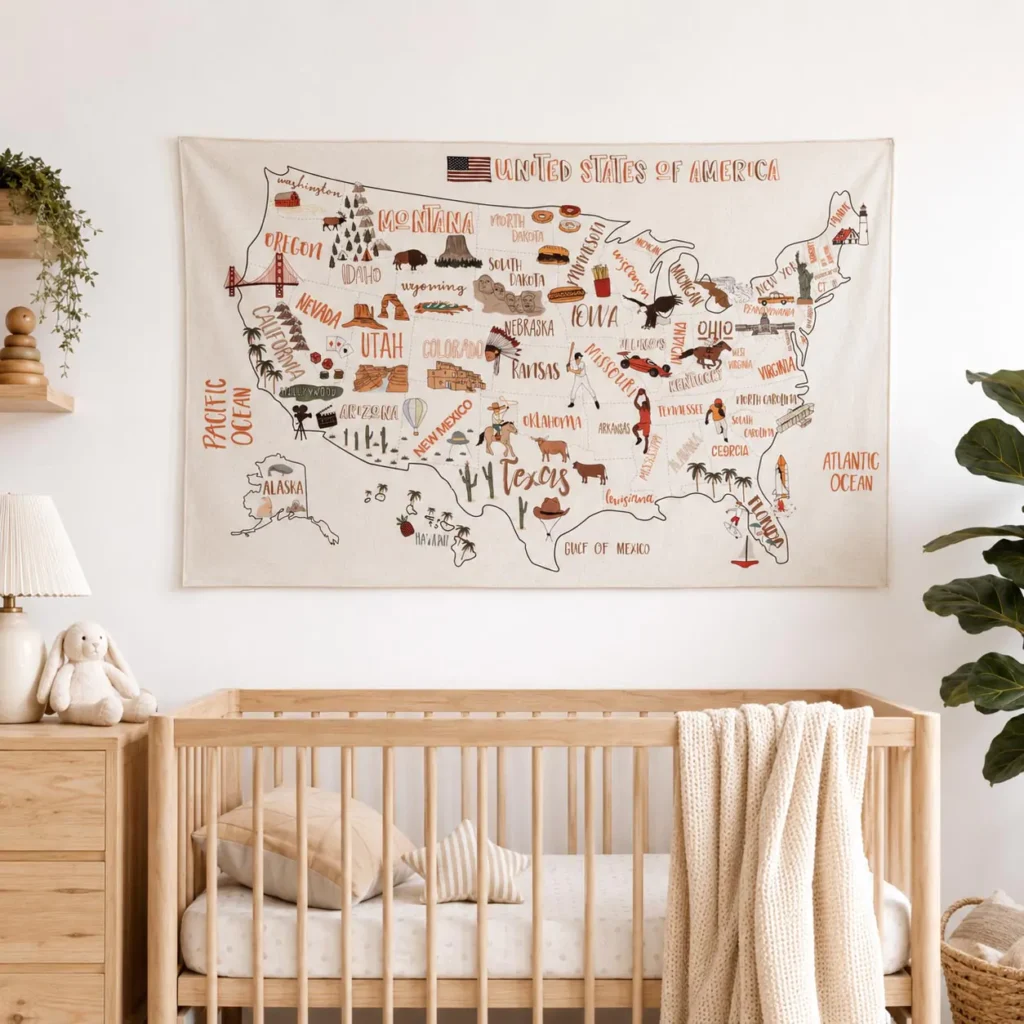
For larger spaces, creating distinct zones is an excellent design strategy. Use the washable rug strictly for the active play and toy storage area. Then, for the sleep zone near the crib, you might introduce elegant, framed world map wall art that utilizes a more muted, sophisticated color palette. Alternatively, for a highly customized look, integrating specific regional designs—like a detailed continent or country map decal—allows you to highlight specific areas of the globe that hold personal significance for your family, creating a deeply personalized and cohesive interior narrative.
Frequently asked questions
Will a washable kids rug shrink in the washing machine?
No, provided you follow the care instructions carefully. High-quality washable rugs are pre-shrunk during manufacturing. To prevent any accidental warping, always wash the rug in cold water on a delicate cycle and strictly avoid high-heat tumble drying.
Can I use a robot vacuum on a low-pile map rug?
Yes. Most modern robot vacuums easily transition from hard floors onto low-pile or flatweave washable rugs without getting stuck. The lack of deep, shaggy fibers allows the sensors to navigate the surface efficiently for daily dust maintenance.
Does the rug require an additional non-slip pad underneath?
Generally, no. Premium washable designs feature an integrated TPR (Thermoplastic Rubber) backing that securely grips hardwood, laminate, and tile floors. An additional pad is only necessary if you are placing it over an existing, highly plush carpet.
How often should I machine wash my nursery rug?
For general hygiene, washing the rug every 4 to 6 weeks is sufficient. However, for households with pets or active toddlers, or immediately following a significant spill or illness, you can safely machine wash it as frequently as needed without damaging the print.
Conclusion
Selecting a world map rug is an excellent way to introduce both practical hygiene and engaging design into your home. By prioritizing a machine-washable construction with a safe, non-slip backing, you ensure a durable surface that withstands the rigors of childhood play. Whether you are completing a minimalist nursery or outfitting a bustling playroom, understanding the dimensions and maintenance requirements guarantees a lasting, beautiful floor covering. Ready to anchor your child’s room with a stunning, easy-to-clean design? Explore our full collection today to find the perfect geographical centerpiece for your family’s space.