

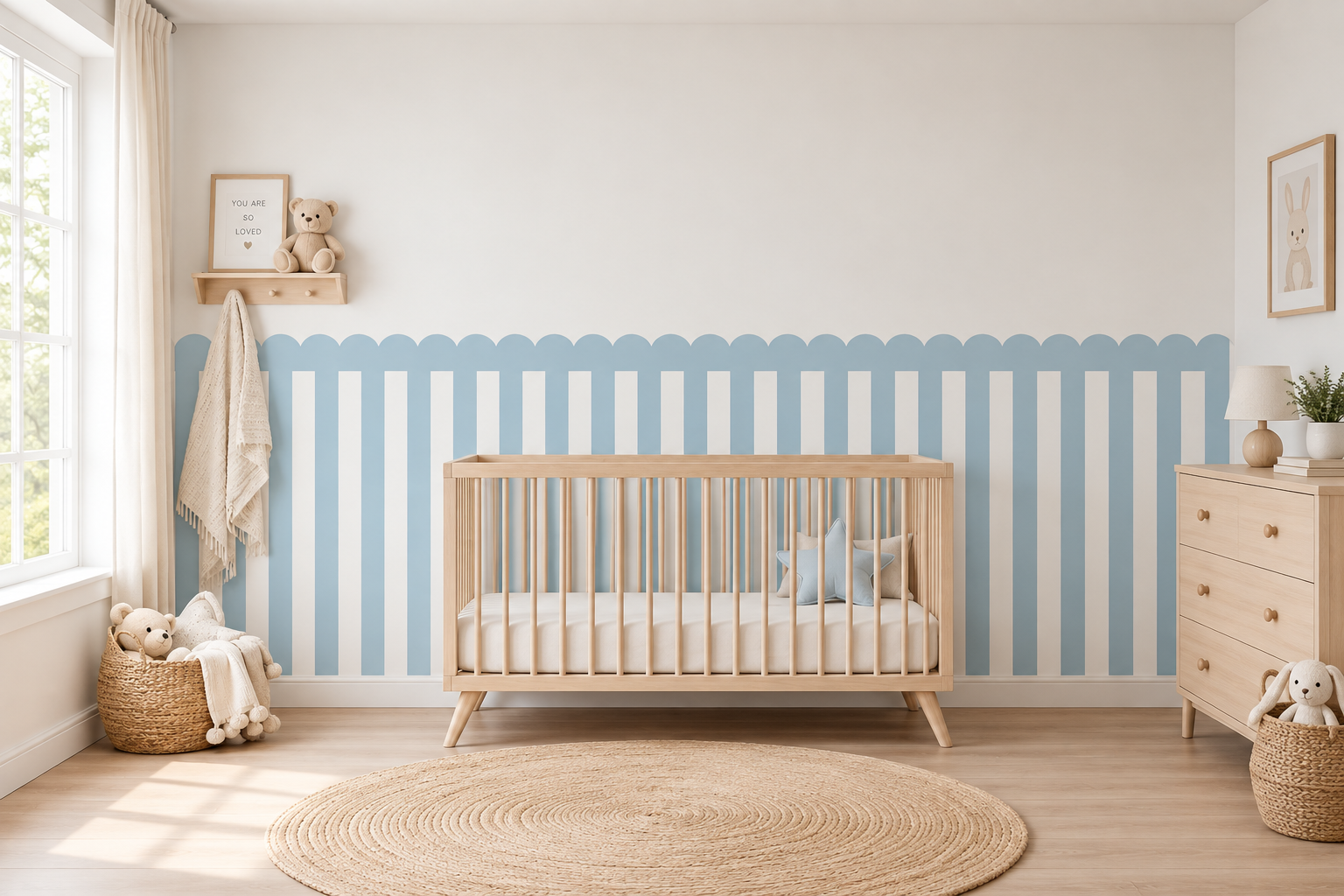
The most effective nursery accent wall ideas turn one carefully chosen wall into a focal point without making the entire baby room feel busy. A nursery with accent wall décor can use paint, wallpaper, wainscoting, murals, or removable wall decals depending on the desired style and how permanent the transformation should be. The right choice also considers room size, furniture placement, color palette, and how easily the décor may need to change as the child grows.
What is the best accent wall for a nursery?
The best nursery accent wall is usually a visually prominent, relatively uninterrupted surface that can establish the room’s theme without competing with several other focal points. Depending on the layout, this may be the crib wall, dresser wall, or the first full wall visible from the doorway.
| Method | Best for |
|---|---|
| Paint | Simple color blocking |
| Wallpaper | Full-wall pattern |
| Wall decals | Flexible illustrated themes |
| Wainscoting | Structured wall detail |
| Mural | Large-scale focal artwork |
A successful accent wall nursery does not need to contain the strongest possible color or the largest possible pattern. Its purpose is to give the eye a clear place to land.
The room should therefore be considered as a whole before choosing the wall treatment. If the rug, curtains, crib bedding, and storage already contain several patterns, a simpler accent wall may create better balance. In a minimal room, however, a larger botanical, woodland, celestial, safari, or world-map composition can carry more of the visual identity.
Scale matters too. A small motif repeated across a large wall creates a different effect from one oversized illustrated scene. Before purchasing décor, measure the usable wall area rather than the entire wall width; doors, windows, shelves, and tall furniture can significantly reduce the visible composition.
These decisions become easier once the specific wall has been selected.
What wall should be the accent wall in a nursery?
For anyone asking what wall should be the accent wall in a nursery, the strongest candidate is usually the wall with the clearest sightline and enough uninterrupted space for the chosen design. The crib wall is popular, but it is not automatically the right answer for every layout.
Consider four practical candidates:
- Crib wall: Creates an immediate nursery focal point and works well for larger illustrations or controlled color blocking.
- Dresser wall: Useful when a smaller decorative composition is preferred instead of a full mural effect.
- Entrance-facing wall: Makes the design visible as soon as someone enters the room.
- Longest uninterrupted wall: Offers more freedom for maps, landscapes, botanical scenes, or widely spaced decals.
For nursery accent wall ideas for a small room, the longest wall is not always the best choice. A compact room can benefit from one visually defined area rather than spreading strong colors or motifs around every surface. A dresser wall, for example, can provide enough space for a focal composition while leaving the remaining walls quiet.
Windows should also influence the decision. A wall divided by a large window may work beautifully for scattered stars, clouds, leaves, or small animals, but it gives a full-width mural less uninterrupted space.
Furniture placement comes next. Rather than choosing a wall treatment first and forcing furniture around it, map the crib, dresser, chair, shelves, and storage before finalizing the design. This makes it easier to keep the main artwork visible instead of accidentally hiding important elements behind furniture.
Once the location is established, the next decision is the visual direction.
Nursery accent wall ideas by style
The strongest nursery wall ideas usually begin with a clear theme rather than a collection of unrelated decorative objects. Woodland, botanical, safari, celestial, floral, world map, and minimalist designs can each create a distinctive focal wall while still leaving room for the nursery to evolve.
| Style | Palette | Wall direction |
|---|---|---|
| Woodland | Sage, cream | Trees, animals |
| Safari | Beige, clay | Animal scenes |
| Celestial | Blue, cream | Stars, clouds |
| Floral | Blush, sage | Botanical decals |
| World map | Neutral, multi | Educational map |
| Minimal | Cream, taupe | Sparse motifs |
Woodland nursery accent wall
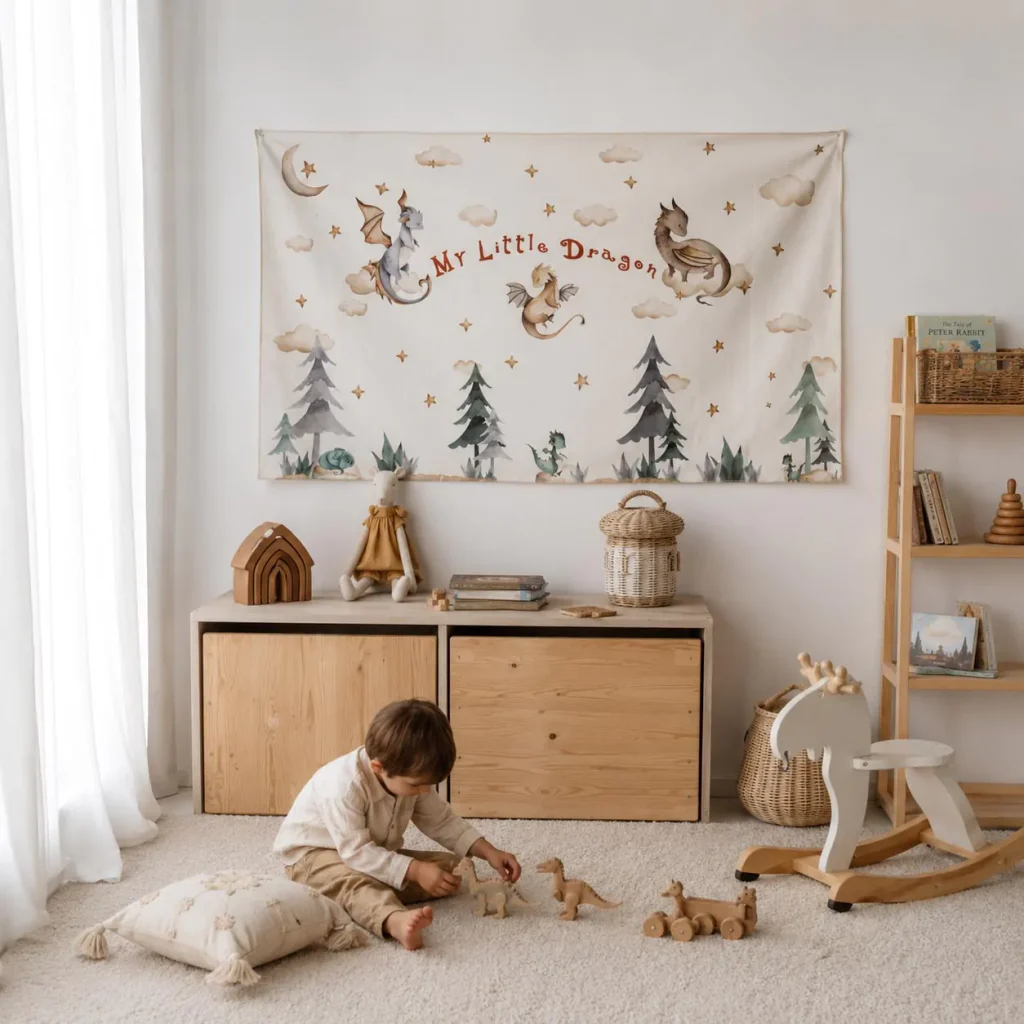
Woodland themes work naturally with sage green, cream, warm white, beige, and natural wood. Trees can create the main vertical structure while smaller animals, leaves, mushrooms, or birds fill the surrounding space.
Instead of repeating woodland motifs across bedding, rugs, curtains, and every wall, allow the accent wall to carry most of the narrative. The remaining décor can echo only two or three colors from the artwork.
Safari nursery accent wall
A safari wall can range from a large animal scene to individually positioned lions, giraffes, elephants, and botanical details. Warm beige, sand, muted green, terracotta, and natural wood create an easy foundation.
This style is especially suited to nursery accent walls because separate illustrated elements can be distributed according to furniture placement rather than forcing the room around one rigid composition.
Celestial nursery wall
Clouds, stars, moons, birds, and subtle sky motifs work well when the goal is a lighter focal wall. They can be placed across a pale blue wall, but they also work on cream, warm white, and soft neutral backgrounds.
Spacing becomes part of the design. Leaving intentional empty areas between celestial elements can create a more open appearance than filling every section of the wall.
World map accent wall
A large illustrated world map combines a focal point with a theme that can remain relevant beyond the earliest nursery stage. Neutral animal maps can work with beige and natural wood, while more colorful versions can supply the accent colors for an otherwise restrained room.
Dos Junior’s world map wall decals offer an example of how a single large composition can establish both the color direction and visual theme of a nursery wall.
Once the style is clear, the material used to create it becomes the next decision.
Paint, wallpaper or wall decals: which is better?
For a wallpaper or wall decals for nursery accent wall decision, there is no universal winner. Paint is useful for broad color changes, wallpaper provides continuous pattern coverage, and removable wall decals are better suited to illustrated compositions that may need to change later. Wainscoting adds architectural structure and can also be combined with color or decals.
| Option | Coverage | Changeability | Best use |
|---|---|---|---|
| Paint | Full | Lower | Color blocks |
| Wallpaper | Full | Lower–medium | Repeating patterns |
| Wall decals | Selective | Higher | Themes, illustrations |
| Wainscoting | Partial | Medium | Structured walls |
| Mural | Full/large | Lower | Statement scenes |
Nursery accent wall paint
Nursery accent wall paint is the simplest option when color itself is meant to create the focal point. Sage green, dusty pink, muted blue, warm beige, or terracotta can distinguish one wall while leaving the others lighter.
Paint also provides a useful background for another layer of decoration. For example, a sage wall can support pale woodland illustrations, while a warm cream wall can provide contrast for terracotta, brown, or green motifs.
Wallpaper accent wall nursery
A wallpaper accent wall nursery design works particularly well when the goal is continuous pattern coverage. Botanical repeats, small florals, stripes, and illustrated patterns can transform the whole surface at once.
Because the pattern occupies nearly the entire wall, furniture and textiles usually benefit from being quieter. Repeating the same strong pattern across several other room elements can reduce the focal effect.
Removable wall decals
Wall decals work differently because the wall itself remains visible between individual elements. This makes it possible to control spacing, scale, and composition more precisely.
Dos Junior’s wall decals can be considered when the room needs a themed focal point without covering the entire surface with a repeating pattern. For a deeper comparison of adhesive wall décor formats, the wall decals vs. wall stickers guide explains the distinction in more detail.
For parents comparing decals, wallpaper, murals, and other wall graphics, Types of Nursery Wall Graphics: Decal vs Wallpaper vs Mural vs Tapestry can also serve as the detailed material-selection guide rather than forcing every technical comparison into the accent-wall decision.
Material establishes the structure; color determines how strongly that structure reads in the room.
Nursery accent wall color ideas
Color should connect an accent wall to the rest of the nursery rather than make it feel like an unrelated surface. Neutral, sage, blue, pink, and earthy palettes can all work, but the accent wall needs at least one visual connection to furniture, textiles, or smaller accessories elsewhere in the room.
For readers planning the entire palette rather than only one wall, the Nursery Color Ideas guide can be used to choose the room’s base, supporting, and accent colors before selecting wall décor.
Neutral and cream
Cream, beige, warm white, oatmeal, and taupe create a versatile background for detailed illustrations. Instead of making the wall itself dramatically darker, the artwork can supply contrast through woodland animals, botanical motifs, maps, or earthy accents.
Neutral does not need to mean monochrome. A cream wall can support sage, rust, muted blue, dusty rose, or mustard details while remaining adaptable.
Sage green
Sage works as either the wall color or the accent within a lighter wall. A sage-painted focal wall paired with cream illustrations and natural wood furniture creates a more color-led composition; a warm white wall with sage botanical decals produces a lighter result.
Pink accent wall nursery
A pink accent wall nursery can move beyond bright or highly saturated pink. Dusty rose, blush, muted mauve, and warm clay-pink shades can pair with cream, beige, natural wood, or deeper botanical greens.
Floral illustrations are an obvious option, but woodland animals, stars, birds, and abstract shapes can prevent the palette from feeling restricted to one theme.
Blue and celestial palettes
Soft blue, blue-gray, and muted teal provide useful backgrounds for clouds, stars, moon motifs, birds, and ocean-inspired illustrations. Warm white and natural wood can soften cooler shades and connect the wall to the rest of the furniture.
The goal is not to find a universally correct nursery color but to create enough contrast for the focal design to remain visible. That becomes particularly important when the room cannot be repainted.
How can renters create a nursery accent wall without paint?
A renter friendly nursery accent wall without paint can be created by treating the existing wall color as the background and adding removable decorative layers. Wall decals are particularly useful for this approach because the theme can be introduced selectively rather than requiring an entirely new painted surface.
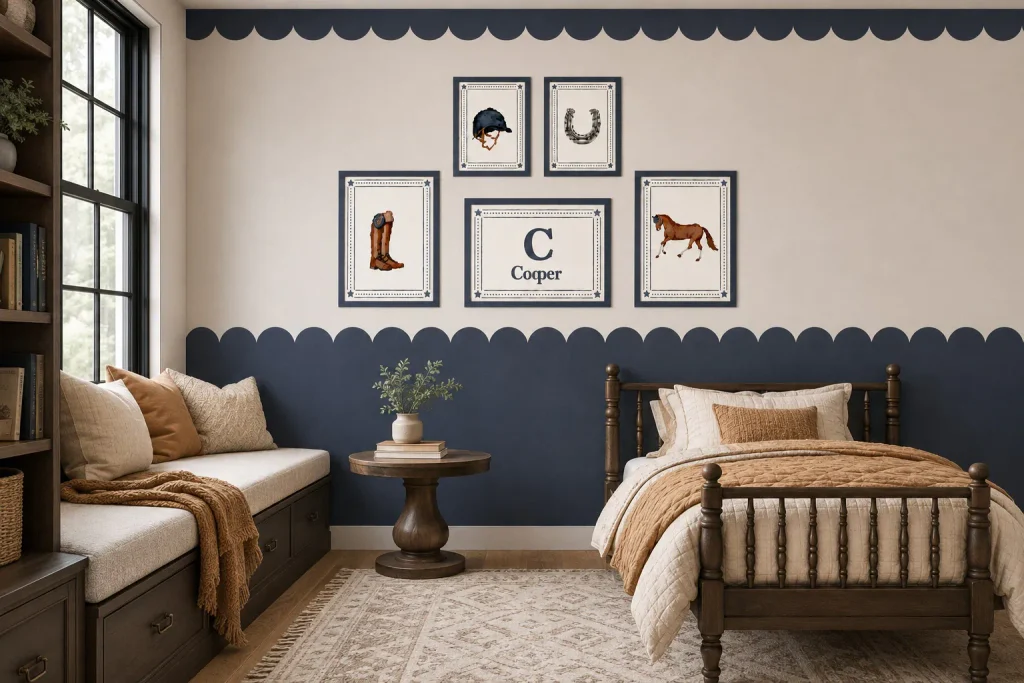
Start with the existing wall and identify whether it reads warm, cool, light, or dark. Then select artwork with enough contrast to remain visible.
A simple process is:
- Measure the usable wall area after accounting for furniture and openings.
- Choose one visual theme and a limited accent palette.
- Place the largest decorative element first.
- Build smaller elements around it while preserving negative space.
- Repeat one or two accent colors elsewhere through textiles or accessories.
A budget friendly nursery accent wall without repainting follows the same principle. Instead of spending the decorating budget across four walls, focus on one controlled composition and allow existing furniture and wall color to become part of the scheme.
Another option is a half-wall effect. Wainscoting-style decoration can visually divide a wall without requiring a full illustrated scene. Dos Junior’s wainscoting wall decals provide one route for creating that structured lower-wall appearance.
This approach also makes it easier to update the nursery later, which matters when the original baby-room theme no longer suits the child.
How can a nursery accent wall grow with your child?
A nursery accent wall can transition more easily into a toddler room when permanent surfaces stay relatively versatile and age-specific storytelling is concentrated in elements that can be changed. Instead of designing every surface around an infant theme, use the focal wall to carry the room’s most expressive imagery.
Some themes naturally have a longer visual lifespan:
- World maps can move from nursery décor toward an educational room feature.
- Woodland scenes can shift from gentle baby animals to broader nature themes.
- Botanical designs work across multiple ages when the palette is restrained.
- Celestial motifs can evolve into space, astronomy, or night-sky themes.
- Simple geometric forms can adapt to changing furniture and textiles.
This is where removable elements offer a practical design advantage. A neutral or softly colored wall can remain unchanged while the illustrations are updated as interests change.
For example, a cream nursery with a small animal scene may later become a nature-themed toddler room without replacing the dresser, rug, curtains, or wall color. The focal wall changes, but the expensive foundational pieces continue to work.
Scale should be considered with longevity in mind as well. Very small nursery motifs can feel visually young as the room transitions, while larger trees, maps, botanical forms, or landscapes can support a broader age range.
The best nursery wall design ideas therefore solve two problems at once: they make the room feel complete now while leaving a realistic path for the next stage.
Frequently asked questions
What wall should be the accent wall in a nursery?
Choose a prominent, relatively uninterrupted wall that works with the furniture layout. The crib wall, dresser wall, entrance-facing wall, or longest clear wall are common choices. The best option is the one that keeps the focal design visible without competing with windows, shelving, or several other patterns.
What are good nursery accent wall ideas for a small room?
Use one controlled focal area rather than several heavily decorated walls. Light paint, a smaller wallpaper section, spaced wall decals, or a half-wall treatment can add interest while preserving visual breathing room. Scale the artwork to the usable wall area, not the room’s total dimensions.
Is wallpaper or a wall decal better for a nursery accent wall?
Wallpaper is better for continuous, repeating coverage, while wall decals suit flexible illustrations and selective placement. The better option depends on the desired visual effect, wall condition, installation preference, and how likely the design is to change as the child grows.
What is the most budget-friendly way to make a nursery accent wall?
Cost depends on wall size, materials, installation, and the design selected. Using the existing wall color and decorating only one focal area can reduce the scope of the project. Compare total material and installation requirements for paint, wallpaper, decals, and other treatments before choosing.
Conclusion
The most useful nursery accent wall ideas balance visual impact with the realities of room size, furniture placement, permanence, and future changes. Paint can establish a bold color field, wallpaper can provide continuous pattern, while removable décor can build a more flexible illustrated focal point; the right solution depends on how the room needs to function now and how easily it should evolve later. For a themed wall that can work with an existing nursery palette, explore Dos Junior wall decals and choose a design whose scale, colors, and subject complement the room rather than compete with it.