

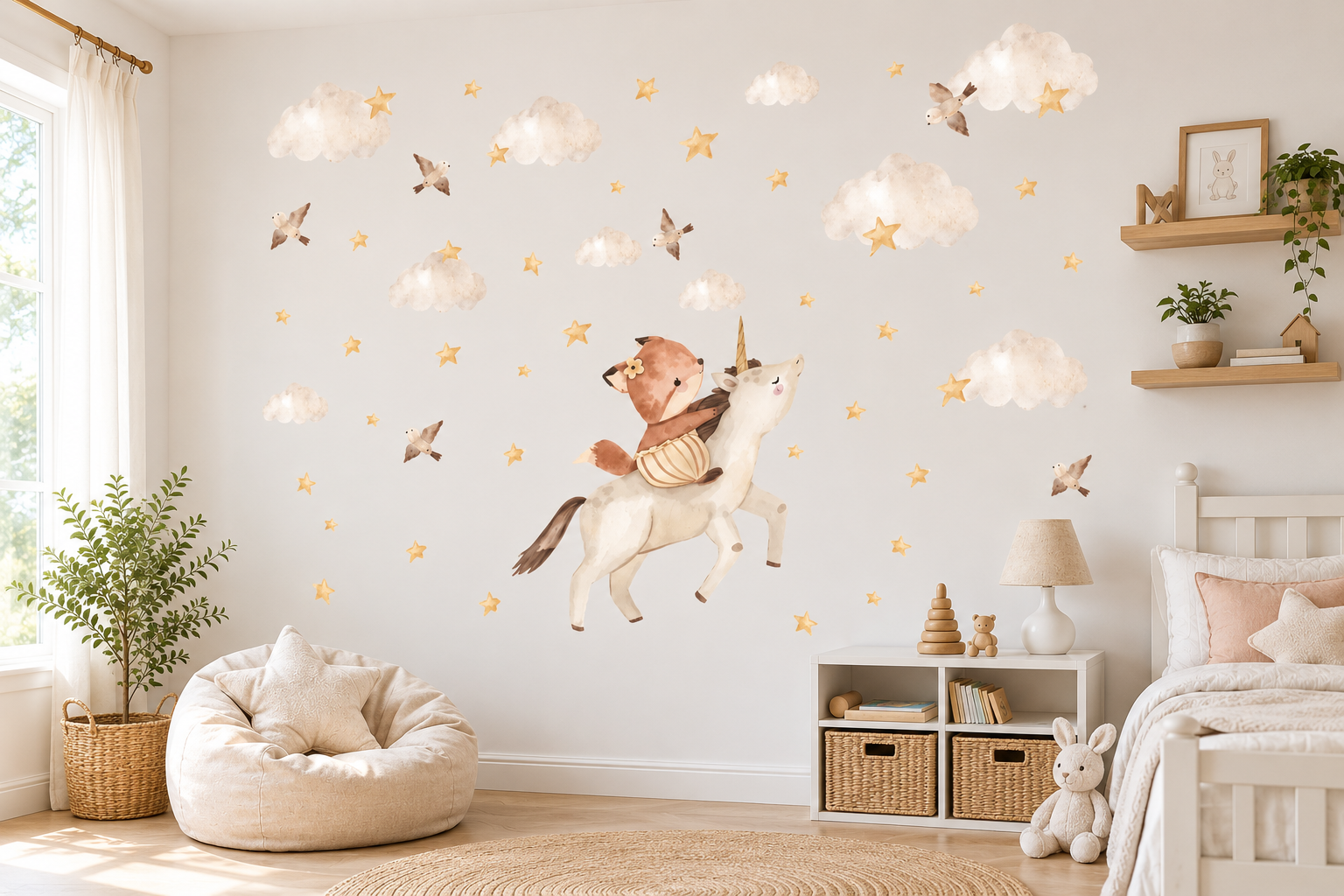
The best nursery color ideas combine a versatile base color with one or two supporting tones and carefully chosen accents. A successful nursery color palette should work across the walls, furniture, textiles, and décor rather than relying on a single paint shade. Warm neutrals, sage green, muted blue, dusty pink, and earthy tones can all create cohesive baby rooms when their undertones and contrast levels work together. The most flexible approach is to keep large surfaces relatively adaptable and introduce more personality through artwork, textiles, and removable wall décor.
What are the best colors for a nursery?
The best nursery colors depend on the room’s light, size, furniture, and desired style. Warm white and cream create a flexible foundation; sage introduces muted color; soft blue feels airy; dusty pink adds warmth; and earthy shades such as terracotta can provide stronger accents without requiring every surface to match.
| Palette | Works well with |
|---|---|
| Warm white + beige | Natural wood, botanical décor |
| Sage + cream | Woodland themes, light wood |
| Soft blue + warm white | Sky, ocean, cloud themes |
| Dusty pink + beige | Floral décor, walnut accents |
| Cream + terracotta | Safari themes, woven textures |
Instead of asking which single color is “best,” it is more useful to decide how three layers will work together: the background color, the supporting neutral, and the accent color. This makes the room easier to decorate now and easier to update as the child grows.
How do you choose a nursery color palette?
A practical nursery color palette starts with the elements that are hardest or most expensive to change. Flooring, large furniture, built-in storage, and existing wall treatments should influence the palette before smaller decorative pieces are selected.
For parents wondering what nursery colors work with natural wood furniture, warm whites, cream, muted greens, dusty blues, clay tones, and gentle pinks are particularly easy to coordinate because they complement rather than compete with the visible wood grain.
A useful starting framework is to give each color a specific job:
- Dominant color: walls or the largest visual surface.
- Supporting color: furniture, rug, curtains, or larger textiles.
- Accent color: wall decals, artwork, cushions, lamps, and smaller accessories.
This prevents a common decorating mistake: buying attractive individual items that do not create a coherent room once placed together.
Consider the room’s natural light
A paint sample can appear different at 9 a.m. and 5 p.m. Natural light, artificial lighting, flooring, and neighboring colors all affect how a shade reads in the finished room. Testing a sample on more than one wall before committing to a full room is more useful than choosing from a digital swatch alone.
Start with furniture if it is already purchased
White nursery furniture creates room for both cool and warm palettes. Natural oak often pairs easily with cream, sage, muted blue, and earthy colors, while darker wood can provide useful contrast against lighter walls.
The same principle applies to decorative themes. A woodland, floral, safari, or celestial theme does not require every object to share one exact shade. A controlled palette with repeated accent colors usually creates a more intentional result.
Neutral and gender-neutral nursery color ideas
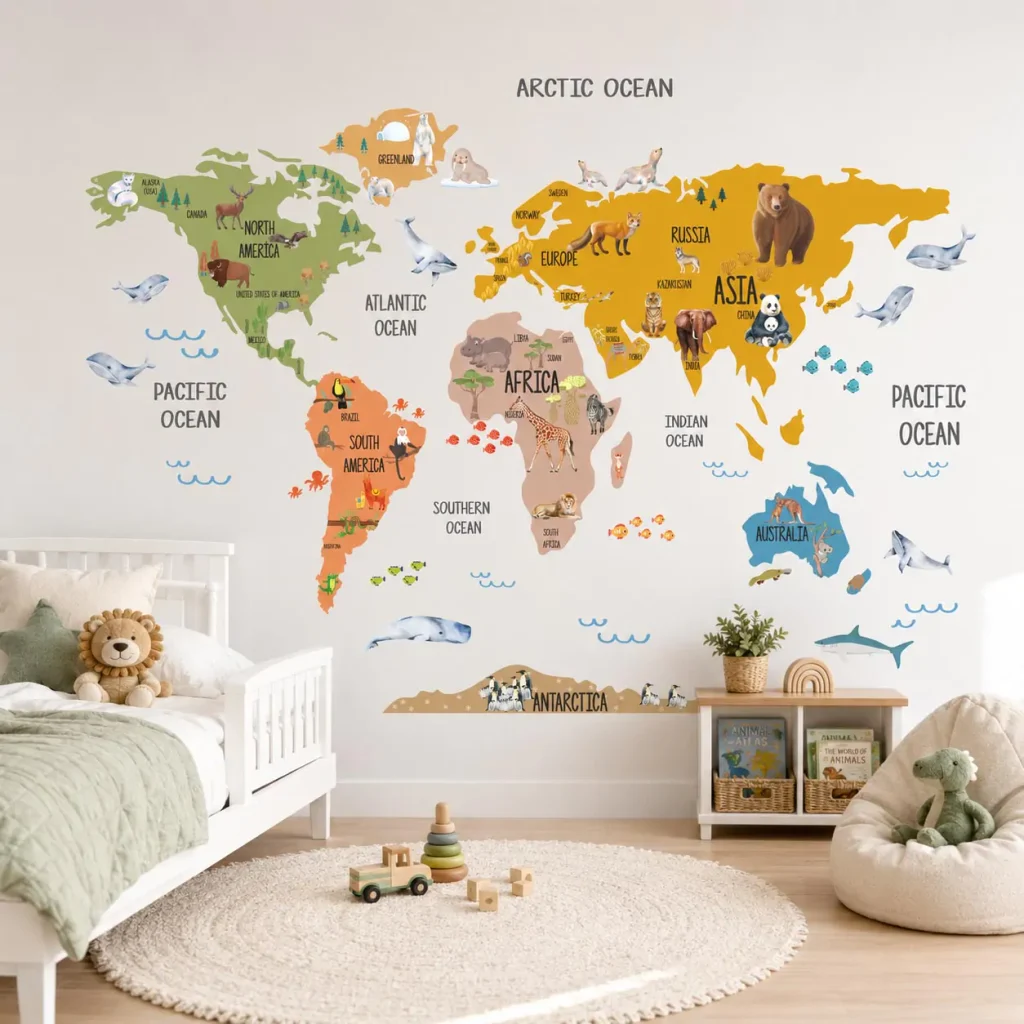
Neutral nursery color ideas can make a room feel cohesive without limiting it to plain white. Cream, oatmeal, beige, mushroom, warm gray, greige, and soft taupe can create a layered foundation, while wood, woven textures, and illustrated wall décor add visual interest.
For a gender neutral nursery color scheme for a modern baby room, consider combinations such as:
| Base | Secondary | Accent |
|---|---|---|
| Cream | Natural wood | Sage |
| Warm white | Beige | Terracotta |
| Greige | Cream | Olive |
| Soft taupe | White | Muted blue |
| Oatmeal | Light wood | Rust |
The advantage of neutral nursery colors is flexibility. If the main surfaces remain relatively versatile, smaller elements can change without requiring a complete redesign.
That becomes particularly useful during the nursery-to-toddler transition. A baby room decorated around subtle botanical details, for example, can later move toward woodland animals or a more adventurous nature theme while keeping the same walls and furniture.
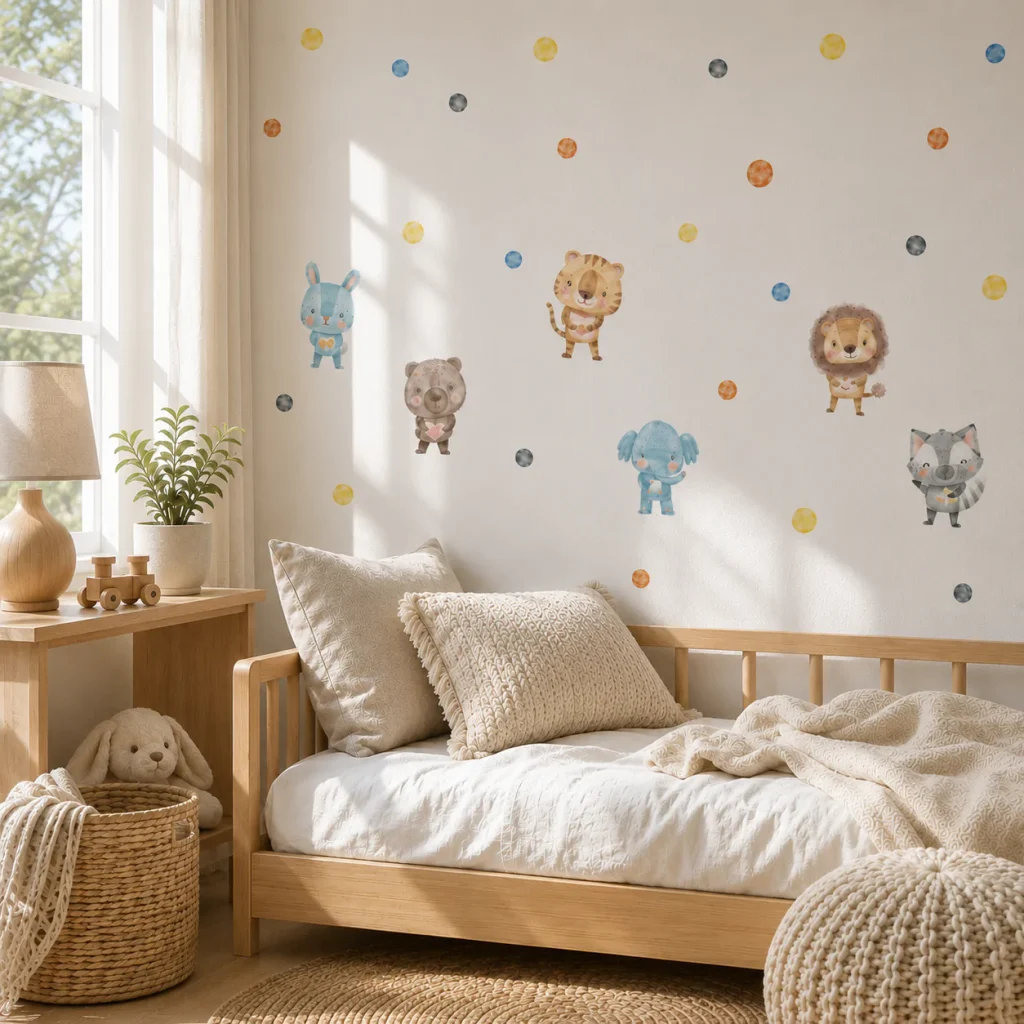
Cream and beige nursery palettes
Cream works especially well when pure white feels too stark. Pair it with beige and natural wood for a quiet base, then introduce one darker accent—olive, rust, muted brown, or dusty rose—to create depth.
Beige can also support illustrated wall décor because it provides a softer background than bright white. When choosing decals, however, compare the artwork against the actual wall tone. A pale beige illustration may lose definition on a similarly colored wall.
Gender-neutral does not have to mean colorless
A gender-neutral room can still use substantial color. Sage, muted teal, ochre, terracotta, clay, dusty blue, and forest-inspired tones can all sit within a neutral scheme when used deliberately.
Readers planning a fully gender-neutral room can continue with a dedicated Gender Neutral Nursery Ideas guide once that content is published. The color palette is only the starting point; furniture, wall art, textiles, and theme determine how the finished room feels.
Green, pink and blue nursery colors: which palette works best?
Green, pink, and blue can all work as baby room colors, but the effect changes dramatically according to saturation and the colors paired with them. Muted shades are generally easier to repeat across a room, while stronger shades often work better as controlled accents.
| Color | Pair with | Décor direction |
|---|---|---|
| Sage green | Cream, beige | Woodland, botanical |
| Olive | Warm white, tan | Nature, safari |
| Dusty pink | Beige, cream | Floral, storybook |
| Muted blue | White, light wood | Sky, ocean |
| Blue-gray | Warm white, walnut | Minimal, celestial |
Sage green nursery
Sage has become a useful choice for parents who want color without making the entire room visually dominant. A sage green nursery can combine sage walls with cream textiles, light wood furniture, and woodland or botanical illustrations.
If painting all four walls feels excessive, sage can instead appear on one feature wall, within wainscoting, or through decorative elements. Dos Junior’s guide to wainscoting wall decals offers another way to think about combining wall treatment and removable decoration.
Pink nursery colors
Pink does not need to create an entirely pink room. Dusty rose, blush, muted mauve, and warm pink can be paired with cream, taupe, wood, or deeper botanical greens.
A useful approach is to select one pink element as the visual anchor. If the wall is pink, keep large textiles quieter. If the walls are neutral, pink can move into illustrated florals, a rug, curtains, or smaller accessories.
Blue nursery colors
Muted blue can create an airy base for cloud, sky, ocean, animal, or travel-inspired rooms. Pairing blue with warm white or natural wood prevents the room from becoming visually cold.
For a more layered scheme, blue-gray can be combined with cream and one earthy accent. This creates enough contrast for decorative illustrations while preserving a restrained palette.
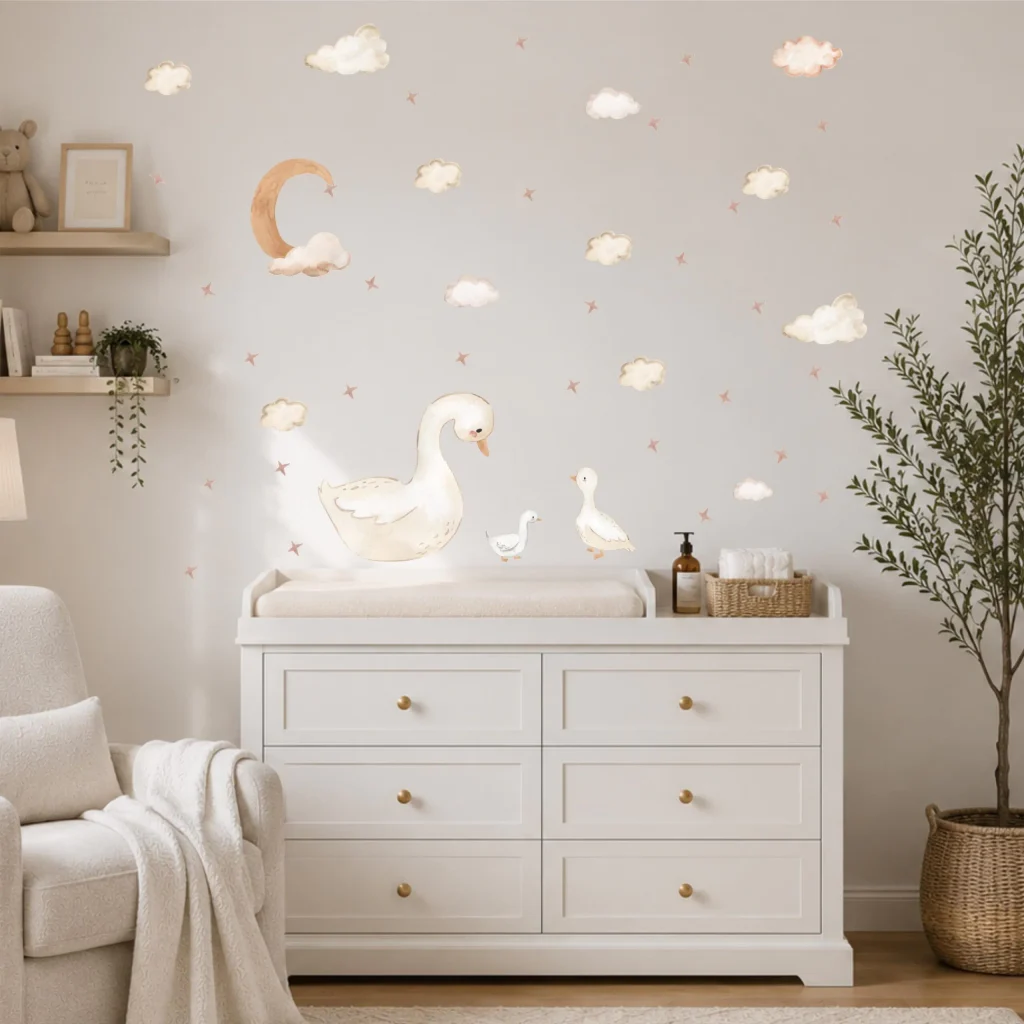
What nursery colors work best in a small room?
The best nursery colors for a small room are usually those that maintain visual continuity rather than dividing every surface into competing blocks of color. Warm white, cream, pale beige, soft sage, and muted blue can provide a flexible background, but layout, lighting, and contrast matter as much as the shade itself.
Three practical decisions can make a compact nursery feel more considered:
- Keep the largest surfaces within a related tonal family.
- Use one focal wall instead of distributing strong patterns around the entire room.
- Repeat the same accent color in two or three smaller areas to connect the space.
A small room does not automatically require white walls. A darker or more saturated feature wall can work when it has a clear purpose and the surrounding surfaces provide visual breathing room.
This is also where nursery wall colors and decorative scale need to be considered together. Oversized wall artwork on every wall can make a compact space feel busy, while one carefully placed scene can establish a focal point without filling the room with objects.
Parents decorating around a crib should also consider placement as part of the visual plan. The safe wall decor above crib guide explores practical considerations for this specific area.
How should wall decals match nursery colors?
Wall decals should complement the nursery paint colors without disappearing into the background or competing with every other decorative element. The easiest method is to compare the artwork’s lightest, darkest, and most prominent colors with the actual wall rather than matching only the product’s theme name.
For example:
| Wall | Decal direction | Supporting décor |
|---|---|---|
| Warm white | Botanical or woodland | Sage, tan |
| Cream | Safari or floral | Brown, terracotta |
| Sage | Cream woodland art | Natural wood |
| Dusty pink | Botanical/floral | Beige, burgundy |
| Soft blue | Clouds, stars, animals | White, gray |
Contrast is particularly important. A decal containing pale cream elements may be beautifully visible on sage or muted blue but less defined on an almost identical cream wall.
The reverse is also true: highly detailed, dark artwork may become the dominant visual element on a pale wall. That can work well for a feature wall, but it should be intentional.
Dos Junior wall decals can be used as part of this removable accent layer, allowing the theme to carry more personality while permanent elements remain versatile. Readers deciding between different forms of adhesive wall decoration can also review wall decals vs. wall stickers before choosing a format.
Nursery paint or removable wall decals for renters?
For a nursery paint or removable wall decals for renters decision, the key distinction is permanence. Painting changes the entire background and may require restoring the original color later, while removable wall décor can introduce a theme without redesigning every surface.
A renter working with white or neutral existing walls could keep the original background, then use textiles and decals to establish the palette. Someone with permission to paint can instead use a new wall color as the base and add removable artwork for the final layer.
The two approaches are not mutually exclusive. Paint establishes atmosphere; wall decals can supply illustration, scale, and theme.
How can you update nursery colors without repainting?
A budget friendly nursery color palette without repainting is possible when the existing wall color is treated as the base rather than as a limitation. Rugs, curtains, crib sheets, storage baskets, artwork, and removable wall décor can introduce a new accent family without the labor and material cost of repainting the entire room.
Start by identifying the undertone of the existing wall. A warm white works naturally with beige, terracotta, olive, and warm pink; a cooler white can support blue, gray, muted green, and cleaner pastel combinations.
Then choose one direction and repeat it selectively:
- Introduce one accent color through a rug or larger textile.
- Repeat that color in a smaller accessory.
- Add wall artwork that connects the base and accent colors.
- Remove unrelated decorative colors that make the palette feel fragmented.
This method is particularly useful when transforming a nursery into a toddler room. Instead of replacing furniture and repainting walls, the room can gain a new theme through removable elements.
For example, a cream-and-sage nursery can evolve from delicate botanical illustrations into a woodland theme while keeping the same furniture, rug, and wall color.
This layered approach also answers a common question about nursery color schemes: not every visible object needs to match. Repetition matters more than exact matching. A few related tones distributed intentionally across the room usually look more cohesive than dozens of accessories purchased in precisely the same color.
Frequently asked questions
What is the best color for a nursery?
There is no single best nursery color. Warm white, cream, sage, muted blue, dusty pink, and earthy neutrals are flexible options. The best choice depends on natural light, furniture, room size, and the decorative theme planned for the space.
What are the best gender-neutral nursery colors?
Cream, beige, sage green, olive, warm white, greige, muted blue, terracotta, and soft taupe can all work in gender-neutral nurseries. Combining one neutral base with one muted accent usually creates more depth than relying on a completely monochrome room.
Should nursery walls be painted or decorated with wall decals?
Painting works well for changing the room’s overall background, while removable wall decals are useful for adding illustrations and themes. Renters or parents expecting the décor to change as their child grows may prefer keeping walls versatile and using removable accents.
Are wall decals cheaper than repainting a nursery?
The answer depends on wall size, paint, labor, and the decal design selected. A decal can be more practical when only a feature area needs changing, while painting may make more sense when the entire room requires a new base color. Compare the total project rather than individual product prices.
Conclusion
The strongest nursery color ideas begin with a flexible base and build personality through supporting colors, textures, and carefully chosen accents. Instead of designing around one fashionable shade, parents can consider how wall color, furniture, natural wood, textiles, and decorative elements will work together—and how easily those elements can change as the baby room becomes a toddler space. Keeping permanent surfaces adaptable and using removable décor for more expressive themes can make future updates considerably simpler. To add illustration and character without rebuilding the entire palette, explore Dos Junior wall decals and choose designs that complement the room’s existing colors.