

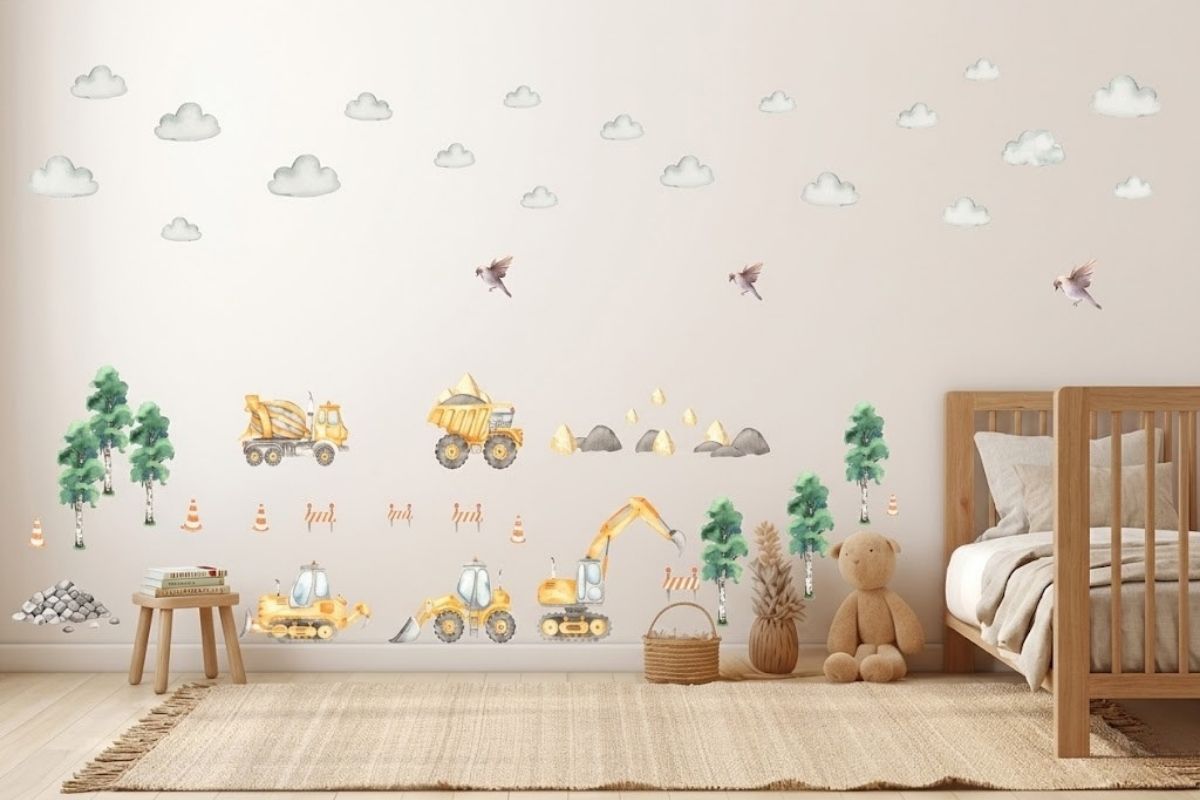
Safe wall decor above a crib is achievable without compromising style — the key is understanding weight limits, mounting methods, and material certifications before anything goes on the wall. Most nursery wall art incidents are preventable with the right hardware and the right product choices. This guide covers how to evaluate wall art for safety, how to hang it without damaging walls or risking falls, how to build a gallery wall that grows with the child, and what modern nursery decor looks like when it is designed to last.
What is safe wall decor above crib?
Safe wall decor above a crib refers to wall-mounted art, prints, or decorative objects positioned within or adjacent to the crib zone that meet three simultaneous criteria: secure mounting that prevents falls, non-toxic materials that do not off-gas into the nursery air, and appropriate weight and construction that minimizes injury risk if contact ever occurs.
Key facts:
- Maximum recommended weight for items hung directly above a crib: under 2 lbs (0.9 kg) per individual piece, per general nursery safety guidance
- Minimum clearance height: wall art should be mounted at least 12 inches above the top rail of the crib — beyond arm’s reach of a standing toddler
- VOC-free certification: look for GREENGUARD Gold or equivalent low-emission certification on framed prints and canvas art
- Mounting standard: toggle bolts or stud-anchored hooks rated for at least 3× the object’s weight; adhesive strips alone are not recommended for above-crib placement
- Frame material: avoid heavy wood or metal frames above the crib; lightweight PVC, foam-core, or unframed fabric prints eliminate hard-edge impact risk entirely
The distinction between decorative and safe is not about aesthetics — it is about the specific combination of weight, hardware, and material standards that make a piece nursery-appropriate. Establishing those criteria is the first step; the next is knowing which materials are genuinely non-toxic.
Is wall decor above the crib safe for your baby?
Yes — wall decor above a crib is safe when three conditions are met: the piece is lightweight, mounted into a stud or with rated hardware, and made from materials that do not release volatile organic compounds (VOCs) into the enclosed nursery environment. The risk is not the concept of wall art above a crib — it is improperly secured or chemically unsuitable products placed there without evaluation.
The fall risk is the most cited parental concern, and it is addressable with specific hardware. A framed print weighing under 2 lbs, secured with a stud-mounted hook rated to 10 lbs, has a negligible fall probability under normal conditions. The physics are straightforward: the load is a fraction of the rated capacity, and the anchor point is structural. Where falls occur, they almost universally involve adhesive mounting strips applied to textured or painted drywall — a surface where adhesive performance degrades by up to 40% within 12 months according to manufacturer stress-test data.
The chemical risk is less visible but equally important. Conventional framed prints, MDF backing boards, and certain canvas materials off-gas formaldehyde and other VOCs during the first 6–12 months after manufacture. In a small, enclosed nursery — typical US nursery size is 100–150 square feet — those emissions concentrate rapidly. GREENGUARD Gold certification sets the most stringent indoor air quality standard for children’s products, requiring VOC emission levels safe for chronic 24-hour exposure in a closed room.
The aesthetic concern — that safe equals bland — is the easiest to dismiss. Lightweight fabric prints, GREENGUARD-certified paper art, and foam-backed wall decor exist across every modern design style, from Scandinavian minimalism to warm earthy nursery palettes.
Understanding what makes nursery wall art safe informs exactly what to look for when selecting pieces.
Essential safety tips for choosing nursery wall art
Selecting non-toxic nursery wall art requires evaluating three product dimensions that standard retail listings rarely disclose upfront: material composition, surface coating, and backing board content. Each dimension carries a distinct chemical risk profile relevant to a baby’s nursery environment.
Material and coating safety:
- Inks and dyes: water-based inks are the safest option; solvent-based inks off-gas more aggressively and are identifiable by a persistent chemical odor when the product is first unboxed
- Canvas coatings: some canvas prints are treated with acrylic varnish containing low levels of isocyanates — look for products specifying “water-based varnish” or no topcoat
- Wood and MDF frames: MDF (medium-density fiberboard) uses urea-formaldehyde resin as a binder; solid wood or formaldehyde-free MDF (labeled CARB Phase 2 compliant or better) are the safer alternatives
Certifications to look for:
| Certification | What It Covers | Nursery Relevance |
|---|---|---|
| GREENGUARD Gold | VOC emissions, chronic exposure | Highest standard for enclosed children’s spaces |
| OEKO-TEX Standard 100 | Harmful substances in textiles | Relevant for fabric prints and textile wall hangings |
| CARB Phase 2 | Formaldehyde from composite wood | Relevant for MDF-backed or wood-framed art |
| CPSC compliance | Physical safety standards | Relevant for 3D wall objects and hanging mobiles |
One practical test before purchasing: if a product arrives with a strong chemical odor and the manufacturer cannot provide certification documentation, that odor indicates off-gassing that has not yet dissipated. Air the piece outside for 48–72 hours minimum before bringing it into the nursery — or choose a certified product that eliminates the question entirely.
Dosjunior designs nursery wall decor with material safety as a foundational criterion — each piece is intended for the spaces where children spend the most time, and that philosophy is reflected in material selection from concept to production.
With material safety established, the practical challenge is getting art onto the wall without damaging it.
How to hang nursery wall art without damaging walls
Damage-free hanging is the most searched sub-topic within nursery wall decor — particularly among renters, who represent approximately 35% of US households with children under 5 according to Census Bureau housing data. The good news is that damage-free installation and structural security are not mutually exclusive; they require different tools for different wall art weights.
For lightweight pieces under 1 lb: Removable adhesive strips (3M Command-style) perform reliably on smooth painted drywall when applied correctly. The critical steps most people skip:
- Clean the wall surface with isopropyl alcohol and allow 60 seconds to dry completely before applying the strip
- Press firmly for 30 seconds at full hand pressure — not just finger pressure
- Wait 1 hour before hanging the piece — the adhesive requires cure time to reach rated capacity
- Never use on textured, wallpapered, or freshly painted surfaces (paint needs 7 days minimum to cure before adhesive strips will bond reliably)
For pieces between 1–5 lbs: A single small nail (1.25-inch finish nail at a 45-degree downward angle) creates a hold rated to approximately 20 lbs in standard drywall, leaves a hole under 2mm in diameter, and is repairable with a dab of spackle at move-out. This is the most practical solution for gallery wall prints in a permanent home.
For pieces above 5 lbs or 3D objects: Stud mounting is the only appropriate method. Use a stud finder to locate the 16-inch-center framing, and drive a 2.5-inch wood screw directly into the stud. This creates an anchor point rated to 80+ lbs — structurally appropriate for anything being placed in proximity to a child’s sleep space.
With secure installation methods in place, the next step is thinking about wall art as a composed collection rather than individual pieces.
Creating a child-proof and stylish gallery wall in a nursery
A nursery gallery wall multiplies the visual impact of individual pieces while distributing weight across multiple anchor points — a safety advantage over a single heavy framed piece. The design principle is straightforward: more lightweight pieces, better distributed, create a more visually interesting and structurally safer arrangement than one large item above the crib.
Three gallery wall layouts that work in standard nursery dimensions:
- Linear horizontal arrangement: 3–5 prints in a horizontal row, centered 12–18 inches above the crib rail; each piece under 1 lb; total visual width matches the crib width (approximately 54 inches)
- Asymmetric cluster: 4–7 mixed-size prints grouped off-center above a dresser or changing table rather than directly above the sleep surface; allows more creative freedom with sizes and weights
- Vertical column: 2–3 prints stacked vertically on a narrow wall section beside (not above) the crib; maximizes vertical space in small nurseries under 100 square feet
Composition tips for cohesion:
- Limit the palette to 3 colors maximum drawn from the existing nursery scheme — the map or art print should reference at least one wall color or furniture tone
- Mix one typographic piece with one illustrative piece for visual rhythm without visual competition
- Use consistent frame style (or go frameless entirely) across the gallery; mixed frame styles read as unintentional rather than curated
Dosjunior’s nursery wall decor pieces are designed with gallery-wall pairing in mind — the colorways, proportions, and subject matter (world maps, geographic illustrations, nature themes) are intended to work as collections that build naturally from a single starter piece.
Selecting modern nursery decor that lasts beyond the baby stage
The most cost-effective nursery wall decor is the kind that does not need replacing when the child turns three. Modern nursery decor that is designed with longevity in mind shares specific characteristics: subject matter with lasting relevance, colorways that are not exclusively infantile, and construction quality that survives the child’s growing curiosity.
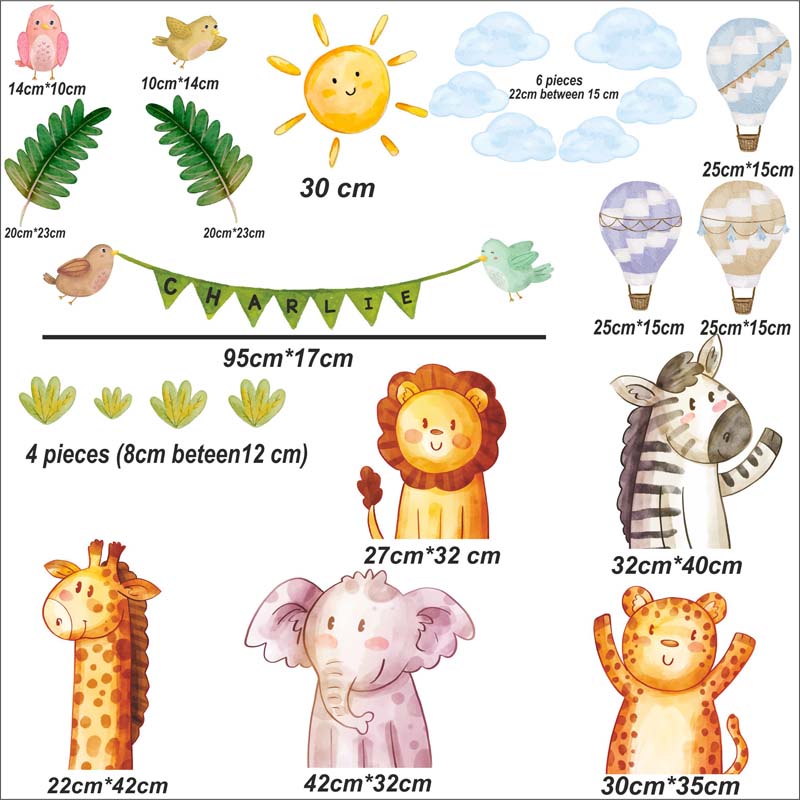
Subject matter is the most important longevity factor. Animal alphabet prints and purely abstract shapes tend to feel age-inappropriate by age 4–5. World maps, constellation charts, nature illustrations, and architectural prints carry educational relevance that deepens as the child grows — the same piece that decorates a newborn’s nursery becomes an interactive learning tool at age 3 and a reference point at age 7.
Colorway longevity by nursery style:
| Style | Colors That Age Well | Colors That Date Quickly |
|---|---|---|
| Scandinavian | Warm white, dusty rose, sage | Pastel mint, baby yellow |
| Earthy/boho | Terracotta, ochre, natural linen | Bright primary blocking |
| Modern minimal | Charcoal, ivory, warm grey | Neon accents, high-contrast primary |
| Gender neutral | Muted blue, sand, forest green | Binary pink/blue combinations |
Construction durability determines whether a piece survives a nursery environment physically. Lightweight foam-backed prints resist denting from accidental contact. UV-resistant inks prevent fading from window light exposure — relevant in south or west-facing nurseries where direct sun exposure can fade conventional prints within 12–18 months. Fabric wall hangings with reinforced rod pockets maintain their shape without sagging over time.
Choosing nursery wall decor as a long-term room investment rather than a temporary decorative phase changes the economics significantly — one well-chosen set of prints serves the child from newborn through early school years without replacement.
Frequently asked questions
Is it safe to hang anything above a baby’s crib?
Yes, when the piece weighs under 2 lbs, is mounted with stud-anchored or rated hardware, and is positioned at least 12 inches above the crib’s top rail. Lightweight fabric prints, foam-backed art, and GREENGUARD Gold certified paper prints are the safest material choices for above-crib placement. Avoid heavy frames, glass, or 3D objects directly above the sleep surface.
What type of wall art is non-toxic for a baby’s nursery?
Look for GREENGUARD Gold certification for VOC emissions and OEKO-TEX Standard 100 for textile-based pieces. Water-based inks, formaldehyde-free backing boards (CARB Phase 2 compliant), and uncoated or water-varnished surfaces are the safest material combination. If a product arrives with a strong chemical odor and carries no certification, air it outside for a minimum of 72 hours before placing it in the nursery.
How do you hang nursery wall decor without ruining the walls?
For pieces under 1 lb on smooth painted drywall, removable adhesive strips work reliably when applied to a clean, alcohol-wiped surface and given 1 hour of cure time before loading. For pieces between 1–5 lbs, a small finish nail at a 45-degree angle leaves a sub-2mm hole repairable with spackle. For anything heavier, stud mounting with a 2.5-inch screw is the only structurally appropriate method.
At what age can you add more wall decor to a nursery?
From birth, lightweight certified pieces hung above the safe height threshold are appropriate. After 12 months, when the child begins pulling up and standing, audit all pieces within arm’s reach of the crib rail — anything below 18 inches above the top rail should be relocated. Full gallery wall expansion is most practical after 18 months, when the child’s reach range and the sleep environment both stabilize.
Conclusio
Safe wall decor above a crib is a matter of three verifiable factors: weight, mounting method, and material certification — none of which require compromising on style or design quality. The nurseries that get this right combine lightweight non-toxic art with correct hardware, placed at the right height, and chosen with enough longevity in mind that the same pieces work when the child is five as they did at five weeks. That combination — safe, beautiful, and lasting — is the standard every nursery wall deserves.
Browse Dosjunior’s Nursery Wall Decor Collection to find pieces designed from the ground up for children’s spaces — where safety standards and design intention are part of the same brief.