

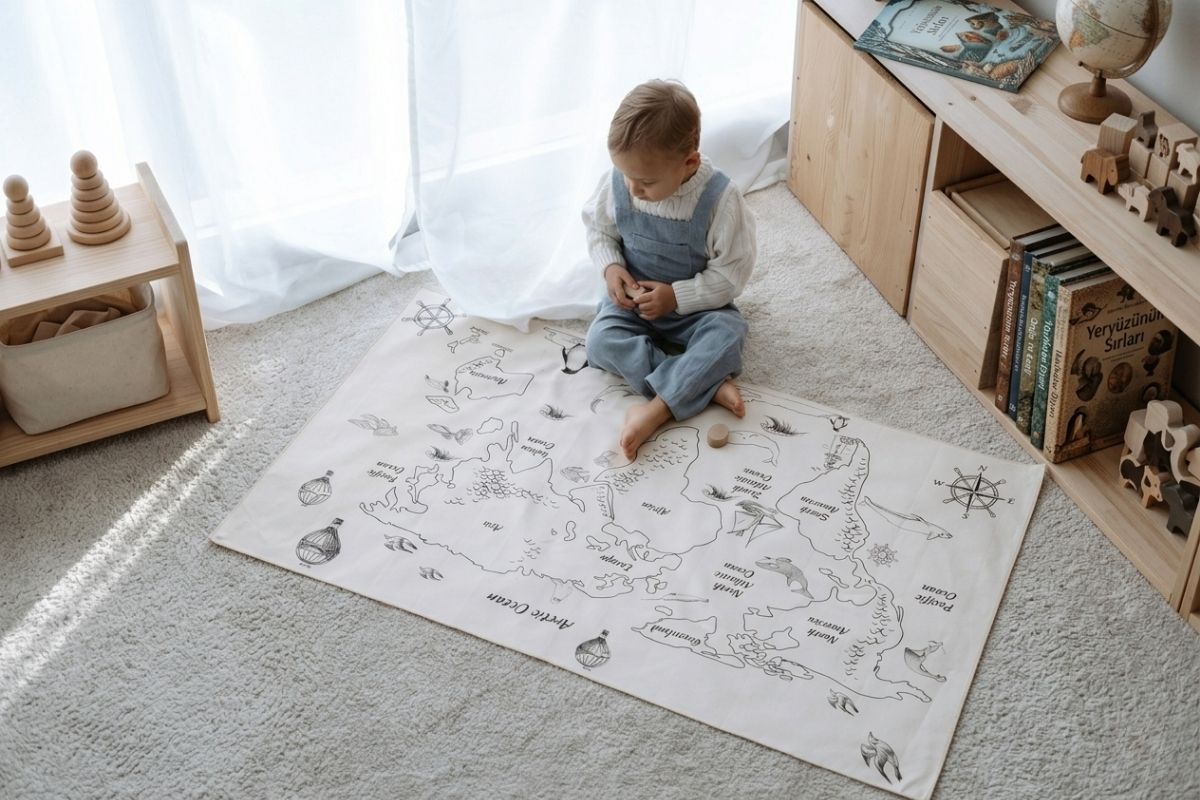
A kids’ room that grows with your child doesn’t need a full makeover every two years. At Dos Junior, we hear it from parents constantly: you pour your heart into a newborn nursery, and by the time your toddler is pulling up on the furniture, the whole room already feels too babyish. It doesn’t have to.
Build a little adaptability in from the start — through your furniture, your textiles, and wall decor you can change without repainting — and the same space carries your little one from their first nap to their first day of school. This guide walks you through every stage from birth to age six, and shows you the specific choices that make each transition feel like a small update instead of a big project.
Why a kids’ room that grows beats designing for one stage
Most nursery advice is written for a single moment. The newborn setup. The toddler refresh. The big-kid room. So parents invest heavily in stage-specific furniture and decor — and watch it feel outdated within 18 to 24 months.
There’s a calmer way: design with the transitions in mind from day one. In practice, that means three things.
- A base palette that lasts. Choose muted, warm neutrals over a highly specific theme. Soft sand, sage, oat, dusty terracotta — colors that look right at six weeks and still look right at six years.
- Furniture that adjusts. Convertible cribs and height-adjustable desks span multiple stages instead of one.
- Wall decor you can update without repainting. This is where peel-and-stick fabric wall decals earn their keep — more on that below.
There’s a money case here, too. A full nursery-to-toddler transition adds up fast: new bedding, new decor, sometimes new furniture. Designing for flexibility shrinks how much of that cost is unavoidable.
And there’s a developmental case. Children settle into spaces that feel familiar even as they change. A room that evolves gradually — new pieces layered onto a stable base — is gentler than a complete transformation. The wall color, the layout, the overall feeling of the room stay steady while the details grow up.
What a newborn actually needs from their room
A newborn’s room has one job above all others: protect sleep. For the first three to four months, your baby spends most of each day asleep, and the room directly shapes how well that sleep goes.
Your design priorities are simple:
- Darkness — blackout blinds or curtains that fully block daylight during naps.
- Soft sound — rugs, curtains, and cushions that absorb echo and soften ambient noise.
- Visual calm — walls and decor without high-contrast patterns that overstimulate during short wake windows.
- An easy layout — clear, accessible paths between the crib, the changing area, and your feeding chair.
This is the stage where simplicity serves your baby best. A neutral wall, one or two meaningful pieces of wall art, and a growth chart on the room’s main wall are plenty. The growth chart goes up now not because your newborn will use it yet — they won’t — but because placing it early means it’s already in the right spot when they begin pulling to stand, usually around nine to twelve months.
One thing to skip: heavily themed wall decor built around a single character. A theme that feels perfect for a newborn often feels babyish to a two-year-old — and that’s exactly what pushes parents into an earlier overhaul than they wanted.
Looking for that first calm, neutral wall piece? Browse our nursery wall decal collection for hand-painted, muted-palette designs.
How the room changes when your baby starts moving (6–18 months)
Once your baby starts rolling, crawling, and pulling to stand, the room’s job expands. It stops being only a sleep space and becomes an active exploration zone. This shift usually begins around six months and intensifies through the first year.
A few adjustments make a big difference:
- Open up floor space. Clear a generous area for movement. A rug with real texture — not just color — gives sensory feedback and quietly defines the play zone.
- Bring things low. Books, toys, and tactile objects at floor level invite independent exploration.
- Mind the wall at standing height. Anything within a standing baby’s reach (roughly 80–90 cm from the floor) should be flat, smooth, and firmly adhered.
That last point is exactly why so many parents choose fabric wall decals over rigid or hard decor at this stage. Our decals are PVC-free, hand-painted on breathable woven fabric, and made with eco-certified, non-toxic inks — so the surface your curious baby is patting, pointing at, and (let’s be honest) occasionally tasting is one you can feel good about. They press flat to the wall with no sharp edges and no residue.
This is also the first stage where wall decor becomes interactive. A large world map wall decal hung at child height — lower than adult eye level — gives a standing or newly walking baby a surface to engage with. Animals, landmasses, and color regions turn into pointing-and-naming moments long before words fully arrive.
Your growth chart becomes functional now, too. Mark height every three to six months and you create a small ritual your child starts to look forward to — and a physical record that quietly becomes one of the most meaningful objects in the room.
What changes when a toddler room replaces the nursery (18 months–3 years)
The move from nursery to toddler room is the biggest design shift of early childhood. The crib becomes a toddler bed or floor bed, the changing table retires, and the room suddenly needs to store a fast-growing pile of toys, books, and art supplies.
Here’s where to focus:
- Transition the bed. A floor bed or low toddler bed lets your child climb in and out on their own — supporting independence and lowering fall risk.
- Make storage reachable. Open shelving at child height, organized consistently, feeds the toddler love of order and “I do it myself.”
- Add a small creative corner. A pint-sized table and chair, sized for your child right now, ideally near natural light.
Wall decor can get richer here. Where the newborn room needed visual calm, the toddler room rewards visual richness — details worth coming back to. A detailed world map, with animals in their native regions, illustrated continents, and gentle watercolor color, gives your toddler new things to find and name over months of looking.
This is also the moment removable wall decals truly shine. You can add them to a neutral wall with no painting, reposition them if you rearrange the room, and peel them away cleanly when your child’s taste moves on — no flaking paint, no sticky mess. Parents in our community tell us this again and again: the freedom to change their mind without damaging the wall is half the appeal. For a kids’ room designed to grow, that flexibility isn’t a nice-to-have. It’s the whole point.
How the room shifts as your child nears school age (4–6 years)
Between four and six, most children begin structured learning: pre-reading, early writing, number recognition, and a real curiosity about the wider world. Now the room needs to support a third mode beyond play and sleep — quiet, focused activity.
Design for it like this:
- Create a study zone. A desk or table away from the bed, ideally by a window, with good task lighting.
- Make books visible. Forward-facing shelves at child height invite far more independent reading than spine-out storage, because your child can actually see the covers.
- Edit ruthlessly. As possessions pile up, rotating toys in and out of storage keeps the visual calm that helps concentration.
Educational wall decor really comes into its own at this age. That world map is no longer just something pretty on the wall — it’s a tool for early geography, cultural curiosity, and bedtime conversation. Four- and five-year-olds start naming continents, finding countries from a story or a show, and connecting the map to places your family loves.
The growth chart deepens, too. A child who can read their own name, understand the numbers, and look back at earlier marks gains a concrete sense of their own history — how much they’ve grown, and over how long.
Which decor pieces work across all stages, 0 to 6
Not everything has to be age-specific. A few choices serve your child beautifully from birth through early school — and they’re the ones worth prioritizing in any room built to grow.
| Decor piece | Why it works across every stage |
|---|---|
| Wooden growth chart | Functional from first steps; more meaningful with every mark you add |
| World map wall decal | A visual object at 12 months; a real learning tool at age five |
| Neutral textile wall hanging | Adds warmth and absorbs sound at every age |
| Muted-palette wall decal set | Adapts to room changes without clashing with new pieces |
The thread running through all four: their value grows over time instead of expiring. A growth chart marked at 18 months, 2 years, 3 years, and 5 years is a richer object at five than it ever was at two. A world map your child has looked at since infancy becomes familiar in a way that quietly supports learning — they know the shapes long before they know the names.
If you buy just one piece to anchor the room across all six years, our handcrafted wooden growth charts are the place to start.
Frequently Asked Questions
When should I transition from a nursery to a toddler room?
Most families make the move between 18 months and two and a half years, usually prompted by the switch from crib to bed. There’s no single right age. The transition works best when your child shows readiness for more independence — climbing out of the crib, or gravitating toward self-directed play.
How do I design one room that works for both a baby and a toddler at the same time?
Keep the base neutral — wall color, flooring, main furniture — and let decor do the differentiating. A single room can serve a six-month-old and a three-year-old at once when the layout separates sleep from play, storage sits at the older child’s level, and the wall decor rewards different kinds of attention at different stages.
Are removable wall decals safe for a baby’s room?
Ours are. Dos Junior wall decals are PVC-free, hand-painted on breathable woven fabric with eco-certified, non-toxic inks — no vinyl, no harsh chemicals. They press on smooth and flat, and they peel away cleanly without damaging your paint, which makes them a favorite with renters and with parents who like to refresh a room as their child grows.
Are wooden growth charts better than wall-decal versions?
Both record height accurately — it comes down to what matters more to you. A wooden growth chart is portable, so it moves with your family when you relocate and never needs reapplying. A wall-decal version blends more seamlessly into the room’s design. Many families keep one of each in different homes.
What’s the one piece worth buying from birth that still matters at age six?
A quality world map wall decal is the most developmentally durable choice across the whole 0–6 range. It’s a calming visual object for infants, a pointing-and-naming game for toddlers, and a genuine geography and culture lesson for preschoolers and early readers.
A room that grows up gently
A room that grows up gently
A kids’ room that truly grows with your child is built on a handful of deliberate early decisions: a neutral base palette, furniture that works across stages, and wall decor chosen for how long it stays relevant rather than how it photographs on day one. Get those right, and the transitions — newborn to crawler, toddler to preschooler — become small, happy updates instead of full overhauls.
If you’re at the very beginning, start with the two pieces that anchor the room across every stage: a wooden growth chart and a world map wall decal. Both are hand-painted in our Texas studio, both are PVC-free and baby-safe, and both come with free worldwide shipping. More than 1,400 families have already made them the heart of a room their child won’t outgrow.