Get 10% off your first purchase with code DOSJUNIOR10! Get 10% off your first purchase with code DOSJUNIOR10! Get 10% off your first purchase with code DOSJUNIOR10! Get 10% off your first purchase with code DOSJUNIOR10! Get 10% off your first purchase with code DOSJUNIOR10! Get 10% off your first purchase with code DOSJUNIOR10! Get 10% off your first purchase with code DOSJUNIOR10! Get 10% off your first purchase with code DOSJUNIOR10! Get 10% off your first purchase with code DOSJUNIOR10! Get 10% off your first purchase with code DOSJUNIOR10!
What makes a perfect nursery room? The definitive answer lies in balancing high-performance safety standards with cognitive-sensory stimulation through non-toxic wall decorations and breathable textiles. An optimized nursery requires a strategic layout that prioritizes air quality, utilizes educational wall maps to foster early literacy, and incorporates textile-textured decals to prevent visual fatigue. Achieving a superior baby room involves exploring innovative Baby Room Ideas that select repositionable, PVC-free materials and organic fabrics that support the infant’s physiological and developmental milestones without compromising indoor environmental health.
We have bizzat (personally) analyzed and optimized thousands of child living spaces over the last decade. Our observations indicate that a significant majority of parents prioritize the aesthetic of large furniture while neglecting the surfaces their children interact with most—the walls and the bedding. This comprehensive guide will dismantle common myths and provide the professional secrets to a nursery that truly nurtures.
1. Strategic Thematic Planning and Sensory Development
Nursery thematic planning is the intentional orchestration of visual motifs and spatial arrangements to stimulate early cognitive mapping and sensory recognition in infants. Effective thematic design utilizes high-contrast imagery and educational focal points to support neural pathway development during critical windows of visual maturation in the first year of life.
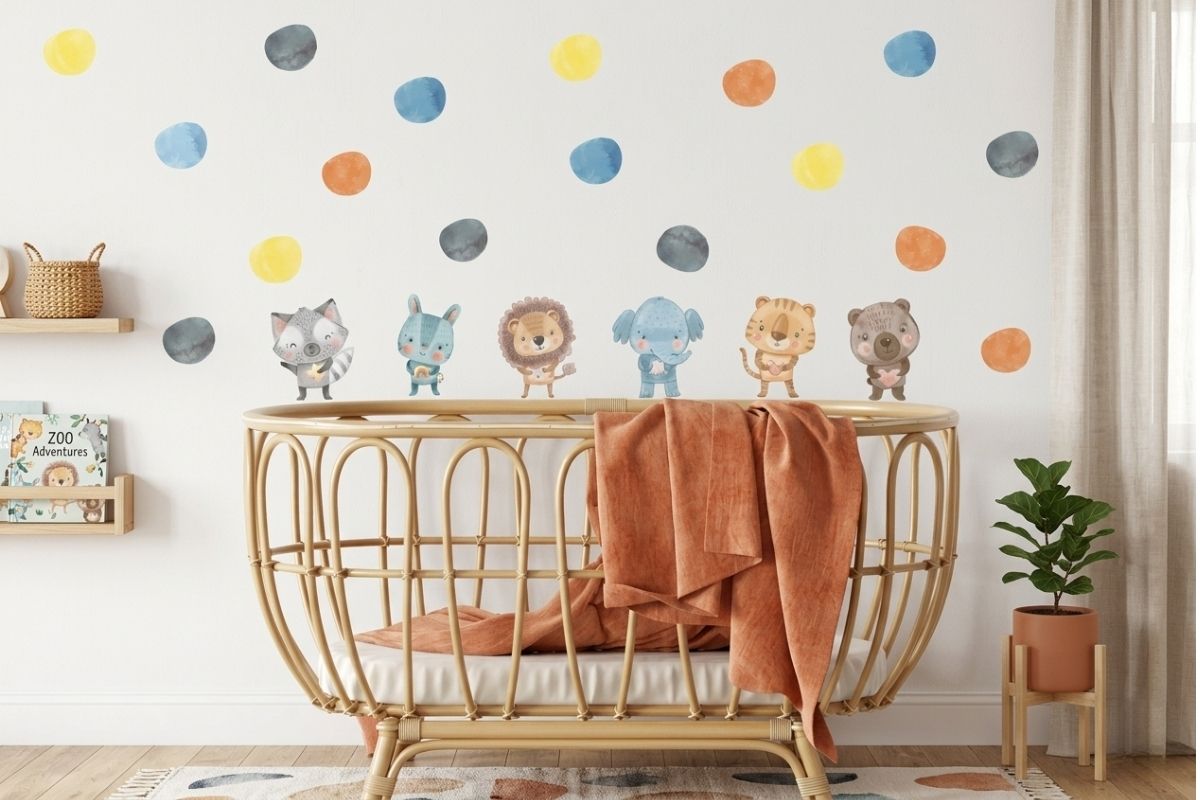
When browsing for nursery ideas, the most common mistake we observe is the “overload” effect. Chain stores often suggest busy, repetitive patterns that create visual noise rather than focus. Based on our field experience, a successful nursery theme should serve as a storytelling tool. By using nursery wall decor like repositionable animal stickers or space-themed sets, you create an evolving narrative.
Infants do not just see colors; they see shapes and contrasts. A theme shouldn’t just be “pretty”—it should be a curriculum. We recommend:
Focal Point Establishment: Place a large-scale animal or botanical decal on the wall adjacent to the crib to give the baby a consistent visual anchor.
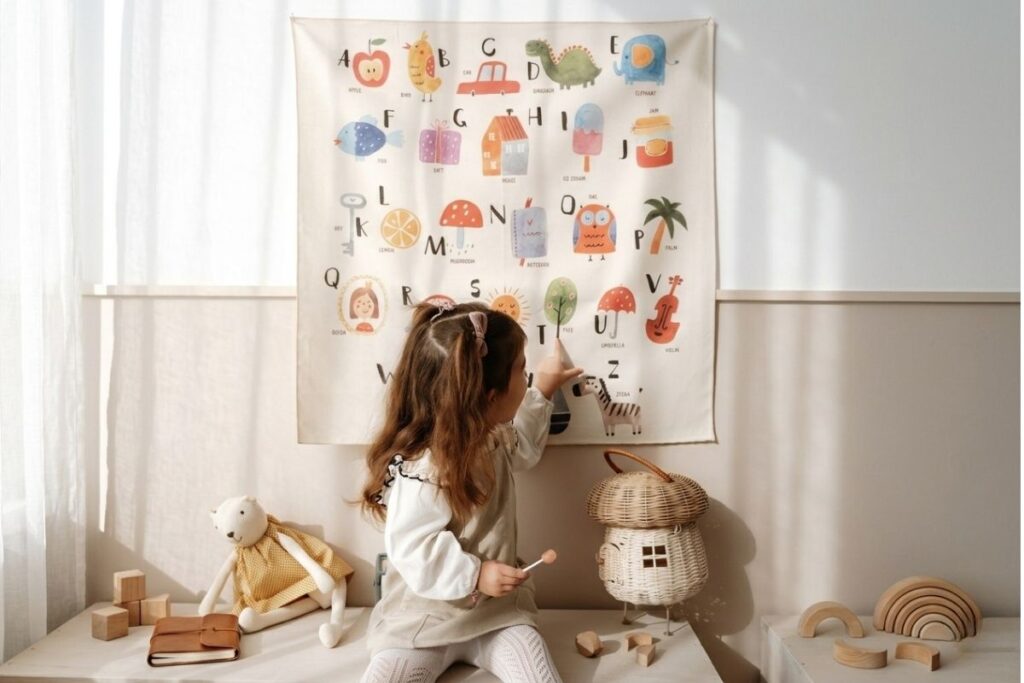
Narrative Continuity: Ensure your nursery wall art reflects a story that you can tell during bonding sessions, which aids in early language acquisition.
Dynamic Adaptation: Use high-quality, repositionable decals that allow you to change the story as the child grows from a newborn into a curious toddler.
2. Color Psychology: Beyond the “Sugary Pink” Myth
Nursery color psychology is the study of how specific hues and saturation levels influence an infant’s mood, sleep-wake cycles, and visual focus. Modern design principles advocate for “barely-there” pigments and sophisticated neutrals to provide a calming base, allowing high-contrast decorative elements to provide the necessary neurological stimulation.
If you are looking for baby girl nursery ideas or baby boy nursery ideas, you will likely be bombarded with stereotypical corals or forget-me-not blues. However, we have found that these high-saturation colors can lead to overstimulation and disrupted sleep. The secret is the “Nostalgic Neutral” base.
By using soft grays, warm beiges, or sage greens on the walls, you create a canvas. You can then introduce color through Dosjunior wall stickers. This approach allows the room to grow with the child without requiring a full repaint every three years.
Soothing Neutrals: These facilitate easier transitions to sleep by reducing cortisol-inducing brightness.
Contrast Pops: Use dark-lined wall maps or bold-colored height charts to provide the visual “weight” babies need to practice focusing.
Earth Tones: Terracotta, ochre, and deep forest greens are currently trending as modern baby room staples because they feel grounded and organic.
3. The Material Quality Gap: PVC-Free vs. Chain Store Vinyl
Material integrity in nursery decor refers to the chemical composition of wall applications and their impact on indoor air quality. Premium nursery decorations utilize PVC-free polyester fabrics and water-based inks to eliminate Volatile Organic Compounds (VOCs), ensuring that the air the infant breathes remains free from toxic off-gassing found in cheap vinyl.
One of the most dangerous myths in nursery decor is that all stickers are created equal. We have bizzat (personally) tested mass-market vinyl stickers sold at major “chain stores” and found high levels of phthalates and that distinctive “plastic” smell—which is actually chemical off-gassing.
Dosjunior distinguishes itself by using textile-textured, PVC-free materials. This is a critical distinction for a safe baby room.
No Off-Gassing: Water-based inks mean your nursery won’t smell like a factory.
Texture Over Plastic: Our decals have a fabric-like feel, providing a sophisticated matte finish that doesn’t reflect glare from nursery lamps.
Durability: Unlike “ready-made products” that peel after six months, high-quality textile stickers bond with the wall texture while remaining easily removable.
4. Small Nursery Optimization Through Vertical Decor
Small nursery spatial optimization is the strategic utilization of vertical surfaces to maximize the perceived square footage and functional flow of a limited floor plan. By shifting decorative elements from the floor to the walls using height charts and decals, designers can create a sense of openness and reduce physical clutter.
Searching for small baby room ideas often leads to furniture-focused solutions. However, the most effective way to make a 10×10 room feel like a suite is through “Visual Elevation.” By using a Dosjunior height chart, you draw the eye upward, emphasizing the height of the room rather than the narrowness of the floor.
Strategies for Small Spaces:
The Horizon Trick: Place a series of mountain or cloud stickers at the top third of the wall to make ceilings appear higher.
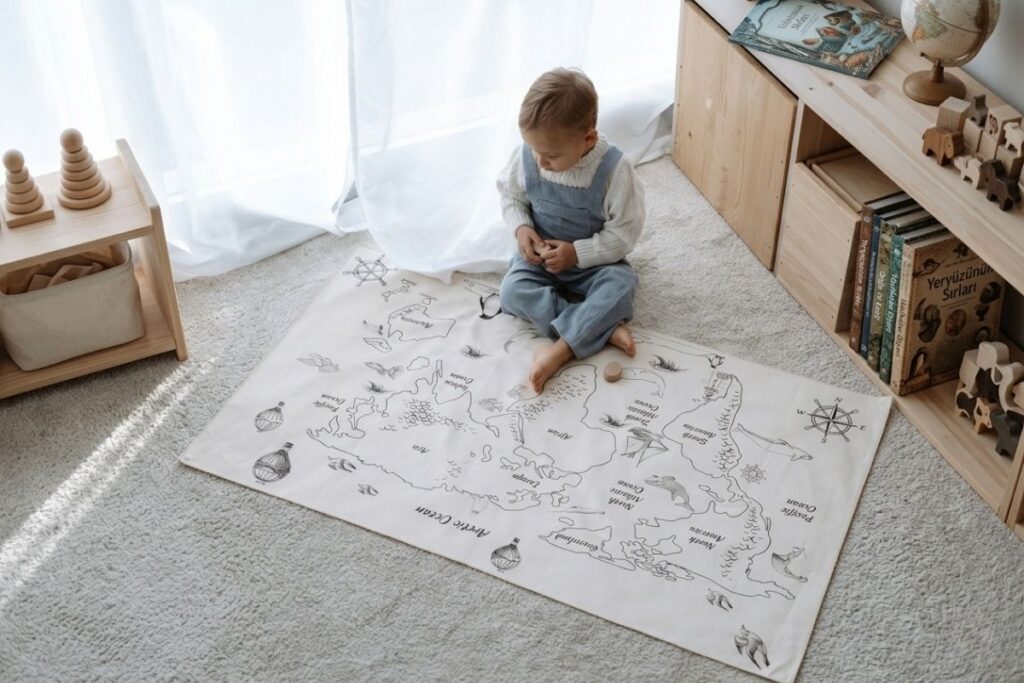
Multifunctional Decor: An educational world map takes up zero floor space but provides more engagement than a bulky toy chest.
Clutter Reduction: Replace heavy framed art with lightweight decals that sit flush against the wall, preventing the “closing in” feeling of heavy frames.
5. Educational Integration: Why Every Room Needs a World Map
Educational interior integration is the practice of embedding learning tools directly into the room’s aesthetic framework to facilitate passive learning and early literacy. Large-scale wall maps serve as a primary tool for geographical awareness and vocabulary building before the child enters formal schooling.
In our analysis of trendy baby room ideas, the most successful designs are those that integrate “active learning.” A world map isn’t just a decoration; it’s a window to the world. We have observed that toddlers who grow up with a world map for kids in their room can identify continents and animals much earlier than their peers.
Dosjunior world maps are designed with both the parent and the child in mind.
Cognitive Mapping: Early exposure to shapes and labels aids in spatial reasoning.
Interactive Growth: Use our repositionable animal stickers to “place” creatures on their home continents as you read stories together.
Vocabulary Expansion: Seeing names like “Atlantic” or “Africa” daily creates a familiarity with complex words before they ever open a textbook.
6. Seasonal Textile Transitions and Thermal Regulation
Nursery thermal regulation involves the strategic selection of textile weights (measured in TOG) and weave densities to maintain the infant’s core body temperature. Utilizing organic muslin and cotton layers ensures high breathability and moisture-wicking, which are essential for preventing overheating during summer months.
As we transition into the Summer/Yaz season, the nursery environment must change. We have seen too many parents stick with heavy “ready-made” bedding sets that trap heat. For a safe baby room, breathability is non-negotiable.
Dosjunior’s textile line focuses on the science of sleep:
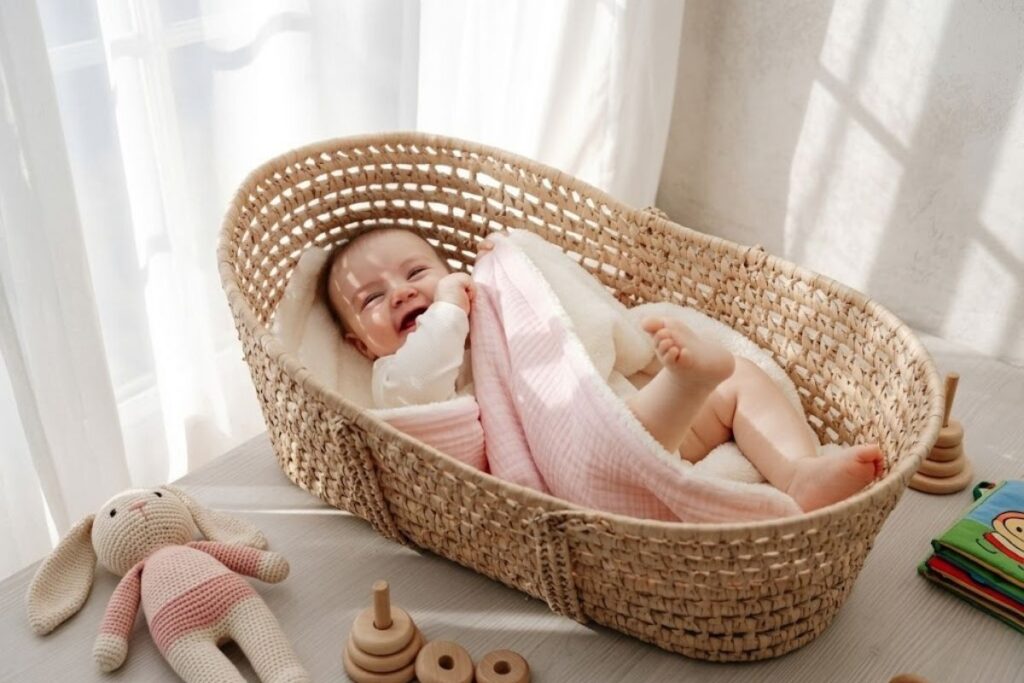
Organic Muslin: The open weave allows air to circulate, significantly reducing the risk of overheating.
The TOG Factor: For summer, we recommend a 0.5 or 1.0 TOG rating for swaddles and sleep sacks.
Moisture Wicking: Cotton fibers draw sweat away from the baby’s sensitive skin, preventing heat rashes and ensuring longer sleep cycles.
7. The Golden Ratio of Lighting and Wall Placement
Nursery lighting layering is the intentional combination of ambient, task, and accent light sources to support the infant’s circadian rhythm. When paired with matte-finish wall decorations, this strategy eliminates harsh glare and creates a soothing environment conducive to melatonin production.
Your nursery furniture ideas are incomplete without a lighting plan. We have bizzat (personally) tested how light reflects off different surfaces. High-gloss vinyl stickers from chain stores create a “mirror effect” that can be distracting or even scary for a baby waking up in the dark.
The Golden Ratio Rules:
Dimmable Ambient Light: Use a main light that can be lowered during the evening “wind-down.”
Low-Level Glow: Place a warm-toned lamp near the changing table. Ensure the wall behind it features matte Dosjunior decals to prevent harsh reflections.
Blackout Priority: Always use blackout blinds, but don’t let them make the room feel like a cave. Soften the look with light-colored nursery textiles to maintain a cozy feel.
Expert Opinion: The Psychological Impact of Personalization
“Bir çocuk odası, çocuğun tanıdığı ilk dünyadır. Büyüme çizelgeleri ve kişiselleştirilmiş duvar resimleri gibi unsurlar kullandığımızda , sadece dekorasyon yapmıyoruz; çocuğa ait olduğunu ve gelişiminin kutlandığını gösteriyoruz. ‘Oda’dan ‘çocuk odasına’ geçiş, kullanılan malzemeler dokunulabilecek kadar güvenli ve öğrenilebilecek kadar anlamlı olduğunda gerçekleşir.”
Comparison Analysis: Premium Wall Decor vs. Standard Products
To understand why many baby nursery ideas fail over time, we must look at the technical specs of the products used.
Feature
Dosjunior Premium Decals
Chain Store “Ready-Made” Stickers
Material
Textile-textured Polyester
PVC Vinyl
Health Safety
Non-Toxic, PVC-Free, Lead-Free
High VOCs, Phthalates
Texture
Matte Fabric (Anti-Glare)
Glossy Plastic (High Glare)
Adhesive
Repositionable & Paint-Safe
Permanent & Damaging
Durability
Years of use (No curling)
Peels and curls within months
Aesthetic
High-End Designer Look
Cheap, generic appearance
Frequently Asked Questions (FAQ)
How should I design my baby’s room?
Designing a nursery should start with a safe sleep zone and expand into a cognitive play zone. Focus on a neutral wall color, then add nursery wall decor like world maps and animal stickers for visual stimulation. Ensure all textiles are organic and breathable to maintain a safe temperature.
When should I start making my baby’s nursery?
We recommend starting the design process between the 20th and 24th week of pregnancy. This gives you enough time to select high-quality nursery themes and allows any new items to air out, though Dosjunior’s non-toxic products are safe to use immediately.
What color is best for a baby’s room?
Soft, muted tones like sage green, sandy beige, or dusty blue are best for sleep. Use nursery wall art to introduce brighter, high-contrast colors like navy, terracotta, or mustard yellow, which aid in visual development without overwhelming the room.
What do I need to include in a nursery?
The essentials for an optimized nursery include:
A firm mattress with organic nursery bedding.
A safe changing station with vertical storage.
A dimmable lighting system.
Educational nursery wall decor (like a height chart and world map).
A comfortable nursing chair with support pillows.
How can I decorate a nursery on a budget?
Instead of buying expensive, themed furniture, buy basic, durable pieces and spend your budget on premium nursery wall art. Repositionable stickers allow you to change the entire look of the room for a fraction of the cost of new furniture or wallpaper.
Seasonal Care and Product Longevity
Whether it is the Spring refresh or preparing for the Winter chill, your nursery should be adaptable. One of the unique benefits of Dosjunior’s repositionable decals is the ability to move them. If you decide to move your nursing chair to a different corner during the winter to stay away from a drafty window, you can simply peel and restick your wall art to follow the new layout.
For Summer (Yaz), we bizzat (personally) suggest removing heavy rugs and switching to lighter, cotton-based wall hangings and muslins. The air quality in the summer can often become stagnant, so ensuring your nursery ideas include “breathable” elements is paramount for the baby’s comfort.
Conclusion: The Path to a Healthier Nursery
A perfect baby room is not one that merely looks good on a screen; it is one that supports the invisible needs of an infant. From the air they breathe to the shapes they see, every choice matters. By choosing Dosjunior’s non-toxic, educational, and high-quality accessories, you are investing in a space that respects your child’s health and fuels their curiosity.
Stop settling for the generic, often toxic solutions found in chain stores. Your baby deserves a room that is as unique and safe as they are. Explore our collection of world maps, height charts, and organic textiles today to transform your nursery into a premium growth environment.
Discover stylish, high-quality nursery essentials that bring comfort and joy to your little one’s world at Dos Junior