

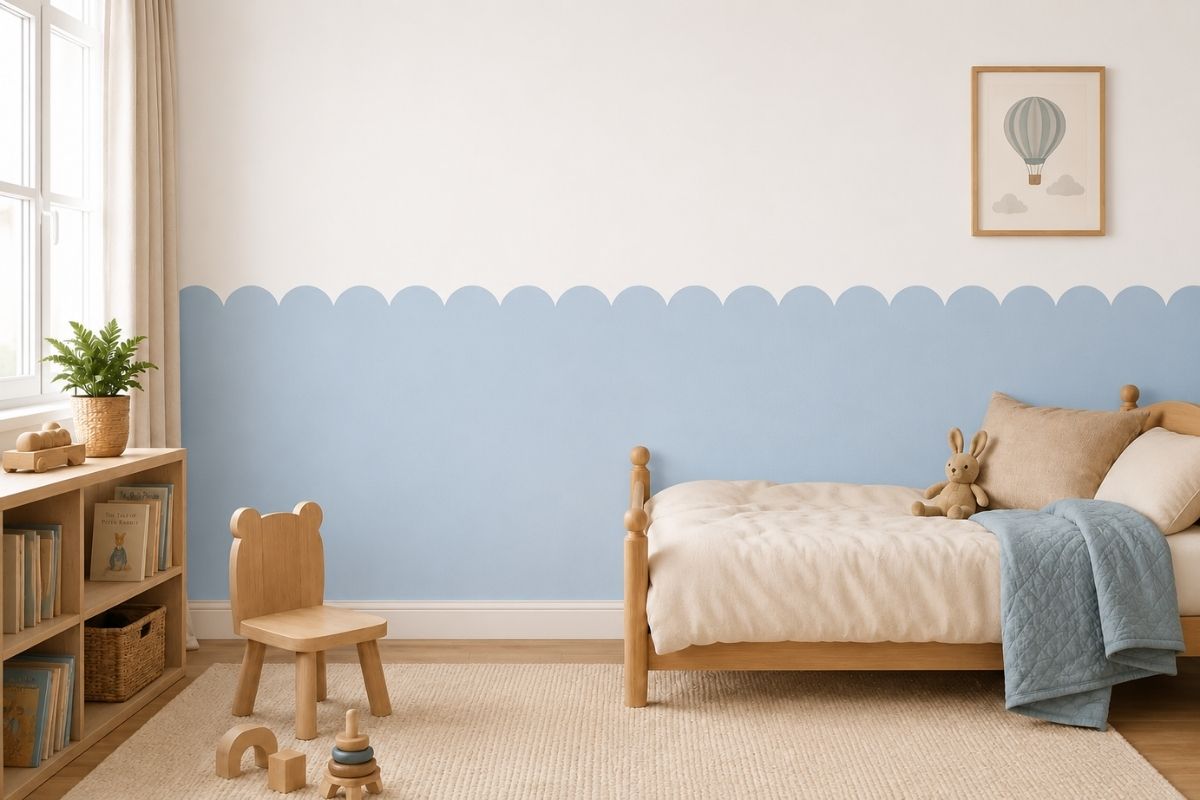
Small nursery ideas prioritize functionality and vertical space optimization to transform limited square footage into a highly efficient, beautiful environment. Creating a comfortable baby room in a compact area requires strategic furniture placement, clever storage solutions, and visual tricks to enhance spatial depth. This comprehensive guide provides actionable blueprints to maximize your tiny nursery without sacrificing style, ensuring every square inch serves a distinct purpose for you and your newborn.
What are the best small nursery ideas? Designing a compact baby room requires specific spatial strategies to prevent clutter and ensure safety. The most effective methods include:
- Replacing standard cribs with space-saving mini cribs.
- Utilizing vertical wall space for open, floating shelving.
- Implementing over-the-door hanging organizers for daily essentials.
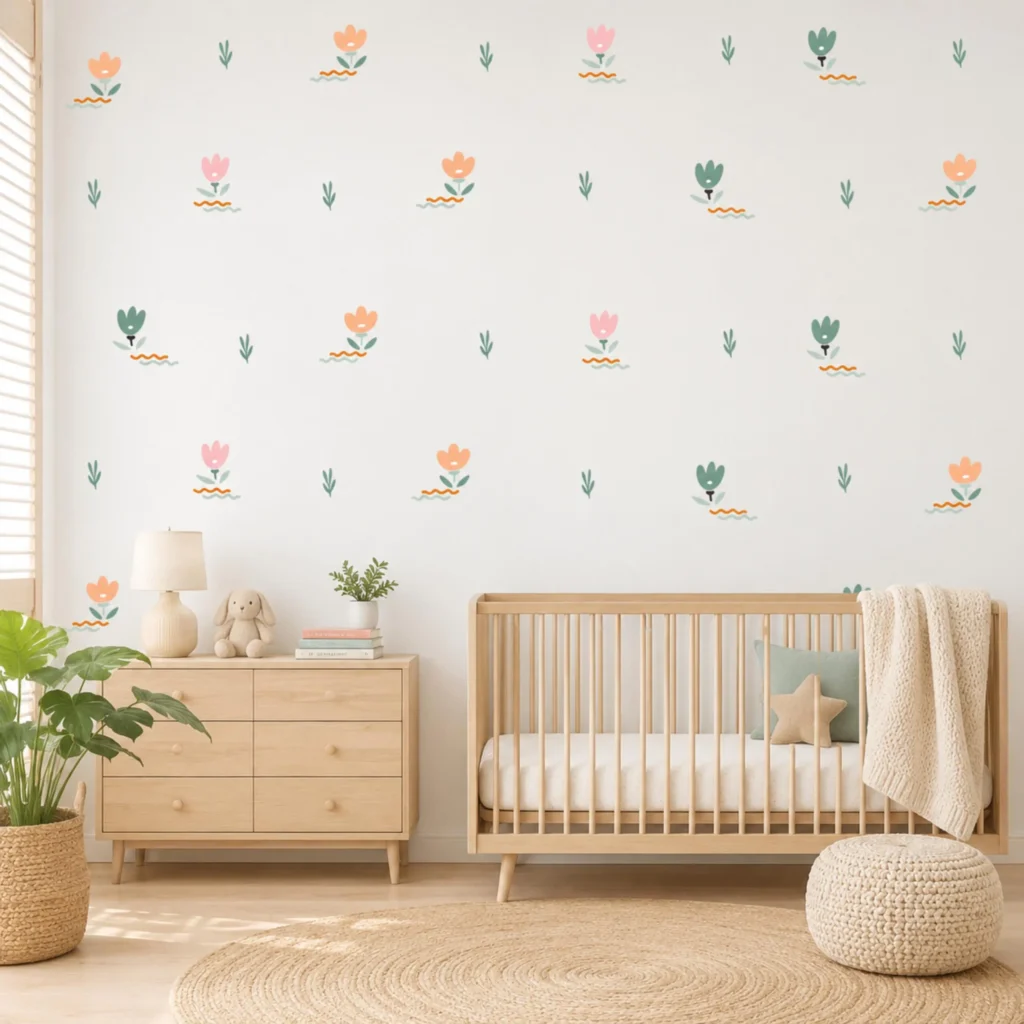
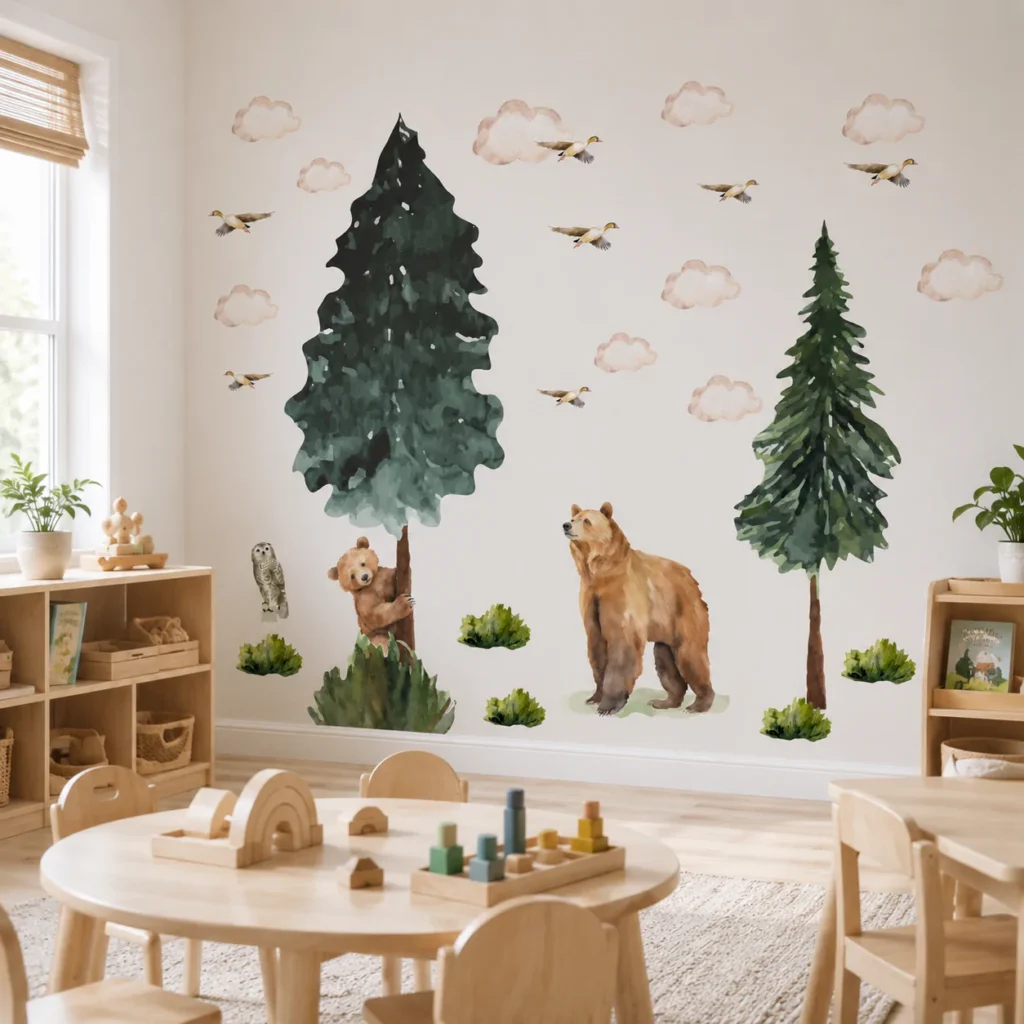
- Applying damage-free wall decals to create an optical illusion of depth.
How to maximize small nursery storage ideas on a budget?
Optimizing storage in a confined space does not require expensive, custom-built cabinetry. You can implement highly effective organizational systems using affordable, accessible products. The key to maximizing storage in a compact footprint is looking upward rather than outward, exploiting the vertical height of the room.
Parents often struggle with out-of-season clothing, endless packages of diapers, and bulky blankets. Instead of purchasing a massive, heavy armoire that consumes precious floor space, utilize the “Door-Back Command Center” technique. By hanging a heavy-duty, multi-tier fabric organizer over the back of the nursery door, you instantly create accessible compartments for swaddles, burp cloths, and lotions. This utilizes zero floor space and keeps everyday items at arm’s reach during frantic diaper changes.
For the closet, if your tiny room even has one, avoid expensive wood built-ins. Instead, install a secondary, adjustable tension rod halfway down the closet space. Baby clothes are incredibly short; a standard closet leaves three feet of wasted vertical space beneath the hanging items. Adding a second rod instantly doubles your hanging capacity for a fraction of the cost. Below the second rod, slide in lightweight, structured fabric bins to hold shoes and toys.
| Storage Solution | Best For | Floor Space Used | Estimated Cost Level |
| Over-the-Door Organizer | Lotions, swaddles, daily essentials | Zero | Low |
| Double Tension Rods | Doubling hanging clothes capacity | Zero (Inside closet) | Low |
| Rolling Utility Cart | Mobile nursing and diaper station | Minimal (approx. 2 sq ft) | Low to Medium |
| Freestanding Armoire | Long-term bulky item storage | High (approx. 6-8 sq ft) | High |
Furthermore, consider multi-functional furniture as your primary storage investment. Rather than buying a standalone changing table—which becomes obsolete after 18 months—purchase a low-profile, sturdy dresser and secure a contoured changing pad to the top. This immediately consolidates two large pieces of furniture into one, leaving room for a comfortable nursing chair or a slim floor lamp.
What are the best small space nursery decorating ideas for renters?
Decorating a leased apartment presents strict limitations; you cannot drill heavy anchors for floating cabinets, nor can you paint the walls to brighten a cramped room. However, you can completely transform the atmosphere using temporary, high-impact design elements that respect your lease agreement and protect your security deposit.
The most effective visual strategy for a cramped room is manipulating the optical illusion of height and depth. Standard white rental walls can make a small room feel sterile and box-like. Applying high-quality, removable fabric wall decals draws the eye upward, making the ceiling appear higher. For instance, placing Dos Junior hot air balloon decals near the upper third of the wall forces the viewer’s gaze to lift, instantly making the room feel more expansive. Unlike harsh vinyl stickers that can peel the landlord’s paint, premium fabric decals use gentle adhesives that remove flawlessly when it is time to move.
Another excellent idea for a small nursery in a rental is strategic rug layering. A tiny room often features outdated or dark flooring that absorbs light, making the space feel even smaller. You cannot rip up the landlord’s carpet, but you can lay a large, light-colored, low-pile area rug directly over it. Light colors reflect ambient light, instantly brightening the room.
Window treatments also play a critical role in rental decor. Instead of installing heavy curtain brackets, use industrial-strength tension rods placed high inside the window frame. Hang crisp, light-colored blackout curtains as close to the ceiling as possible, allowing them to drape all the way to the floor. This vertical line tricks the brain into perceiving taller windows and a larger overall space, all without drilling a single hole in the drywall.
Baby boy nursery ideas for small rooms vs gender neutral
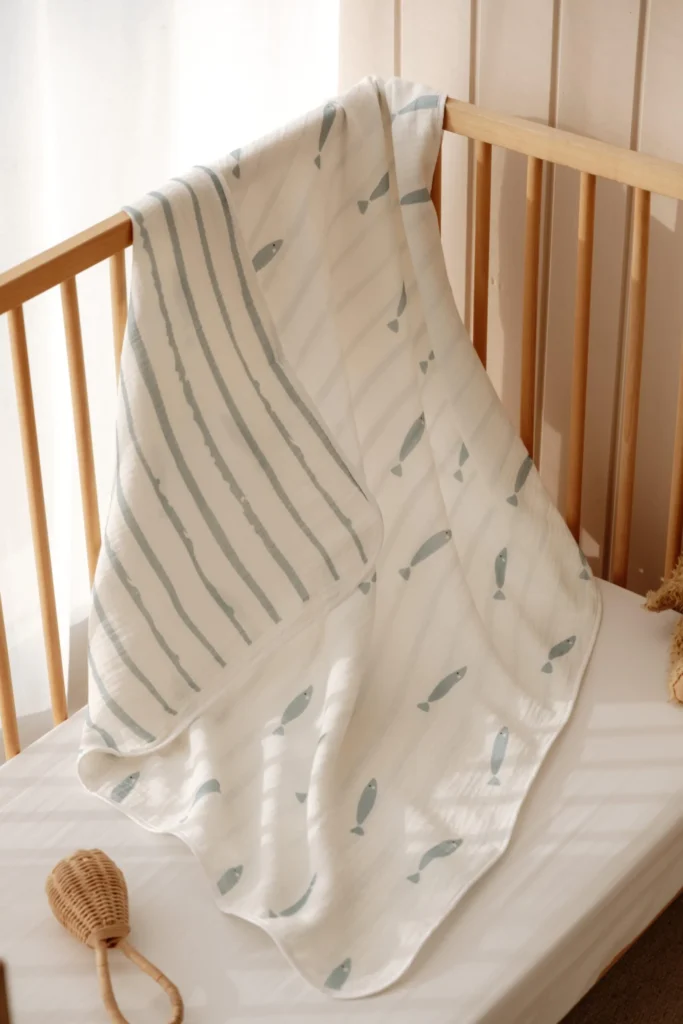
When conceptualizing the color palette and theme for a compact space, parents often face a critical design dilemma. Traditional gender-specific themes can sometimes work against the physical limitations of the room. Understanding how color interacts with light is essential when selecting the perfect aesthetic for a confined area.
Historically, baby boy rooms lean heavily on dark navy blues, deep forest greens, and heavy rustic wood textures. While these themes are beautiful in a large, sunlit bedroom, applying dark, light-absorbing colors to a tiny room will create a “cave effect,” making the walls feel as though they are closing in. If you are committed to a boy-specific theme, you must pivot to lighter shades. Consider a palette of soft powder blue, crisp white, and pale gray. Use the darker navy strictly as an accent color—perhaps in small picture frames or the trim of a rug—rather than as a dominant wall color.
Conversely, gender-neutral designs are uniquely suited for maximizing the perception of space. A neutral palette relies on warm whites, soft beige, sage green, and natural wood tones. These shades reflect maximum natural light, blurring the sharp corners of a box room and creating an airy, breathable environment.
| Design Element | Traditional Boy Theme | Gender Neutral Theme | Spatial Impact |
| Dominant Colors | Navy, Forest Green, Red | Sage, Warm White, Oatmeal | Neutral colors expand; dark colors contract. |
| Furniture Finish | Dark Walnut, Espresso | Whitewash, Natural Pine | Light woods feel visually lighter and less bulky. |
| Theme Examples | Nautical, Deep Space | Botanical, Soft Animals | Minimalist natural themes reduce visual clutter. |
| Longevity | Specific to toddler phase | Easily transitions to guest room | Neutral rooms adapt easily to future housing changes. |
By opting for a gender-neutral foundation, you also build flexibility into your home. If you transition the room to a home office later, or if your rental situation changes, neutral tones require far less overhaul than a deeply saturated, theme-heavy design.
Twin nursery ideas for small rooms with limited floor space
Designing a compact room for one baby is challenging; preparing it for twins requires absolute mathematical precision. When you must accommodate two cribs, double the clothing, and a dual-stroller, standard furniture layouts immediately fail.
The most critical decision you will make is abandoning the standard American crib. A standard crib measures approximately 28 by 52 inches. Placing two of these in a small room eliminates all walkable floor space. Instead, invest in two mini cribs. Mini cribs measure approximately 24 by 38 inches but still meet all strict CPSC (Consumer Product Safety Commission) sleep standards. This subtle reduction saves over eight square feet of floor space, which provides exactly enough room for a shared dresser or a slim rocking chair.
When arranging the mini cribs, the “L-shape” configuration in a corner is often the most efficient use of a square room, leaving the center of the floor open for tummy time and crawling. If the room is long and narrow, place the cribs end-to-end along the longest wall. Crucially, adhere to safety guidelines: never place cribs directly against windows with blind cords, and never attempt to stack sleep surfaces.
To handle the doubled wardrobe, you must aggressively declutter and organize. Use slim, velvet hangers to compress the clothing in the closet. Dedicate specific drawers in the shared dresser to each child, using rigid drawer dividers to keep tiny socks and onesies strictly categorized. A shared, rolling utility cart positioned exactly between the two cribs can serve as the ultimate dual-nursing and diaper-changing station, ensuring you have immediate access to supplies for both babies during midnight wakings.
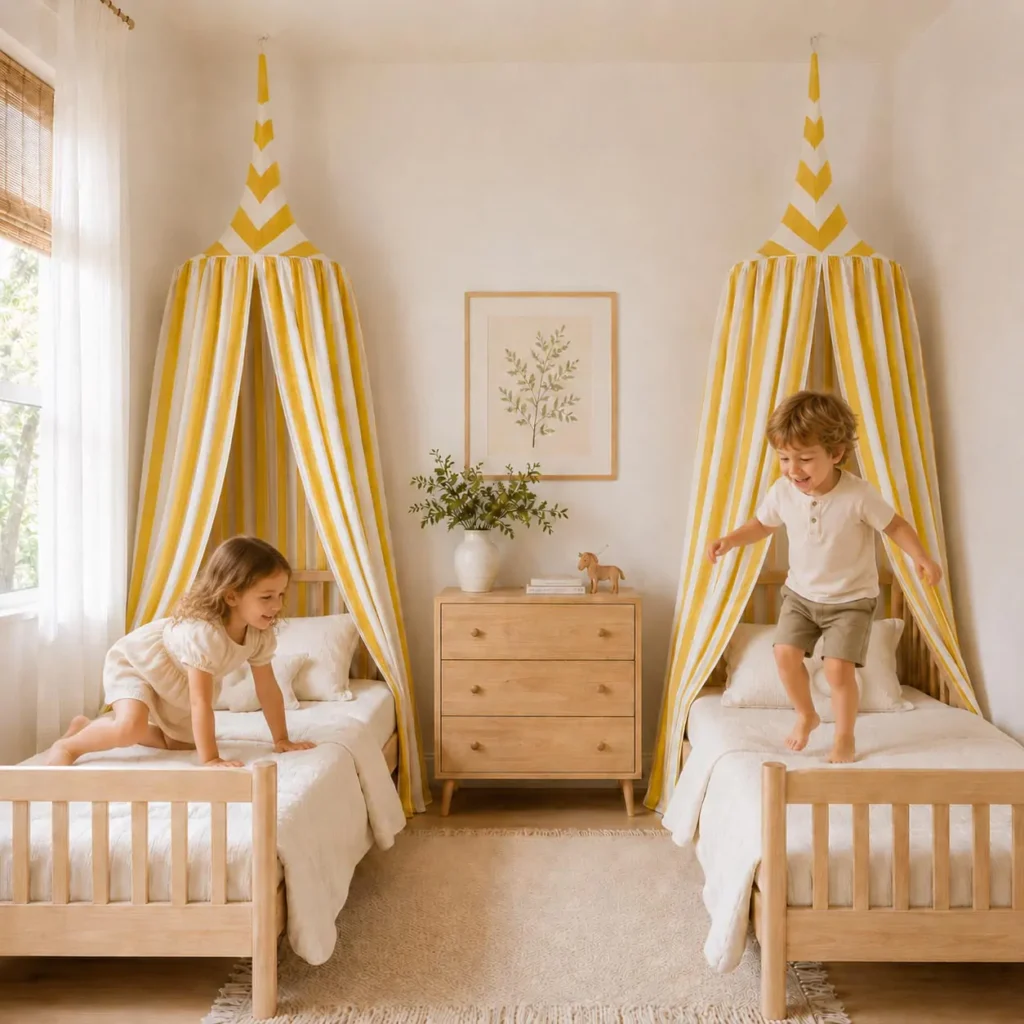
Minimalist small nurseries decorating ideas for a box room
A “box room”—typically a windowless office or a tiny 8×8 foot spare bedroom—demands a strict adherence to minimalism. In these intensely confined spaces, every single item must serve a functional purpose; purely decorative, space-consuming objects must be eliminated. The minimalist philosophy dictates that visual quietness equals perceived spaciousness.
Start by selecting multi-functional furniture. A sleek, wall-mounted folding changing table (commonly seen in commercial spaces but now available in beautiful residential wood finishes) can be folded flat against the wall when not in use. If wall-mounting is impossible, rely on a very narrow, three-drawer dresser. Skip the massive, oversized upholstered nursing glider. Instead, choose a modern, slim-profile rocking chair with open wooden arms. Furniture that sits high on tapered legs allows light to pass underneath it, creating a sense of continuous floor space, whereas heavy, blocky furniture that sits flush on the carpet visually stops the eye and shrinks the room.
When exploring nursery room ideas for small rooms, remember that open floor space is a premium asset. Keep the center of the box room entirely clear. Do not place a heavy ottoman or a bulky floor gym in the middle of the room. Store foldable play mats in a slim gap between the dresser and the wall, sliding them out only when needed.
Acrylic shelving is a secret weapon in minimalist design. Replace heavy wooden floating shelves with clear, high-quality acrylic ledges to hold baby books. Because the shelves are transparent, the books appear to float against the wall, adding zero visual weight to the tiny room. This subtle trick maintains the room’s utility while strictly adhering to a clean, uncluttered aesthetic.
How to arrange furniture using very small nursery ideas?
The physical layout of your furniture dictates whether the room feels like a functional sanctuary or an obstacle course. When utilizing very small nursery ideas, you must adopt the “Triangle Method,” a concept borrowed from kitchen design. The three points of your triangle are the Crib (sleep), the Dresser/Changing Pad (care), and the Chair (feeding).
First, position the crib. According to safety experts, the crib should be placed against a solid interior wall, far away from windows, heavy wall art, or HVAC vents. Once the crib is anchored, place the dresser on the opposite wall to balance the visual weight of the room. If the room is incredibly narrow, place the dresser inside the closet (if you have removed the doors) to completely free up the main floor area.
The nursing chair should occupy the final corner, ideally positioned so you can see both the door and the crib without turning your head. Maintain a strict “two-foot rule”: ensure there is a clear, 24-inch pathway between every piece of furniture. You will be carrying a fragile newborn through this space at 3:00 AM in the dark; you cannot afford to be tripping over extension cords or bulky floor baskets.
If you are implementing small nursery design ideas in a uniquely shaped room with slanted ceilings (like an attic conversion), push the lowest-profile furniture into the tightest corners. The crib can sit under a mild slope (provided you won’t bump your head when lifting the baby), reserving the highest ceiling area for the tall armoire or the standing caregiver.
Integrating small nursery room ideas: Lighting and Plants
Lighting is the final, critical layer that brings all small nursery design ideas together. A single, harsh overhead ceiling light creates sharp shadows in the corners, making a tiny room feel like a cramped closet. To expand the space visually, you must implement layered lighting.
Introduce a slim, heavy-based floor lamp in the corner behind the nursing chair, equipped with a warm, dimmable LED bulb (around 2700K). This provides soft, ambient light that bounces off the walls. Furthermore, utilize battery-operated LED puck lights mounted under floating shelves. This hidden, indirect lighting pushes the walls outward visually, generating a warm, expansive glow without requiring any electrical hardwiring.
Small nursery plants can also dramatically improve the atmosphere of a confined space. Introducing a touch of nature breaks up the rigid lines of furniture and improves indoor air quality. However, floor plants consume valuable real estate and pose a tipping hazard as your baby becomes a toddler. Instead, hang a non-toxic plant, such as a Boston Fern or a Spider Plant, from a secure ceiling hook in a corner, or place a small, trailing Pothos out of reach on the highest floating shelf. The organic drape of the leaves adds vertical interest and breathes life into the compact environment.
By combining strict organizational discipline, strategic layout planning, light-enhancing color palettes, and multi-functional furniture, you can conquer any spatial limitation. Your tiny nursery can operate with the efficiency of a much larger room, providing a serene, perfectly organized haven for your family’s newest addition. To breathe life into this peaceful sanctuary without consuming a single inch of floor space, explore the nature-themed fabric designs in the Dos Junior Wall Decal Collection.
Frequently Asked Question
What are the dimensions of a mini crib for a small room?
A standard mini crib typically measures 24 inches wide by 38 inches long. This is significantly smaller than a standard American crib, saving crucial floor space while still providing a safe, CPSC-compliant sleeping environment for a baby up until they are approximately 18 to 24 months old.
How can I store baby clothes without a traditional closet?
Utilize vertical space by installing heavy-duty floating shelves with clothing rods attached underneath. Additionally, invest in a tall, narrow freestanding dresser and maximize drawer efficiency by using structured fabric dividers to tightly roll and organize tiny onesies, socks, and swaddles.
Is it safe to put a crib next to a window in a small room?
No. Strict safety guidelines recommend keeping cribs away from windows to prevent risks associated with blind cords (strangulation hazards), shattering glass, and severe temperature fluctuations from drafts or direct sunlight. Always position the crib against a solid interior wall.
What colors make a small nursery look bigger?
Light, reflective colors visually expand a confined space. Opt for warm whites, soft sage greens, pale grays, and oatmeal tones. Avoid dark, heavily saturated colors like navy blue or emerald green on all four walls, as they absorb light and make the room feel cramped.
Conclusion
Implementing effective small nursery ideas transforms a cramped, challenging room into a highly functional, beautiful sanctuary. By prioritizing vertical storage, selecting perfectly scaled furniture like mini cribs, and utilizing light-reflecting color palettes, you maximize every square inch without compromising on style or safety. Remember that a compact space requires discipline; eliminate unnecessary clutter and focus only on multi-functional essentials. Ready to create an illusion of depth in your tiny room without touching a paintbrush? Explore the Dos Junior Collection to instantly elevate your nursery’s design with damage-free, space-enhancing visuals.