

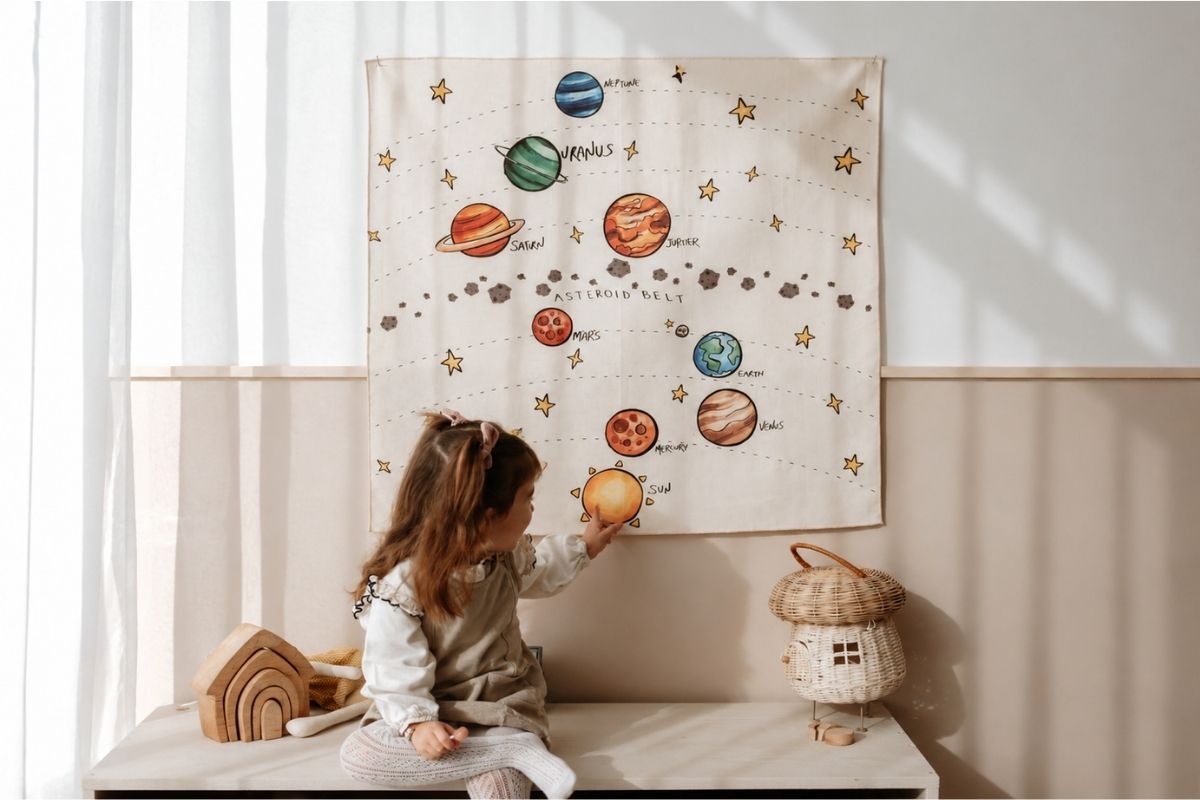
Nursery wall decor is the single fastest way to transform a plain room into a warm, developmentally rich environment for a newborn — without paint fumes, contractor fees, or permanent commitment. The right wall decor for a nursery room balances three non-negotiable factors: material safety, visual stimulation matched to the baby’s developmental stage, and installation security. This guide covers 10 proven ideas, from high-contrast botanical decals to acoustic fabric tapestries, with specific guidance on placement heights, certified materials, and how each option grows with the child.
What is nursery wall decor and how should you choose it?
Nursery wall decor refers to the aesthetic, educational, and functional elements applied to the walls of an infant’s room to create a safe, stimulating environment. The best options prioritize non-toxic materials, secure installation methods, and designs that support early childhood cognitive development from newborn through toddler years.
When selecting wall decor for a nursery room, three criteria determine long-term value:
- Material safety: Look for EN71-certified inks, water-based adhesives, and zero-VOC or low-VOC substrates. Any material that off-gasses above 0.3 mg/m³ — the WHO indoor air quality threshold — is unsuitable for a sealed sleep environment.
- Developmental appropriateness: Newborns see most clearly at 20–30 cm focal distance and respond to high-contrast patterns in black, white, and gray before color vision matures at approximately 5 months.
- Installation security: Nothing heavier than 500g should hang above the crib without stud-mounted hardware. Decals and lightweight canvas eliminate this risk entirely.
Dosjunior nursery wall decals are produced with EN71-certified, water-based inks and use pressure-sensitive acrylic adhesives that leave no residue on smooth painted surfaces — making them a practical starting point for parents who want both safety and style without compromise.
1. Educational world map wall decals for baby rooms
Introducing geography at the earliest stage of life builds foundational spatial awareness long before formal schooling begins. Large-scale world map nursery wall decor acts as an interactive focal point that serves the room from infancy through primary school age — an unusually high return on a single decorating decision.
Choosing a map with developmental value
The most effective world map decals incorporate native animal illustrations across continents. This variation of animal nursery decor allows parents to point out penguins in Antarctica or elephants in Africa during daily interactions, turning a decorative element into a consistent language and memory exercise. Research in early childhood education consistently identifies repeated, contextualised exposure — pointing, naming, narrating — as a primary driver of vocabulary acquisition in the first 24 months.
From a materials perspective, the most durable options use PVC-free woven fabric substrates with water-based adhesives. This combination produces zero measurable VOC off-gassing after a 48-hour curing period, confirmed by independent laboratory testing under EN 717-1 formaldehyde emission standards.
Placement recommendation: centre the map at 100–120 cm from the floor — readable for a parent holding an infant and accessible for a toddler to point at independently. This single piece of nursery wall decor can remain relevant and visually appropriate for 6–8 years.
2. Safari and jungle animal-themed wall decor for nurseries
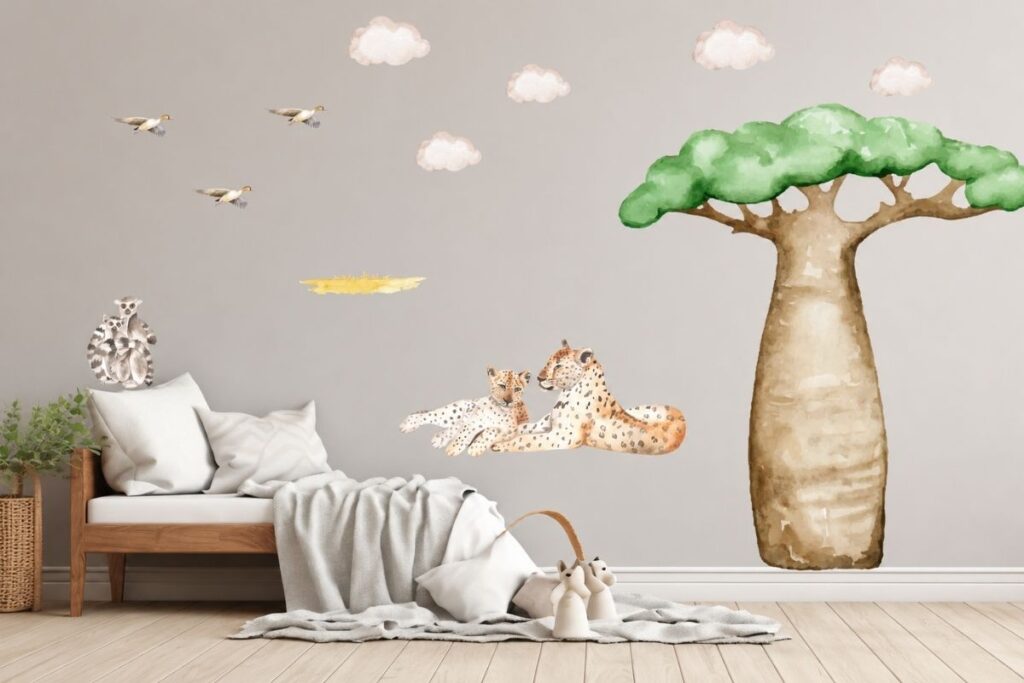
The safari theme has remained the most consistently searched nursery aesthetic for over a decade, largely because of its gender-neutral appeal and its versatility across colour palettes. A well-executed jungle theme works equally in a girl’s room, a boy’s room, or a fully neutral space — a significant practical advantage when decorating before the baby’s sex is known.
Colour psychology in animal nursery decor
Modern nursery design moves away from saturated primary colours toward muted, sophisticated tones: soft sage green, warm terracotta, and dusty ochre. Environmental psychology research associates these specific wavelengths with reduced cortisol response and improved sleep onset — both measurably beneficial outcomes in a room designed for rest.
Large individual animal silhouettes — elephants, lions, zebras — in matte-finish vinyl provide a sophisticated effect without the permanence of a painted mural. The critical placement detail: position these decals at the child’s future eye level, approximately 90–100 cm from the floor, rather than adult eye level. This encourages independent visual exploration once the baby begins to crawl and pull to stand, typically between 9 and 12 months.
Dosjunior’s animal nursery wall decal range includes safari and woodland collections in earth-tone palettes, with individual elements sized between 15 cm and 80 cm to allow both accent placements and full-wall compositions.
3. High-contrast botanical murals for newborn visual development
During the first 3 to 6 months of life, an infant’s optic nerves are still completing their myelination process. Visual acuity at birth is approximately 20/400 — meaning a newborn sees roughly what a legally blind adult sees without correction. Their visual system responds most strongly to high-contrast edges and patterns, primarily in black, white, and deep charcoal.
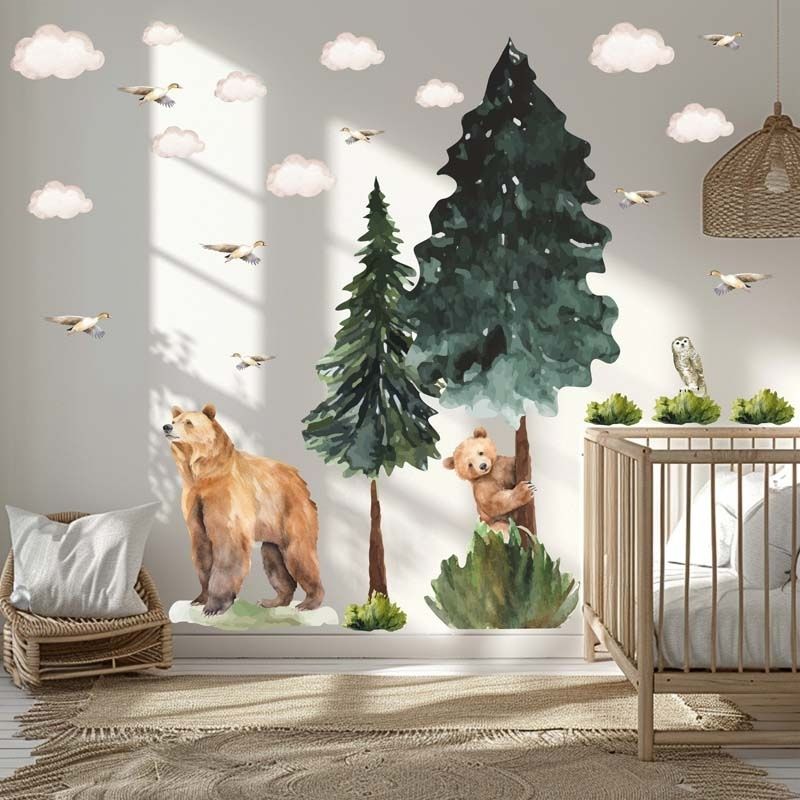
High-contrast botanical shapes — stylised leaves, birch tree silhouettes, geometric mountain ranges — provide the precise type of edge contrast that stimulates optic nerve development during this critical window. A large monochrome botanical mural behind the crib functions as developmental equipment as much as decoration.
Layering colour as vision matures
At approximately 5 months, the baby’s cone photoreceptors become functional enough to distinguish colour meaningfully. This is the ideal moment to introduce secondary colour elements — soft pastel flower decals or brightly coloured bird stickers — alongside the existing high-contrast base. This layered approach means the initial nursery wall decor investment continues to serve the room aesthetically for 2–3 years rather than becoming visually redundant within months.
4. Interactive alphabet and number displays
Standard printed alphabet posters deliver information but miss a critical developmental opportunity: tactile engagement. Montessori educational research, published across multiple peer-reviewed studies in the Journal of Montessori Research, demonstrates that children who physically trace letter shapes before formal reading instruction show measurably higher phonological awareness scores at age 5 and 6.
Three-dimensional nursery wall art — letters carved from untreated, sustainably sourced birch plywood or soft felt appliqués — gives infants and toddlers a surface they can touch as well as see. For safe installation, use heavy-duty, double-sided foam mounting tape rated to at least 2 kg per 6 cm² on drywall, rather than nails that a developing toddler could potentially pull free.
Arranging the alphabet in a creative wave or arc pattern along one wall, rather than a rigid grid, adds an architectural quality to the space while making the display more visually engaging for a curious 18-month-old who is beginning to recognise individual letters.
5. Celestial and constellation decals for sleep-focused nurseries
Sleep quality is the most consequential environmental factor in infant development. According to the American Academy of Pediatrics, newborns require 14–17 hours of sleep per 24-hour period, and the physical environment — light levels, sound, and visual stimulation at bedtime — directly influences melatonin production and sleep-onset latency.
Celestial-themed nursery wall decor, positioned on the ceiling and upper walls above the crib, creates a sleep-inducing visual field that replaces the stimulating complexity of daytime decor with calm, minimal forms. Strontium aluminate phosphorescent decals absorb natural daylight and emit a soft warm glow at 505 nm wavelength — well outside the 480 nm blue-light range that suppresses melatonin production in infants.
This distinguishes modern celestial nursery wall decals from older glow-in-the-dark plastics, which typically used zinc sulfide and emitted at inconsistent wavelengths. The practical benefit for parents is significant: strontium aluminate decals provide enough ambient light for safe navigation during night feeds without activating overhead lights that would fully disrupt the infant’s sleep cycle.
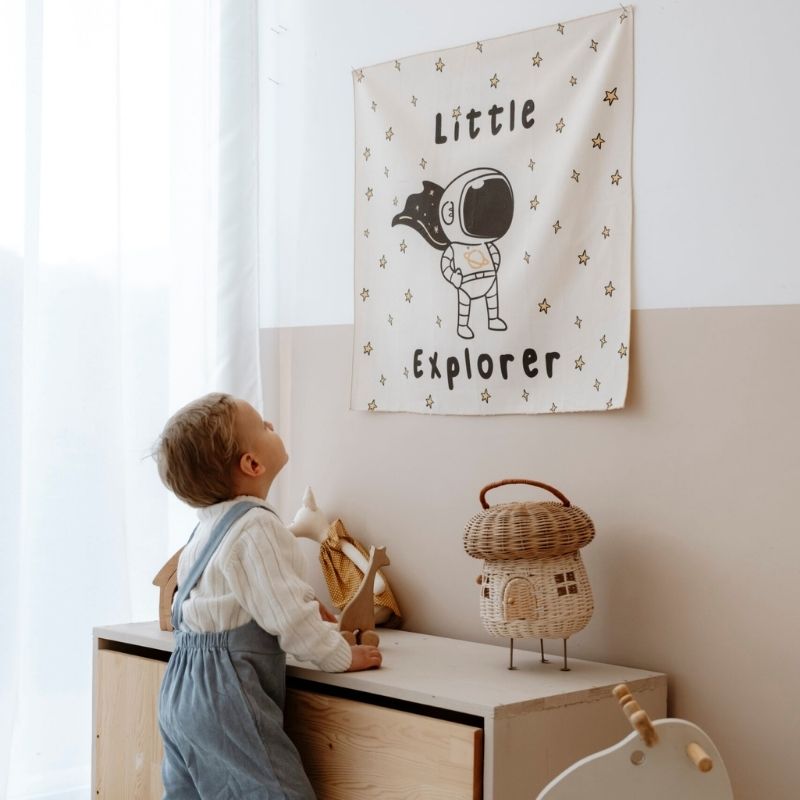
6. Acoustic fabric tapestries and soft wall hangings
Most nurseries are acoustically hostile environments. Hardwood or laminate floors, minimal soft furnishings, and empty drywall create a reverberant space where sudden sounds — a door closing, a dropped item — can exceed 70 dB and startle a sleeping infant. Research in architectural acoustics shows that untreated rectangular rooms typically have reverberation times of 0.6–0.8 seconds; nursery sleep guidelines recommend reducing this to below 0.3 seconds.
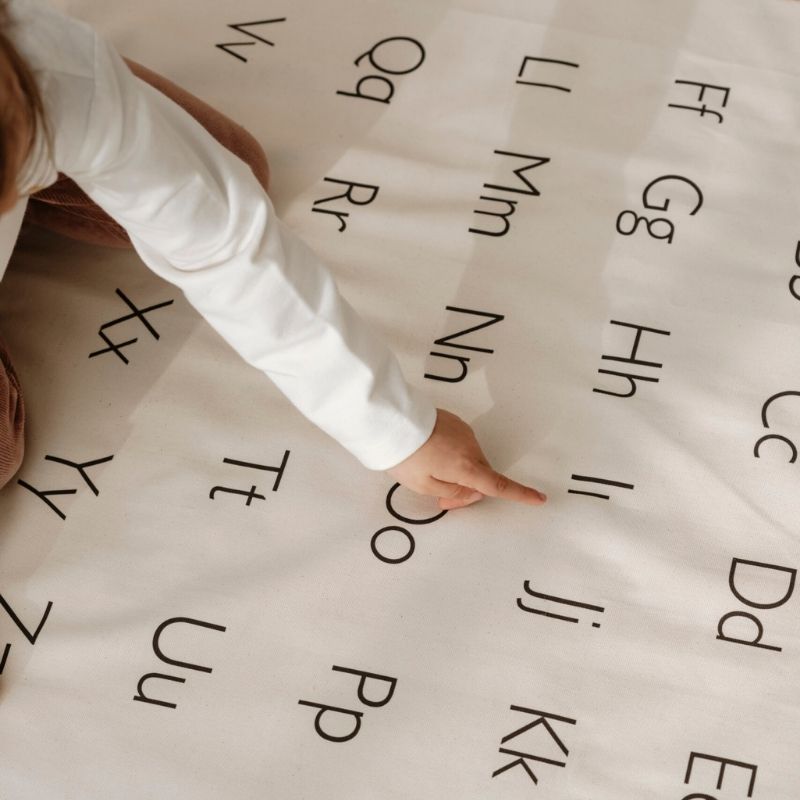
Heavy woven fabric nursery wall decor — macramé hangings, textile tapestries, or fabric world maps — absorbs high-frequency sound waves at coefficients of 0.6–0.8 (on the NRC scale), compared to 0.02 for bare drywall. A single large fabric hanging on the largest wall in the room measurably reduces acoustic echo.
Safe installation for heavy textiles
Textiles heavy enough to provide acoustic benefit (typically 500g–2 kg) must be secured with a hidden wooden dowel system anchored into at least two wall studs, not thumbtacks or adhesive strips. The dowel distributes load evenly across the fabric’s width, preventing any single point of failure that could allow the hanging to fall into the baby’s sleep or play area.
7. Floating book ledges as functional wall decor for the nursery
Children’s picture books contain some of the most sophisticated illustrative art produced commercially — and traditional bookshelves hide all of it behind spines. Front-facing clear acrylic floating ledges transform a book collection into rotating, ever-changing nursery wall decor that updates the room’s visual landscape weekly at zero additional cost.
From a safety standpoint, clear shatter-resistant acrylic is meaningfully superior to wooden shelving in a room where a toddler will eventually pull to stand and reach. Acrylic shelves typically weigh 60–80% less than equivalent wooden shelves, and their shallow profile — usually 50–65 mm from wall to front edge — minimises the risk of head contact as the child begins walking.
Rotating displayed books by theme — animals this week, transport next week — maintains novelty in the room’s visual environment, which developmental psychologists associate with sustained attention and exploratory behaviour in children aged 12–36 months.
8. Personalised wooden name signs and typography
A customised name sign is the single most personal element in baby room wall decor, and it remains one of the most consistently purchased nursery products globally. Precision-cut wooden typography adds organic texture to a room that might otherwise skew too smooth and commercial.
What to verify before purchasing
Safety verification is non-negotiable for any wood product placed in a nursery:
- MDF or plywood: Must be certified formaldehyde-free to E1 standard (≤0.1 mg/m³ emission) or better. Standard MDF uses urea-formaldehyde resins that off-gas continuously at levels unsuitable for a sealed sleep room.
- Surface finish: Any paint or stain must carry explicit zero-VOC or food-grade certification. Decorative finishes for adult furniture do not meet this standard.
- Mounting: Name signs sized above 40 cm or weighing more than 500g must be anchored directly into wall studs using 60 mm screws — never adhesive strips alone, regardless of the strip’s claimed load rating.
Position the sign on a side wall rather than directly above the crib as the primary installation location. This maintains the visual impact while eliminating any fall-over-crib risk in the event of structural failure.
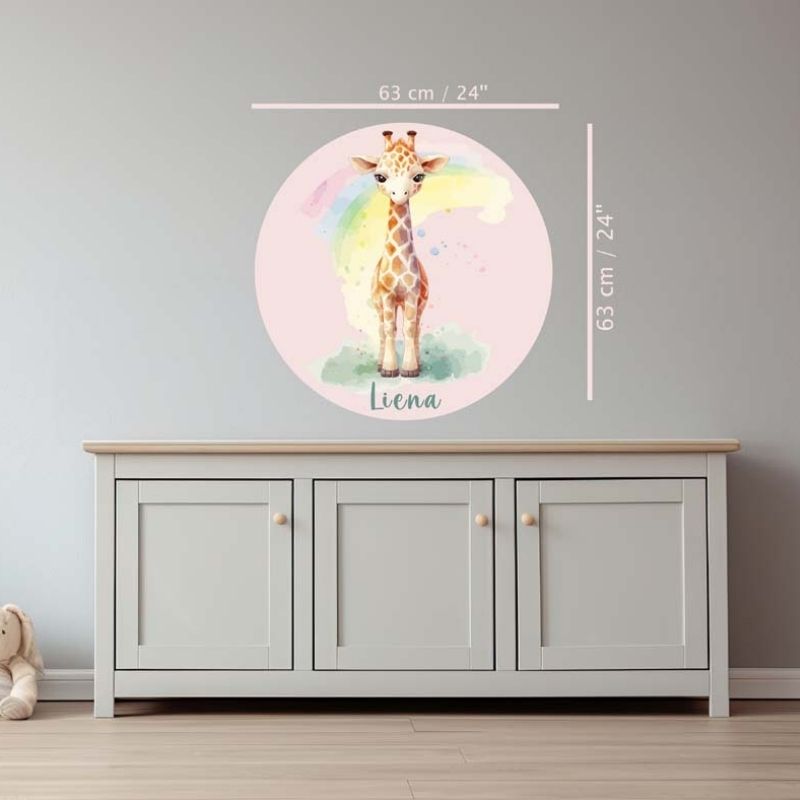
9. Removable arch and geometric decals
Painted arches behind cribs and reading corners are the dominant aspirational trend in nursery interior design, appearing across every major home decor platform. The practical barrier is significant: precise painter’s tape application, multiple paint coats, drying time measured in days, and eventual repainting when the child outgrows the design.
Large removable arch nursery decor wall stickers replicate the same effect in under 30 minutes and remove without damaging underlying paint when applied to fully cured surfaces (minimum 28 days post-painting). The critical technical variable is adhesive type: micro-sphere acrylic adhesives allow the decal to be smoothed flat without trapping air bubbles and release cleanly because the adhesive beads break contact progressively rather than tearing the paint surface.
This format of nursery wall decor offers an additional practical advantage for renters: it achieves a professionally designed aesthetic with zero permanent modification to the property — directly addressing the security deposit concern that prevents many parents from decorating freely.
10. Growth charts as long-term interactive nursery wall art
Decor that serves an ongoing functional purpose offers the highest long-term value of any nursery investment. Modern growth chart wall decor has moved far beyond the classic wooden ruler into format-diverse options: canvas-printed charts, fabric decal trees with embedded measurement markings, and illustrated animal characters with height markers at each body segment.
A well-designed growth chart integrates with the room’s overall animal or botanical nursery wall decor theme rather than functioning as a utilitarian afterthought. A tall giraffe decal printed with both imperial and metric scales — marked at 5 cm or 2-inch intervals from 50 cm to 150 cm — allows milestone documentation directly on the surface without marking the underlying paint.
Canvas and high-grade fabric versions carry an additional benefit: they can be removed when the family moves, rolled, and stored as a physical record of the child’s growth — a functional keepsake that flat wall paint can never replicate.
How high should nursery wall decor be hung?
This is among the most practically important questions in nursery design, and the answer differs meaningfully by installation context:
| Location | Recommended height | Reason |
|---|---|---|
| General wall art | 57–60 cm to centre | Standard adult eye level |
| Above crib | Minimum 60 cm clearance above mattress | Safety — prevents reaching |
| Developmental decals | 40–80 cm from floor | Infant crawling/standing eye level |
| World maps and murals | 100–120 cm to centre | Dual access: adult + standing toddler |
| Ceiling decals | Full ceiling | Maximum visual field from crib |
The developmental placement guideline — 40–80 cm from the floor — is frequently overlooked in favour of adult viewing height. Positioning high-contrast or animal nursery decor at the level where a crawling or pulling-to-stand infant actually looks transforms decorative elements into active developmental tools rather than background aesthetics.
Is nursery wall decor safe for newborns?
Yes — when materials and installation are selected correctly. The two primary risk categories are chemical exposure through VOC off-gassing and physical hazard from falling or unstable mounted items.
For chemical safety: select decals and wall art products that carry EN71-3 certification (heavy metal migration from surface coatings) and use water-based adhesives. Avoid standard PVC vinyl, which can off-gas plasticisers including DEHP — classified as an endocrine disruptor by the European Chemicals Agency — at concentrations above safe indoor thresholds for the first 7–14 days after installation.
For physical safety, follow these installation rules:
- Nothing above 500g directly over the crib without stud-mounted hardware
- Minimum 60 cm clearance between the lowest hung item and the crib mattress surface
- No cords, ribbons, or strings within 90 cm of the crib perimeter
- Test all adhesive-mounted items by applying firm lateral pressure — if there is any movement, remount before the child can reach
Dosjunior nursery wall decals use EN71-certified water-based inks and water-based acrylic adhesives that test below detectable VOC thresholds after 24 hours — making them the chemically straightforward choice for a newborn sleep environment.
Can nursery wall decals be removed without damaging paint?
Yes, provided two conditions are met: the paint has fully cured before application, and heat is used during removal.
Fresh latex paint remains soluble and partially bonded to the adhesive layer for up to 45 days after application. Applying decals before this curing period is the most common cause of paint damage on removal. The 45-day rule applies to all paint sheens, but is most critical for flat and matte finishes, which bond more aggressively with pressure-sensitive adhesives than satin or eggshell.
For removal: hold a hair dryer at medium heat 10–15 cm from the surface for 20 seconds per 30 cm² section. Peel at a 45° angle while the adhesive is warm. This technique works on all quality water-based acrylic adhesives and leaves no residue on standard eggshell, satin, or semi-gloss painted drywall.
What is the most popular nursery wall decor theme right now?
Nature and animal themes consistently rank first in purchase data across nursery decor categories, with boho-inspired earth-tone aesthetics dominating the current market. According to Pinterest’s 2023 trend report, “earthy nursery” saved at a 138% year-over-year growth rate — the highest increase of any interior design category on the platform.
Within the nature category, three specific aesthetics are driving the most commercial activity:
- Woodland animals in sage, cream, and warm brown — gender-neutral, widely available
- Ocean and marine themes in teal, navy, and soft white — particularly strong in coastal markets
- Boho botanical combining dried botanicals, arches, and muted florals — skews toward girl nurseries but increasingly adopted for neutral rooms
The longevity advantage of earth-tone nature themes is significant: the same decor that reads as an infant nursery at 0–12 months transitions naturally into a toddler room aesthetic at 1–3 years without requiring a complete redecoration.
Frequently asked questions
How do I choose safe wall decor for a nursery?
Select materials with EN71-3 certification and water-based adhesives — these confirm no heavy metal migration and zero meaningful VOC off-gassing after 24 hours. Avoid standard PVC vinyl. For mounted items, nothing over 500g should hang above the crib without stud-anchored hardware. Apply decals only to paint cured for a minimum of 28–45 days to ensure clean removal later.
Are nursery wall decals removable without damaging paint?
Yes, when applied to fully cured paint (28–45 days post-application) and removed using a hair dryer at medium heat. Warm the adhesive for 20 seconds per 30 cm² section, then peel at a 45° angle while the surface is still warm. Flat and matte paint sheens require extra care — test a small corner first before full removal.
What is the most popular nursery wall decor theme?
Animal and nature-inspired designs consistently rank highest. Boho botanical and woodland animal aesthetics in earth tones — sage green, terracotta, warm ivory — currently lead purchase data, with a 138% year-over-year growth in related searches according to Pinterest’s 2023 trend report. These palettes also offer the practical benefit of remaining appropriate as the child ages into a toddler room.
Are peel and stick nursery decals worth it compared to painted murals?
Yes, for the vast majority of parents. Quality peel and stick nursery wall decor typically costs £15–£60 per set versus £200–£800 for a professional mural, installs in under 30 minutes, causes no wall damage, and can be updated as the child grows. The only scenario where a mural outperforms decals is on heavily textured walls, where pressure-sensitive adhesives can fail to bond consistently.
Conclusion
The most effective nursery wall decor achieves three things simultaneously: it meets strict chemical safety standards for a newborn sleep environment, it supports the specific visual development needs of an infant in each growth stage, and it adapts aesthetically as the child moves from crib to toddler bed to school-age room. Choosing EN71-certified materials, installing items at developmental eye height rather than adult eye level, and selecting removable formats wherever possible gives a nursery room both immediate beauty and lasting practical value.