

Creating a welcoming and profoundly safe environment for an infant is a universal priority for parents, but it absolutely does not require draining your savings or accumulating debt. In this comprehensive guide, you will learn exactly how to decorate a nursery on a budget by utilizing strategic spatial planning, smart furniture investments, and high-impact visual elements. We will thoroughly explore cost-effective wall treatments, space-saving layouts, and clever architectural styling tricks. By focusing on durability and versatility, you can successfully achieve a premium, magazine-quality aesthetic without the premium price tag.
The Fundamentals of Affordable Nursery Planning
When navigating how to decorate a nursery on a budget, the most effective strategy begins with strict financial allocation and a clear distinction between necessity and luxury. Follow these core, actionable steps to establish a solid foundation:
- Prioritize safety-certified, convertible cribs over purely aesthetic furniture pieces.
- Repurpose existing household dressers instead of purchasing dedicated, single-use changing tables.
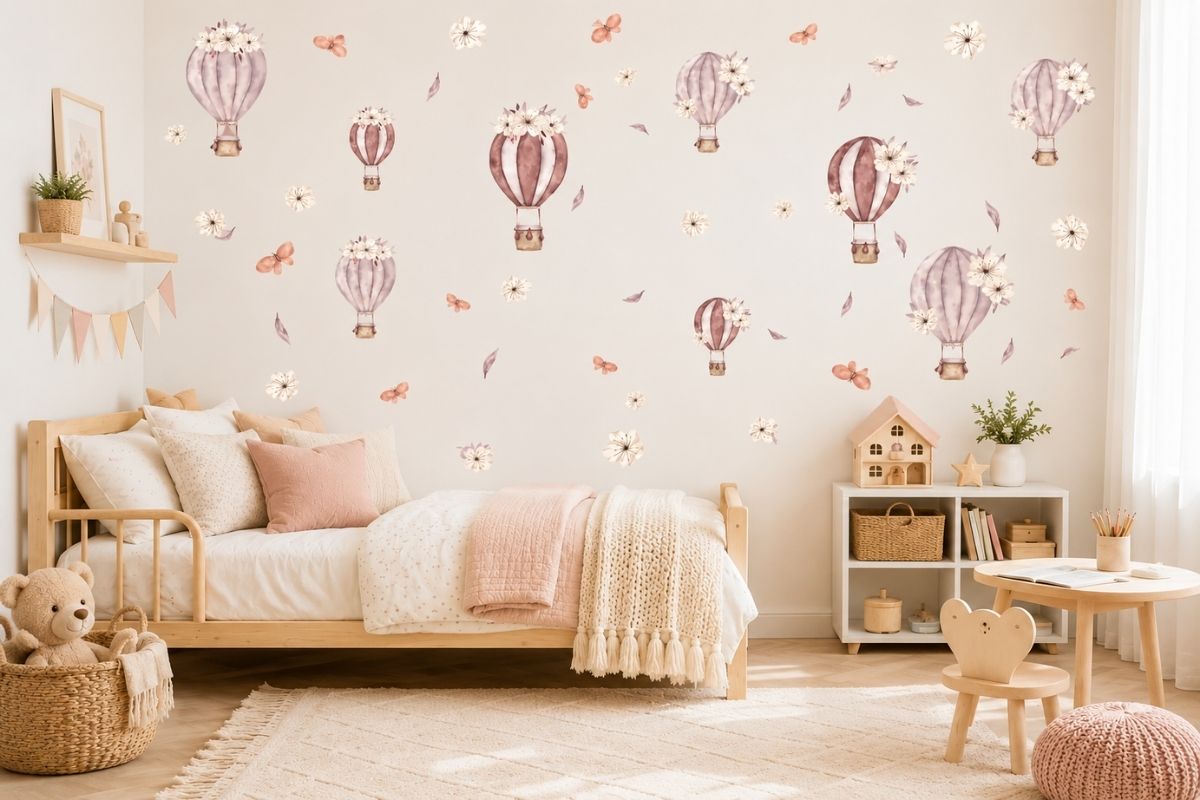
- Utilize easily removable wall decals instead of committing to expensive traditional wallpaper.
- Maximize vertical storage capacity using heavily anchored, inexpensive floating shelves.
- Invest in durable, long-lasting blackout curtains to ensure optimal infant sleep routines.
Understanding the Financial Framework of Baby Rooms
Designing a high-quality space requires a disciplined approach to expenditure. For parents wondering how to build a baby room under 500 dollars, the answer lies in strict adherence to a predetermined financial plan rather than spontaneous retail shopping. Often, new parents fall into the trap of purchasing expensive, heavily themed furniture that the child will physically and developmentally outgrow in just a few short years. Instead, a successful financial framework relies on the proven 50-30-20 rule. Allocate exactly 50 percent of your total budget to crucial, safety-oriented items. According to rigorous CPSC (Consumer Product Safety Commission) standards, the non-negotiable investments must always be a sturdy convertible crib and a certified, ultra-firm mattress. These are foundational elements where cutting costs could critically compromise infant safety.
Allocate 30 percent of the budget to functional elements that drastically improve the room’s daily usability. This category includes ambient lighting solutions, functional textiles like thermal blackout curtains, and comfortable, supportive seating. For instance, purchasing a second-hand nursery glider that has been thoroughly sanitized and mechanically inspected provides essential comfort for late-night feedings without the exorbitant retail markup.
The final 20 percent is reserved strictly for aesthetics, accessories, and personalization. This is where you can freely explore various nursery decor ideas to inject character and warmth into the space. By adhering to this rigid structural budgeting, parents can comfortably navigate the overwhelming retail landscape without succumbing to emotional impulse purchases. Every single dollar spent directly contributes to the room’s safety, longevity, or visual appeal, ensuring a sustainable approach to interior design.
Cheap Nursery Ideas That Still Look Expensive
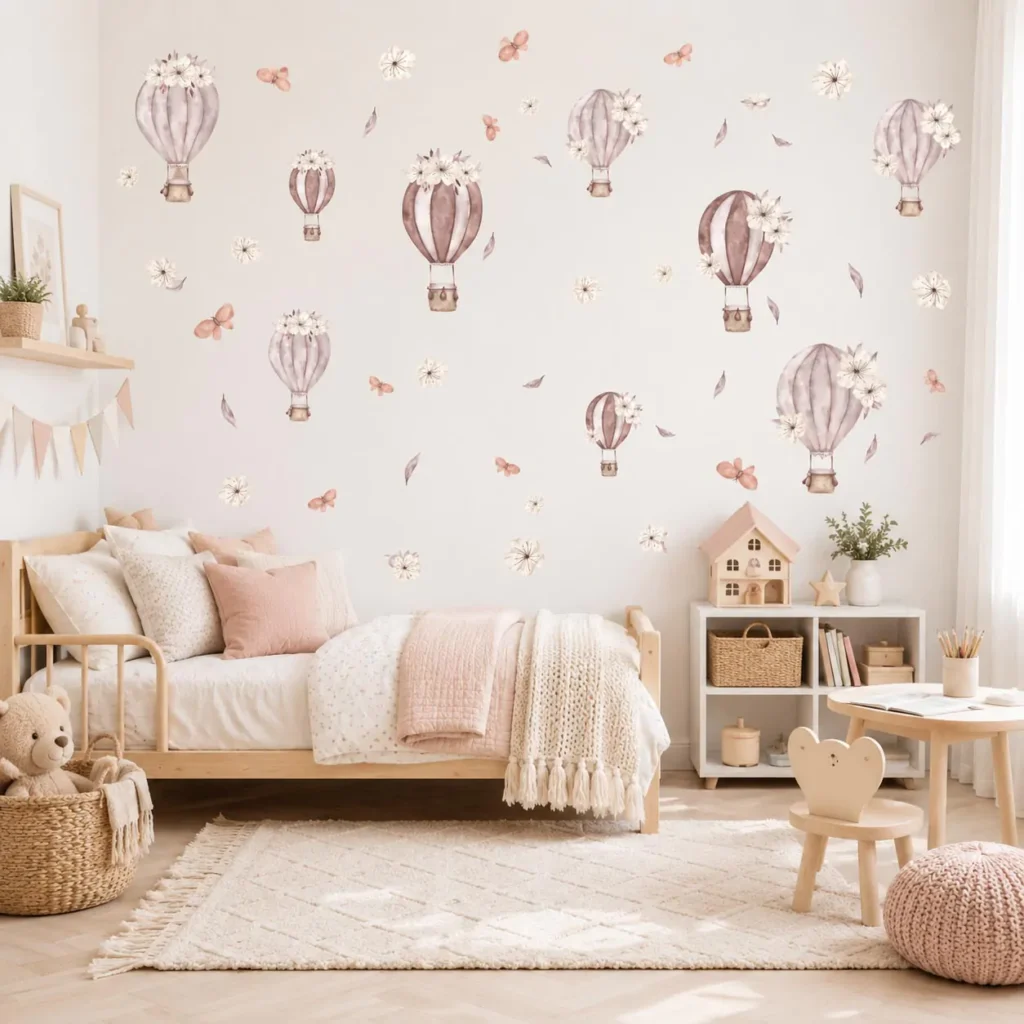
Achieving a luxurious, high-end interior aesthetic does not inherently require a massive financial investment or a professional interior designer. The core secret to implementing cheap nursery ideas that still look expensive lies entirely in optical design principles, deliberate material choices, and the creation of strategic focal points. Premium interior design is defined by cohesion, proper scale, and layered lighting rather than the sheer price tag of individual catalog items.
Instead of cluttering the limited space with dozens of small, cheap knick-knacks—which inevitably makes a room feel chaotic, disorganized, and much smaller—focus your resources on one or two large-scale statement pieces. A single, beautifully executed focal point commands visual attention and securely anchors the entire room. Furthermore, lighting represents a critical factor in perceived financial value. Standard builder-grade, harsh overhead lighting highlights drywall imperfections and makes spaces feel sterile and uninviting. Upgrading the central ceiling fixture to an affordable, oversized paper lantern or a deeply textured woven bamboo pendant instantly elevates the room’s architectural profile.
Additionally, mastering how to decorate a nursery on a budget involves clever and deceptive textile layering. Purchasing a massive, high-quality Persian rug is usually financially prohibitive, but buying a very large, inexpensive flat-weave neutral rug and layering a smaller, faux-sheepskin rug on top creates a rich, heavily dimensional look. Similarly, manipulating window treatments alters spatial perception. Hanging inexpensive curtain panels 4 to 6 inches below the ceiling line, rather than right above the actual window frame, draws the human eye upward. This classic architectural trick makes the ceilings appear significantly higher and the room more expansive, mimicking the grand proportions of custom-built luxury homes at absolutely zero additional cost.
Which is Better for Nursery Walls Paint or Peel and Stick Decals?
Wall treatments serve as the fundamental visual canvas for the entire room, making this one of the most critical decisions in the economical design process. When analyzing rigorously which is better for nursery walls paint or peel and stick decals, parents must carefully consider both immediate capital expenditure and long-term convenience.
| Feature | Traditional VOC-Free Paint | Peel-and-Stick Decals | Traditional Wallpaper |
| Initial Material Cost | Moderate (Requires tools) | Low to Moderate | Very High |
| Application Labor | High (Masking, multiple coats) | Zero (DIY Friendly) | Very High (Professional needed) |
| Room Recovery Time | 24-48 hours (Drying/Fumes) | Immediate | 24 hours |
| Long-Term Flexibility | Low (Needs repainting later) | High (Easily replaceable) | Low (Difficult removal) |
Traditional painting requires far more than just the baseline cost of a few liquid gallons. It necessitates purchasing heavy-duty painter’s tape, protective drop cloths, assorted rollers, and plastic trays. Furthermore, strict pediatric health guidelines dictate the mandatory use of zero-VOC (Volatile Organic Compounds) paint to maintain pristine indoor air quality for developing infant lungs, which inevitably carries a premium price point. The application process is incredibly labor-intensive and requires completely vacating the room until all chemical odors dissipate. Additionally, painting an entire room in dark, bold colors heavily impacts the Light Reflectance Value (LRV), leading to a higher reliance on artificial lighting and physically making the room feel restrictive.
In stark contrast, modern peel-and-stick wall decals represent the ultimate intersection of financial efficiency and high-end aesthetics. Utilizing precision-cut products like those from Dos Junior completely eliminates multi-day drying times, lingering chemical fumes, and the need for specialized construction equipment. Decals can instantly introduce vibrant colors, intricate artistic patterns, and engaging motifs to a specific accent wall without darkening the entire spatial footprint. Because they can be effortlessly applied, repositioned, and adjusted by anyone without prior experience, they represent a massive saving on professional labor. This makes them a functionally superior choice for families seeking immediate, striking visual results.
Brilliant Nursery Decor Ideas for Small Spaces
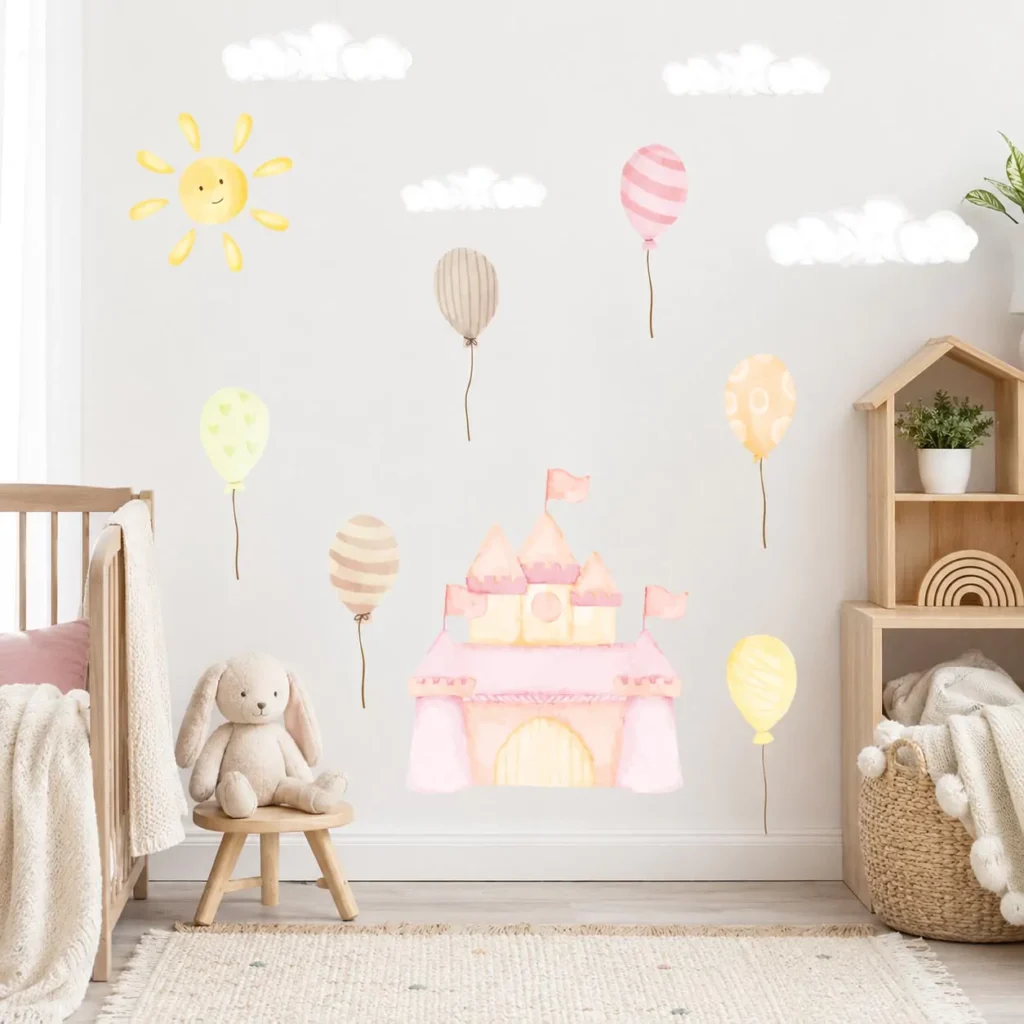
High-density urban environments frequently require infants to occupy considerably smaller rooms or creatively share spaces with parents or siblings. Discovering the absolute best affordable nursery decor for small apartment rooms requires a distinct, ruthless strategy focused heavily on multi-functional furniture and the aggressive maximization of vertical real estate. In compact areas, floor space is an exceptionally premium commodity; therefore, every physical item introduced must rigorously justify the square footage it permanently consumes.
If you are actively figuring out how to decorate a nursery on a budget while dealing with severe spatial limitations, heavy-duty floating shelves are your greatest architectural asset. Constructed from inexpensive, sanded lumber and basic hardware brackets, these shelves forcefully lift vital storage off the ground. By organizing storybooks, lightweight audio monitors, and daily grooming essentials high on the wall, you maintain a clear, unobstructed floor path. Flat-pack furniture featuring exposed, elevated wooden legs is another critical optical element. Unlike bulky, traditional dressers that sit entirely flush against the floor and visually weigh the room down, elevated furniture allows natural light to seamlessly pass underneath, creating a powerful optical illusion of continuous, expanding floor space.
Mirrors are inherently indispensable in small room interior design. Positioning a large, inexpensive, and shatter-proof mirror securely opposite the room’s primary window physically doubles the amount of natural sunlight bouncing around the room. This makes a tiny, potentially claustrophobic space feel instantly larger and more inviting. Furthermore, utilizing over-the-door hanging fabric organizers for diapering lotions, wipes, and small soft toys keeps daily necessities rapidly accessible yet completely visually hidden, preserving the room’s serene, uncluttered, and expansive aesthetic.
How to Decorate a Rental Nursery Without Painting Walls
Tenants and apartment renters encounter highly specific obstacles, as property management companies and strict lease agreements typically prohibit permanent physical alterations, heavy structural drilling, or customized repainting. Solving the complex puzzle of how to decorate a rental nursery without painting walls demands an exclusive reliance on high-impact, completely reversible design techniques. The primary objective is to inject deep warmth and unique character into a standardized, sterile white-box environment without risking the total loss of a substantial security deposit.
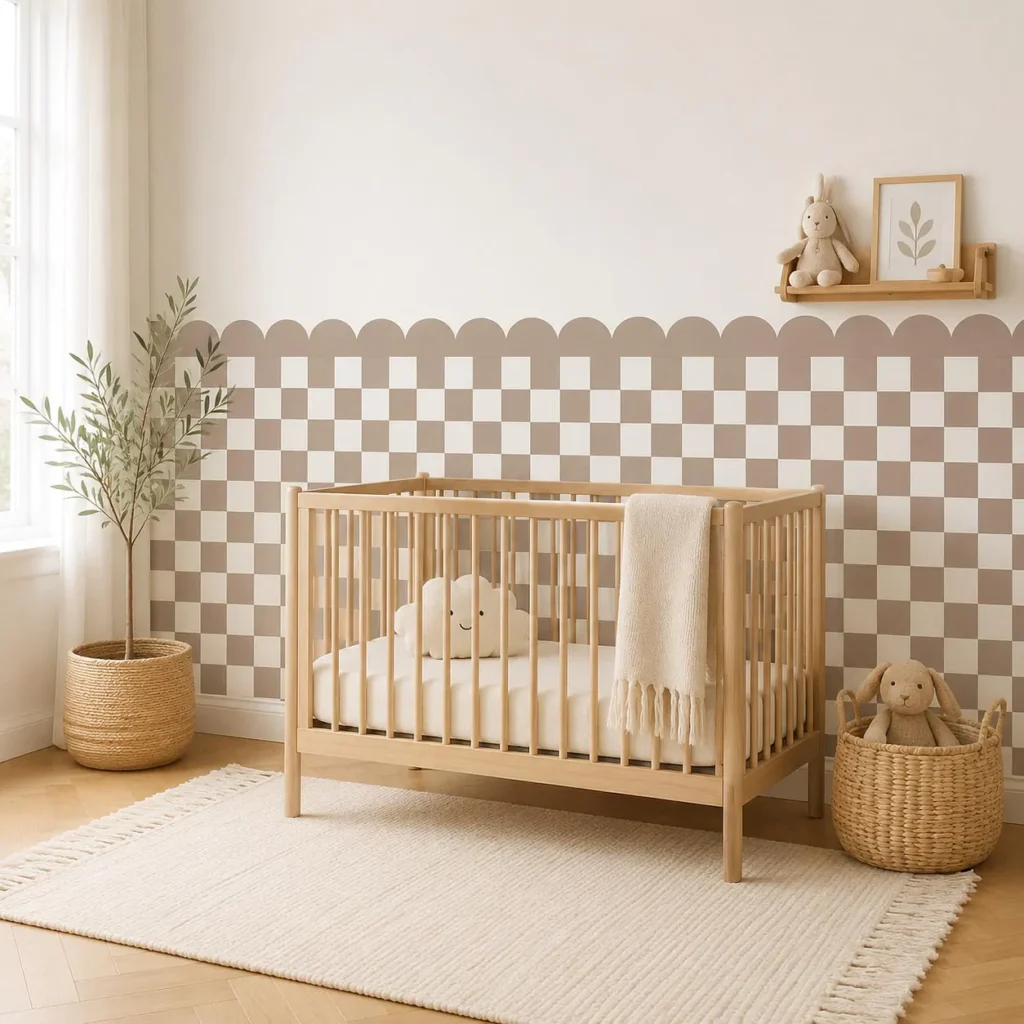
One highly effective, low-cost method involves the strategic use of large-scale, lightweight textiles. Hanging a beautiful, intricately patterned quilt or a woven fabric tapestry using simple, non-damaging adhesive strips can introduce a massive block of color and organic texture to an otherwise empty wall. Furthermore, these heavy textiles serve a crucial dual purpose by providing subtle acoustic dampening, which is highly beneficial for maintaining uninterrupted infant sleep environments. Washi tape represents another incredibly versatile tool. This low-tack, specialized paper tape can be utilized to painstakingly create geometric patterns, faux-wainscoting, or colorful framing for unframed art prints directly on the drywall, and it peels away without tearing the underlying paper.
However, the absolute cornerstone of rental decoration lies in specialized, low-tack removable wall graphics. High-quality decals provide an unparalleled ability to establish elaborate, immersive visual themes—ranging from delicate, minimalist botanical illustrations to adventurous, large-scale mountain landscapes—in just a matter of hours. Because they rely entirely on gentle, specialized adhesive technology, they bond securely to the wall but release cleanly and completely when it is time to move out. This vital feature allows renters to achieve a highly customized, permanent-looking interior design while remaining fully, legally compliant with strict lease restrictions.
DIY Nursery Decor Ideas Using Vinyl Decals
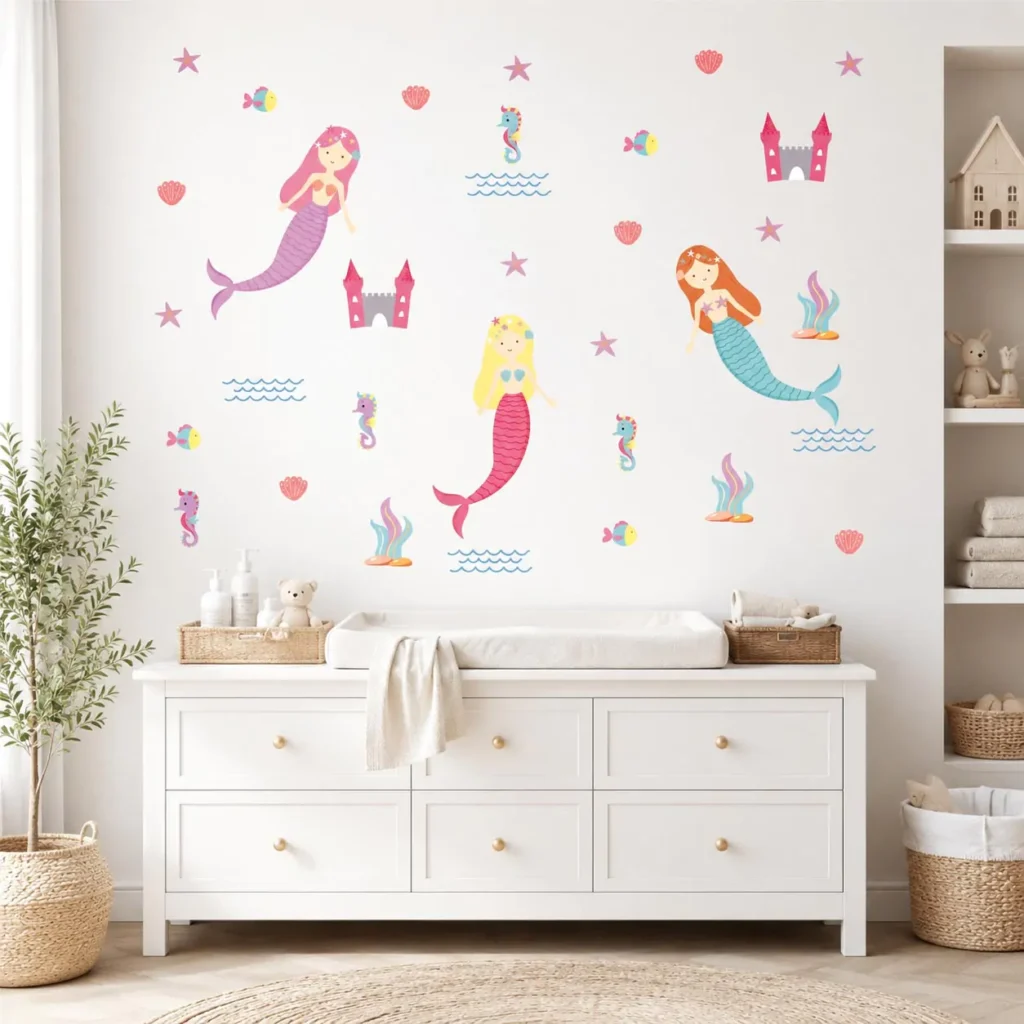
The very essence of deeply economical decoration is substituting expensive professional labor with dedicated personal effort. Embracing clever diy nursery decor ideas utilizing premium peel-and-stick elements is an empowering, highly rewarding way to create bespoke interiors. However, achieving a flawless, professional-grade visual finish requires meticulous preparation and exact application technique.
The absolutely most crucial step in any DIY decal installation project is microscopic surface preparation. Walls must be completely, utterly free of atmospheric dust, hidden cobwebs, and microscopic grease particles, all of which critically compromise the chemical adhesive bond. Wiping the target application area thoroughly with a lightly damp microfiber cloth and allowing it to air dry perfectly ensures maximum longevity and prevents peeling edges. When executing a structured geometric pattern, such as creating a faux-wallpaper effect using individual spaced shapes, mathematical precision is mandatory. Utilizing a laser level or drawing a faint, erasable pencil grid guarantees uniform spacing and prevents the final design from looking chaotic, crooked, or amateurish. For applying larger, continuous mural pieces, employing the professional “hinge method”—taping the top edge securely, slowly peeling the paper backing downward, and smoothing the vinyl outward from the center—completely prevents trapped air bubbles and irreversible misalignment.
These specific DIY techniques extend beautifully beyond bare walls. Transforming a heavily worn, generic second-hand wooden dresser is a quintessential strategy for anyone learning how to decorate a nursery on a budget. By lightly sanding the drawer fronts to remove old varnish, applying a safe, non-toxic primer, and precisely cutting and affixing vinyl decals directly to the wood, parents can seamlessly create custom, heavily themed furniture. This satisfying upcycling process effortlessly saves hundreds of dollars compared to buying brand-new, boutique-style pieces and ensures the furniture perfectly, identically matches the room’s overarching visual aesthetic.
Sourcing Affordable Nursery Decor
Procuring high-quality, durable items on a severely restricted budget requires stepping firmly outside the traditional, heavily marked-up baby retail ecosystem. Dedicated infant and maternity boutiques often charge astronomical premium prices for basic items that can easily be found in general homeware or organizational departments for significantly less capital. Redefining exactly where and how you shop is vital for securing truly affordable nursery decor.
Storage and daily organization provide prime, undeniable examples of this aggressive retail markup. Instead of buying “nursery-specific,” heavily branded fabric bins, explore the general storage aisles of massive hardware stores or large-scale office supply retail chains. Standard industrial canvas baskets, coated wire crates, and sturdy woven bins serve the exact same physical function but are priced realistically for general consumers. Similarly, purchasing a standard, heavy-duty metal utility cart to function as a mobile diaper changing and supply station offers incredible, unmatched spatial flexibility. Not only is it vastly cheaper than a dedicated wooden side table, but it can easily and cleanly be repurposed for toddler craft supplies or secondary bathroom storage as the child rapidly grows.
The localized second-hand market is an incredibly invaluable resource for acquiring solid wood furniture like heavy dressers and tall bookshelves. These items possess exceptional, multi-generational longevity and can often be acquired locally for a minimal financial investment. However, rigorous safety protocols must remain permanently paramount when shopping used. Always meticulously inspect items for internal structural integrity, missing hardware, or toxic lead-based paints. Crucially, ensure that all purchased heavy furniture is immediately retrofitted with brand-new, heavy-duty wall anchor kits, with screws penetrating at least two inches directly into the wooden wall studs, to prevent catastrophic tip-overs. Remember, while purely aesthetic items can be safely bought second-hand, official consumer protection guidelines state unequivocally that sleep mattresses and vehicular car seats must always be purchased brand new to guarantee uncompromising infant safety.
Frequently Asked Questions
How do I make my baby’s room look nice on a budget?
Focus strictly on decluttering and adopting a clean, minimalist aesthetic. Purchase heavy second-hand wooden furniture, upgrade the metal knobs, and use removable wall decals to create a strong visual focal point. Layering inexpensive textured rugs and upgrading to warm-toned, oversized lighting fixtures instantly elevates the space without requiring a large financial investment.
Is it cheaper to paint or use wall decals?
Wall decals are significantly cheaper and vastly more time-efficient. Painting requires purchasing specific primer, drop cloths, tape, and rollers, alongside hours of physical labor. High-quality decals offer instant visual impact, demand zero extra equipment, leave absolutely no chemical odors, and completely eliminate the need for expensive future repainting.
What is the 50 30 20 rule for decorating a room?
This rigid financial strategy dictates allocating exactly 50 percent of your total budget to essential safety furniture, like a structurally certified crib. Dedicate 30 percent to highly functional items such as blackout curtains and comfortable seating. Reserve the final 20 percent strictly for aesthetic touches, like affordable nursery decor and removable wall art.
How to decorate a nursery if you rent?
Renters must strictly avoid permanent structural modifications. Utilize large, inexpensive area rugs to conceal unattractive flooring and use tension rods for temporary window treatments. Rely exclusively on peel-and-stick decals to implement custom wall designs, ensuring you can personalize the space heavily without risking your security deposit or damaging the drywall.
Conclusion
Ultimately, fully mastering how to decorate a nursery on a budget is about making highly deliberate, data-driven, and functional decisions rather than settling for inferior quality. By prioritizing structurally sound, safety-certified furniture, cleverly upcycling robust second-hand pieces, and utilizing high-impact, low-cost architectural treatments like removable decals, you can build a stunning, secure, and deeply comforting environment. Remember that the best nursery decorating ideas on a budget thrive on long-term adaptability; the smartest, most economical designs are those that easily evolve as your child grows physically and developmentally. Focus heavily on vertical spatial planning and strategic, unconventional retail sourcing to bring your creative vision to life. Ready to upgrade your walls without the frustrating hassle of chemical paint? Explore premium, effortlessly easy-to-apply decal collections that perfectly align with your strict financial goals.