

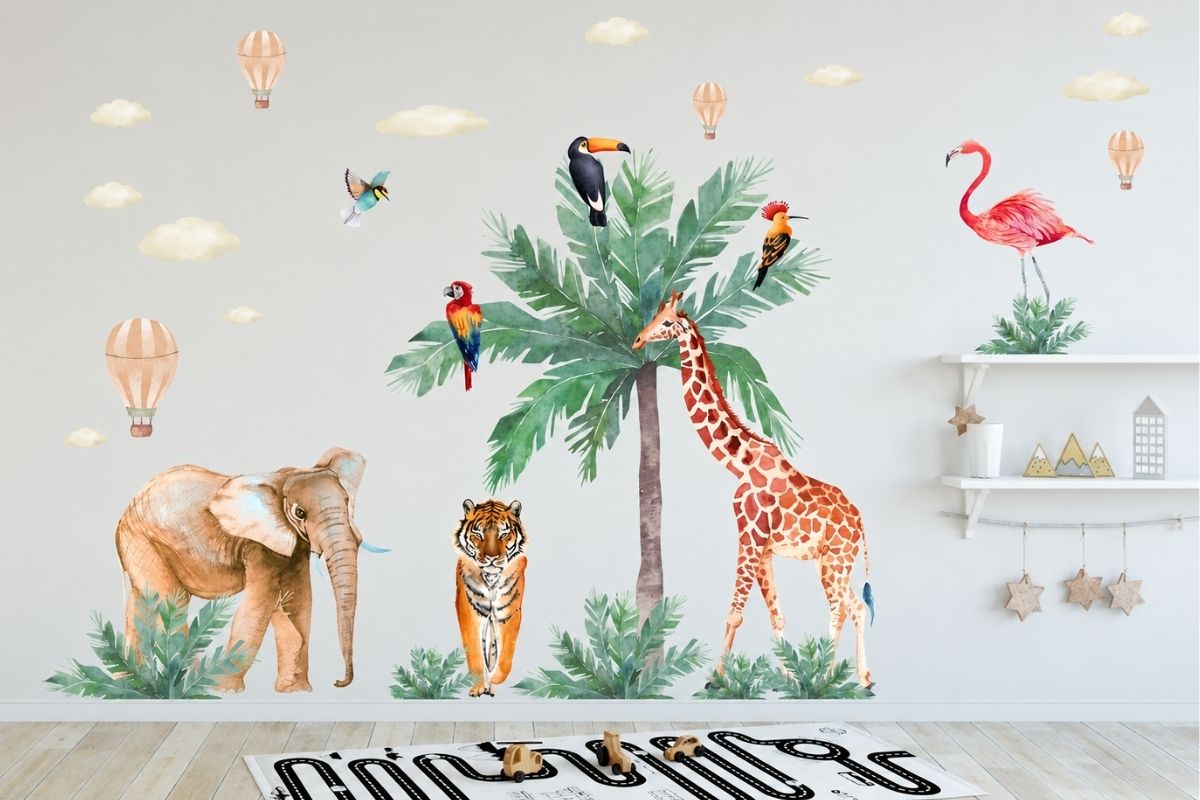
Giraffe nursery wall decor turns a blank baby room into a calm, safari-inspired space without relying on bright primary colors or cartoon prints. The look works because giraffe motifs pair a soft neutral palette with one strong, recognizable silhouette, which keeps a small room feeling open rather than busy. This guide compares decal, wallpaper, and mural formats, explains where to place giraffe wall decor relative to the crib, and walks through material safety, sizing, and budget so the choice fits both the room and the baby using it.
What is giraffe nursery wall decor?
Giraffe nursery wall decor refers to giraffe-themed wall coverings and accents used in a baby’s room, including peel-and-stick decals, wallpaper panels, framed prints, and painted murals. Most current designs favor a single-color, line-art giraffe silhouette over busy illustrations, which suits a minimalist nursery and stays visually calm during nighttime feedings.
Key facts at a glance:
- Format options: removable decals, pre-pasted wallpaper, canvas prints, hand-painted murals.
- Typical price range: $15–$45 for a decal set; $60–$150 for a full wallpaper wall.
- Application time: most decal sets apply in under 20 minutes with no tools required.
- Removal: repositionable vinyl decals lift off without damaging painted drywall in most cases.
These four formats cover almost every giraffe nursery wall decor purchase, and each one suits a different stage of furnishing a room, from a quick rental fix to a long-term family home. Parents decorating on a tight timeline, such as in the weeks right after a gender reveal, usually default to decals simply because no drying or curing time stands between unboxing and a finished wall. Families with more lead time, often starting in the second trimester, have room to consider wallpaper or a mural instead, since both formats need extra days for ordering, prepping the wall, and letting paste or paint set fully before placing furniture against it.
Material also varies by format: most decals use a matte vinyl or fabric-textured vinyl rather than glossy plastic, which keeps glare down under a nursery’s overhead light and avoids the slightly cheap look that high-shine decals can have on a painted wall. Fabric-backed decals, sometimes marketed as wall stickers rather than vinyl decals, leave even less residue on removal, which makes them a common choice for nurseries inside an apartment with a strict move-out inspection.
Why choose a giraffe theme for a nursery
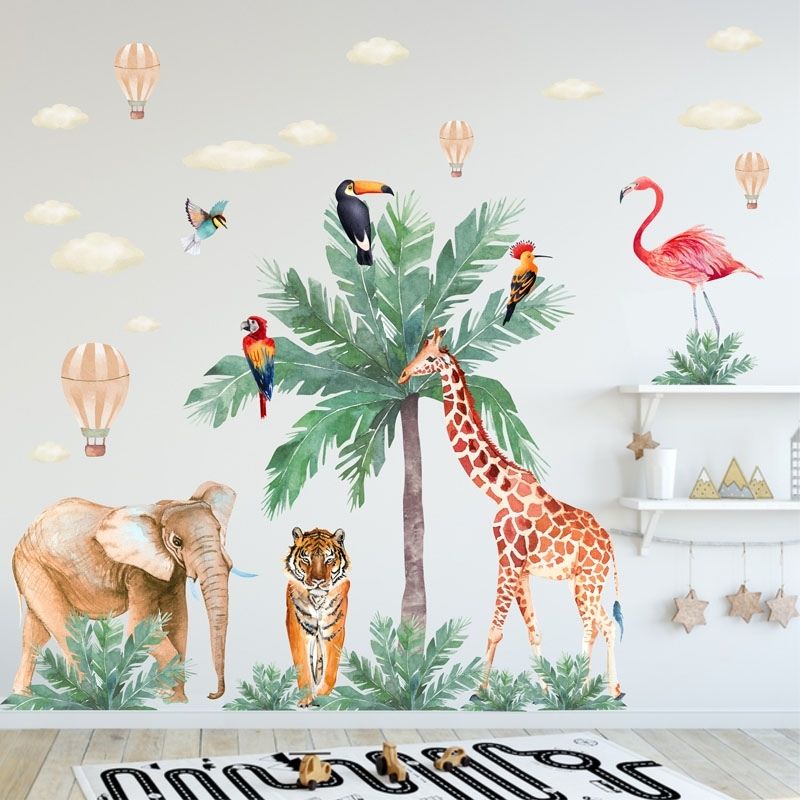
A giraffe theme works in a nursery because the animal’s long neck and spotted coat translate into one clean shape, unlike denser jungle scenes that can feel cluttered on a small wall. Designers who specialize in children’s spaces often note that a single large, calm motif reads better in a nursery than several smaller competing prints, since a newborn’s eyes focus best at roughly 8 to 12 inches and respond more strongly to clear outlines and contrast than to fine detail, according to general pediatric vision guidance. Giraffe nursery wall decor also tends to skip the bright, saturated colors used in many cartoon animal sets, leaning instead toward sand, taupe, sage, or charcoal tones that match a wider range of furniture finishes.
That neutral leaning matters for longevity: a family can keep the same wall decor through multiple stages of the room, from infant to toddler, without it reading as outgrown. Because the giraffe motif carries no strong gender signaling on its own, it also works well for parents who don’t know the baby’s sex yet or who prefer a gender-neutral palette from the start. dosjunior’s giraffe wall decals are produced without printed text, characters, or bright accessories, keeping the silhouette realistic rather than cartoonish, which is one reason the design pairs easily with wood furniture, woven baskets, and other natural-material nursery pieces.
Building a nursery around one strong motif, rather than five or six different animals, also simplifies later decisions about bedding, rugs, and wall art, since every piece can reference the same shape and palette instead of competing for attention. Home-decor industry coverage of nursery trends has noted a steady shift toward this kind of single-motif, neutral-toned styling over the past several years, moving away from the multi-character, primary-color sets that dominated baby decor a decade ago. That shift tracks with a broader move toward neutral, design-forward nurseries that double as a usable guest room or home office once a child outgrows the crib, which keeps the wall decor itself simple enough to leave in place through that transition.
Decals, wallpaper, or murals: which giraffe wall decor fits best
Three formats account for most giraffe nursery wall decor sold today: peel-and-stick decals, pasted or pre-pasted wallpaper, and hand-painted or stenciled murals. Each one trades off differently on cost, permanence, and how much wall preparation it needs, so the right pick depends on whether the room is rented, shared with a future sibling, or part of a long-term family home.
| Format | Typical cost | Best for |
|---|---|---|
| Decals | $15–$45 | Rentals, quick changes |
| Wallpaper | $60–$150 | Owned homes, full walls |
| Murals | $200–$600 | Custom, permanent rooms |
As a general rule, renters and anyone furnishing a nursery on a lease shorter than two years tend to land on decals, since the format leaves no patch job behind at move-out. Homeowners planning to keep the nursery’s layout for several years, or to hand it down to a second child, more often justify wallpaper or a mural, where the higher upfront cost spreads across a longer useful life.
Removable decals
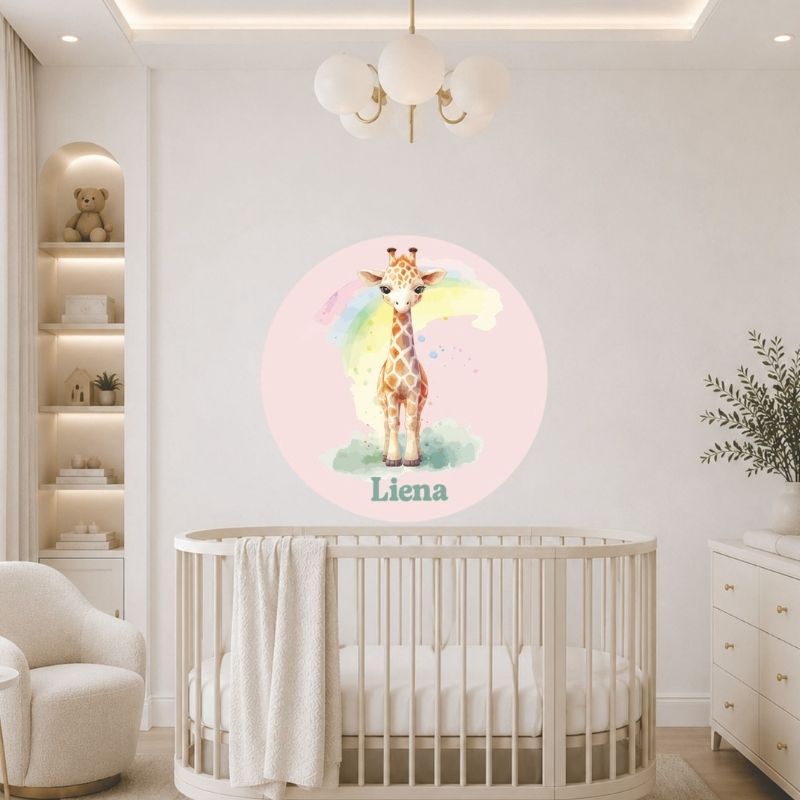
Removable vinyl decals apply directly to painted drywall and lift off without tearing the paint underneath in most cases, which makes them the default choice for renters and first-time nursery planners. dosjunior’s decal sets ship pre-cut into a single giraffe silhouette plus a few branch or cloud accents, so the layout takes shape without scissors or a measuring grid. A typical decal set installs in under 20 minutes and can be repositioned several times before the adhesive starts to lose tack, which gives new parents room to experiment before committing to a final spot.
Pasted wallpaper
Wallpaper covers more wall area in one continuous piece and holds up better over years of wiping down, which matters in a room that will see spit-up, crayon marks, and tape from artwork. Pre-pasted versions need only water to activate the adhesive, while traditional wallpaper requires a separate paste pot and a steadier hand during application. Because wallpaper commits to the wall for the long term, it tends to suit owned homes more than short-term rentals or rooms expected to change use within a year or two.
Hand-painted murals
Murals offer the most design flexibility, since a painter can scale a giraffe scene to an irregular wall, a sloped ceiling, or a built-in nook that pre-made decals and wallpaper rolls can’t fit cleanly. They also cost the most per square foot, because pricing reflects the painter’s time rather than material cost, and any correction after the paint dries usually means repainting the section rather than peeling and repositioning. Choosing a format is only half the decision; where that decor sits on the wall affects both safety and visual balance just as much.
Where to place giraffe wall decor in a nursery
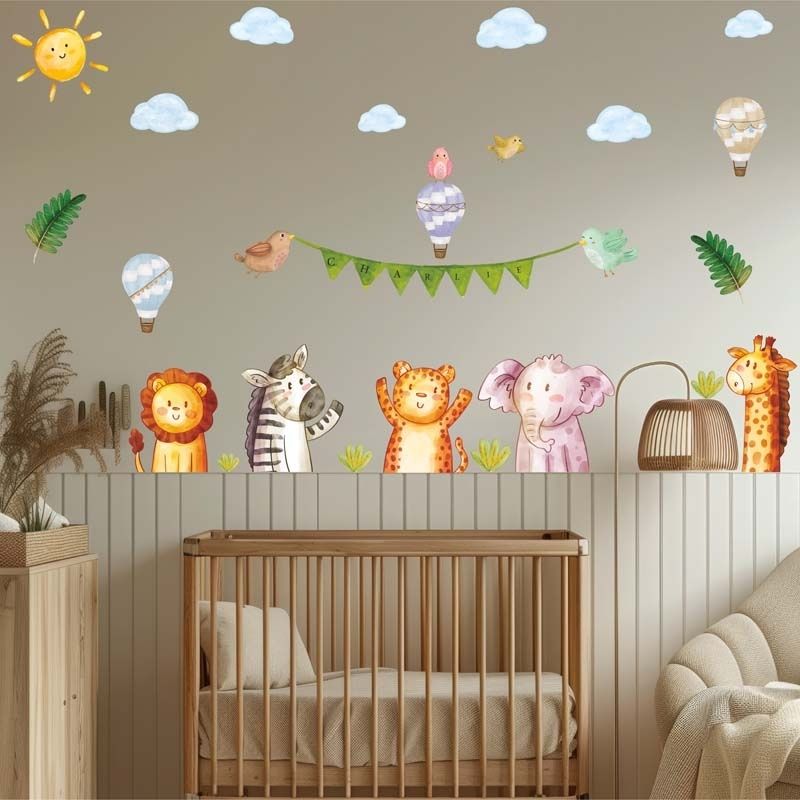
Most safety and design guidance points to keeping wall decor at least 12 inches above the top rail of the crib, both so a standing toddler can’t reach it and so the piece reads clearly from a changing table or rocking chair across the room.
Above the crib
A single giraffe silhouette centered above the crib works best when its tallest point sits between 36 and 60 inches from the floor, roughly eye level for an adult holding the baby during a late-night feed. Centering the decal on the crib’s midpoint, rather than the wall’s midpoint, keeps the visual line tied to the furniture instead of looking off-balance once a dresser or glider gets added later.
Accent wall behind seating
A second common placement is the wall behind a glider or rocking chair, where the decor faces whoever is feeding or settling the baby rather than the baby itself. This spot tolerates a larger design, such as a wallpaper panel or a multi-giraffe scene, since there’s no crib-rail height restriction to plan around.
Measuring before you buy
Most decal and wallpaper listings give a finished width and height, so measuring the target wall first prevents ordering a panel that overruns a window, outlet, or door frame. A useful starting measurement is the clear wall span between the crib’s outer edge and the nearest piece of furniture, since that span sets the realistic maximum width for the design regardless of how large the listing photo makes it look. Leaving roughly 3 to 4 inches of breathing room on each side of the decal, rather than running it edge to edge, generally reads as more intentional than filling the entire available span. Placement decisions like these intersect directly with safety questions about materials, adhesives, and certification, which matter just as much as positioning once a baby starts pulling up on nearby furniture.
Is giraffe nursery wall decor safe for babies?
Yes, most giraffe nursery wall decor is safe for babies when it carries a low- or zero-VOC certification and sits outside the baby’s physical reach. Reputable decal and wallpaper makers publish compliance with general consumer product safety standards covering lead content and choking-hazard testing, which matters most for decor with small embellishments like flowers or stars rather than a single flat giraffe silhouette. dosjunior keeps its giraffe decals as one flat vinyl piece with no separate small parts, which removes the loose-piece concern that applies to more decorative, multi-piece sets.
Parents furnishing a shared nursery should also check that any adhesive is rated for the wall type, since textured or freshly painted walls sometimes need a 2- to 4-week cure time before decals will hold long-term. For murals, specifying low-VOC paint directly to the painter is worth the extra step, since it affects indoor air quality in a room where a baby spends 12 or more hours a day. Most of these checks line up with general children’s-product safety frameworks used across the home-goods industry, which cover surface coatings, lead limits, and small-part testing for anything marketed for use in a child’s room.
What to check before buying:
- Zero-VOC or low-VOC certification on paint, decal ink, or wallpaper adhesive.
- No detachable small parts within crib reach.
- A 2- to 4-week cure time on new paint before applying decals.
- Lead-content compliance documentation available from the manufacturer.
How much does giraffe nursery wall decor cost?
Giraffe nursery wall decor spans a wide price range, from a $15 single decal to a $600 commissioned mural, so budget usually narrows the format choice before style does. A vinyl decal set covering one wall typically runs $20 to $45, which fits a one-time nursery budget without competing with bigger purchases like a crib or stroller. Pre-pasted wallpaper panels for a full accent wall run $60 to $150 depending on the brand and roll count, and most rooms need two to four rolls to cover one wall. Custom or hand-painted murals start around $200 for a simple silhouette and can exceed $600 for a detailed, multi-color scene, since pricing reflects the painter’s time rather than the cost of paint itself.
Buyers working with a tighter budget can also pair a smaller, lower-cost decal with existing neutral wall paint rather than committing to a full wallpaper wall, which keeps the giraffe motif as an accent instead of the room’s biggest line item. Installation labor adds a separate cost on top of materials for the more involved formats: decals are designed for a parent to apply directly, while wallpaper and murals often bring in a professional installer or painter, typically adding $100 to $300 to the total depending on wall size and local labor rates. Factoring that labor cost in upfront avoids a mid-project surprise once materials have already been ordered.
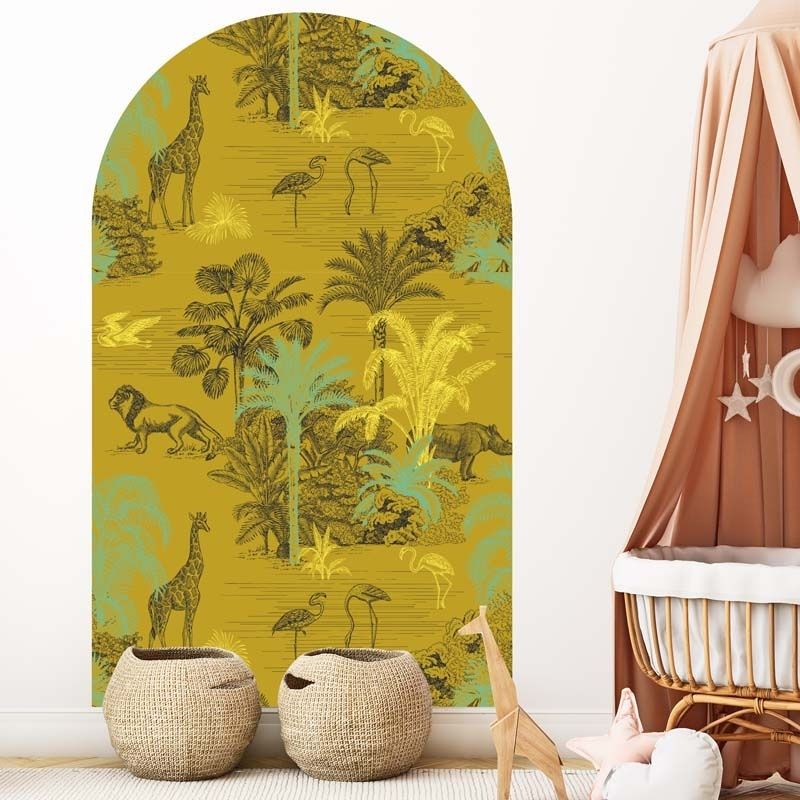
Giraffe nursery decor ideas for girls, boys, and gender-neutral rooms
Giraffe nursery wall decor adapts easily across gendered and neutral nursery styles because the animal itself carries no inherent color or pattern association the way pink florals or blue trucks often do. For a girl’s nursery, many parents pair a giraffe silhouette decal with blush, dusty rose, or soft lavender accents in the bedding and rug rather than changing the decal’s color. Boy-themed rooms more often pair the same giraffe motif with deeper sage, navy, or charcoal accents, leaving the wall decor itself unchanged across both directions.
Gender-neutral nurseries, which baby-registry industry surveys describe as a growing share of first-time parent setups, typically keep the giraffe decal in its natural tan-and-cream tone and build the room’s personality through textiles instead of the wall art. This flexibility is one reason a single minimalist, realistic giraffe decal, without text, color blocking, or added characters, tends to outlast a specific gender theme as the nursery transitions into a toddler room. Swapping a room’s gender lean later, whether for a second child or simply a style refresh, usually only requires changing the rug, curtains, and crib sheet rather than removing the wall decor itself, which keeps the most labor-intensive part of the nursery untouched.
Quick palette pairings:
- Girl-leaning: blush bedding, cream giraffe decal, brushed-brass accents.
- Boy-leaning: sage bedding, cream giraffe decal, matte-black accents.
- Gender-neutral: oat or linen bedding, cream giraffe decal, natural wood accents.
Frequently asked questions
Does giraffe nursery wall decor work for a gender-neutral nursery?
Yes. A giraffe silhouette carries no built-in color or gender association, so it pairs equally well with blush, sage, or neutral cream palettes. Most gender-neutral nurseries keep the decal in its natural tan tone and adjust personality through bedding and rugs instead of the wall art itself.
How high should giraffe wall decor go above a crib?
Most placement guidance puts the top of the design between 36 and 60 inches from the floor, and at least 12 inches above the crib’s top rail. That height keeps it out of a standing toddler’s reach while staying clearly visible from a nearby glider.
Is a giraffe decal or giraffe wallpaper cheaper for a nursery?
Decals are cheaper. A single-wall decal set typically costs $20 to $45, while a comparable wallpaper wall runs $60 to $150 for materials alone, plus application time. Decals also remove without wall damage, which wallpaper generally does not.
Are giraffe wall decals safe for a baby’s room?
Yes, when the decal is a single flat vinyl piece with no small detachable parts and the product documents lead-content and choking-hazard compliance. Confirming a low-VOC certification on the adhesive is also worth doing before applying it inside a baby’s room.
Conclusion
Giraffe nursery wall decor offers a calm, single-motif alternative to busier cartoon themes, with decals, wallpaper, and murals covering most budgets and levels of commitment. Placement at least 12 inches above the crib rail, paired with a low-VOC or zero-VOC certified product, addresses most of the safety questions parents raise before buying. Because the giraffe shape carries no fixed gender association, the same wall decor can carry a nursery from a gender reveal through the toddler years without a full redesign.