

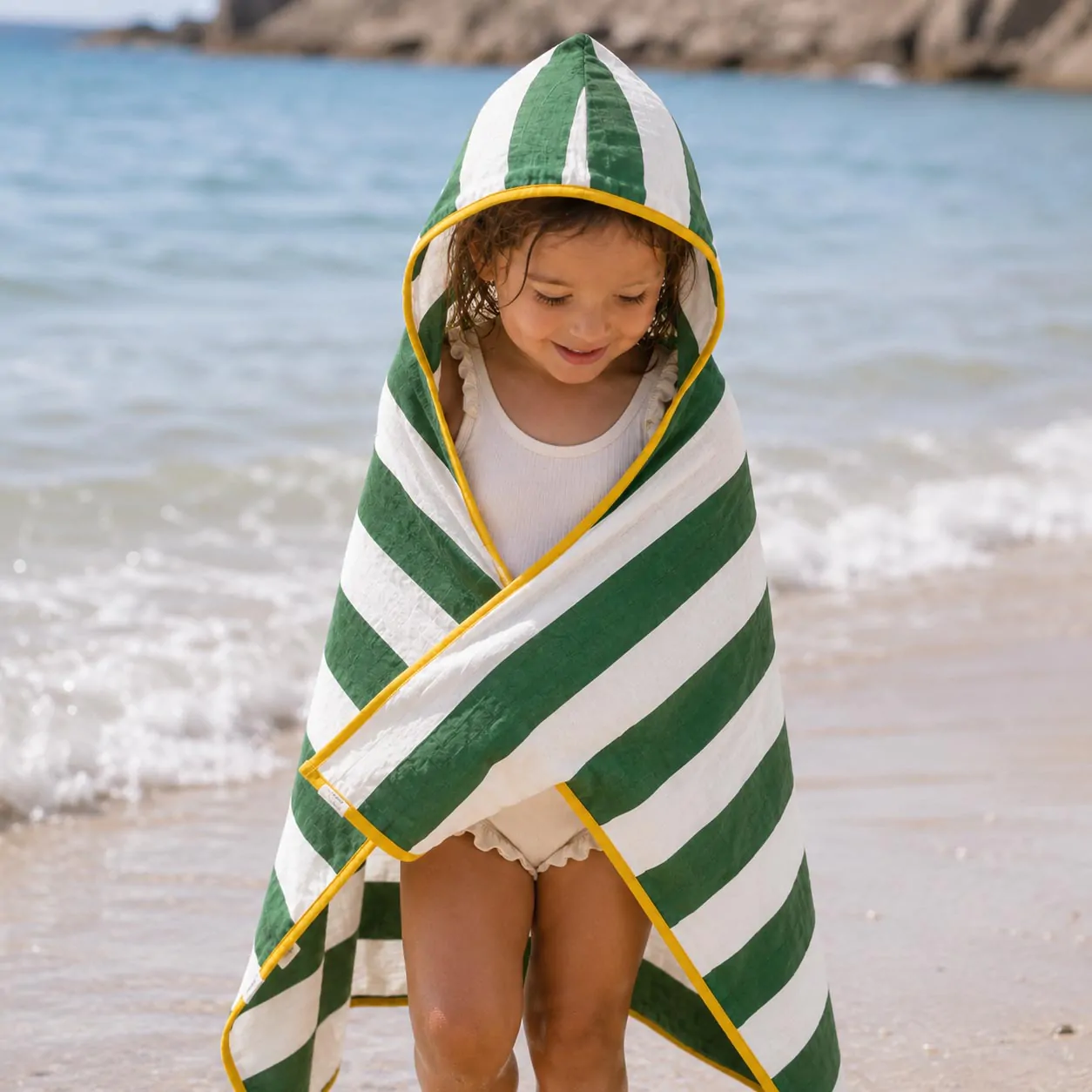
Selecting high-quality hooded baby towels and wearable poncho towels transforms daily bath routines and beach outings into safe, comforting, and stress-free experiences. Expectant parents and experienced caregivers increasingly move away from standard adult towels, recognizing that infants require specialized textile engineering to regulate body temperature and protect delicate skin. This comprehensive guide explores thermal retention physics, organic fabric certifications, and sizing transitions from infancy through the active toddler years. You will discover practical methods to evaluate absorption rates, choose between traditional hooded wrap designs and wearable ponchos, and care for premium baby linens to ensure lasting softness.
What are hooded baby towels and why are poncho towels better for active toddlers?
Hooded baby towels are specialized bath linens featuring an integrated fabric corner pocket designed to cover an infant’s head immediately after bathing, preventing rapid heat loss. For active, walking toddlers, a hooded towel poncho baby design is superior because it slips directly over the head like a garment, keeping the towel securely anchored on the child’s shoulders while leaving their hands completely free for play.
- Thermal Regulation: An infant loses up to 60% of their body heat through their head; an integrated hood traps warmth instantly within 3 to 5 seconds of leaving the warm water.
- Freedom of Movement: Unlike traditional wrap towels that drag on the floor or fall open when a toddler runs, a wearable baby poncho towel stays firmly in place without constant readjustment.
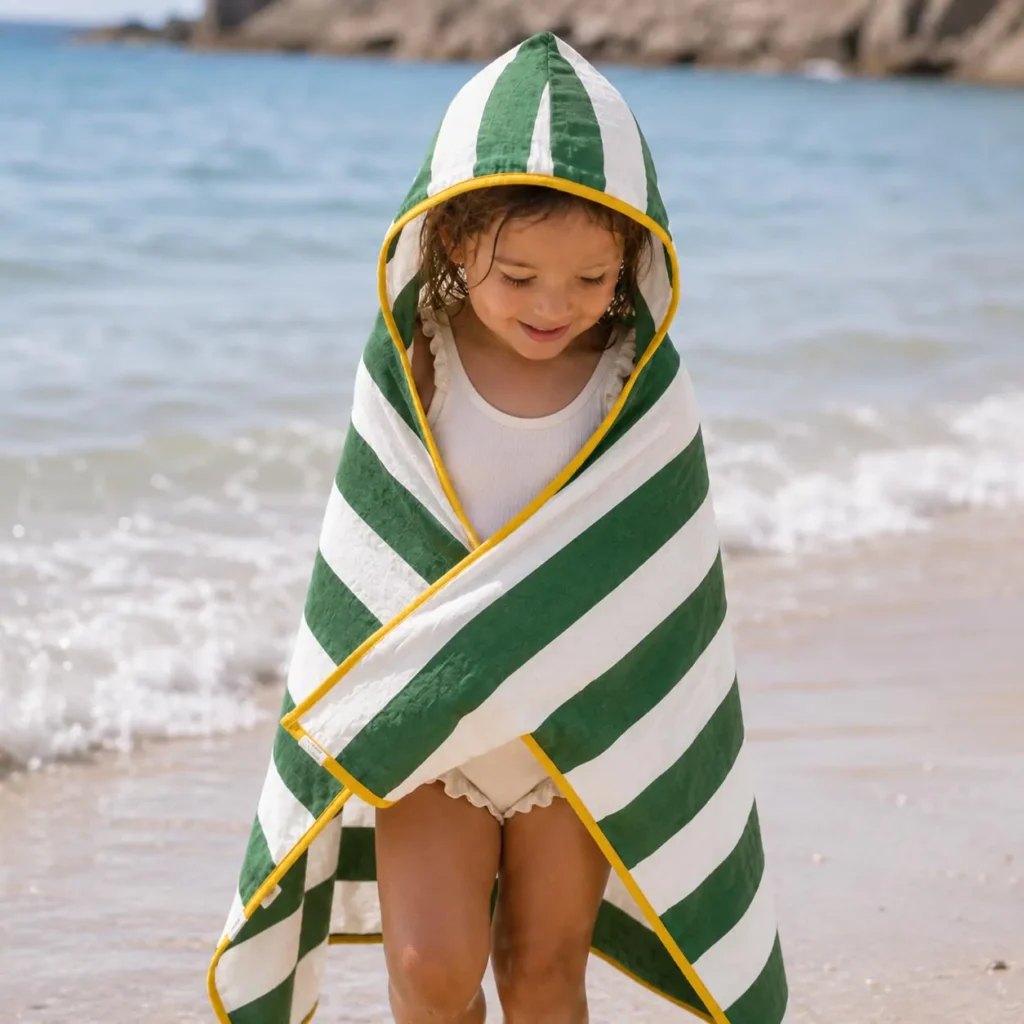
- Multi-Environment Utility: Poncho designs transition seamlessly from residential bathroom routines to outdoor swimming pools and breezy seaside beaches, serving simultaneously as an absorbent towel and a wind-breaking cover-up.
Why do infants need specialized hooded bath towels instead of adult towels?
An infant’s physiological structure and anatomical proportions differ vastly from those of an adult, making standard household bath towels inadequate and potentially harmful. The primary vulnerability of a newborn lies in their immature thermoregulatory system. Infants possess a high surface-area-to-body-mass ratio, meaning they lose ambient body heat nearly four times faster than adults when exposed to cooler room air. When an infant is lifted from a 37°C warm bath into a standard room temperature of 21°C, the rapid evaporation of water droplets from their skin triggers an immediate, stressful drop in core body temperature.
Specialized hooded baby towels mitigate this thermal shock by enclosing the wet head instantly while wrapping the torso in a continuous insulating layer. Furthermore, adult towels are typically woven with dense, heavy loops designed to withstand abrasive friction. A baby’s epidermal layer is 30% thinner than adult skin and produces significantly less protective sebum, rendering it highly susceptible to micro-abrasions, redness, and contact dermatitis when rubbed with harsh, standard terry cloth.
Understanding infant thermal heat loss after bath time
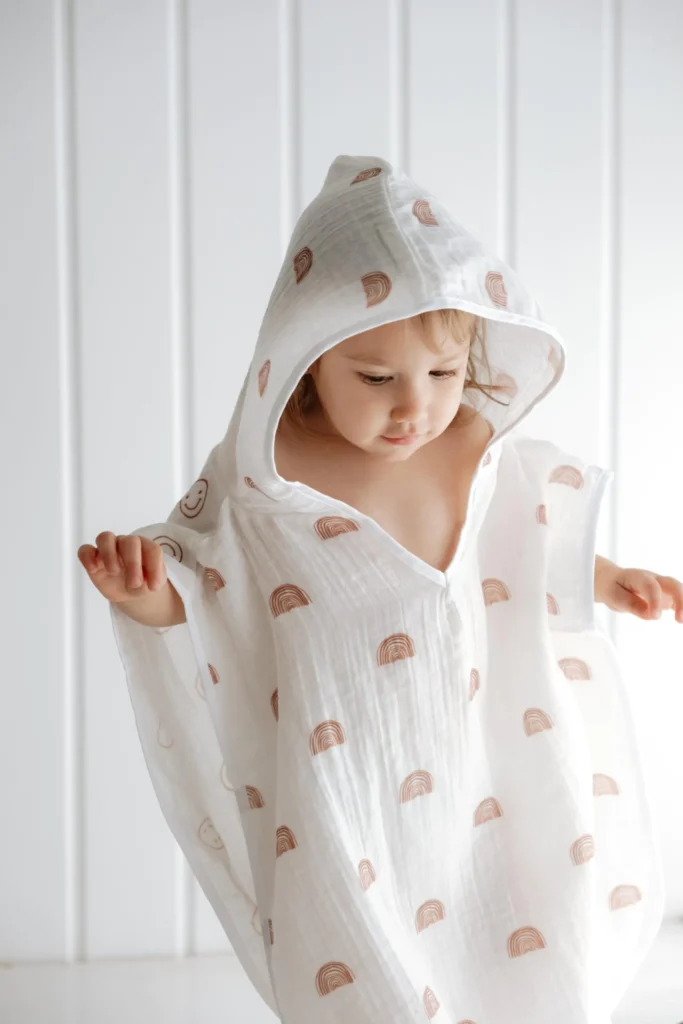
The human head represents approximately 20% of a newborn’s total body surface area, compared to only 9% in an adult. Consequently, leaving a baby’s head uncovered after immersion in water causes rapid evaporative cooling, which can lead to hypothermia-like stress responses, including trembling, elevated heart rates, and distress crying. By utilizing an organic hooded baby towel immediately upon exiting the water, caregivers create a controlled microclimate. The integrated hood absorbs moisture from the scalp and fine hair while blocking ambient drafts, maintaining physiological equilibrium and keeping bath time a soothing, bonding experience rather than a traumatic sensory transition.
Why heavy adult terry cloth damages delicate baby skin
Standard household bath towels are manufactured with a high fabric weight—typically exceeding 600 to 700 GSM (Grams per Square Meter)—using tightly twisted, chemically bleached cotton yarns. When soaked with water, these heavy towels become unwieldy and exert excessive friction across a baby’s fragile skin barrier. Moreover, commercial adult towels frequently retain residues from laundry detergents and fabric softeners inside their dense loops. When applied to an infant’s damp, permeable skin, these chemical residues can trigger acute eczema flare-ups and allergic rashes. High-quality baby towels are engineered with a lighter, breathable 400 to 500 GSM construction using unbleached, extra-long-staple cotton fibers that blot moisture away gently without mechanical friction.
What is the difference between traditional hooded towels and poncho towels?
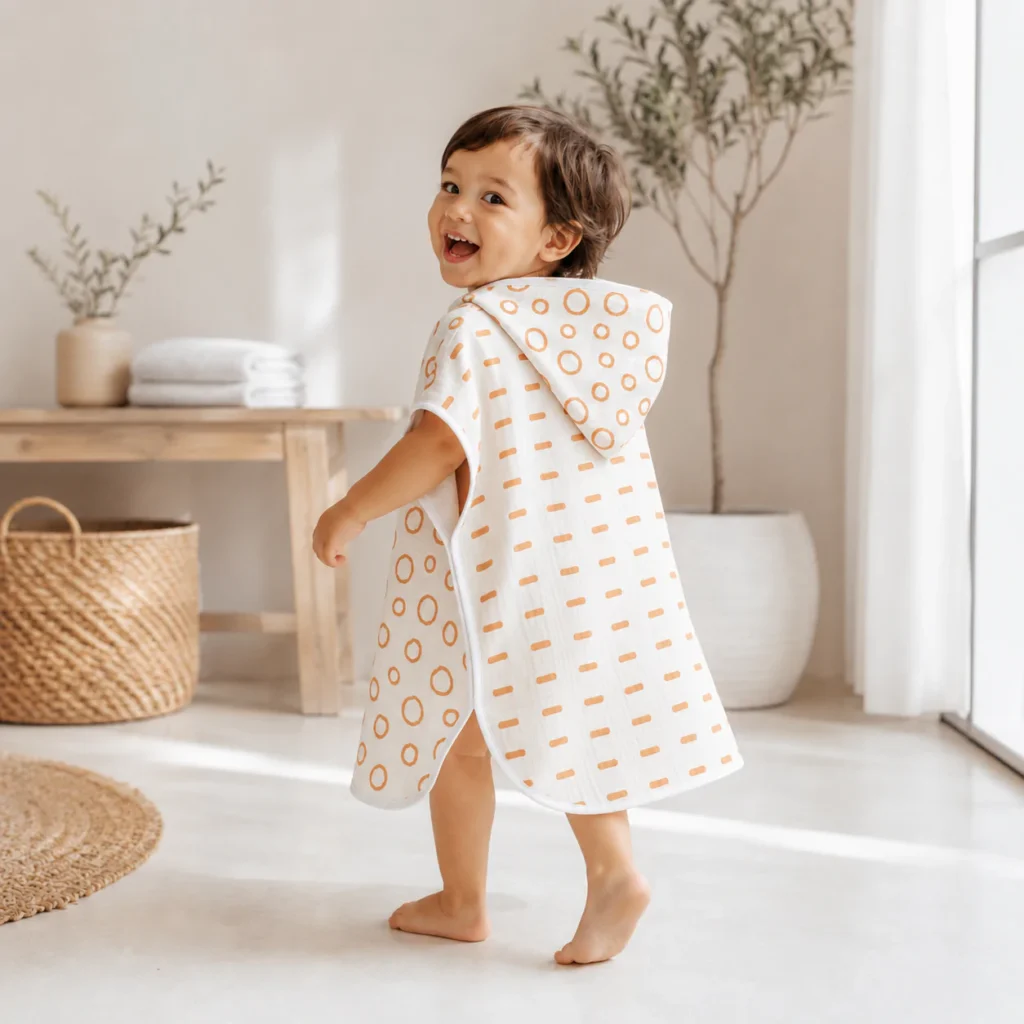
When curating a baby’s textile wardrobe, caregivers face a primary design choice: traditional square hooded towels versus wearable poncho towels. While both utilize integrated hoods to protect the child’s head, their structural geometry and functional applications cater to distinct developmental stages. Understanding the mechanical differences between these two designs ensures you select the appropriate towel architecture for your child’s age, mobility level, and environment.
Traditional hooded towels are square or rectangular linens with a triangular hood sewn into one corner. Caregivers lay the towel flat, position the baby’s head inside the hood, and fold the side panels across the torso like a swaddle. This wrap design is exceptionally efficient for immobile newborns and sitting infants who require full-body containment and immediate warmth on a changing table. However, as an infant transitions into a walking toddler who actively resists being laid down or swaddled, traditional towels become difficult to keep secured.
+-----------------------------------------------------------------+
| TOWEL ARCHITECTURE COMPARISON: WRAP DESIGN VS. PONCHO DESIGN    |
+-----------------------------------------------------------------+
|  [ TRADITIONAL WRAP TOWEL ] --> Best for: 0 to 9 Months         |
|  * Triangle corner hood, flat square body, requires swaddling.  |
|                                                                 |
|  [ WEARABLE PONCHO TOWEL  ] --> Best for: 9 Months to 4 Years   |
|  * Center hood, pull-over garment design, hands-free mobility.  |
+-----------------------------------------------------------------+
| * Note: Pricing varies by fabric organic certification.         |
+-----------------------------------------------------------------+
Why a baby poncho towel is superior for active toddlers
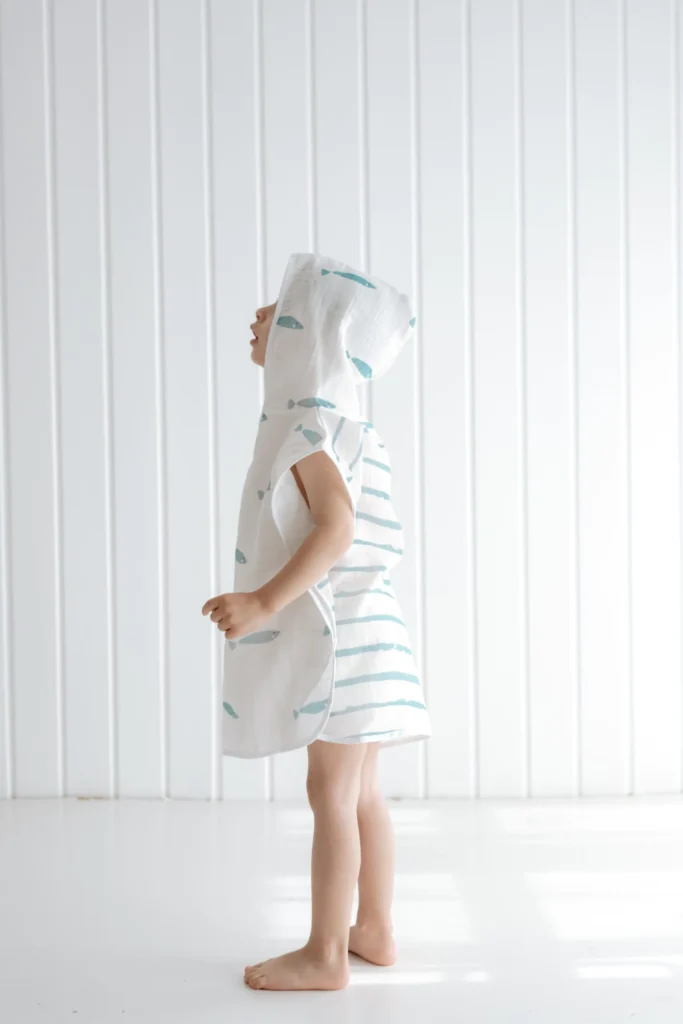
Once a child learns to stand, walk, and run, their tolerance for stationary post-bath wrapping diminishes rapidly. A baby poncho towel solves this behavioral challenge through smart garment engineering. Constructed as a rectangular pullover featuring a centrally positioned neck opening and hood, the poncho slips over the child’s head in a single, fluid motion. Once on, the front and back panels drape securely over the torso and legs, while the sides remain open or loosely stitched to allow complete freedom of arm movement. This hands-free design empowers toddlers to walk safely from the bathroom to the bedroom without tripping over trailing fabric or dropping their towel onto a cold floor.
How a baby beach towel poncho enhances outdoor vacations
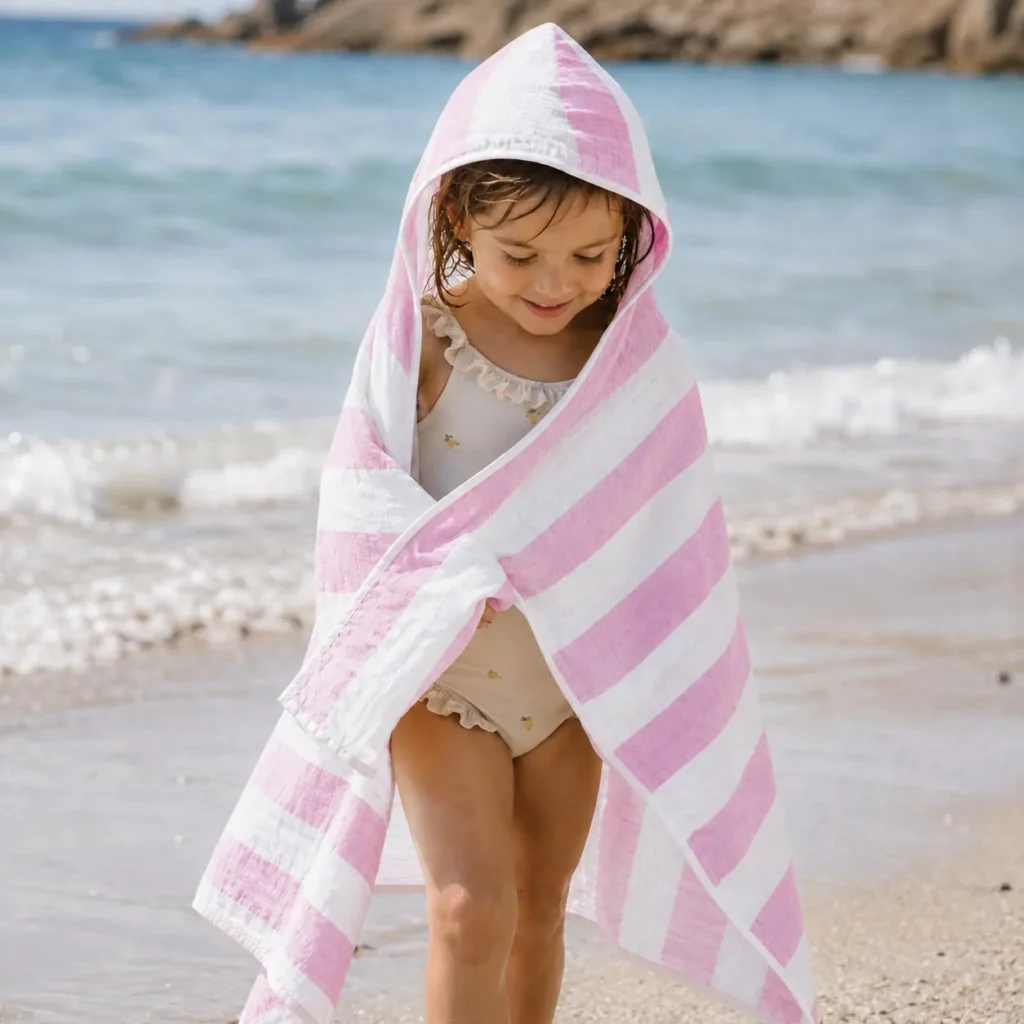
Taking a young child to a public swimming pool, water park, or seaside beach introduces complex environmental variables, including UV radiation, ocean breezes, and abrasive sand. A baby beach towel poncho serves as an indispensable multifunctional garment in these outdoor settings. Rather than struggling to hold a blowing, sand-covered towel around a shivering toddler, parents can slip a poncho over the child immediately after they exit the water.
The wearable poncho acts as an effective windbreaker, trapping body heat while the high-absorbency internal loops wick away salt water and chlorine. Furthermore, when crafted from dense, tightly woven organic cotton, a beach poncho provides natural barrier protection against direct sunlight, allowing the child to build sandcastles or eat a poolside snack comfortably without requiring constant towel re-wrapping.
How do you choose the right fabric and GSM for baby towels?
The performance, softness, and chemical safety of hooded baby towels depend almost entirely on the underlying fiber composition and fabric weight. In the infant textile market, products are typically crafted from conventional cotton, organic cotton, bamboo viscose blends, or synthetic microfiber. Evaluating these materials through a technical lens allows caregivers to make informed decisions that prioritize skin health and environmental sustainability.
To understand textile quality, caregivers must examine GSM (Grams per Square Meter), which measures the density and weight of the fabric. A common misconception is that heavier is always better. For infant towels, a GSM below 350 is too thin, resulting in poor absorbency and rapid saturation. Conversely, a GSM above 600 is overly heavy, takes excessive hours to dry, and creates an ideal damp breeding ground for bacteria and mildew. The optimal sweet spot for an organic hooded baby towel lies between 450 and 500 GSM, providing plush, rapid water absorption while maintaining sufficient airflow for quick hanging evaporation.
| Fabric Material Type | Absorbency Rate | Skin Safety & Eco-Rating | Recommended Use Case |
| Certified Organic Cotton (GOTS) | High (Rapid moisture wicking) | 100% Safe (Zero synthetic chemicals or dyes) | Daily residential bath time, newborn skin, sensitive eczema-prone infants. |
| Bamboo Viscose Blend | Very High (Holds 3x its weight in water) | High (Silky soft, naturally antimicrobial) | Beach outings, humid climates, toddlers requiring ultra-plush tactile comfort. |
| Conventional Cotton | Moderate to High | Moderate (May contain pesticide residues) | General budget-conscious household use, older toddlers without skin allergies. |
| Synthetic Microfiber | High (Surface wicking) | Low (Traps odors, releases microplastics) | Travel or camping where ultra-lightweight packing is the primary necessity. |
Why organic hooded baby towel certifications matter (GOTS)
When sourcing bath linens for newborns, selecting an organic hooded baby towel certified by the Global Organic Textile Standard (GOTS) is a critical health safeguard. Conventional cotton farming relies heavily on synthetic pesticides, insecticides, and toxic defoliants, which leave chemical residues embedded within the raw cotton fibers. During industrial processing, conventional towels are frequently treated with formaldehyde-based resins to prevent wrinkling and colored with synthetic azo dyes containing heavy metals.
When a damp, warm towel is wrapped around an infant’s freshly bathed body, open skin pores can absorb these chemical residues, triggering contact dermatitis and respiratory irritation. A GOTS certification guarantees that the cotton was harvested organically without toxic pesticides and processed without chlorine bleaches, toxic dyes, or endocrine-disrupting chemicals, ensuring pristine indoor air quality and absolute dermatological safety.
Comparing bamboo viscose versus 100% organic cotton
A frequent debate among parents is whether to select bamboo viscose or 100% organic cotton for their hooded towels. Bamboo viscose is celebrated for its extraordinary silk-like softness and inherent antimicrobial properties, which resist musty odors even when damp. Bamboo fibers are hollow and round, allowing them to absorb water up to three times faster than standard cotton.
However, the industrial conversion of bamboo bamboo wood pulp into soft viscose fabric requires intensive chemical processing, which can reduce its ecological purity unless manufactured through closed-loop lyocell methods. In contrast, 100% certified organic cotton offers superior structural durability, resisting pilling and thinning over hundreds of high-temperature laundry cycles while providing natural, predictable absorbency and unmatched chemical purity. For maximum longevity and skin safety, organic cotton remains the gold standard for daily nursery use.
How do sizing guides work for baby poncho towels from 0 to 4 years?
A critical error in purchasing infant textiles is selecting an incorrect size that either restricts movement or swamps the child in hazardous excess fabric. Because infants and toddlers grow at an exponential rate during their first 36 months, towel architecture must adapt proportionally. Utilizing standardized age and height sizing guides ensures caregivers select a baby poncho towel that provides optimal thermal coverage without creating tripping hazards.
When evaluating poncho sizing, the most important measurement is the vertical length from the shoulder seam to the bottom hem, alongside the horizontal width across the chest. For newborns and sitting infants, traditional square hooded towels measuring 30 by 30 inches (75 x 75 cm) provide adequate wrapping dimensions. Once a child transitions to wearable poncho designs around 6 to 9 months, sizing must align strictly with their standing height to ensure the bottom hem falls safely between the knee and mid-calf.
+-----------------------------------------------------------------+
| STANDARDIZED PONCHO TOWEL SIZING & DEVELOPMENTAL GUIDE          |
+-----------------------------------------------------------------+
|  [ 6 - 12 Months ] --> Height: 26"-30" | Poncho Length: 18"-20" |
|  [ 12 - 18 Months] --> Height: 31"-34" | Poncho Length: 22"-24" |
|  [ Toddler (2-4Y)] --> Height: 35"-42" | Poncho Length: 26"-28" |
+-----------------------------------------------------------------+
Navigating baby poncho towel 6 12 months and 12 18 months sizing
During the rapid developmental phase between 6 and 18 months, babies transition from crawling to pulling up and taking their first independent steps. Selecting a baby poncho towel 6 12 months or 12 18 months requires careful attention to hemline clearance. A poncho that is too long will tangle around a crawling baby’s knees or trip a unsteady walking toddler attempting to navigate a bathroom floor.
For the 6 to 12-month stage, choose a poncho with a shoulder-to-hem length of approximately 18 to 20 inches, ensuring the fabric clears the ground completely when the baby stands. As the child progresses into the 12 to 18-month bracket, upgrade to a 22 to 24-inch length with a wider neck opening, accommodating larger head circumference growth while allowing effortless, tear-free overhead dressing after bath time.
Sizing transition: When to upgrade to a toddler poncho towel
By the time a child reaches their second birthday, their physical mobility and independence increase dramatically. At this stage, standard infant towels no longer provide sufficient surface area to cover their torso and limbs, leading to post-bath shivering. Upgrading to a dedicated toddler poncho towel engineered for ages 2 to 4 years is essential.
A proper toddler poncho features a generous length of 26 to 28 inches and an expanded chest width of 24 inches, allowing ample room for the child to pull their arms inside the garment to dry their torso independently. Furthermore, toddler models should incorporate deeper hoods designed to accommodate thicker, longer hair, alongside reinforced side snaps or ties that keep the poncho closed during active outdoor play at the beach or swimming pool.
Why are minimalist, text-free towel designs better for nursery aesthetics?
In contemporary home design, children’s products are no longer viewed as isolated, disposable novelties; they are functional extensions of the home’s overall interior architecture. A pervasive issue in the commercial infant towel market is the dominance of hyper-saturated primary colors, loud typographic slogans, and cartoon character embellishments. While these designs may appeal momentarily to older children, they often clash violently with curated, modern bathroom and nursery aesthetics, creating visual clutter and sensory overstimulation.
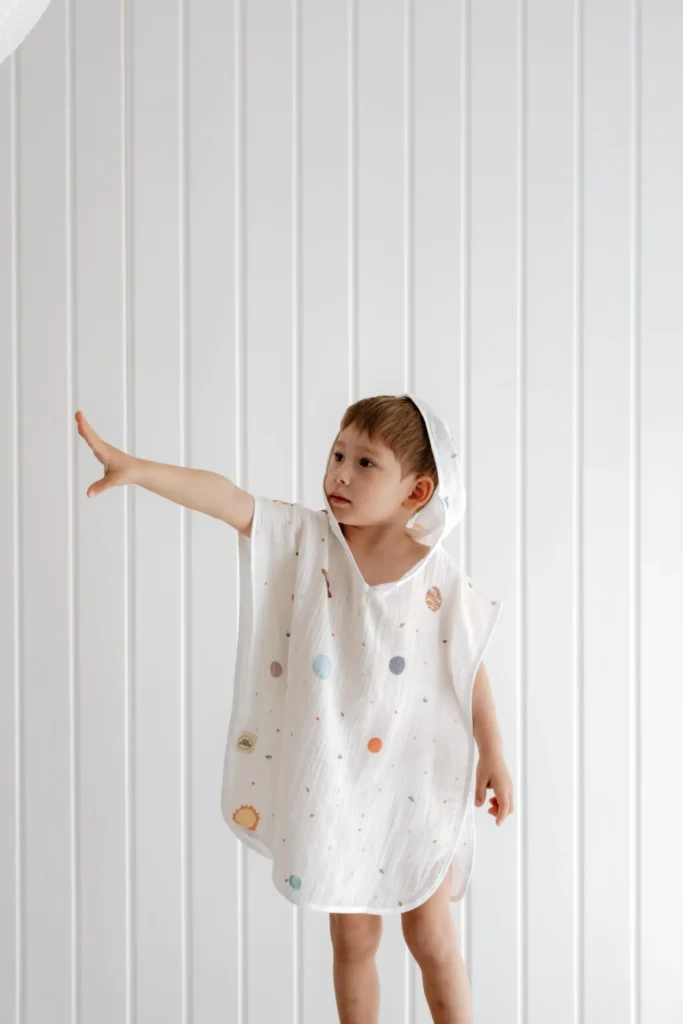
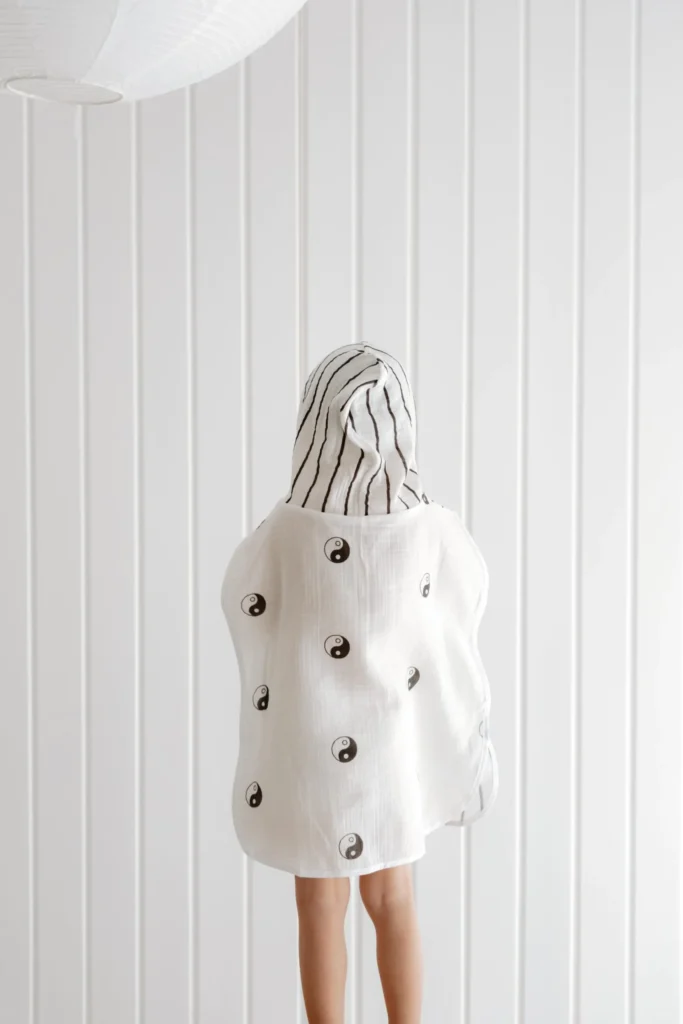
Modern parents and interior designers increasingly favor minimalist, text-free towel designs rendered in calming earth tones. Opting for unembellished, realistic textures—such as waffle weave organic cotton or plush loop terry in muted mineral hues—brings a spa-like tranquility to the daily bath routine. Environmental psychology demonstrates that reducing visual noise in evening routines lowers cortisol levels, signaling to the infant’s nervous system that it is time for rest. By treating bath linens with the same aesthetic reverence as living room drapery or bedroom bedding, caregivers maintain an elevated home environment that feels serene, cohesive, and timeless.
How muted earth tones promote calming bedtime routines
Color selection plays a profound role in regulating an infant’s circadian rhythm during evening wind-down rituals. Bright primary reds, electric blues, and high-contrast character prints stimulate the optic nerve, triggering cognitive alertness and delaying melatonin secretion just before bedtime.
Replacing saturated graphics with hooded baby towels in grounded earth tones—such as moss green, warm terracotta, oatmeal beige, and slate grey—creates a visually soothing environment. These low-frequency, botanically inspired colors mimic the gentle dimming of natural twilight, helping to decelerate the infant’s heart rate and prepare their brain for deep, restorative sleep immediately following their warm evening bath.
Why timeless designs outlast fleeting cartoon trends
Investing in heavily themed, cartoon-character towels frequently results in rapid product obsolescence. A toddler’s fascination with a specific commercial animated character often fades within 6 to 12 months, causing them to reject the towel long before the fabric itself wears out. Furthermore, commercial character towels are frequently manufactured using inferior, low-GSM synthetic blends that pill, fade, and lose absorbency after only a dozen washes.
By prioritizing minimalist, text-free designs crafted from high-density organic cotton, parents invest in enduring textile quality. A beautifully tailored, neutral hooded towel or poncho remains aesthetically relevant from infancy through the preschool years, passing gracefully down to younger siblings without ever looking dated or worn out.
How do you safely wash and maintain organic baby towels?
Preserving the original plush softness, maximum absorbency, and structural integrity of organic baby towels requires adherence to specific laundry science principles. Standard household laundering habits—such as using harsh chemical detergents, high-heat drying, and commercial fabric softeners—can rapidly destroy fine organic cotton fibers, leaving towels scratchy, stiff, and hydrophobic (water-repelling).
To maintain pristine textile performance, wash hooded baby towels separately from heavy adult clothing containing metal zippers, buttons, or velcro, which snag and pull delicate loops. Utilize a gentle, liquid organic laundry detergent completely free of optical brighteners, synthetic fragrances, and enzymes. Set the washing machine to a warm water cycle between 30°C and 40°C; washing at boiling temperatures above 60°C causes natural cotton fibers to shrink excessively and degrades the elastic tension of integrated hood seams.
+-----------------------------------------------------------------+
| ORGANIC BABY TOWEL LAUNDRY CARE & MAINTENANCE PROTOCOL          |
+-----------------------------------------------------------------+
|  [ WASH TEMPERATURE ] --> Warm Water (30°C - 40°C Max)          |
|  [ DETERGENT TYPE   ] --> Eco-Friendly Liquid (Zero Fragrance)  |
|  [ FABRIC SOFTENER  ] --> NEVER USE (Coats fibers, ruins grip)  |
|  [ DRYING METHOD    ] --> Tumble Dry Low Heat or Natural Hang   |
+-----------------------------------------------------------------+
Why you should never use commercial fabric softeners
A critical mistake caregivers make when washing baby linens is adding liquid fabric softeners or scented dryer sheets in an attempt to increase softness. Commercial fabric softeners operate by coating textile fibers with a microscopic layer of synthetic silicone and fatty chemical compounds.
While this chemical coating feels artificially smooth to the touch, it creates a waterproof barrier over the cotton loops. Over just 3 to 5 laundry cycles, a towel treated with fabric softener loses up to 50% of its moisture-wicking capacity, pushing water around the baby’s skin rather than absorbing it. Furthermore, these synthetic silicone coatings trap body oils and bacteria within the weave, leading to persistent musty odors and skin irritation.
How to naturally restore plush softness using white vinegar
If your organic baby towels begin to feel stiff, scratchy, or less absorbent due to hard water mineral buildup or detergent residue, you can easily restore their original plushness using simple household chemistry. Run a diagnostic stripping cycle without any laundry detergent. Set the washing machine to a warm water load and add one cup (250 ml) of distilled white vinegar directly into the drum alongside the towels.
The mild acetic acid in the white vinegar safely dissolves alkaline mineral deposits (calcium and magnesium) from hard water, breaks down trapped soap residue, and naturally relaxes the cotton loops without leaving any lingering vinegar scent. For an extra boost of freshness and natural disinfection, follow the vinegar cycle with a second wash containing half a cup (120 ml) of baking soda, leaving your baby’s towels remarkably soft, highly absorbent, and chemically pure.
Frequently asked questions
How many hooded baby towels do I need for a newborn?
For a newborn bathed 2 to 3 times per week, having a rotation of 3 to 4 high-quality hooded towels is optimal. This quantity ensures you always have a clean, dry towel available while accounting for inevitable laundry delays, accidental spit-ups, or diaper leaks immediately following bath time without cluttering your linen closet.
Can my toddler sleep wearing a baby poncho towel?
No, a child should never sleep wearing a hooded towel or poncho. While poncho towels are exceptional for active post-bath drying and beach cover-ups, wearing any hooded garment to bed introduces severe suffocation, strangulation, and overheating hazards during sleep. Always remove towels and dress your toddler in certified, breathable sleepwear before bedtime.
Why do my baby’s towels smell musty even after washing?
Musty odors occur when moisture and skin bacteria get trapped inside the dense cotton loops due to slow drying, leaving towels in a damp laundry basket, or detergent residue buildup. To eliminate musty smells, wash the towels in warm water with one cup of white vinegar (no detergent), ensure they dry completely on a low-heat tumble cycle, and never store them while slightly damp.
When should I switch from a square hooded towel to a wearable poncho?
The ideal developmental time to transition from a square wrap towel to a wearable poncho is between 9 and 12 months of age. Once your baby begins standing, walking, and actively resisting being swaddled lying down, a pull-over poncho towel provides hands-free mobility, preventing the towel from falling off while keeping them warm.
Conclusion
Investing in high-quality hooded baby towels and wearable poncho models is an essential step in safeguarding your child’s thermal comfort, dermatological health, and emotional calm during bath time and outdoor beach adventures. By moving away from heavy, chemically treated adult towels and embracing certified organic cotton with an optimal 450 to 500 GSM density, parents ensure rapid, friction-free moisture absorption that protects fragile infant skin. Understanding the distinct structural advantages of traditional wrap designs for newborns versus hands-free wearable ponchos for active toddlers guarantees a seamless transition through every developmental milestone from infancy to age four.
Whether you are navigating precise 6 to 12-month sizing guides, establishing serene bedtime routines with minimalist, text-free earth tones, or utilizing natural white vinegar laundry protocols to preserve plush softness, technical preparation yields exceptional results. Explore premium, text-free organic textile designs and elevate your daily baby care routines today by discovering the realistic, minimalist collections at dos junior collection.