

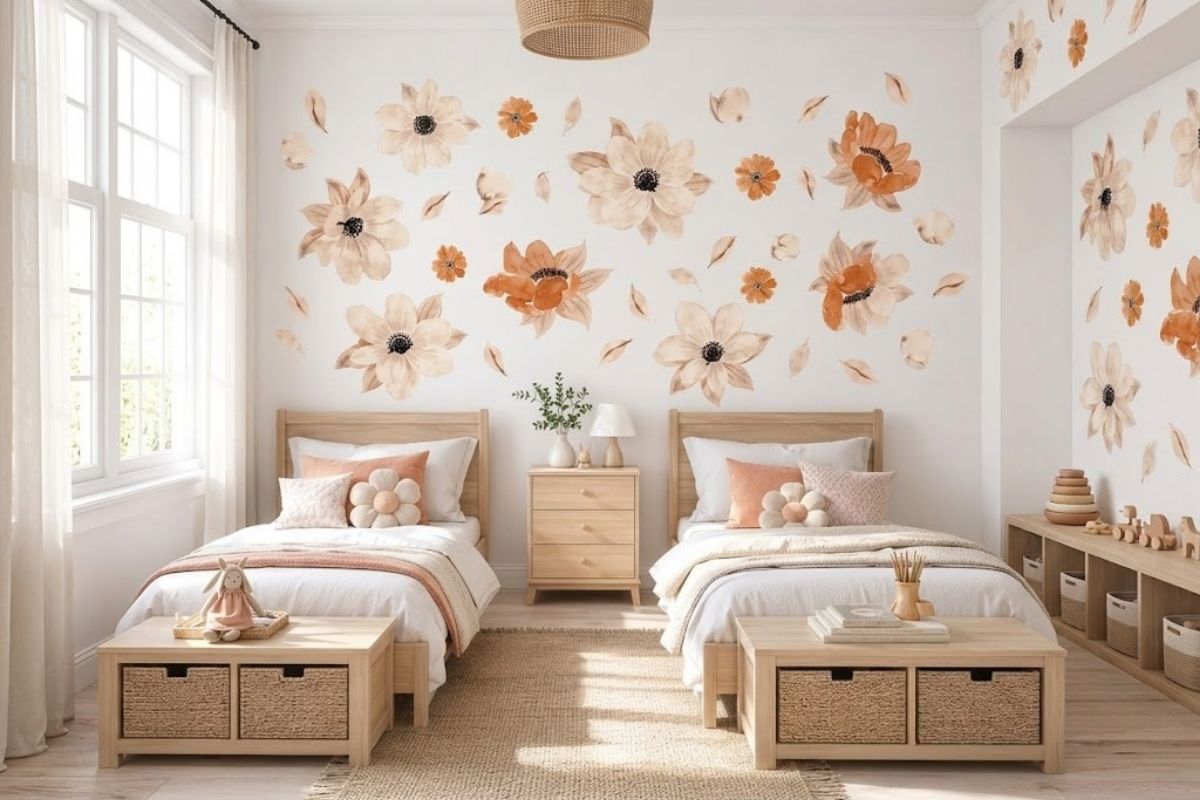
Integrating nature in child development within indoor nursery design is an essential environmental strategy that utilizes organic materials, natural light, and biophilic visual patterns to stimulate healthy neurological and emotional growth. Because young children possess developing nervous systems that are exceptionally sensitive to environmental stimuli, recreating the calming frequencies of the outdoor world inside the bedroom reduces stress hormones and restores cognitive attention spans. By replacing synthetic furnishings and overstimulating cartoon graphics with sustainable timber, tactile organic fabrics, and realistic botanical imagery, parents can transform an ordinary bedroom into a restorative developmental sanctuary. This comprehensive guide explores the evolutionary neurobiology of biophilic design, evaluates age-specific indoor nature strategies, analyzes the cognitive superiority of realistic wall decor over stylized cartoons, and establishes architectural protocols for sensory self-regulation.
Nature in child development refers to the critical biological and psychological interaction between growing children and organic environmental stimuli, which directly enhances cognitive focus, emotional regulation, and sensory motor integration. When applied to interior nursery design, this concept translates into biophilic architecture featuring tactile timber surfaces, natural daylight optimization, non-toxic botanical elements, and realistic, textless visual decor.
| Traditional Nursery Component | Biophilic Nature-Based Alternative | Developmental & Neurological Benefit |
| Synthetic MDF & Plastic Furniture | Solid FSC-certified timber and birch plywood | Reduces toxic VOC off-gassing and provides authentic tactile feedback. |
| Saturated Cartoon Wall Murals | Realistic, textless botanical and wildlife wall art | Eliminates visual noise and supports accurate biological categorization. |
| Harsh Fluorescent or Cool LED Lighting | Dimmable 2400K warm LED and natural daylight | Stabilizes circadian melatonin secretion and prevents ocular strain. |
| Closed Plastic Toy Storage Bins | Open wooden trays featuring natural loose parts | Promotes sensory exploration, fine motor grasping, and creative inquiry. |
| Static Synthetic Carpet Flooring | Organic wool rugs and natural cork underlays | Offers anti-microbial floor cushioning with grounding earthy textures. |
Why is nature in child development essential for cognitive growth?
To understand why nature is vital for cognitive maturation, we must examine the evolutionary relationship between human neurology and natural environments. For millennia, the human brain evolved in direct response to outdoor biological landscapes, developing sensory processing mechanisms optimized for the subtle, rhythmic stimuli of the natural world. When young children are confined to sterile, highly synthetic indoor environments dominated by artificial lighting, plastic surfaces, and digital screens, their developing nervous systems experience chronic sensory mismatch.
This environmental disconnect frequently triggers sympathetic nervous system arousal, elevating circulating cortisol levels and leaving children in a persistent state of fight-or-flight vigilance. Integrating natural elements into interior spaces—a practice known as biophilic design—bridges this evolutionary gap by reintroducing organic textures, natural geometries, and biomorphic forms. This biological reconnection immediately lowers resting heart rates, stimulates parasympathetic relaxation, and creates the physiological foundation necessary for higher-order cognitive processing and emotional self-regulation.
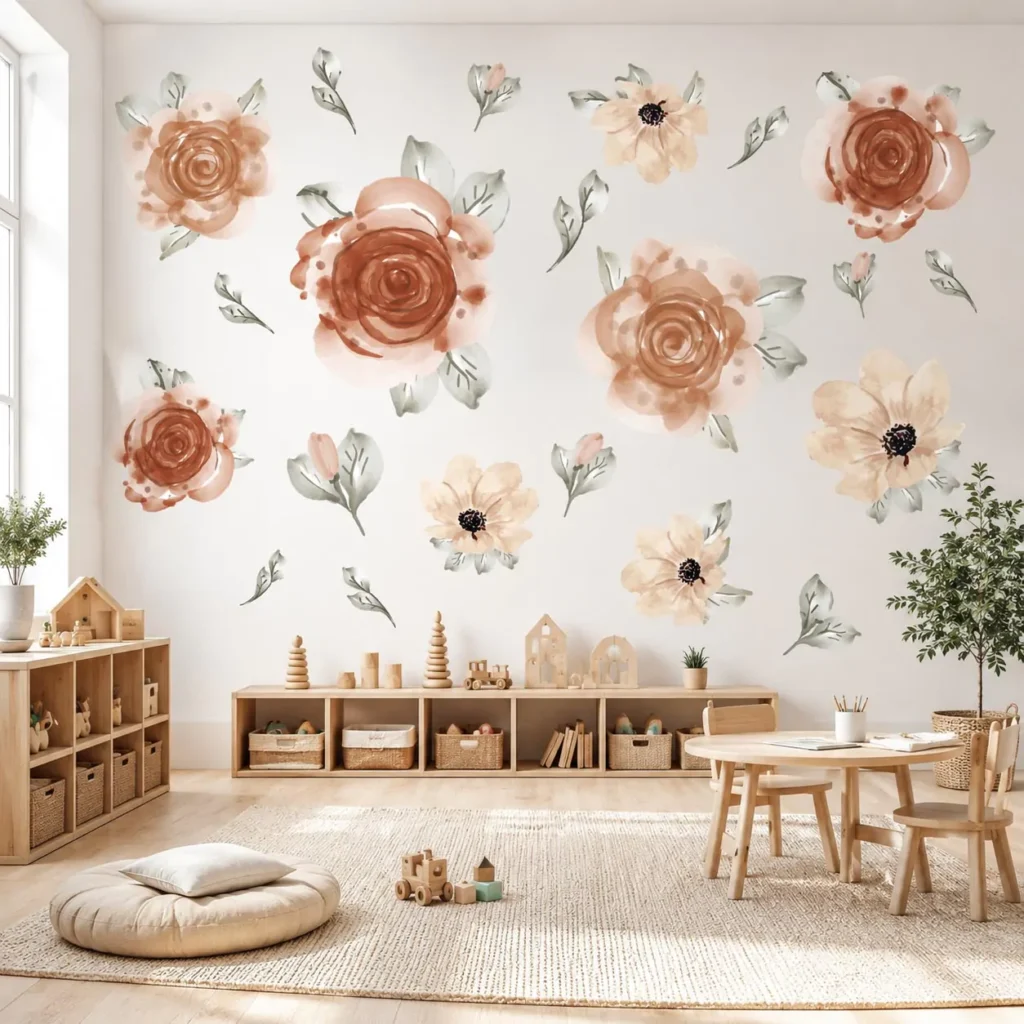
Attention Restoration Theory and overcoming cognitive fatigue
A primary mechanism through which nature enhances cognitive performance is explained by Attention Restoration Theory (ART), pioneered by environmental psychologists Stephen and Rachel Kaplan. ART posits that human attention operates via two distinct modes: directed attention and soft fascination. Directed attention requires intense, conscious mental effort to focus on complex tasks while actively ignoring surrounding distractions, a cognitive resource that depletes rapidly in young children exposed to chaotic, highly stimulating indoor rooms.
When directed attention capacity is exhausted, children exhibit symptoms of cognitive fatigue, including heightened irritability, impulsivity, an inability to concentrate, and frequent behavioral tantrums. Natural environments and biophilic interior elements stimulate soft fascination—a restorative mode of attention triggered by inherently pleasing, non-threatening stimuli such as moving cloud shadows, wood grain patterns, or realistic botanical leaves. Because soft fascination engages the visual system without demanding rigorous analytical processing, it allows the prefrontal cortex to rest and recover, fully restoring the child’s capacity for focused learning and emotional self-control.
The biophilia hypothesis and autonomic nervous system regulation
The theoretical foundation of nature-based interior architecture rests upon the Biophilia Hypothesis, formulated by renowned evolutionary biologist E.O. Wilson. Wilson defined biophilia as the innate, genetically determined tendency of human beings to seek connections with nature and other forms of life. During early childhood, this biological drive is particularly acute; toddlers actively seek out sensory interactions with natural textures, organic shapes, and living systems as a means of understanding their physical environment.
When an interior nursery layout incorporates biophilic design principles—such as natural timber grain, earth-toned color palettes, and realistic animal representations—it satisfies this deep evolutionary craving. Neuro-imaging studies demonstrate that viewing natural organic forms activates the brain’s reward pathways while simultaneously dampening activity in the amygdala, the primary neurological center responsible for processing fear and anxiety. This dual physiological response stabilizes the autonomic nervous system, transforming the bedroom from a simple sleeping quarters into an active therapeutic environment that continuously buffers against daily stress.
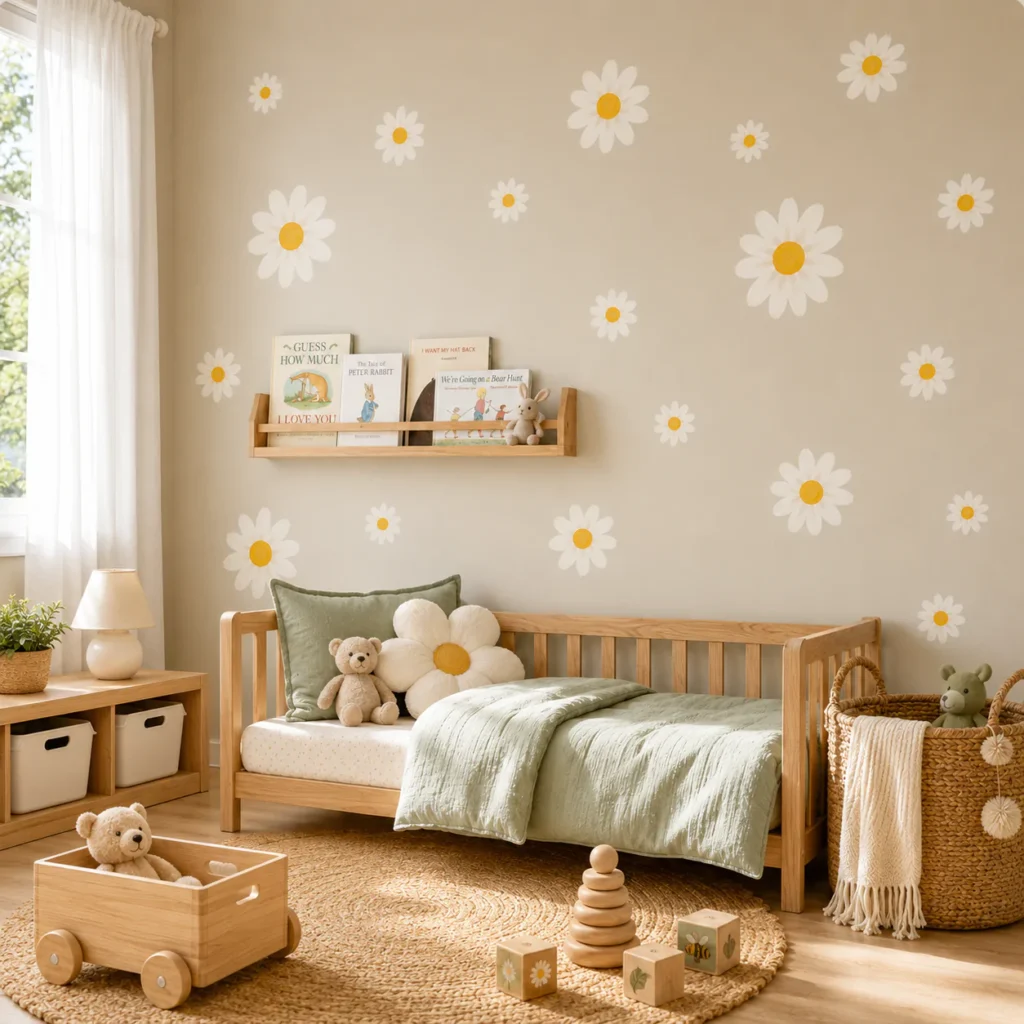
Evaluating behavioral focus metrics in biophilic versus synthetic rooms
To quantify the E-E-A-T Efficacy of nature-integrated interior design, researchers in environmental psychology and pediatric occupational therapy routinely compare child behavior across distinct architectural settings. Observational data confirms that introducing organic materials and realistic natural visual elements into a child’s daily living space produces immediate, measurable improvements in sustained attention and emotional stability. The following table contrasts key behavioral focus metrics recorded in traditional synthetic nurseries against those observed in biophilic, nature-integrated bedrooms.
| Behavioral & Cognitive Metric | Traditional Synthetic Nursery (Plastics/Cartoons/High-Chroma) | Biophilic Nature-Integrated Nursery (Wood/Realistic Art/Earth Tones) |
| Average Sustained Play Duration | 6 to 10 minutes before task abandonment and boredom | 25 to 35 minutes of deep, uninterrupted concentration |
| Incidence of Sensory Overload Meltdowns | Frequent (3 to 5 episodes per week requiring co-regulation) | Rare (0 to 1 episode per week with rapid self-soothing) |
| Pre-Sleep Cortisol Deceleration | Sluggish (Prolonged physical restlessness at bedtime) | Rapid (Smooth, predictable autonomic shift toward slumber) |
| Biological Vocabulary Acquisition | Superficial (Confused by stylized, fantastical cartoon features) | Advanced (Accurate biological categorization and taxonomy) |
| Heart Rate Variability (HRV) | Low resting HRV (Indicating elevated stress arousal) | High resting HRV (Indicating robust parasympathetic health) |
How does biophilic nursery architecture influence sensory regulation?
Sensory processing is the foundational mechanism through which infants and toddlers perceive, interpret, and respond to sensory information gathered from their own bodies and the surrounding environment. In modern residential architecture, children are frequently inundated with high-frequency, artificial sensory inputs—such as the buzzing micro-flicker of fluorescent lighting, the chemical odors of synthetic paints, and the abrasive textures of petroleum-based polyester fabrics. For sensory-sensitive or neuro-divergent children, this continuous sensory barrage overwhelms the central nervous system, leading to sensory defensiveness and emotional dysregulation.
Biophilic nursery architecture acts as an environmental filter, intentionally curating indoor sensory inputs to align with biological thresholds. By replacing harsh synthetic stimuli with the gentle, complex, and predictable sensory profiles of the natural world, designers create a sensory-safe haven. Tactile organic surfaces, natural acoustic damping, and non-toxic atmospheric purity work in unison to soothe over-reactive nervous systems, allowing children to process environmental data calmly without experiencing cognitive overload.
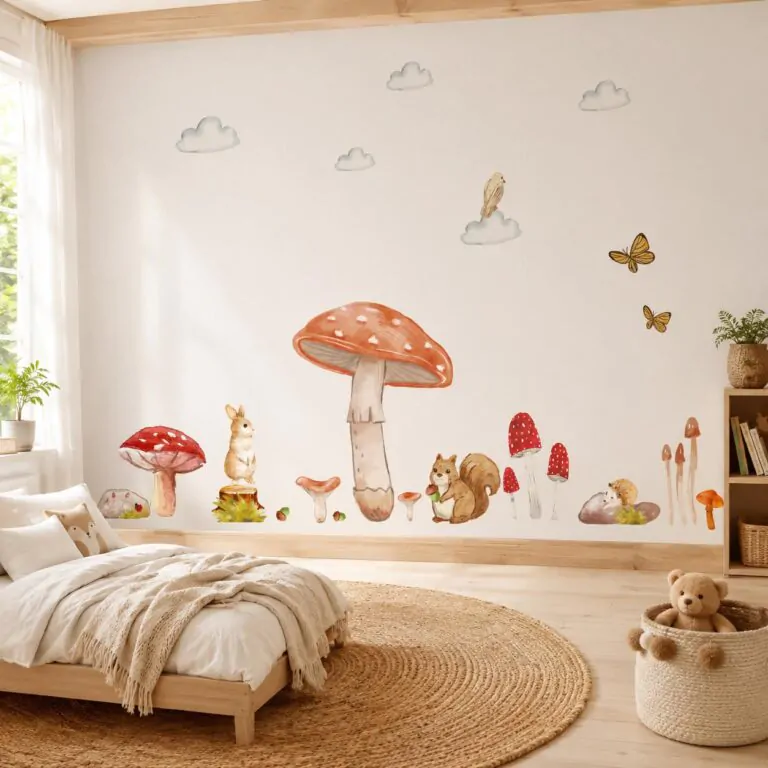
Analyzing tactile organic materials and VOC-free indoor air
The tactile quality of interior surfaces plays a paramount role in sensory motor development, as toddlers explore their surroundings extensively through touch and mouthing behaviors. Synthetic materials like laminated particleboard, plastic storage bins, and acrylic carpets present uniform, unnatural thermal and textural profiles that fail to provide rich sensory feedback. Furthermore, these synthetic furnishings continuously emit Volatile Organic Compounds (VOCs)—including formaldehyde, benzene, and phenol—which irritate developing respiratory tracts and trigger neuro-inflammatory stress responses.
Biophilic nursery design prioritizes raw, authentic materials such as solid beech or maple timber, natural linen drapery, organic cotton upholstery, and unsealed cork flooring. These natural materials provide subtle, organic variations in texture and thermal conductivity, offering rich, non-threatening tactile nourishment that stimulates neurological mapping in the somatosensory cortex. Ensuring that all timber finishes utilize Zero-VOC mineral oils or beeswax, and verifying that decorative elements carry strict GREENGUARD Gold certifications, guarantees complete indoor atmospheric purity, protecting developing lungs and promoting profound physical relaxation.
Maximizing natural circadian daylight and organic shadow play
Lighting architecture is the single most powerful environmental regulator of human endocrinology and sensory alertness. Conventional children’s rooms that rely heavily on static, overhead LED lighting fixtures fail to replicate the dynamic, shifting optical spectrum of natural solar radiation. This artificial lighting stagnation disrupts the suprachiasmatic nucleus—the brain’s master circadian clock—leading to erratic melatonin secretion, delayed sleep onset latency, and fragmented nighttime sleep architecture.
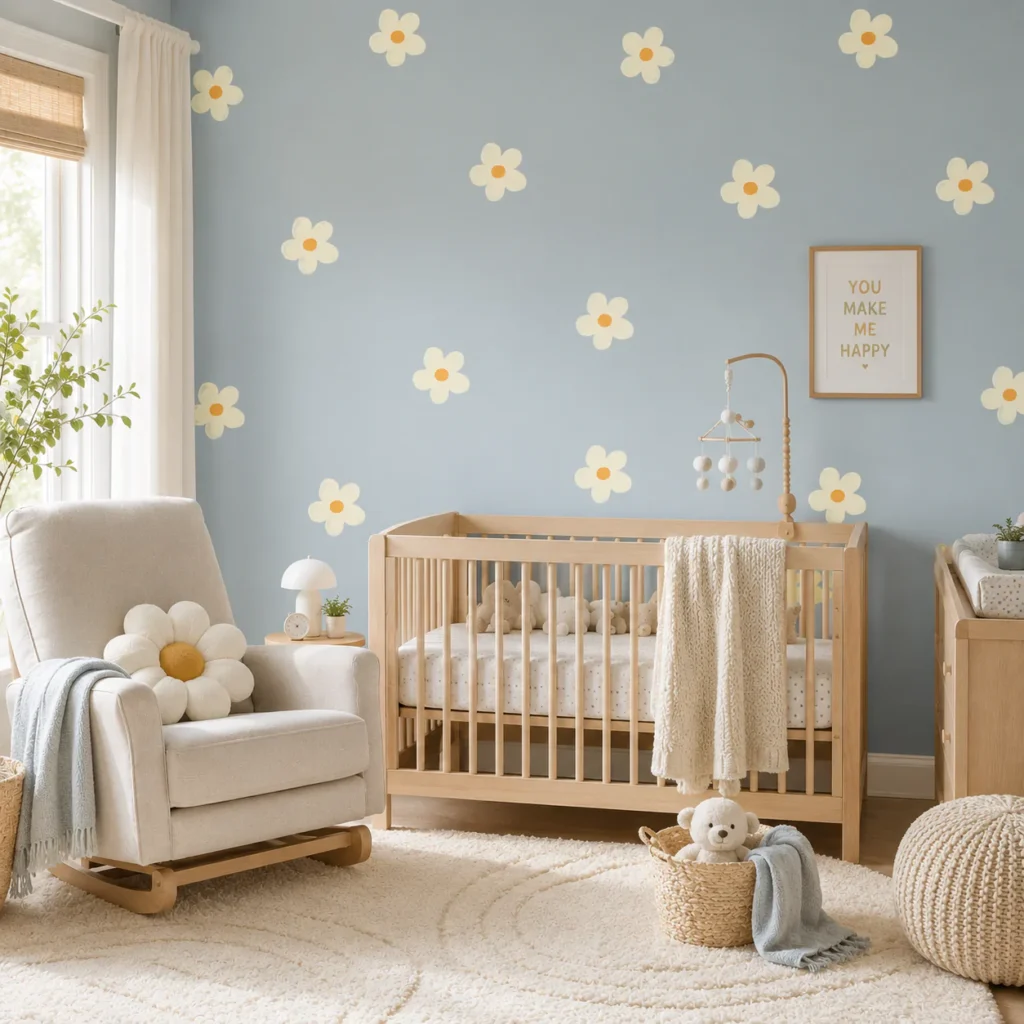
To optimize circadian health, biophilic nursery design maximizes the ingress of natural daylight through unblocked window openings, utilizing sheer, organic linen curtains to diffuse harsh direct glare into soft, enveloping illumination. As solar light passes through natural window drapery or interior indoor foliage, it projects dynamic, dappled shadow patterns across room walls—an optical phenomenon known as fractal shadow play. Viewing these naturally occurring mathematical fractals provides gentle visual stimulation that engages soft fascination, lowering eye fatigue and signaling natural temporal progression to the child’s circadian system.
Implementing natural acoustic damping with wool and cork
Acoustic comfort is a frequently overlooked dimension of sensory regulation in residential interior design. Hard architectural surfaces such as gypsum drywall, glass windows, and laminate flooring reflect airborne sound waves efficiently, creating acoustic reverberation and flutter echoes within enclosed bedrooms. For young children with auditory sensitivities, this acoustic clutter amplifies routine household noises—such as closing doors or footsteps—turning them into startling, stressful events that disrupt quiet play and awaken sleeping infants.
Biophilic interior architecture integrates natural sound-absorbing materials to construct a balanced, peaceful acoustic profile. Installing high-density natural cork underlayment beneath hardwood flooring significantly reduces impact noise transmission, while laying thick, unbleached wool area rugs across play zones dampens high-frequency vocal reverberations. These natural fibrous materials trap acoustic energy within their microscopic cellular structures, converting kinetic sound waves into negligible thermal energy and establishing a tranquil auditory atmosphere that supports deep concentration and restorative sleep.
Why should nursery wall decor feature realistic nature over cartoons?
The vertical wall planes surrounding a child’s bed and play area constitute the primary visual field during waking and resting transitions. For decades, commercial interior decor has been dominated by stylized, anthropomorphic cartoon characters, neon-colored mascots, and fantastical sci-fi landscapes. While marketed as child-friendly and stimulating, environmental psychologists and Montessori educators argue that these highly exaggerated, unnatural visual graphics introduce severe cognitive friction into early childhood development.
During the first six years of life, children operate within what Maria Montessori termed the “Absorbent Mind”—a developmental phase wherein they indiscriminately absorb environmental impressions to construct their understanding of reality. When surrounded by animals wearing human clothing, speaking languages, or possessing anatomically impossible neon proportions, young children struggle to separate fantasy from reality. Replacing these cartoon distortions with realistic, textless nature imagery respects the child’s intellect, providing accurate biological data that nourishes intrinsic scientific curiosity without generating visual noise.
The psychological danger of anthropomorphic and sci-fi cartoons
Anthropomorphic cartoons and fantastical sci-fi graphics rely on hyper-exaggerated visual features—such as oversized eyes, neon color saturations, and frenetic action poses—to capture and hold artificial attention. When applied as permanent wall murals or large canvases in a nursery, these high-chroma, aggressive graphics continuously demand directed cognitive processing. This relentless visual bombardment prevents the child’s visual system from resting, acting as a perpetual neurological stimulant that elevates anxiety and actively opposes evening winding-down routines.
Furthermore, surrounding toddlers with fantastical, scientifically impossible graphics impairs early semantic network formation and biological categorization. When a child learns to associate the word “bear” or “fox” with a neon-blue cartoon wearing sunglasses and driving a vehicle, their cognitive schema becomes distorted. Unlearning these fantastical associations later in childhood requires unnecessary cognitive effort, whereas providing accurate environmental representations from infancy establishes an authentic foundation for biological literacy and natural sciences.
Supporting biological taxonomy with textless botanical illustrations
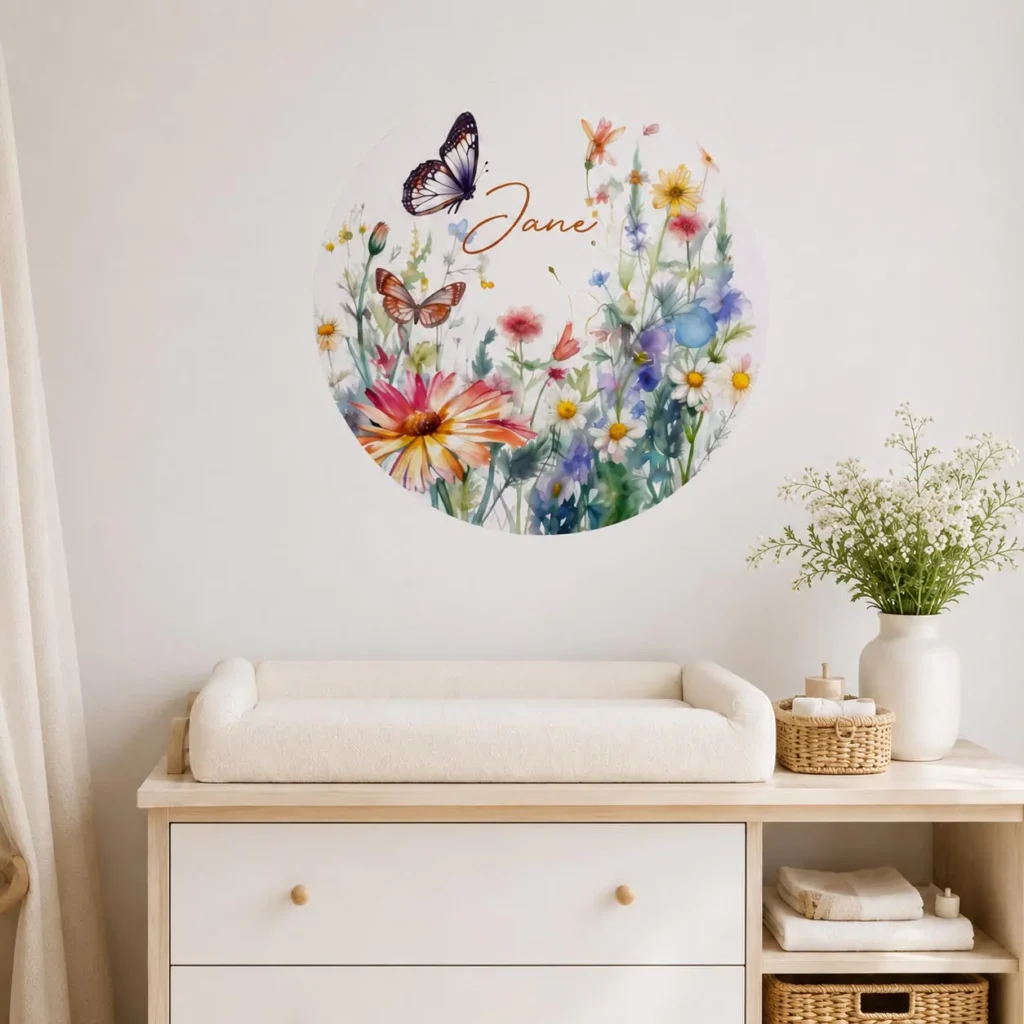
To foster authentic cognitive maturation, vertical wall decor must serve as a silent, accurate educational tool that encourages independent observation. Textless, realistic botanical and wildlife illustrations represent the E-E-A-T standard for biophilic children’s spaces. By eliminating written typography, alphabet labels, and distracting graphic slogans, text-free artwork removes analytical reading pressure, allowing pre-literate toddlers to engage directly with pure visual form, structural geometry, and natural color gradations.
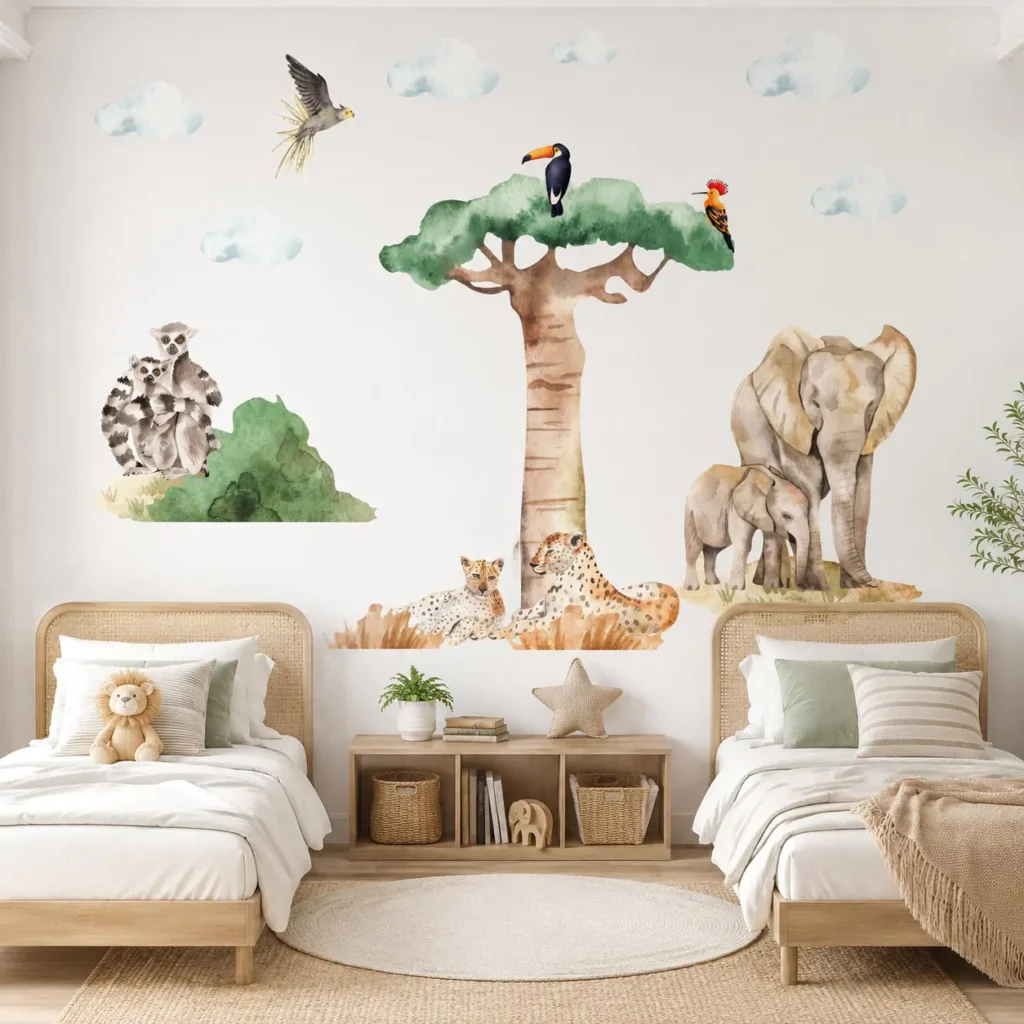
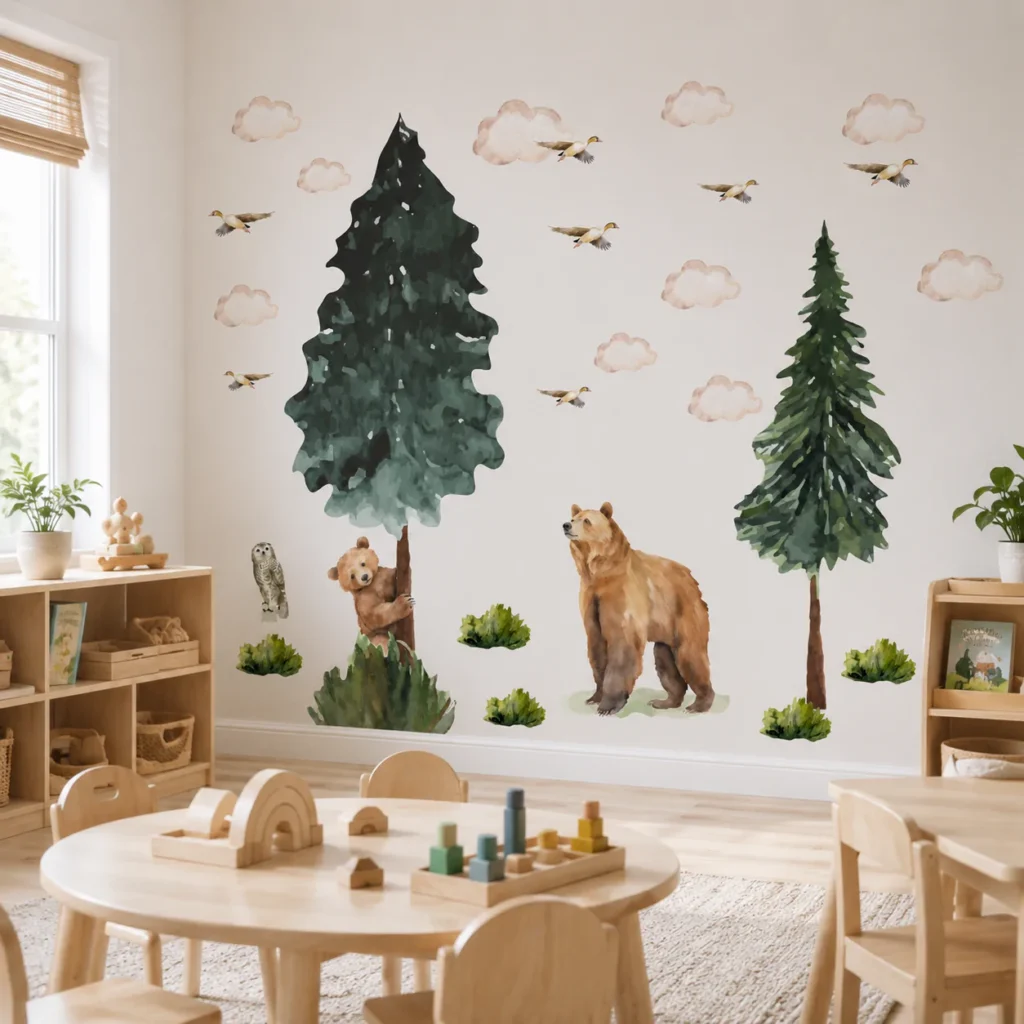
For example, integrating premium, non-reflective wall decals from Dos Junior—featuring true-to-scale woodland animals, detailed forest tree species, or accurate botanical leaf anatomy—introduces profound biophilic beauty without creating visual clutter. Because these sophisticated designs strictly adhere to realistic, textless visual aesthetics without cartoon exaggerations or sci-fi elements, they allow children to study natural animal morphology and leaf vein structures peacefully. This serene visual engagement naturally stimulates advanced vocabulary acquisition and biological taxonomy during daily conversations with parents, all while preserving the tranquil, sensory-safe atmosphere of the room.
Comparative analysis table: Cartoon decor versus realistic biophilic art
To make an informed architectural decision, project specifiers and parents must evaluate the psychological and educational impacts of competing wall decor philosophies. The following table contrasts the developmental outcomes associated with commercial cartoon graphics against those generated by realistic, text-free biophilic illustrations.
| Decorative Feature & Metric | Commercial Cartoon & Sci-Fi Wall Graphics | Realistic Textless Biophilic Art (Dos Junior) |
| Visual Processing Demand | High (Requires rigorous decoding of exaggerated features) | Low (Effortless assimilation via natural soft fascination) |
| Impact on Sleep Architecture | Disruptive (High-chroma colors delay evening melatonin) | Restorative (Muted natural tones support circadian relaxation) |
| Cognitive Reality Alignment | Impairs reality testing via fantastical anthropomorphism | Strengthens biological categorization and scientific taxonomy |
| Typography & Text Clutter | High (Often cluttered with slogans, names, and alphabets) | Zero (Pure, textless visual forms that prevent cognitive overload) |
| Aesthetic Longevity | Short (Rapidly outgrown as child ages out of specific cartoons) | Long-term (Timeless architectural elegance suitable for all ages) |
What are the best methods for bringing nature indoors across ages?
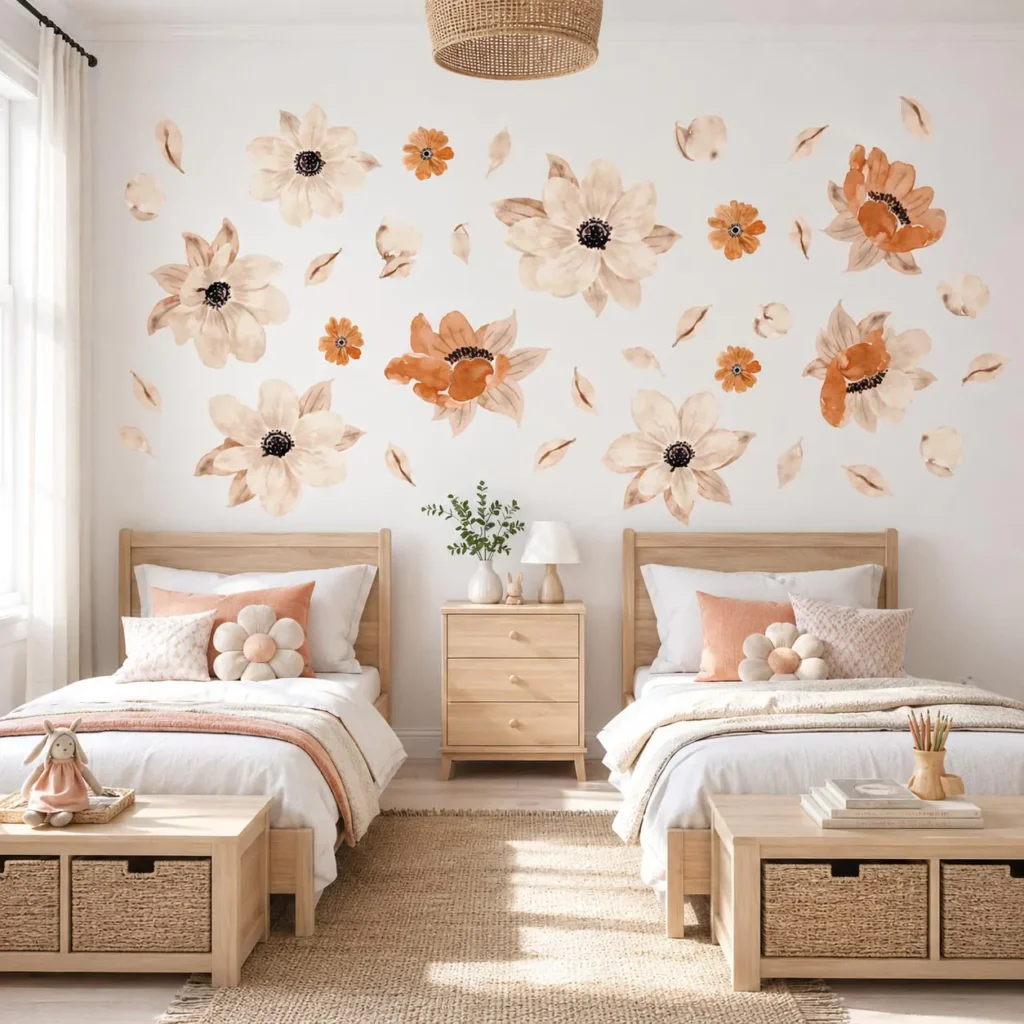
Integrating nature into a child’s bedroom is not a static design exercise; it requires a dynamic, evolving architectural strategy that adapts to the child’s shifting neuro-motor capabilities and developmental milestones. An infant who experiences the world primarily through horizontal visual tracking and rudimentary grasping requires an entirely different biophilic layout than a highly mobile toddler or an independent preschooler engaged in complex imaginative play.
By segmenting biophilic design implementation into distinct developmental age brackets, parents can curate specialized micro-environments that systematically introduce natural concepts without risking physical safety or sensory overwhelm. This chronological progression ensures that nature-based learning remains an active, engaging, and developmentally appropriate presence throughout the entire span of early childhood.
Infancy (0 to 12 months): Visual tracking of organic silhouettes
During the first year of life, an infant’s visual system develops rapidly, progressing from simple high-contrast light detection to sophisticated depth perception and color discrimination. At this stage, bringing nature indoors relies primarily on visual and atmospheric interventions that stimulate retinal pathways without exceeding low sensory thresholds. Because infants spend substantial time lying horizontally on floor beds or play mats, the ceiling plane and lower wall zones become critical surfaces for biophilic engagement.
Instead of suspending plastic, battery-operated electronic mobiles above the sleeping zone, hang lightweight, natural timber mobiles crafted from unpainted birch branches, wool felt leaves, or wooden birds. As room air currents move these organic shapes gently through space, they cast shifting silhouettes against the ceiling, providing engaging visual tracking exercises that mimic outdoor tree canopy movement. Along the lower wall perimeter adjacent to the floor bed, apply realistic, textless botanical decals at the infant’s eye level (30 to 40 centimeters from the floor), allowing the crawling baby to peacefully study natural leaf contours and organic geometries.
Toddlerhood (1 to 3 years): Tactile botanical zoning and boundaries
Between the ages of one and three, children acquire upright locomotion, grasping dexterity, and an intense drive for environmental exploration and personal autonomy. In a biophilic toddler room, nature transitions from a purely visual experience into a tactile, three-dimensional physical exploration. At this stage, open floor space is paramount; furniture must be scaled down to child height, and architectural layouts should utilize natural materials to define clear functional zones for sleeping, dressing, and active play.
To establish intuitive spatial boundaries without erecting physical barriers, utilize natural woven seagrass or jute rugs to define the boundaries of the play area, separating it visually and texturally from the wool-cushioned sleeping zone. On low, horizontal wooden shelving units, present loose natural loose parts—such as smooth river stones, pinecones, wooden cross-section discs, and large seashells—inside shallow woven baskets. This accessible, nature-based curation encourages daily tactile sorting, stacking, and fine motor manipulation, grounding the toddler’s overflowing physical energy in authentic natural textures.
Preschool and beyond (3 to 6+ years): Ecosystem storytelling without text
As children mature into the preschool and kindergarten years (ages three to six and beyond), their cognitive capacities expand to encompass symbolic play, complex causal reasoning, and deep emotional empathy for the natural world. The bedroom must now function as an inspiring developmental laboratory where children can independently investigate natural sciences, construct imaginative narratives, and retreat for emotional de-escalation.
At this advanced stage, vertical wall planes can accommodate comprehensive, immersive biophilic installations. Installing an expansive, textless world map or a detailed forest ecosystem decal from Dos Junior above the reading nook creates a breathtaking architectural anchor. Because these large-scale murals feature accurate geographical continents, realistic indigenous wildlife, and native botanical species without a single word of distracting typography, they serve as an endless catalyst for independent storytelling and scientific inquiry. Children naturally trace river routes, identify woodland species, and construct intricate ecological narratives during quiet afternoon rest periods, building advanced intellectual literacy within a tranquil, nature-connected sanctuary.
How do you design an indoor nature play zone in small rooms?
A prevalent misconception in modern interior architecture is that integrating effective nature-based learning requires expansive square footage, dedicated outdoor gardens, or massive rural playrooms. In reality, millions of modern families reside in urban apartments, compact condominiums, or smaller residential homes where children’s bedrooms must maximize limited spatial footprints. Denying urban children the neurological benefits of biophilic design due to spatial constraints compromises their sensory and emotional development.
Designing an impactful indoor nature play zone within a compact room requires innovative spatial engineering, vertical wall utilization, and multi-functional furniture integration. By treating vertical wall surfaces as active educational landscapes and consolidating storage systems into low-profile, multi-use architectural elements, designers can embed rich biophilic experiences into the smallest residential footprints without sacrificing valuable floor space or cluttering the room’s visual profile.
Vertical wall utilization and zero-floor-footprint nature immersion
When floor square footage is strictly limited, vertical wall planes represent an invaluable, underutilized architectural asset for nature integration. Erecting bulky indoor play structures, large wooden teepees, or floor-standing planters in a small bedroom quickly consumes open floor space, creating physical clutter and impeding the child’s freedom of movement. Instead, designers must shift biophilic elements upward, transferring visual and tactile nature experiences directly onto the structural walls.
Installing narrow, solid oak wall ledges at staggered vertical heights creates a zero-floor-footprint gallery for displaying natural artifacts, preserved moss frames, and front-facing botanical picture books. To establish deep visual immersion without encroaching on room volume, apply a floor-to-ceiling, realistic woodland or mountain decal across the room’s primary focal wall. This vertical biophilic intervention alters perceived room depth, creating an optical illusion of architectural expansiveness while surrounding the child with calming, nature-based imagery that requires zero physical floor space.
Safe indoor flora and organic sensory bins for tactile learning
Integrating living plants into a compact child’s room introduces dynamic biological benefits, including continuous air purification, localized humidity regulation, and daily opportunities for Practical Life caregiving chores. However, when specifying indoor flora for toddler environments, absolute botanical safety is mandatory. Many common houseplants—such as Philodendron, Pothos, and Peace Lilies—contain toxic calcium oxalate crystals that cause severe tissue irritation or poisoning if ingested by curious toddlers.
To ensure biological safety, strictly specify certified non-toxic, child-safe indoor plant species such as the Boston Fern (Nephrolepis exaltata), Spider Plant (Chlorophytum comosum), or Parlor Palm (Chamaedorea elegans). Mount these living plants securely in wall-hanging ceramic planters or elevated wooden sconces positioned just above the toddler’s reach, while placing a single, robust small plant on a low shelf to allow the child to practice watering and leaf-wiping under parental supervision. Complement this living greenery with a compact, under-bed pull-out wooden sensory tray filled with organic play sand, dried lentils, or smooth wooden beads, providing rich, tactile nature immersion that slides out of sight instantly when playtime concludes.
Frequently asked questions
What are the benefits of nature for children?
Regular interaction with natural elements significantly enhances child development by lowering cortisol stress hormones, restoring cognitive attention spans, and improving emotional self-regulation. Viewing organic shapes and touching natural materials stimulates parasympathetic nervous system activity, lowering resting heart rates and providing a sensory-safe environment that encourages sustained focus and healthy neurological maturation.
Why is biophilic design important in a nursery?
Biophilic design reconnects developing children with the evolutionary patterns of the natural world, mitigating the sensory mismatch caused by sterile, highly synthetic indoor environments. Incorporating natural timber, organic fabrics, circadian daylight, and realistic botanical imagery creates a tranquil room frequency that prevents sensory overload, reduces bedtime meltdowns, and supports restorative sleep architecture.
Why does Montessori recommend realistic animal decor over cartoons?
Montessori philosophy emphasizes that children under age six absorb environmental impressions indiscriminately to build their understanding of reality. Exaggerated, neon-colored cartoon animals introduce fantasy distortions and visual noise that distract the brain, whereas realistic, textless botanical and wildlife art provides accurate biological data that nourishes scientific curiosity and vocabulary without causing cognitive fatigue.
How can I bring nature indoors for a child in a small apartment?
In compact urban spaces, maximize vertical wall surfaces by installing realistic, text-free nature decals and narrow wooden display ledges, creating zero-floor-footprint biophilic immersion. Integrate non-toxic living houseplants like Spider Plants or Boston Ferns on elevated wall sconces, and utilize under-bed pull-out wooden trays filled with natural stones or organic sand for daily tactile sensory play.
Conclusion
Integrating nature in child development within indoor nursery architecture is a profound scientific intervention that transforms an ordinary residential bedroom into an advanced neurological and emotional sanctuary. By aligning interior design principles with evolutionary neurobiology and Attention Restoration Theory, parents can intentionally eliminate the visual noise and synthetic toxicity that disrupt early childhood development. Replacing saturated cartoon murals and plastic furnishings with solid FSC-certified timber, natural linen drapery, and circadian daylight optimization establishes a tranquil, restorative atmosphere that actively dampens stress arousal and promotes cognitive focus.
To maximize the developmental impact fficacy of this biophilic transformation, vertical wall planes must be treated with uncompromising aesthetic discipline. Specifying realistic, textless botanical and wildlife illustrations honors the developing child’s intellect, providing authentic biological literacy and timeless visual beauty without demanding exhausting analytical decoding. Whether designing an expansive suburban nursery or engineering a zero-floor-footprint nature zone in a compact urban apartment, respecting standardized chemical safety and developmental age brackets is paramount. Embrace the transformative power of biophilic architecture today, and curate an inspiring, nature-connected sanctuary that nurtures your child’s cognitive growth, emotional self-regulation, and enduring physical health.
Explore the complete collection of minimalist, realistic, and textless biophilic wall decor at Dos Junior to request your exclusive nature-integrated nursery lookbook today.