

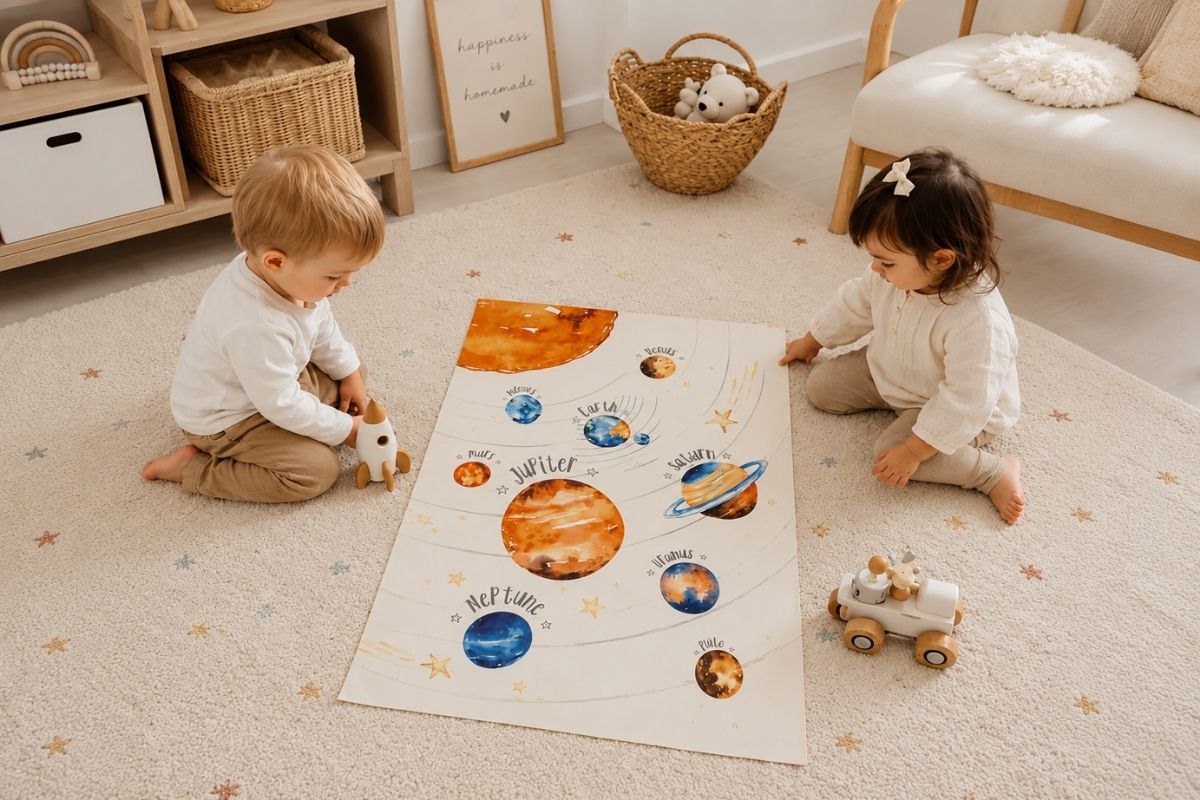
SpSpace nursery decor answers the growing demand for soothing, educational, and modern environments tailored specifically for infants. This design philosophy abandons chaotic, overstimulating patterns in favor of sophisticated celestial elements that promote a sense of deep tranquility. By integrating high-quality, natural textiles and minimalist visual art, parents can establish a stunning aesthetic without compromising indoor safety. The following comprehensive guide explores the intersection of pediatric visual development, sustainable material selection, and advanced spatial optimization to help you execute the perfect galaxy-themed room for your newborn.
What is space nursery decor and how is it applied?
Space nursery decor is an interior design style that incorporates celestial motifs—such as planets, stars, and galaxies—into a baby’s room using a minimalist approach. It creates a serene, educational environment that grows seamlessly with the child over time.
To successfully implement this aesthetic, interior design experts recommend the following key elements:
- Utilizing 100% natural cotton fabrics for wall hangings and bedding.
- Prioritizing text-free, highly realistic celestial illustrations over cartoons.
- Maintaining a neutral or deep, calming color palette to avoid overstimulation.
- Integrating soft, indirect lighting to enhance the spatial depth of the room.
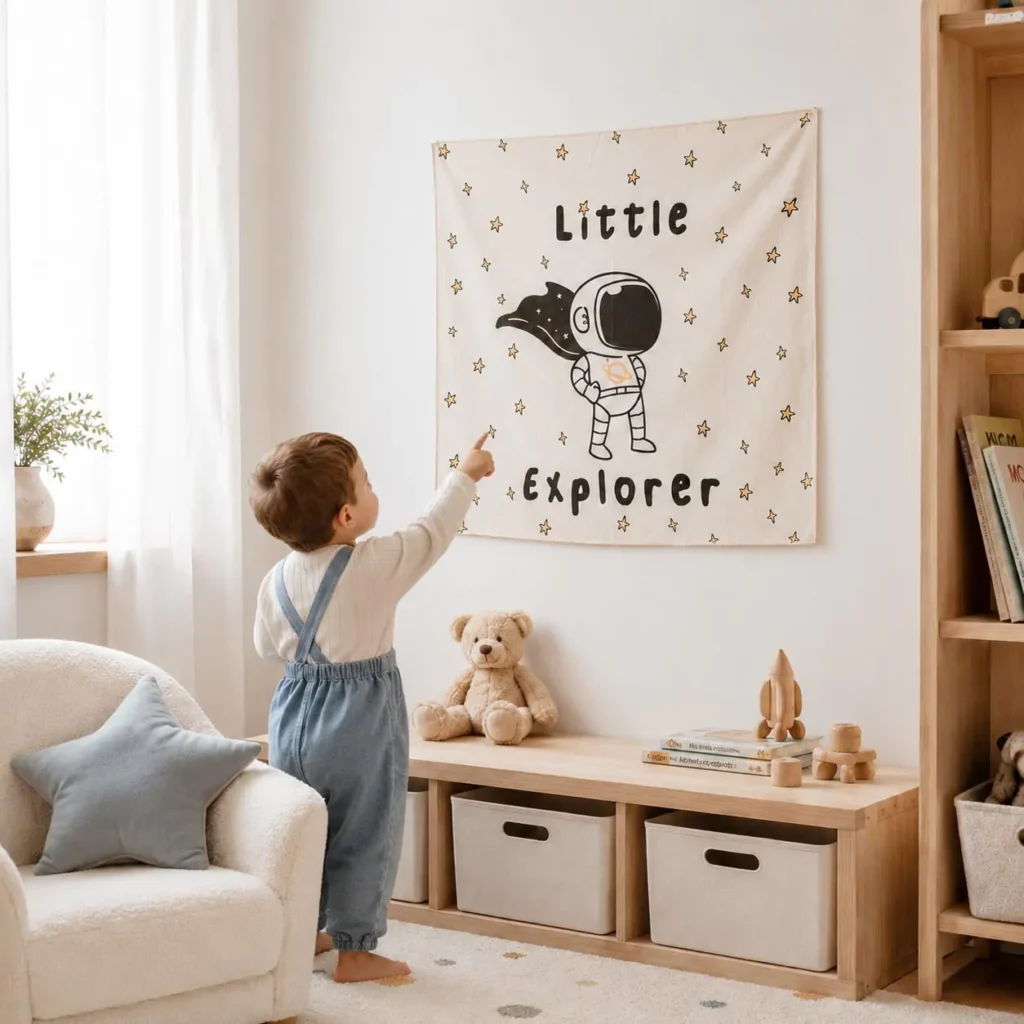
Why is space nursery decor ideal for newborn development?
Designing a room for a newborn involves much more than selecting matching furniture sets. The visual and environmental stimuli present in a nursery play a foundational role in a child’s cognitive, psychological, and physiological development during their most critical formative months. Establishing a deeply calming atmosphere requires an understanding of how infants perceive their immediate surroundings.
Visual stimulation and cognitive growth
During the first few months of life, a newborn’s retina and optic nerves are still undergoing rapid development, making it challenging for them to process highly complex or overly saturated visual information. Pediatric visual development research indicates that high-contrast imagery presented in soothing tones significantly helps strengthen eye muscles without causing sensory overload. A thoughtfully curated space nursery decor setup provides this exact balance. By utilizing a backdrop of deep navy, indigo, or charcoal gray accented with softly glowing celestial bodies, you offer visual anchors that help your baby practice focusing and tracking. Unlike overly saturated, chaotic themes that can overstimulate the nervous system, the gentle contrast of a starry night sky promotes focused, relaxed observation.
The psychology of celestial atmospheres and circadian rhythms
The concept of the cosmos naturally evokes innate feelings of vastness, tranquility, and wonder across all age groups. In architectural psychology, introducing elements that mimic the expansive night sky effectively lowers the perceived heart rate and encourages a transition into a restful state. When applied to an infant’s room, you are engineering an environment biologically primed for superior sleep hygiene. The illusion of a deep, endless galaxy created by a high-quality tapestry acts as a visual cue for the brain to initiate the production of melatonin. By reinforcing the natural circadian rhythm, a celestial-themed room actively assists parents in establishing healthy, consistent sleep schedules.
Long-term educational engagement
One of the most significant advantages of a celestial theme is its remarkable longevity. While heavily stylized nursery trends often age out by the time a child reaches preschool, a realistic galaxy aesthetic seamlessly transitions through different developmental stages. What begins as a soothing visual landscape for an infant gradually transforms into an engaging educational tool for a curious toddler. This environment organically sparks early interest in science, astronomy, and exploration. Therefore, investing in premium space-themed elements is not a temporary design choice, but a long-term commitment to your child’s intellectual environment.
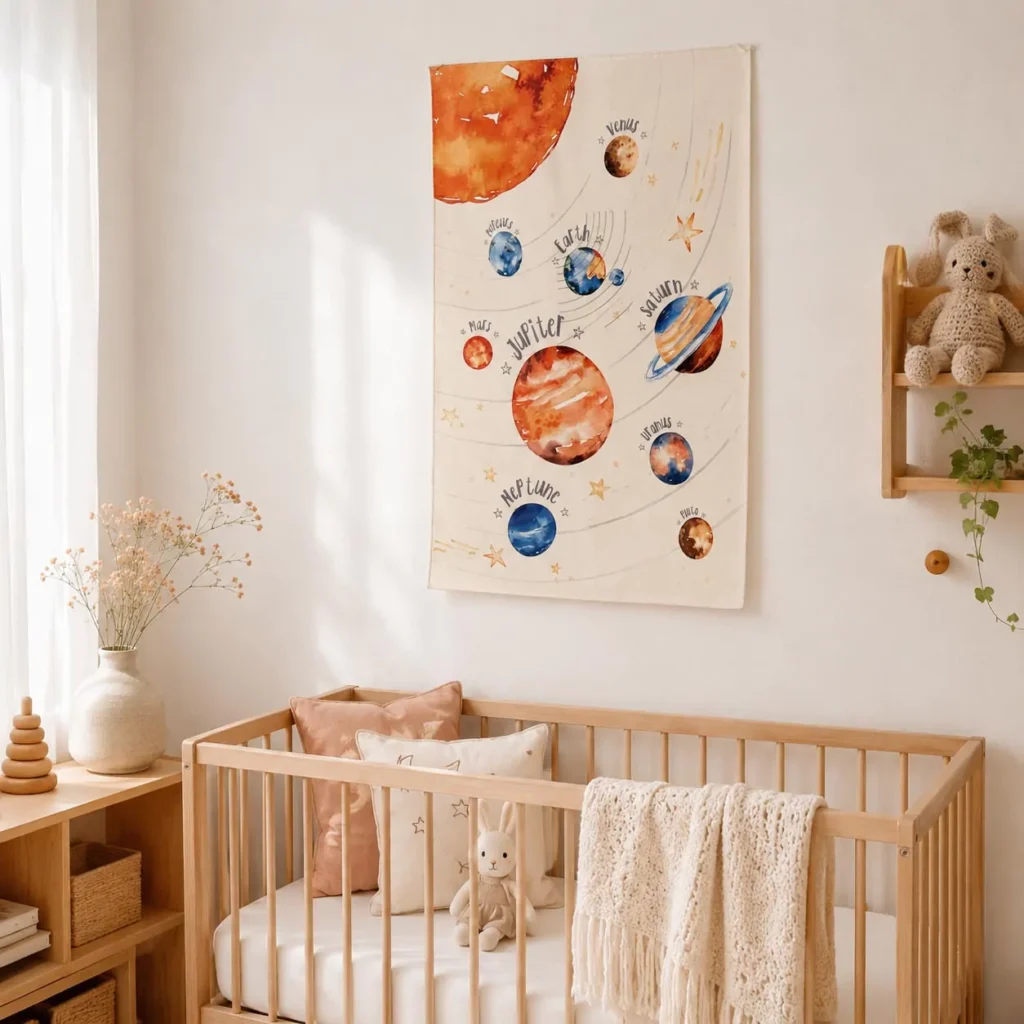
How to choose safe materials for a baby’s room?
When decorating a nursery in the United States, adhering to strict indoor environmental health standards is non-negotiable. The aesthetic appeal of a decorative product must always be matched by its material integrity, especially concerning items placed in close proximity to the crib.
The importance of 100% natural cotton in indoor air quality
The indoor air quality of a nursery is directly impacted by the specific textiles and finishes placed within its walls. Many conventional wall decorations, synthetic fabrics, and vinyl decals off-gas volatile organic compounds (VOCs) that can severely irritate a newborn’s sensitive respiratory system. Prioritizing natural materials is an essential step in modern parenting. Opting for a 100% cotton galaxy tapestry ensures that the fabric is highly breathable, naturally hypoallergenic, and completely free from the microplastic shedding associated with polyester blends. Brands like Dosjunior have elevated this standard by offering natural textile solutions that guarantee a pure, uncontaminated breathing space. Natural cotton does not generate static electricity, meaning it naturally repels airborne dust and allergens rather than trapping them.
Avoiding synthetic fabrics, toxic dyes, and microplastics
Beyond the base textile material, the chemical dyes used in nursery decor require intense scrutiny from conscious consumers. Heavy metals, formaldehyde, and toxic binding agents are frequently hidden in the bright, glossy finishes of mass-produced, inexpensive wall art. When selecting your space nursery decor, always ensure that the manufacturing process utilizes eco-friendly, water-based pigment inks that deeply penetrate the natural cotton fibers without leaving a hazardous chemical residue on the surface. A high-quality, sustainably produced fabric wall hanging features a matte, natural drape that not only looks incredibly sophisticated but also provides profound peace of mind. You can rest assured knowing your baby is breathing clean, untainted air in a heavily vetted environment.
The sustainability factor in modern parenting
Eco-conscious design is no longer a niche preference; it is a fundamental pillar of contemporary family homes. Choosing natural, biodegradable materials significantly reduces the carbon footprint associated with furnishing a nursery. High-quality cotton tapestries require less intensive chemical processing during manufacturing compared to synthetic alternatives. Furthermore, their durability ensures they do not end up in landfills after a few short years of use. By investing in sustainable textile art, parents actively contribute to a healthier planet, aligning their interior design choices with their broader ethical values regarding environmental stewardship.
Minimalist design: The power of text-free wall art
Modern interior design for families has shifted dramatically away from the chaotic, overly commercialized themes dominant in previous decades. Today’s parents seek a sophisticated, minimalist aesthetic that integrates flawlessly with the mature architectural style of the rest of their home.
Eliminating visual clutter in modern homes
A pervasive mistake in traditional nursery styling is the heavy overuse of typography and text. Motivational quotes, large oversized alphabet letters, or prominent brand names splashed across decorative items create immense visual noise. In a space explicitly designed for rest and neurological development, silence should be visually represented as well as auditory. Text-free designs ensure that the artwork speaks purely for itself, offering a serene, uninterrupted view of the cosmos. This minimalist approach allows the developing brain to process the environment without unnecessary strain. By removing distracting typographic elements, you elevate a simple piece of decor into a timeless, museum-quality piece of art.
Realistic illustrations versus cartoonish graphics
The intrinsic aesthetic value of your space nursery decor relies heavily on the quality and maturity of the imagery selected. Cartoonish rockets, overly animated alien figures, or heavily stylized planetary caricatures often age out incredibly quickly, forcing parents into costly redecorating projects within a few short years. Conversely, realistic, intricately detailed illustrations of the lunar surface, distant nebulas, and star clusters possess a timeless, undeniable elegance. Dosjunior excels in this exact niche, providing text-free, highly realistic celestial designs that look remarkably sophisticated on any wall. These minimalist visual representations respect the child’s intelligence and offer a visually pleasing focal point that parents will genuinely enjoy looking at during late-night feedings.
Enhancing spatial perception through minimalism
Minimalism is not merely about having fewer objects; it is about maximizing the impact of the objects you choose to include. A single, large-scale, highly detailed celestial tapestry anchors the room far more effectively than a dozen small, disjointed pictures scattered across a wall. This unified approach draws the eye upward and outward, making the ceiling feel higher and the walls wider. The absence of heavy frames, rigid borders, or contrasting mats allows the artwork to blend organically with the surrounding architecture, creating a fluid, expansive atmosphere that perfectly mimics the boundless nature of outer space.
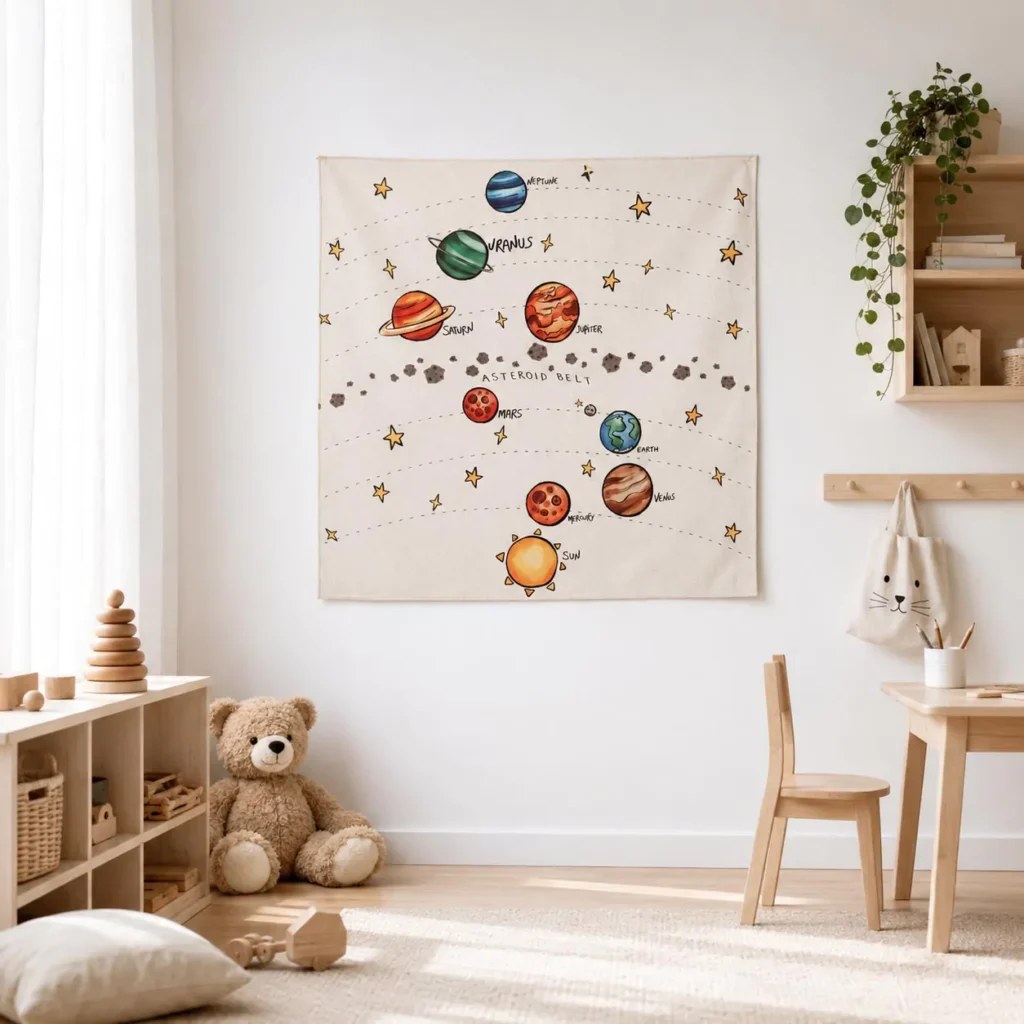
What are the best space-saving decorating ideas?
Not every growing family has the luxury of dedicating a sprawling, oversized suite to their newest member. In many modern urban environments, the baby’s room might physically be the smallest room in the house. However, a restricted square footage does not mean you have to compromise on style, depth, or functionality.
Utilizing vertical space with a galaxy tapestry
When floor space is strictly limited, the blank walls become your most valuable architectural asset. Heavy wooden furniture, thick floor-to-ceiling shelving units, or bulky framed artwork can instantly make a small room feel claustrophobic and heavily cramped. A fabric wall hanging completely eliminates this spatial issue. By draping a large, natural cotton tapestry across the primary accent wall—ideally positioned directly behind the crib—you instantly create a massive focal point that takes up absolutely zero physical volume in the room. The dark, expansive nature of a celestial print acts as a powerful optical illusion, pushing the boundary wall backward and making the room feel significantly larger and deeper than its actual measurements suggest.
Safe installation methods for fabric wall hangings
Physical safety in a small, compact room is paramount, especially when placing any decorative elements directly above a designated sleep space. Heavy wooden frames, metal brackets, or glass-covered art pose a significant, life-threatening hazard if dislodged by a slammed door, an accidental bump, or seismic activity. A natural cotton tapestry is virtually weightless, neutralizing this risk entirely. To install it securely without permanently damaging your drywall or using dangerous protruding nails, industrial-strength velcro strips or specialized damage-free adhesive hooks are the perfect, modern solution. This professional installation technique ensures the fabric remains taut, flush against the wall, and completely secure, eliminating any potential risk to the child sleeping directly below it.
Complementary minimalist furniture choices
To maximize the impact of your space nursery decor, the surrounding furniture must support the minimalist ethos. Opt for cribs and changing tables with clean, straight lines and natural wood finishes rather than ornate, heavy detailing. Floating shelves positioned high on the walls can display a curated selection of wooden educational toys or select books, keeping the floor area entirely clear for safe playtime. By ensuring that the functional pieces in the room are visually lightweight, you allow the expansive celestial wall art to remain the undisputed focal point of the space.
Lighting and sensory integration for celestial themes
The visual impact of any decorative element is fundamentally dictated by the lighting scheme of the room. To truly capture the magic and depth of a galaxy theme, a strategic approach to sensory integration is required.
Mastering indirect warm lighting
Harsh, direct overhead lighting instantly shatters the calming illusion of a celestial nursery. To complement a deep, richly colored tapestry, lighting should be layered and entirely indirect. Wall sconces featuring warm amber bulbs (around 2700K color temperature) can be strategically placed to cast a gentle wash of light across the fabric, highlighting the realistic details of the stars and planets without creating glare. Dimmable floor lamps or concealed LED strip lighting behind the crib can further enhance the optical depth of the space nursery decor. This controlled, warm illumination perfectly mimics the soft glow of distant starlight, reinforcing the biological cues for sleep preparation.
Acoustic benefits of fabric wall tapestries
Beyond their profound visual appeal, fabric wall hangings offer an often-overlooked sensory advantage: acoustic dampening. Hard surfaces such as drywall, hardwood floors, and glass windows naturally reflect sound waves, creating a slight echo that can magnify sudden noises and startle a sleeping infant. Large-scale cotton textiles absorb a significant portion of these high-frequency sound waves. By covering a large section of the wall with a premium tapestry, you subtly soften the acoustic profile of the nursery. This creates a quieter, more insulated environment that buffers external household noises, contributing significantly to a more peaceful, uninterrupted sleep cycle for the baby.
Comparing nursery wall decor options
To make the most informed architectural decision for your nursery, it is helpful to objectively analyze the most common decorating methods available on the market today regarding safety, aesthetics, and spatial efficiency.
| Decor Type | Safety Profile | Aesthetic Quality | Space Efficiency |
| Natural Cotton Tapestry | Hypoallergenic, zero fall risk | Matte, elegant, seamless drape | Zero volume, maximizes space |
| Framed Glass Artwork | Heavy, poses shattering hazard | Glare-prone, rigid structure | Bulky, encroaches on room |
| Vinyl Wall Decals | May contain VOCs, synthetic | Often peels, shiny finish | Zero volume, but looks flat |
As the comparative data clearly indicates, utilizing a natural textile approach offers the highest possible safety rating for an infant’s environment. Simultaneously, it delivers a premium, modern aesthetic with superior acoustic and spatial benefits that traditional, rigid alternatives simply cannot replicate in a residential setting.
Frequently asked questions
What is the best color palette for space nursery decor?
The ideal palette combines deep indigo, charcoal, or navy backgrounds with soft accents of warm white, silver, and earthy terracotta. Avoiding highly saturated neon colors in favor of these muted, neutral tones ensures the room remains a calming environment conducive to healthy infant sleep patterns.
Are fabric wall tapestries safe to hang above a crib?
Yes, tapestries made from 100% natural cotton are incredibly safe. Unlike heavy framed art, they are lightweight and pose no blunt-force or shattering risk if they ever fall. Furthermore, natural cotton is hypoallergenic, ensuring no harmful dust or synthetic particles settle into the crib.
How do I decorate a very small nursery effectively?
To decorate a small nursery, maximize vertical space and avoid bulky items. Hanging a large, text-free celestial tapestry on a single accent wall creates an optical illusion of depth. Keeping the floor clear and using soft, indirect lighting will further enhance the feeling of spaciousness.
Is a premium cotton tapestry more cost-effective than traditional framed art?
Yes, a premium cotton tapestry covers a significantly larger surface area for a fraction of the cost of oversized, custom-framed artwork. Additionally, its durability, ease of washing, and timeless minimalist aesthetic mean it will easily transition from a nursery into a toddler room, maximizing your investment.
Conclusion
Creating a beautiful, scientifically sound, and soothing environment for your newborn is one of the most rewarding steps in preparing for their arrival. By thoughtfully applying modern space nursery decor principles, you provide your child with an architectural space that actively promotes neurological calm, encourages vital visual development, and gracefully grows with them over time. Prioritizing 100% natural, breathable materials and embracing the quiet elegance of minimalist, text-free designs ensures that the space remains fundamentally safe, healthy, and visually stunning. Whether you are working with a spacious suburban suite or a highly compact urban room, leveraging vertical space with high-quality acoustic textiles is a demonstrably superior design choice.
Explore Dosjunior’s collection of natural, text-free celestial tapestries today to transform your baby’s room into a modern, minimalist galaxy.