

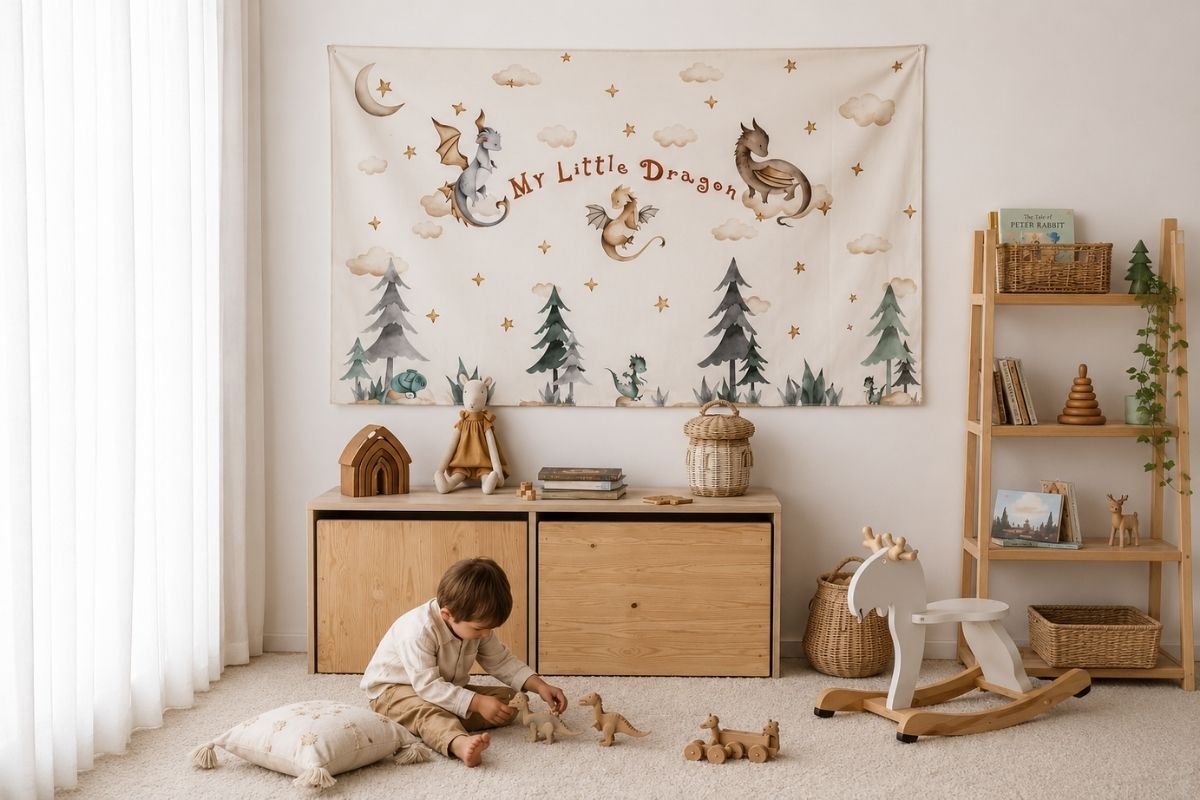
Wall hangings for nursery spaces provide a secure, visually appealing, and acoustically beneficial alternative to traditional framed artwork. By utilizing soft textiles, parents eliminate the physical hazards of heavy glass and sharp wooden frames while simultaneously improving the room’s sound dampening qualities. This complete guide covers everything from the psychological impact of minimalist, text-free designs to step-by-step installation methods that protect your interior paint. You will learn how to select the right fabrics, arrange educational themes seamlessly, and maintain a pristine environment for your newborn.
What are wall hangings for nursery rooms?
Wall hangings for nursery rooms refer to soft, textile-based decorative pieces designed specifically for infant and toddler environments. These items replace traditional hard-framed art to prioritize safety and sensory comfort.
Key benefits of textile nursery decor include:
- Absolute physical safety: Zero risk of shattered glass or heavy impacts near the crib area.
- Acoustic dampening: Fabric absorbs high-frequency sounds, reducing echoes by up to 20% in standard room dimensions.
- Tactile stimulation: High-quality woven materials provide gentle sensory input as the child grows and begins exploring.
- Lightweight flexibility: Easy to install, reposition, and clean without requiring heavy-duty wall anchors.
Why fabric wall decor outperforms traditional framed art
When designing a modern space for an infant, safety and sensory regulation must dictate interior design choices. Traditional framed art presents inherent risks; a standard 18×24 inch wooden frame with glass can weigh over 5 pounds. If an earthquake occurs, or if a toddler unexpectedly pulls a nearby curtain, a dislodged frame poses a severe physical hazard. Fabric wall decor entirely neutralizes this threat. A premium textile piece of the same dimension typically weighs under 1 pound and consists entirely of soft, yielding materials.
Beyond physical safety, sensory regulation is a critical factor in a baby’s environment. Hard surfaces like glass, painted drywall, and hardwood floors create acoustic environments where sound waves bounce freely. This reverberation amplifies everyday noises, from closing doors to ambient street sounds, frequently disrupting infant sleep cycles. Integrating textile-based decor introduces soft, porous surfaces that naturally absorb sound waves. Clinical environmental studies indicate that adding soft furnishings to a room can decrease ambient noise reflection by a significant margin, creating a muted, tranquil atmosphere conducive to uninterrupted rest.
The aesthetic flexibility of woven or printed textiles also allows for seamless integration into various design schemes. Modern parents increasingly lean toward minimalist interior design aesthetics. Brands like Dos Junior focus heavily on text-free, highly realistic visual styles that elevate the room without overwhelming the senses. By removing chaotic typography and cartoonish clutter, fabric pieces maintain a sophisticated, contemporary feel that grows with the child rather than feeling outdated within a few years.
Popular themes for modern minimalist baby rooms
Selecting the right motif establishes the foundational mood of the environment. The current trajectory in high-end interior design heavily favors nature-inspired and intellectually stimulating concepts executed with a sophisticated, realistic touch.
Woodland and animal inspired textile art
The woodland nursery decor theme remains a dominant force in infant room design due to its inherent connection to the natural world. However, the modern approach completely discards exaggerated, brightly colored cartoon animals. Instead, the focus has shifted toward highly realistic, detailed depictions of flora and fauna. A beautifully woven tapestry featuring lifelike forest canopies, subtle earth tones, and precisely detailed animal silhouettes creates a calming anchor point in the room. These text-free designs rely purely on the quality of the illustration and the texture of the fabric to draw the eye. This approach prevents visual overstimulation, ensuring the space remains a sanctuary for both the baby and the parents during late-night feedings.
Educational map designs for little explorers
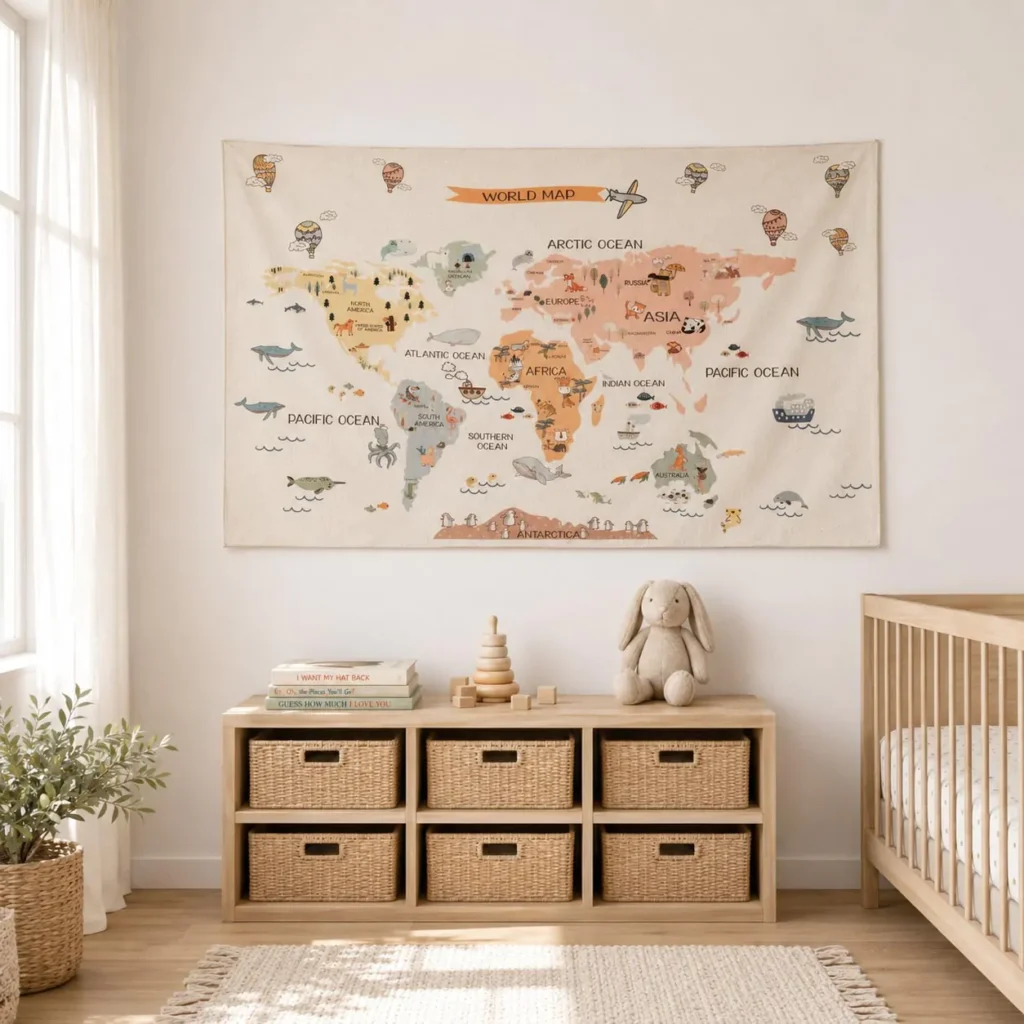
Maps have always been a staple of childhood exploration, but integrating them as soft wall decor elevates their utility and elegance. For a nursery, vintage-inspired or realistically scaled world maps printed on premium organic canvas serve as both a focal point and a subtle educational tool. The absence of heavy text on these modern map designs encourages children to focus on geographical shapes, continents, and realistic animal placements corresponding to specific regions. This minimalist approach transforms a standard map into a sophisticated piece of art. As the child transitions from infancy to toddlerhood, the map becomes an interactive canvas for pointing and learning, all while maintaining the room’s high-end aesthetic profile.
Minimalist alphabet and sensory arrangements
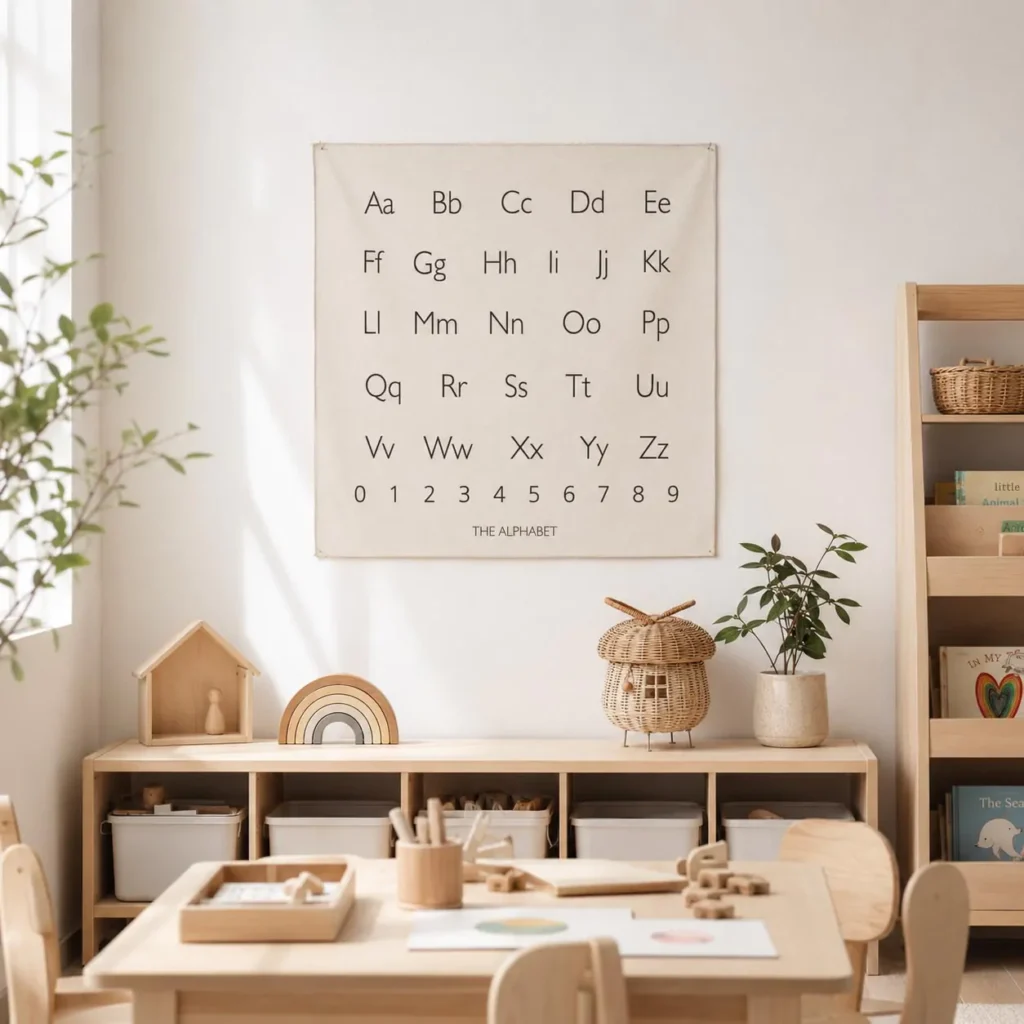
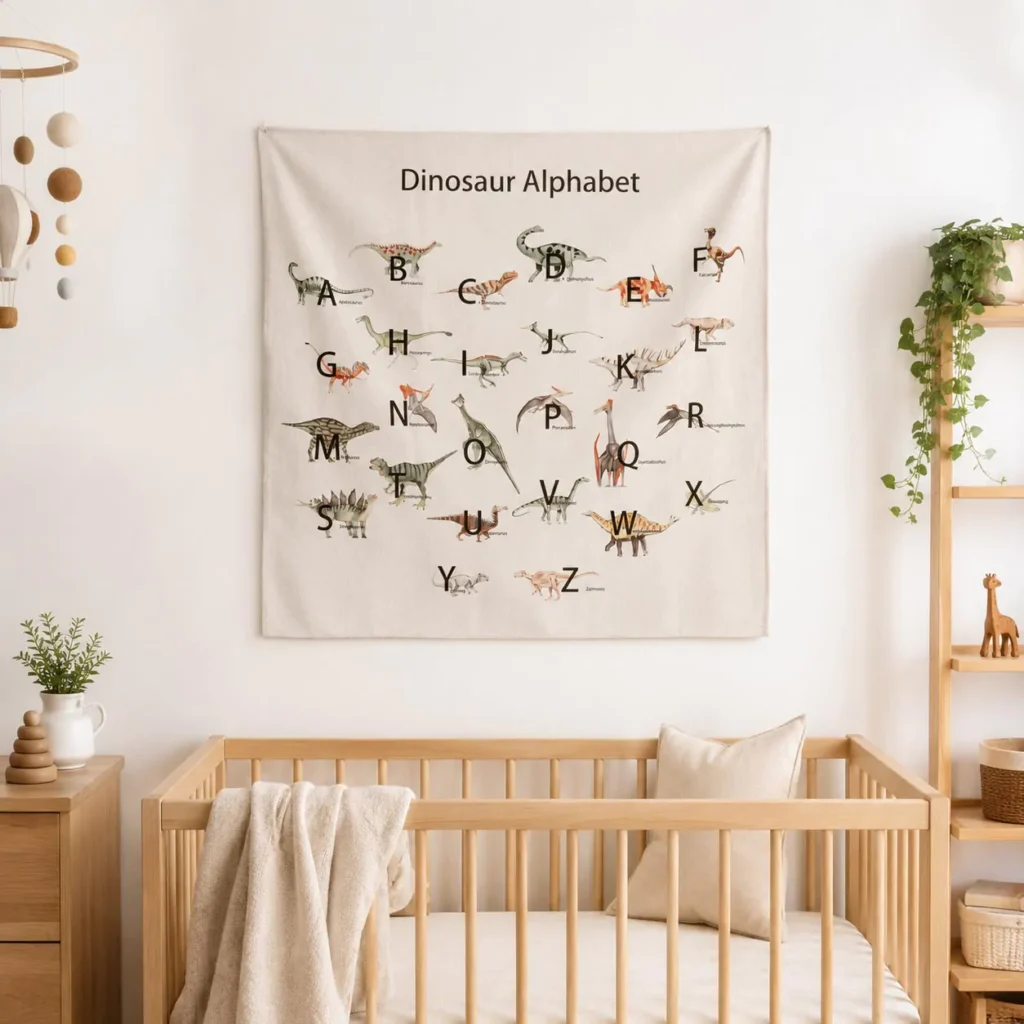
Alphabet decor is a classic choice, but modern applications have moved away from chaotic, multicolored plastic letters. Today’s premium execution involves sophisticated, textile-based letters or cohesive tapestries featuring the alphabet in elegant, realistic fonts without distracting background noise. These pieces often utilize neutral color palettes—such as muted sage, terracotta, or warm beige—that blend perfectly with modern interior architecture. Soft wall decor featuring the alphabet allows parents to introduce early educational concepts without sacrificing the room’s overarching design philosophy. The tactile nature of the fabric also means that when these letters are placed lower on the wall, toddlers can safely touch and feel the shapes, engaging their sensory development safely.
The psychology of text-free and realistic visual design
The visual environment directly influences an infant’s cognitive and emotional development. In the first few months of life, a newborn’s vision is developing rapidly, and they are highly sensitive to their surroundings. Overloading a room with high-contrast, chaotic patterns, bright neon colors, and excessive typography can lead to visual fatigue and sensory overstimulation. This overstimulation often translates to restlessness and difficulty regulating sleep patterns.
Opting for text-free, realistic designs in your decor strategy aligns perfectly with developmental psychology recommendations. Realistic imagery, whether it is a precisely drawn botanical leaf or a proportionally accurate animal, helps ground the child in reality. It provides clear, recognizable shapes that the developing brain can process without confusion. Without the interference of words—which infants cannot read and which only serve to clutter the visual field—the child can focus entirely on form, color, and texture.
Furthermore, minimalist aesthetics foster a sense of calm and order. A textile piece featuring a singular, beautifully rendered image against a clean background allows the eye to rest. This design philosophy not only benefits the infant but also significantly impacts the parents’ psychological well-being. A serene, uncluttered nursery serves as a peaceful retreat for parents navigating the stresses of early parenthood. By selecting sophisticated, text-free tapestries, families create a harmonious environment that respects the psychological needs of both the child and the adult caretakers.
How to safely install textile decor without damaging walls
One of the primary advantages of soft wall hangings is the ease and safety of installation. Because these items are exceptionally lightweight, heavy-duty drilling, wall anchors, and stud finders are entirely unnecessary. However, proper installation remains crucial to ensure the piece hangs flat, looks professional, and leaves the wall pristine if you decide to redecorate.
When preparing to hang your selected fabric piece, avoid using standard nails or thumbtacks, as these create permanent holes and can tear the delicate fibers of high-quality textiles over time. Instead, utilize modern, damage-free hanging solutions designed specifically for lightweight objects.
Follow these secure installation steps:
- Assess the wall surface: Ensure the designated area is clean, completely dry, and free of dust. Damage-free adhesive strips require a pristine surface to bond correctly. Wait at least 30 days before applying adhesives to newly painted walls to prevent peeling.
- Determine the hanging mechanism: If the tapestry includes a built-in wooden dowel or a dedicated hanging string, you only need one or two adhesive wall hooks. If it is a flat piece of fabric, use specialized adhesive hook-and-loop strips (like Command strips) designed for textiles.
- Apply the adhesives symmetrically: For flat fabrics, apply strips to the top two corners. For larger pieces exceeding 36 inches in width, place an additional strip in the top center to prevent the material from sagging.
- Press and secure: Press the fabric firmly against the wall hooks or strips for 30 seconds. This pressure activates the adhesive, ensuring a secure bond capable of holding the minimal weight of the fabric indefinitely.
This non-destructive method is particularly beneficial for renters or parents who anticipate changing the room’s layout as the child transitions to a toddler bed.
Selecting hypoallergenic and sustainable materials
The materials introduced into a baby’s room must meet the highest standards of safety and purity. Infants possess highly sensitive respiratory systems and delicate skin, making them susceptible to airborne irritants, off-gassing chemicals, and harsh synthetic fibers. Therefore, the composition of your soft wall decor is just as important as its visual appeal.
When evaluating wall hangings for nursery environments, prioritize fabrics woven from organic, natural fibers. Organic cotton and natural linen are the premier choices. These materials are inherently hypoallergenic, meaning they naturally resist the accumulation of dust mites and do not emit volatile organic compounds (VOCs). Traditional synthetic decorations, particularly those made from cheap plastics or treated with heavy chemical fire retardants, can release microscopic particles into the air over time, compromising indoor air quality.
Furthermore, pay close attention to the dyeing and printing processes used on the fabric. High-quality pieces utilize water-based, non-toxic inks rather than heavy plastisol prints. Water-based inks bind directly with the fabric fibers, leaving no raised, rubbery texture that could peel or flake off. This ensures that the realistic, minimalist designs remain vibrant without introducing chemical hazards. Seek out products that boast certifications like OEKO-TEX Standard 100, which guarantees that every component of the textile—from the yarn to the dyes—has been rigorously tested for harmful substances. By investing in premium, sustainably sourced materials like those utilized by Dos Junior, parents ensure a completely safe, breathable, and visually stunning environment.
Sizing and placement strategies for optimal visual impact
Strategic placement of decor dictates the flow and balance of the entire room. A beautiful piece of textile art can easily be overshadowed if hung at the wrong height or dwarfed by the surrounding furniture. Understanding standard interior design proportions will ensure your chosen piece maximizes its visual potential.
The most common location for a focal tapestry is directly above the crib. However, safety and proportion are paramount here. The bottom edge of the fabric should hang a minimum of 12 to 14 inches above the top rail of the crib. This height ensures the design is visually anchored to the furniture below it, rather than floating aimlessly on the wall, while remaining safely out of reach of a standing toddler.
When considering width, the “Rule of Two-Thirds” is a fundamental interior design standard. The width of your wall hanging should ideally span roughly two-thirds the width of the furniture piece it sits above. For example, if your crib is 54 inches wide, a tapestry measuring approximately 36 inches across will create perfect visual harmony. If the piece is too small, it will look disconnected; if it is too large, it will make the furniture appear disproportionately tiny.
If you are grouping multiple smaller pieces—such as a minimalist alphabet series or a collection of realistic woodland animal profiles—treat the arrangement as one cohesive unit. Maintain consistent spacing of 2 to 3 inches between each piece, and ensure the overall boundary of the collection adheres to the two-thirds rule relative to the furniture below. For standalone walls without furniture, center the artwork at an average adult eye level, which is standardly 57 to 60 inches from the floor to the center of the design, ensuring the room feels designed and deliberate.
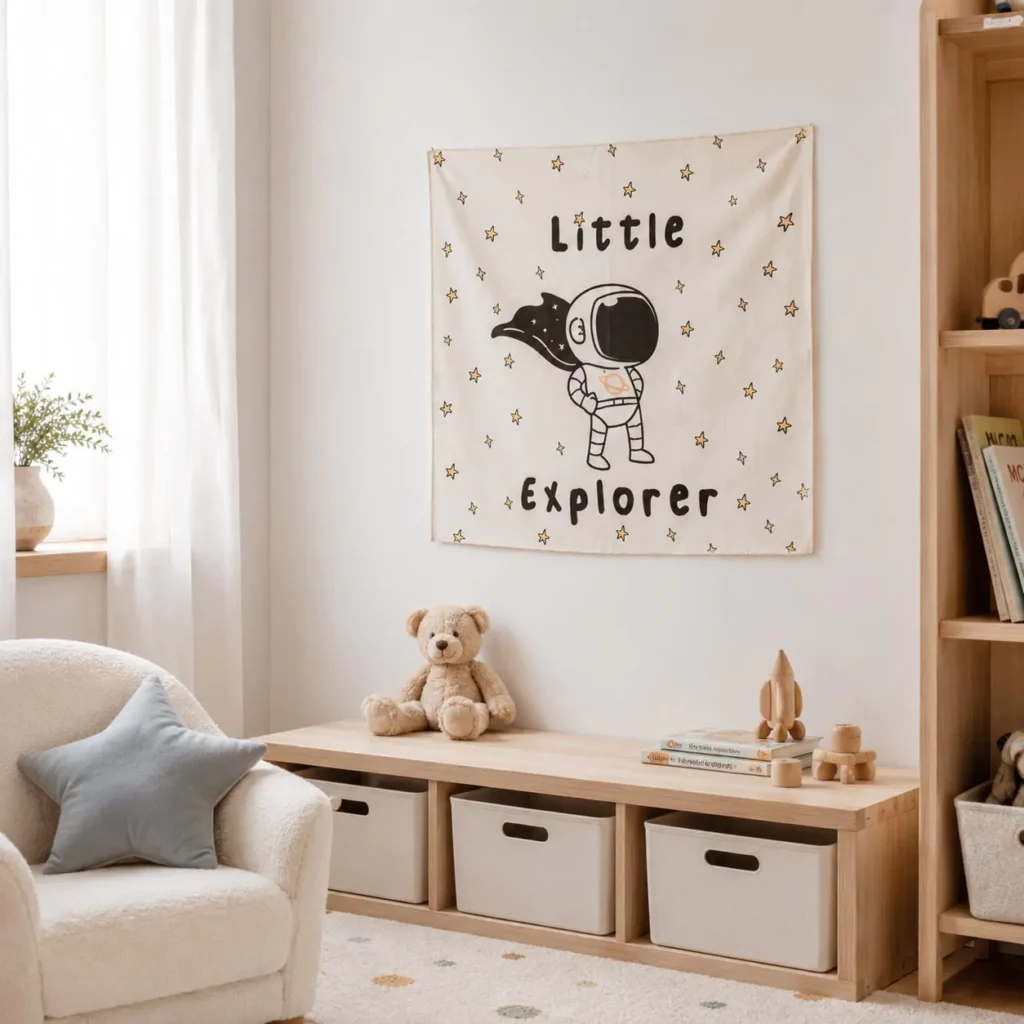
Cleaning and maintaining your woven or printed tapestries
Unlike hard-surfaced art that simply requires a quick wipe with a glass cleaner, textile decor requires specific, gentle maintenance to preserve its fiber integrity and color vibrancy. Fortunately, because these items hang vertically on the wall, they rarely accumulate the heavy dirt or spills associated with rugs or bedding.
Routine maintenance is straightforward and should be incorporated into your standard nursery cleaning schedule.
- Routine dusting: Use a clean, dry microfiber cloth or a lint roller gently across the surface of the fabric every two weeks. This prevents ambient room dust from settling deep into the woven fibers.
- Vacuuming: For larger or highly textured pieces, use the upholstery brush attachment on your vacuum cleaner. Keep the suction on the lowest setting and move vertically down the fabric to remove deeper dust particles without distorting the weave.
- Spot cleaning: If an accidental splash or smudge occurs, immediate spot cleaning is required. Do not use harsh chemical stain removers. Instead, lightly dampen a clean white cloth with cold water and a drop of mild, pH-neutral baby detergent. Dab the stain gently—never rub, as rubbing will force the pigment deeper into the fibers and may cause the water-based inks to bleed.
- Deep cleaning: Should the piece require a full wash, always refer to the manufacturer’s care label. Most high-quality organic cotton tapestries can be hand-washed in cold water or run on a delicate, cold machine cycle. Always air dry the fabric by laying it flat on a clean towel; never run textiles through a heated dryer, as high temperatures will warp the material and shrink the organic fibers, ruining the piece’s structural integrity.
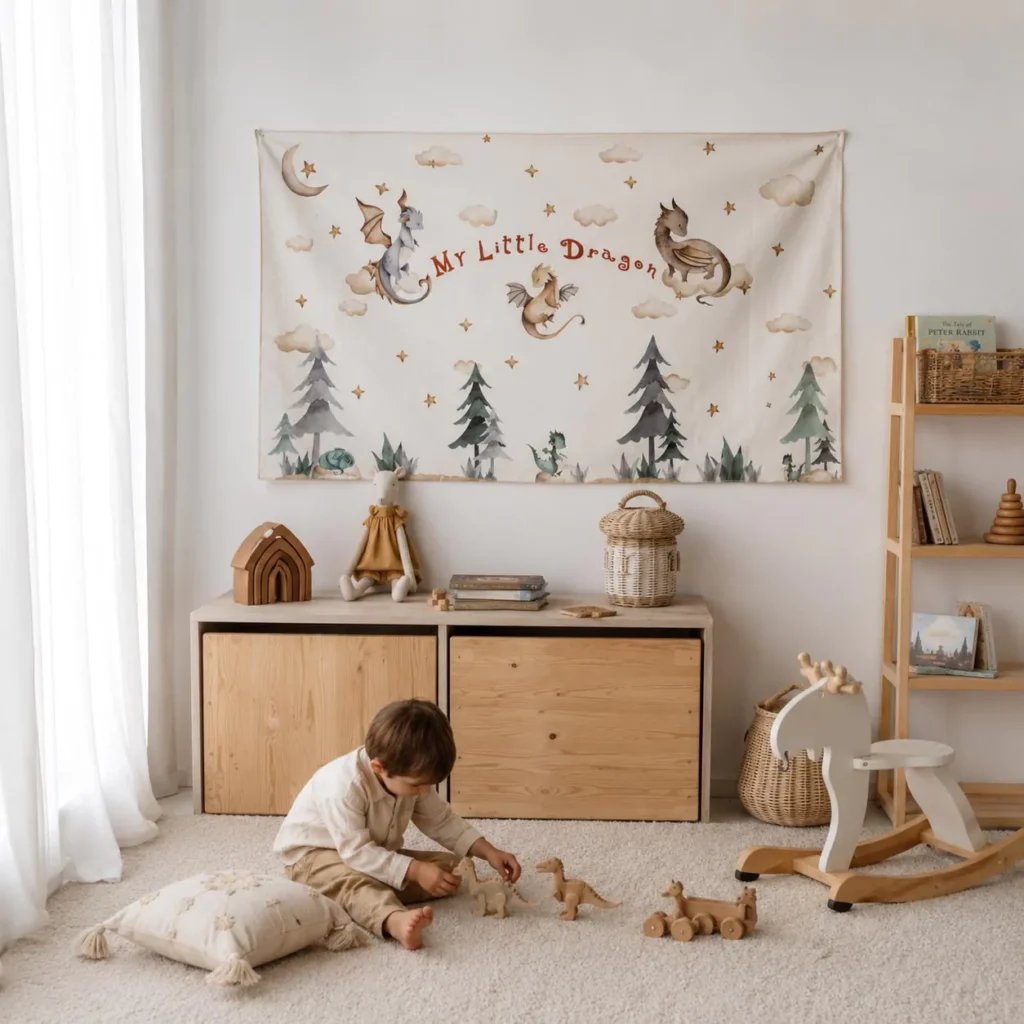
Frequently asked questions
What is the safest decor to put above a baby crib?
Lightweight, soft wall hangings are the safest option for above-crib placement. Unlike heavy wooden frames, mirrors, or glass-covered art, textile tapestries pose zero risk of physical injury if they accidentally fall, making them the ultimate secure choice for modern parents prioritizing safety.
How do you hang fabric wall art without leaving marks?
Utilize damage-free adhesive strips specifically designed for lightweight textiles. Apply the strips to the top corners of the fabric and press firmly against a clean, dry wall. This method completely avoids nails, thumbtacks, and drilling, protecting your interior paint from permanent holes.
Are fabric tapestries better than framed prints for acoustics?
Yes. Hard surfaces like glass and wood reflect sound waves, creating echoes that can disturb a baby’s sleep. Soft textiles naturally absorb and dampen high-frequency sounds, significantly reducing noise reverberation and helping to maintain a peaceful, quiet atmosphere in the room.
How much should I expect to spend on premium nursery tapestries?
High-quality, organic, and hypoallergenic textile art generally ranges from $40 to $120, depending on the size and detailing. While cheaper synthetic options exist, investing in premium materials ensures safe, non-toxic dyes, superior longevity, and a highly realistic, minimalist aesthetic.
Conclusion
Choosing the ideal wall hangings for nursery environments goes far beyond simple aesthetics; it is a fundamental decision regarding safety, sensory development, and room acoustics. By opting for soft, high-quality textiles over traditional framed glass, you eliminate physical hazards while actively dampening ambient noise. Furthermore, selecting sophisticated, text-free, and realistic designs—whether woodland motifs or elegant alphabet layouts—fosters a calm, focused atmosphere that supports your child’s cognitive growth without visual overstimulation. Maintaining and installing these lightweight pieces is effortless, ensuring your modern decor remains pristine and adaptable as your family grows.
Explore the collection to find the perfect text-free, realistic designs to safely elevate your child’s room