

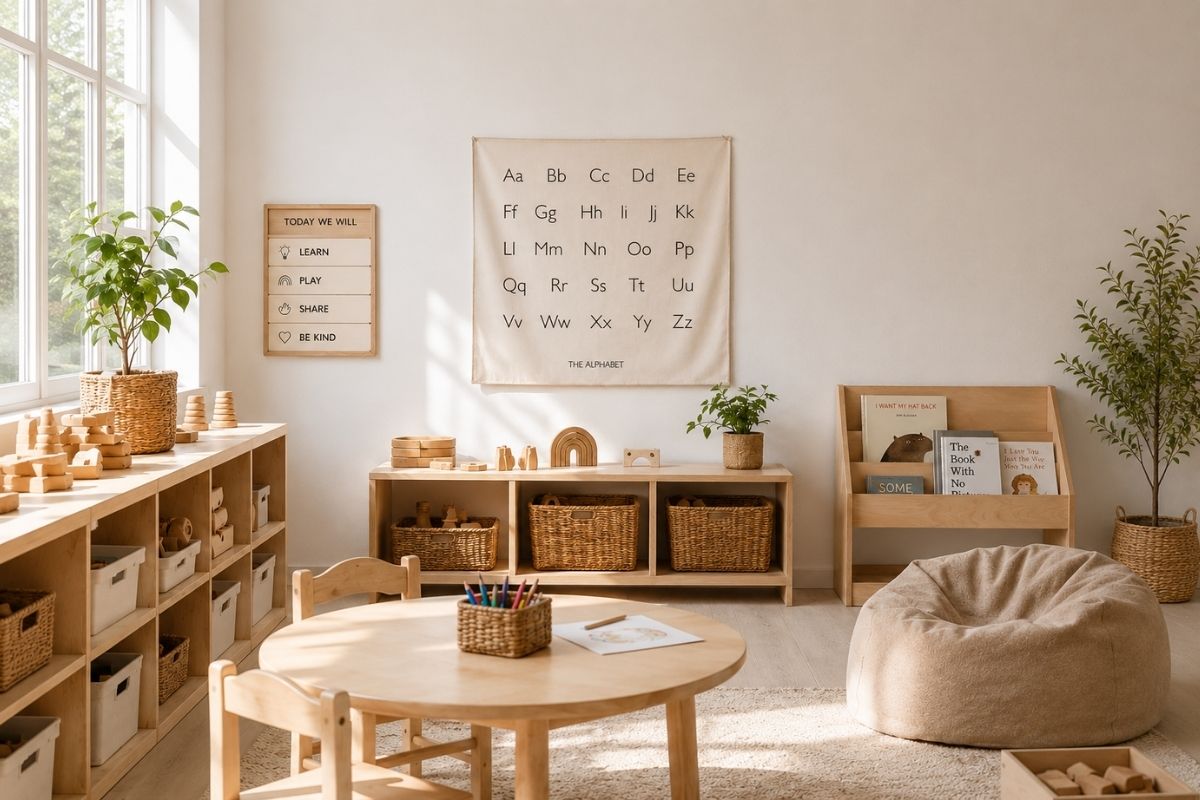
Boho nursery wall decor blends natural textures, neutral tones, and organic shapes to create a soft, calming space for a baby. The style relies on materials like rattan, cotton macramé, and wood rather than bright primary colors or cartoon prints. A well-planned boho nursery wall typically layers two or three focal pieces around a crib or glider rather than scattering small items across every surface. This guide covers wall layout principles, material and color choices, gender-neutral styling, safety considerations, and practical placement tips for a finished boho nursery.
What is boho nursery wall decor?
Boho nursery wall decor refers to nursery wall styling that combines natural materials, muted neutral colors, and organic or abstract shapes instead of bright, cartoon-style prints. It typically includes woven hangings, wooden wall art, dried botanicals, and minimalist line drawings arranged in an asymmetrical gallery layout above the crib or change table.
- Materials: rattan, wood, cotton macramé, jute
- Color palette: cream, terracotta, sage, sand
- Layout: asymmetrical gallery grouping above the crib
- Motifs: moons, mountains, arches, botanical line art
- Tone: wordless, minimalist, gender-neutral
Interior design surveys on nursery trends consistently point to neutral, nature-inspired palettes overtaking primary-color cartoon themes, particularly among parents furnishing gender-neutral rooms. Wordless, single-line illustrations — the kind found in collections such as dosjunior’s nursery wall art — fit this shift well, since they read as wall art rather than toys and keep a room looking finished long after a baby outgrows nursery-rhyme characters.
Part of the appeal is longevity. A boho nursery rarely needs a full redo when a child moves from crib to toddler bed, since the same neutral palette and natural materials work for both ages. Parents furnishing a first nursery on a budget often value this carryover more than the look itself, since replacing an entire themed room every two to three years adds up quickly.

How to plan a boho nursery wall gallery layout
A boho nursery wall gallery rarely uses more than four to six pieces, since the style depends on negative space as much as on the objects themselves. Most layouts start with one larger anchor piece — a woven hanging, a large line-art print, or a wood cutout — and build outward with two or three smaller items in varying shapes.
Choosing a focal point above the crib
The focal point usually sits centered above the crib headboard, slightly off-center if a window or door breaks up the wall. Crib-safety guidance consistently advises against placing decor directly above or within reach of the mattress, so the focal piece should sit high enough that it cannot be pulled down by a standing toddler later on. Many parents choose a piece around 24 to 36 inches wide for this spot.
Spacing and hanging height for nursery walls
Interior designers commonly center a gallery grouping at 57 to 60 inches from the floor. In a nursery, where most viewing happens from a glider or while holding a baby, many parents lower that center point to 52 to 55 inches instead. Leave 2 to 3 inches between tightly clustered small pieces, and closer to 4 to 6 inches for frames larger than 16 inches across. Any nail, hook, or wire should be rated for at least twice the item’s actual weight, since wood and rattan pieces are often heavier than they look.
Adjusting layout for small or narrow nursery walls
Narrow walls, common in converted offices or shared rooms, rarely fit a six-piece spread without feeling cramped. Dropping to a three-piece cluster of one medium anchor and two small accents usually solves this. A single vertical arrangement also works well next to a narrow crib wall, and tends to draw the eye upward, making a small room feel taller.
Which colors define a boho nursery palette

Boho color palettes lean on muted, earthy tones rather than the saturated primary colors common in cartoon-themed nurseries. Cream, sand, terracotta, and sage repeat across most boho rooms, often alongside one deeper accent like rust or charcoal.
Warm neutral and terracotta palettes
Warm boho palettes pair cream or oatmeal walls with terracotta, rust, and warm wood tones, often finished with a single black or dark-walnut frame for contrast. This suits rooms with south-facing windows or warm artificial lighting, since orange undertones intensify under yellow-toned bulbs.
Cool sage and stone palettes
Cooler boho palettes swap terracotta for sage, dusty blue, or stone gray, paired with lighter ash or white-washed wood. Sage-toned palettes are a common middle ground for parents who want gender-neutral without leaning fully into the warmer terracotta family.
| Palette | Mood | Pairs well with |
|---|---|---|
| Terracotta & cream | Warm, earthy | Walnut wood, rattan |
| Sage & stone | Calm, airy | White-washed wood, linen |
| Charcoal & oat | Modern, grounded | Black metal accents |
Lighting changes how any palette actually reads on the wall. A terracotta piece that looks rich under daylight can shift cooler under a standard nightlight bulb, while sage tones hold color more consistently across bulb temperatures. Testing a swatch under both daytime and nighttime lighting helps avoid a mismatch that only becomes obvious once the full gallery is mounted.
Boho nursery wall decor ideas for girls, boys, and gender-neutral rooms
A boho girl nursery typically leans into softer, rounded shapes with a blush or dusty-rose accent over the standard cream-and-sage base. A boho boy nursery tends toward angular motifs — mountains, arrows, geometric suns — paired with rust or olive instead of pink. Gender-neutral boho rooms skip a strong accent color and rely on shape and texture instead.
- Girl-leaning motifs: arches, dried pampas grass, dotted-line moons, soft blush accents
- Boy-leaning motifs: mountains, arrows, geometric suns, rust or olive accents
- Gender-neutral motifs: plain arches, abstract line art, woven texture, cream-and-sage base only
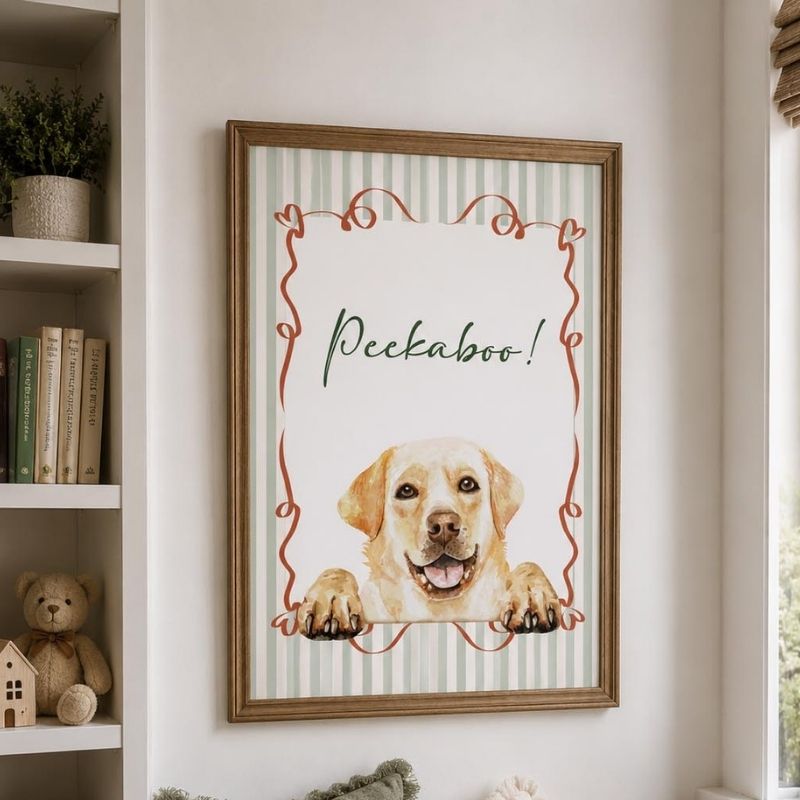
Adding personalized name art without breaking the neutral palette
A name sign can clash with the rest of the wall if it’s too literal in style. Wordless, single-line wood or print designs that spell out a name in the same minimalist style as the surrounding line art tend to blend in rather than stand out. Keeping the name piece in the same material family as the rest of the gallery — raw wood next to raw wood — is usually enough to make it look planned rather than added on.
What materials and motifs define the boho aesthetic
Rattan and wicker show up in round wall mirrors, baskets, and pendant shades. Cotton or jute macramé forms wall hangings and small shelves. Raw or whitewashed wood appears as cutout shapes — moons, mountains, arches — often left unpainted to show grain.
- Rattan and wicker: mirrors, shades, baskets
- Macramé and woven cotton: wall hangings, shelves
- Raw or whitewashed wood: cutout shapes, name signs
- Dried or faux botanicals: pampas grass, eucalyptus stems
Real versus faux botanicals for nursery walls
Dried pampas grass and eucalyptus stems are common boho accents, but dried botanicals shed fine particles over time, worth factoring in for a room a baby spends many hours in. Faux versions avoid the shedding issue and hold shape under sunlight longer, though they read as slightly less textured up close.
DIY versus ready-made boho nursery wall decor
A DIY macramé hanging can cost under $15 in materials but takes hours to tie correctly, with visible quality variation between a first and fifth attempt. Ready-made pieces cost more per item but arrive at a consistent finish.
| Factor | DIY | Ready-made |
|---|---|---|
| Cost per piece | Lower, $5–$20 | Higher, $15–$120 |
| Time investment | Hours per piece | Minutes to hang |
| Finish consistency | Varies by skill | Consistent |
| Best for | Hobby projects | Time-limited parents |
Most finished boho nurseries mix both: a hand-tied DIY accent next to one or two ready-made line-art prints that anchor the wall with a cleaner, uniform look.
Safety guidelines for hanging nursery wall decor
Nothing should hang directly above or within arm’s reach of the crib mattress, since a curious toddler can pull at low-hanging items once standing. Cords, ribbons, and loose strings should be trimmed short or secured flat.
- Keep all decor outside the crib’s reach zone
- Trim or secure cords and loose strings flat
- Use anchors rated for at least double the item’s weight
- Skip glass frames in direct reach of the crib
Choosing nursery-safe materials and finishes
Wood finished with a low-VOC or water-based sealant off-gasses far less than solvent-based varnish. Unfinished or raw wood avoids the question entirely and fits the boho aesthetic already. Woven cotton and jute are generally low-risk, though natural fiber collects dust over time, so a periodic shake-out keeps the room cleaner.
Frequently asked questions
What is the boho style for a nursery?
Boho nursery style mixes natural materials like rattan, jute, and wood with a neutral color palette of cream, sand, and terracotta. It replaces bright primary colors and cartoon characters with organic shapes, dried botanicals, and woven textures, creating a calm, adult-friendly room that still feels warm for a baby.
How high should I hang wall decor above a crib?
Most decor sits 4 to 6 inches above the headboard or top crib rail, with the grouping’s visual center around 52 to 57 inches from the floor. Nothing should hang directly over the mattress, and cords, nails, or loose strings must stay completely out of an infant’s reach.
Is boho nursery decor gender-neutral?
Yes. Boho’s earthy color palette and nature-based motifs like moons, arches, and mountains work for any gender without relying on pink or blue. Many parents choose boho specifically because it works during pregnancy, before they know the baby’s sex, and stays relevant as the child grows.
How much does boho nursery wall decor cost?
Individual pieces typically range from $15 for a small print to $120 for a large woven hanging or wood wall art set. A full gallery wall of four to six coordinated pieces usually costs $80 to $300, with framed prints at the lower end and rattan or macramé pieces at the higher end.
Conclusion
Boho nursery wall decor works best as a planned, layered look rather than a collection of one-off purchases: a neutral palette, a mix of natural materials, and careful placement around the crib turn a nursery wall into a calm focal point instead of a cluttered one. The style holds up well past infancy because its earthy tones and organic motifs aren’t tied to a specific age or gender, so the same gallery wall can carry through toddlerhood with only minor swaps. Parents ready to plan their own layout can start with a focal piece, such as one of dosjunior’s wordless, minimalist nursery wall art designs, and build outward from there.