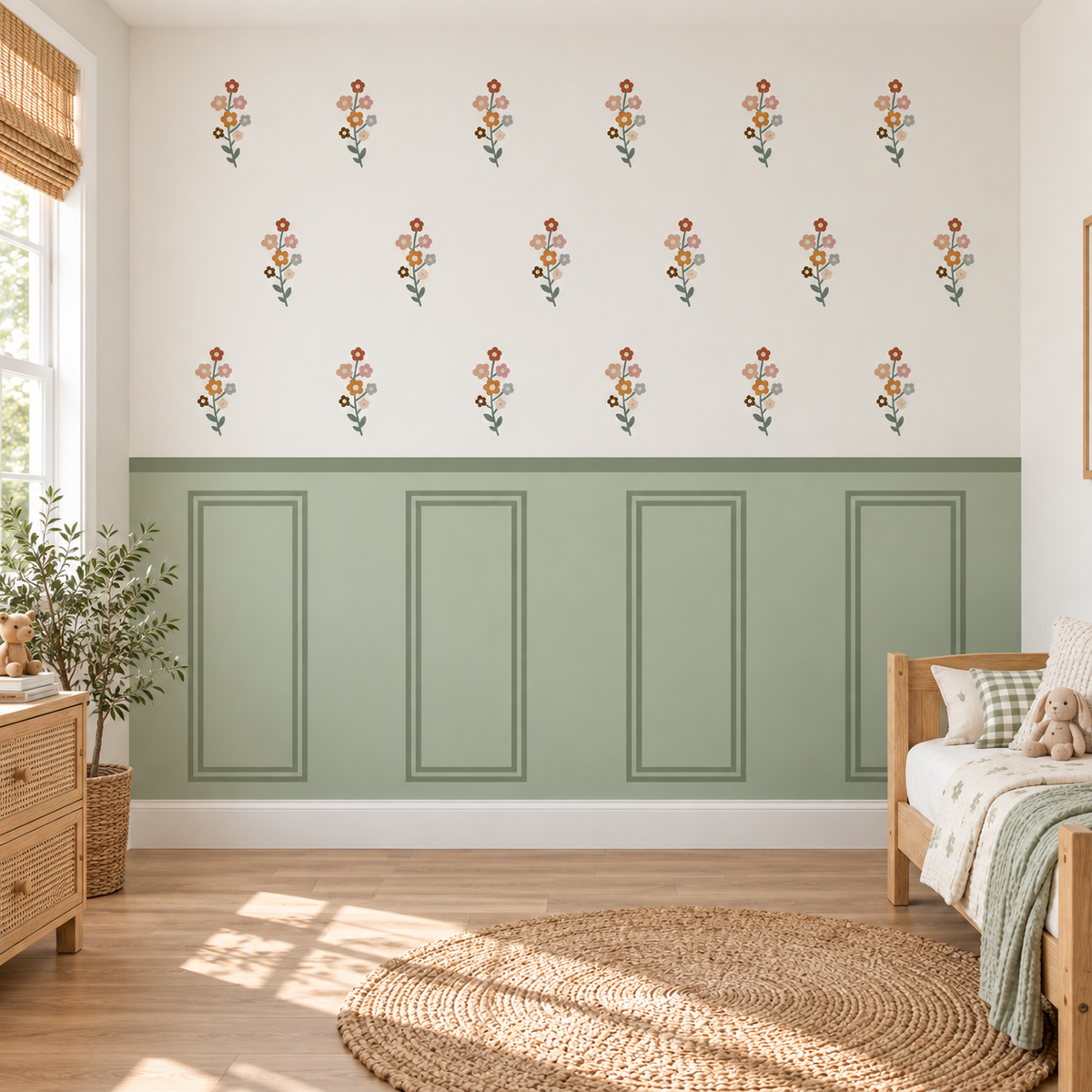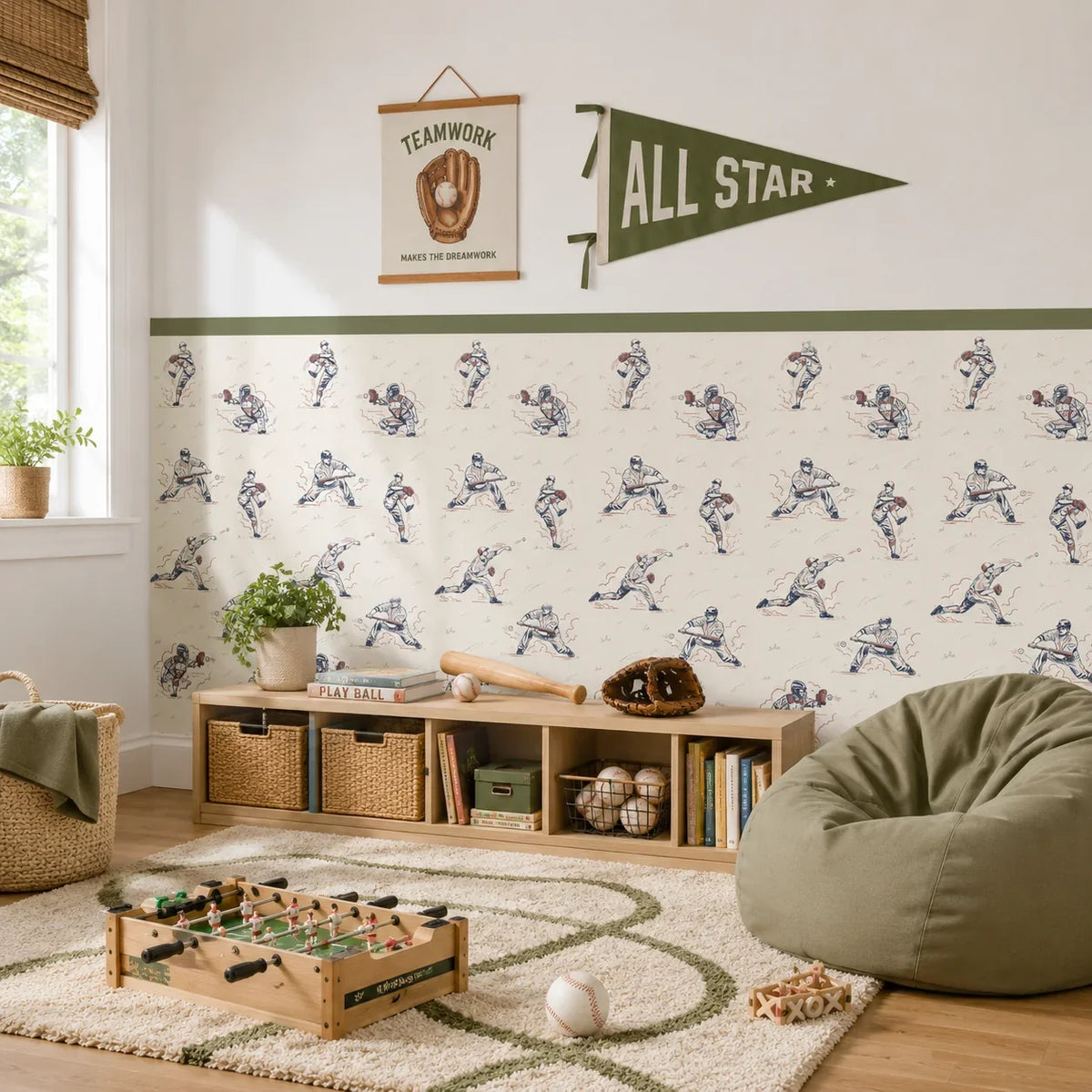
Decorating your baby's first room is exciting, but choosing what belongs on the walls can feel surprisingly complicated. You want a space that looks beautiful in photos, feels welcoming during late-night feeds, and remains practical as your little one grows.

Full panel

Full panel
The best newborn nursery wall decor ideas combine a cohesive color palette, thoughtfully placed artwork, and a layout that keeps potential hazards away from the crib. From woodland illustrations to removable wall decals, you can create a distinctive nursery without filling every wall or committing to an expensive renovation.
Below are 12 nursery wall decor ideas, along with tips for choosing the right style, decorating without painting, and keeping safety in mind.
What Are the Best Wall Decor Ideas for a Newborn Nursery?
For most newborn nurseries, the easiest starting point is one focal wall, a limited color palette, and artwork that complements the furniture you already own.
Popular options include:
-
Woodland animals and forest scenes
-
Safari-inspired illustrations
-
Botanical leaves and soft florals
-
Moon, stars, and celestial themes
-
Neutral and minimalist wall art
-
Removable nursery wall decals
-
Personalized artwork displayed away from the crib
You don't need to use every idea. One well-planned feature wall can make a nursery feel more complete than several competing decorations.
 12 Newborn Nursery Wall Decor Ideas to Try
1. Create a Woodland Nursery With Forest Animals
A woodland theme brings warmth and personality to a newborn's room without relying on bright colors or complicated patterns.
Start with a warm white or cream wall, then introduce illustrations of deer, foxes, rabbits, bears, or woodland trees. Choose artwork with a consistent illustration style so the animals feel like part of the same scene.
For a softer look, pair the wall design with natural wood furniture, oatmeal-colored curtains, and a sage green accent.
Styling tip: Place a woodland scene on the wall behind a dresser or reading chair rather than surrounding the crib with hanging decorations.
2. Build a Safari-Inspired Feature Wall
Safari nursery decor works particularly well when you want playful imagery that still feels timeless.
Giraffes, elephants, lions, and zebras can create an engaging scene, especially when paired with earthy colors such as sand, muted olive, and terracotta.
Instead of scattering dozens of small animals across the room, create one composition with a few larger illustrations. Leave enough blank wall space around them to keep the arrangement balanced.
Explore illustrated nursery designs from Dos Junior when planning a nature-inspired wall.
3. Add Botanical Leaves and Soft Florals
Botanical wall decor is a versatile choice for a newborn nursery because it can complement almost any furniture style.
Consider eucalyptus branches, delicate wildflowers, olive leaves, or oversized watercolor foliage.
A botanical design can work in several ways:
-
Frame an empty wall near the nursing chair.
-
Create an illustrated border around a dresser area.
-
Add a cluster of leaves to one corner of a feature wall.
-
Combine a few floral details with an otherwise neutral room.
Choose two or three related colors rather than mixing many unrelated floral patterns.
4. Try a Moon and Stars Nursery Theme
Celestial decor is a classic nursery choice, and it doesn't have to mean dark navy walls or glow-in-the-dark accessories.
A soft blue-gray background, watercolor moon illustration, and a few carefully spaced stars can create a dreamy focal point.
Cream, dusty blue, warm gray, and muted gold make an elegant combination.
For a newborn's room, keep decorative lights, hanging stars, and cords away from the crib and other areas your child may eventually reach.
5. Keep It Simple With Neutral Nursery Wall Decor
A neutral nursery doesn't have to look plain.
Warm white, beige, taupe, soft gray, and natural wood provide a flexible foundation for artwork that can stay in the room for years.
Try one oversized illustration instead of a gallery of small prints. A watercolor animal, landscape, or botanical design can add enough character without making the space feel busy.
Styling tip: Repeat one accent color from the artwork in a rug, storage basket, or chair cushion to connect the room visually.
6. Design a Gender-Neutral Nursery Wall
Gender-neutral nursery decor is about creating a room around a theme or color palette rather than traditional color conventions.
Woodland landscapes, animals, clouds, abstract shapes, and botanical motifs are all adaptable choices.
A combination of sage green, cream, warm brown, and muted blue can feel both playful and sophisticated.
If you expect to update the room as your child grows, choose wall art that isn't tied to a very specific baby-themed phrase or character.
7. Use Removable Nursery Wall Decals
Removable nursery wall decals can help you introduce illustrated scenes without commissioning a mural or covering an entire wall with wallpaper.
Depending on the product, decals may be available as individual animals, botanical elements, clouds, or larger compositions.
They are particularly useful when you want to:
-
Decorate a rental home.
-
Work with an existing wall color.
-
Create an asymmetrical feature wall.
-
Update the room as your child gets older.
However, removable does not automatically mean damage-free or suitable for every surface. Adhesion and removal depend on the decal material, paint condition, wall texture, and manufacturer's instructions.
Before installing, test the product on an inconspicuous area and keep individual pieces away from places where a child could reach, peel, or pull them loose.
For a detailed comparison of materials and application options, see the Dos Junior Wall Decals & Wallpaper Guide.
8. Create a Nursery Accent Wall
A nursery accent wall gives the room a focal point without requiring every surface to be decorated.
You can create one with a painted color block, wallpaper, an illustrated mural, or a carefully arranged set of wall decals.
For a small nursery, consider a single large illustration with plenty of surrounding blank space. In a larger room, a botanical landscape or animal scene can help visually define a seating or changing area.
The best accent wall is not necessarily the wall behind the crib. A clear wall opposite the doorway or behind a dresser may offer better visibility and more flexibility.
For more layout and color combinations, read our Nursery Accent Wall Ideas guide.
9. Add Watercolor-Style Wall Art
Watercolor illustrations can soften a room filled with straight furniture lines and hard surfaces.
Look for gentle transitions between colors, simple compositions, and artwork that complements the nursery's existing palette.
Watercolor-style animals, landscapes, and flowers are particularly easy to combine with wood furniture and neutral textiles.
If you choose framed prints, install them securely in a location away from the crib and outside your child's reach. Avoid placing heavy or glass-covered frames above the sleeping area.
For a product example, see the Wildflower Peel and Stick Fabric Wall Decals | Boho.


10. Personalize a Wall With Your Baby's Name
Personalized nursery artwork can make the room feel special without becoming the dominant feature.
You might display your baby's name, initials, or a custom illustration on a wall near the dresser or reading corner.
Keep the typography simple and make sure the colors work with the rest of the room.
Avoid hanging wooden letters, signs, or other detachable decorative objects over the crib. Even lightweight items can create hazards if they fall or become accessible.
11. Style a Small Nursery With One Statement Design
When floor space is limited, wall decor can add personality without taking up room needed for essential furniture.
Rather than using many tiny decorations, try one medium or large illustration on an uncluttered wall.
A tall tree, botanical branch, or simple animal grouping can draw the eye upward and make a compact room feel more thoughtfully designed.
Keep the surrounding area relatively simple. Too many patterns, shelves, and accessories can make a small nursery feel crowded.
12. Create a Nursery That Can Grow With Your Child
The most practical newborn nursery wall decor ideas are often the ones that still work after the newborn stage.
Nature-inspired landscapes, animals, maps, and botanical artwork can transition into a toddler's room with relatively small changes.
Choose furniture in versatile finishes, keep the main wall color adaptable, and use changeable decorative elements for the theme.
As your child becomes mobile, reassess the room from their perspective. Artwork, decals, cords, and furnishings that were once out of reach may become accessible.
How Do You Choose the Right Nursery Wall Decor?
Before buying anything, consider the room's layout, available wall space, and how permanent you want the design to be.
| Nursery situation | Wall decor approach |
|---|---|
| Small room | One focal illustration with open wall space |
| Rental home | Wall-compatible removable decals |
| Neutral furniture | Botanical, woodland, or watercolor artwork |
| Limited decorating budget | Decorate one feature wall first |
| Long-term nursery design | Nature themes and adaptable colors |
| Busy or patterned room | Simple artwork with fewer colors |
Start With the Existing Furniture
Your crib, dresser, chair, and storage furniture already influence the room's visual balance.
If the furniture is dark or visually heavy, lighter artwork may help balance the space. If the room is mostly white, a botanical or animal illustration can introduce color without requiring new furniture.
Choose a Limited Color Palette
A useful starting point is one main neutral, one supporting color, and one smaller accent.
For example:
-
Cream, sage, and terracotta
-
Warm white, dusty blue, and beige
-
Oatmeal, olive, and soft brown
-
Blush, taupe, and muted green
There is no single nursery color proven to make every baby sleep better. Choose colors that suit the space and feel comfortable to you.
Think About Scale
A design that looks perfect in a product photo may be too large or too small for your wall.
Measure the usable space after accounting for furniture, doors, windows, and outlets. Use painter's tape or paper templates to visualize the artwork before installation.
Leave some blank space around the design so it has room to stand out.
 Where Should You Place Wall Decor in a Newborn Nursery?
The safest-looking arrangement is not always the safest placement.
Before deciding where artwork belongs, consider whether it could fall, detach, become entangled, or be reached as your baby grows.
The Wall Around the Crib
Be especially cautious with decorations above and around the crib.
The American Academy of Pediatrics' HealthyChildren guidance recommends limiting over-the-crib wall decoration to paint and wallpaper rather than hanging picture frames or mirrors.
Avoid placing shelves, heavy frames, mirrors, hanging signs, fabric canopies, garlands, or decorations with cords above the sleeping area.
For adhesive wall products, follow the manufacturer's instructions, inspect the edges for lifting, and avoid placing detachable elements within reach. A decal's light weight does not eliminate the possibility of peeling or detachment.
The crib itself should remain free of loose bedding, pillows, toys, and decorative objects during infant sleep.
The Changing Area
A wall near the changing table can be a useful place for a botanical scene, animal illustration, or simple color accent.
Choose a location where the artwork won't interfere with storage or daily care. Secure any furniture and keep small decorative pieces out of reach.


The Feeding or Reading Corner
A nursing chair or reading corner is an excellent location for a larger illustrated focal point.
Try a woodland tree, a watercolor landscape, or a botanical arrangement on the wall behind the chair.
Keep cords, hanging decorations, and other reachable objects away from the seating area as your child becomes more active.
The Wall Opposite the Door
If you want the nursery to make an immediate impression, decorate the first clear wall visible when you enter.
This can create a strong visual focal point without placing additional objects near the crib.
How Can You Decorate Nursery Walls Without Painting?
You don't need a complete renovation to give your baby's room a new look.
Three common options are removable wall decals, peel-and-stick wallpaper, and separately mounted artwork.
| Option | Best use | What to consider |
|---|---|---|
| Wall decals | Individual illustrations and flexible compositions | Wall compatibility, adhesion, and reachability |
| Peel-and-stick wallpaper | Larger patterns and feature walls | Surface preparation, seams, and removal |
| Framed artwork | Defined art arrangements away from the crib | Secure mounting and falling-object risks |
If you're renting or expect to redecorate later, wall decals may be a practical choice, provided the material is suitable for your wall.
Follow the specific product's guidance for paint curing, cleaning, installation, and removal. No adhesive product should be assumed to leave every paint finish undamaged.
What Makes Nursery Wall Decor Safer?
When shopping for baby nursery wall decor, look beyond colors and product photography.
1. Check the Product Information
Review the manufacturer's description for material composition, intended use, installation instructions, and any relevant testing documentation.
Terms such as non-toxic, PVC-free, and low-VOC should be supported by product-specific information rather than assumed from appearance.
A certification or laboratory test may address particular substances or performance requirements; it does not establish that every possible installation is safe.
2. Keep Falling and Hanging Hazards Away From the Crib
Avoid heavy objects, suspended decorations, cords, and loose textiles in the crib area.
If you use framed artwork or wall hangings elsewhere in the room, follow appropriate mounting instructions and reassess their placement as your child develops.
3. Inspect Adhesive Decorations
Check wall decals and other adhesive decorations periodically for lifting edges, tears, or loose pieces.
Remove damaged or peeling items promptly, particularly if they are accessible to a child.
4. Plan for the Toddler Stage
A newborn may not be able to reach a wall decoration today, but that can change quickly.
Think ahead to standing, climbing, and pulling. Anchor furniture appropriately and keep potentially hazardous decorations out of reach.
Common Nursery Wall Decorating Mistakes to Avoid
Even a beautiful nursery can feel unfinished or impractical if the wall design isn't planned carefully.
Decorating every wall: Too many competing patterns can make the room feel crowded. Start with one focal area.
Choosing artwork before measuring: Always compare the design dimensions with the usable wall space.
Ignoring the existing color palette: Artwork should complement the furniture and textiles rather than introduce several unrelated colors.
Assuming removable means damage-free: Paint quality, surface texture, and installation methods affect the result.
Prioritizing appearance over crib safety: Avoid placing hanging objects above the crib simply because the arrangement looks attractive in a styled photograph.
Forgetting future mobility: Reevaluate wall decor as your baby begins reaching, standing, and exploring.
Frequently Asked Questions About Newborn Nursery Wall Decor
What is the best wall decor for a newborn nursery?
The best choice is a design that suits the room's size and style while avoiding hazards around the crib. Woodland illustrations, botanical artwork, neutral accent walls, and removable wall decals are versatile options.
Is it safe to hang pictures above a baby crib?
It is better to avoid hanging picture frames, mirrors, shelves, or other objects above the crib because they could fall. HealthyChildren, from the American Academy of Pediatrics, recommends paint and wallpaper as over-the-crib wall decoration options.
Are removable wall decals suitable for nursery walls?
They can be a useful decorating option when the product is appropriate for the wall surface and installed according to its instructions. Keep detachable pieces out of reach, check for peeling, and don't assume that every material is safe for every location.
What colors work best for a newborn nursery?
Cream, sage, beige, muted blue, blush, and warm earth tones are popular choices because they are easy to coordinate with furniture and artwork. The best palette is one that fits your space and personal preferences.
How do I decorate a nursery on a budget?
Focus on one feature wall, reuse existing furniture, and select a few coordinated decorations rather than buying many separate accessories. Removable wall decals can be an alternative to a custom mural when they suit your wall and budget.
Can nursery wall decor grow with my child?
Yes. Woodland landscapes, botanical illustrations, animals, and neutral color schemes can work beyond the newborn stage. As your child grows, review the placement and condition of all decorations and update anything that becomes reachable or unsafe.
Final Thoughts: Create a Nursery That Feels Like Home
The most memorable newborn nurseries don't need elaborate installations or expensive renovations. A thoughtful color palette, one well-designed focal wall, and a few carefully chosen details can make the room feel personal and welcoming.
Whether you love woodland animals, safari scenes, botanical illustrations, or minimalist neutrals, choose wall decor that works with your furniture, fits your available space, and respects the safety needs of a growing child.
At Dos Junior, you can explore illustrated wall decor ideas for creating a nursery with personality. Start with the wall you want to transform, choose a theme you genuinely love, and build the rest of the room around it.