

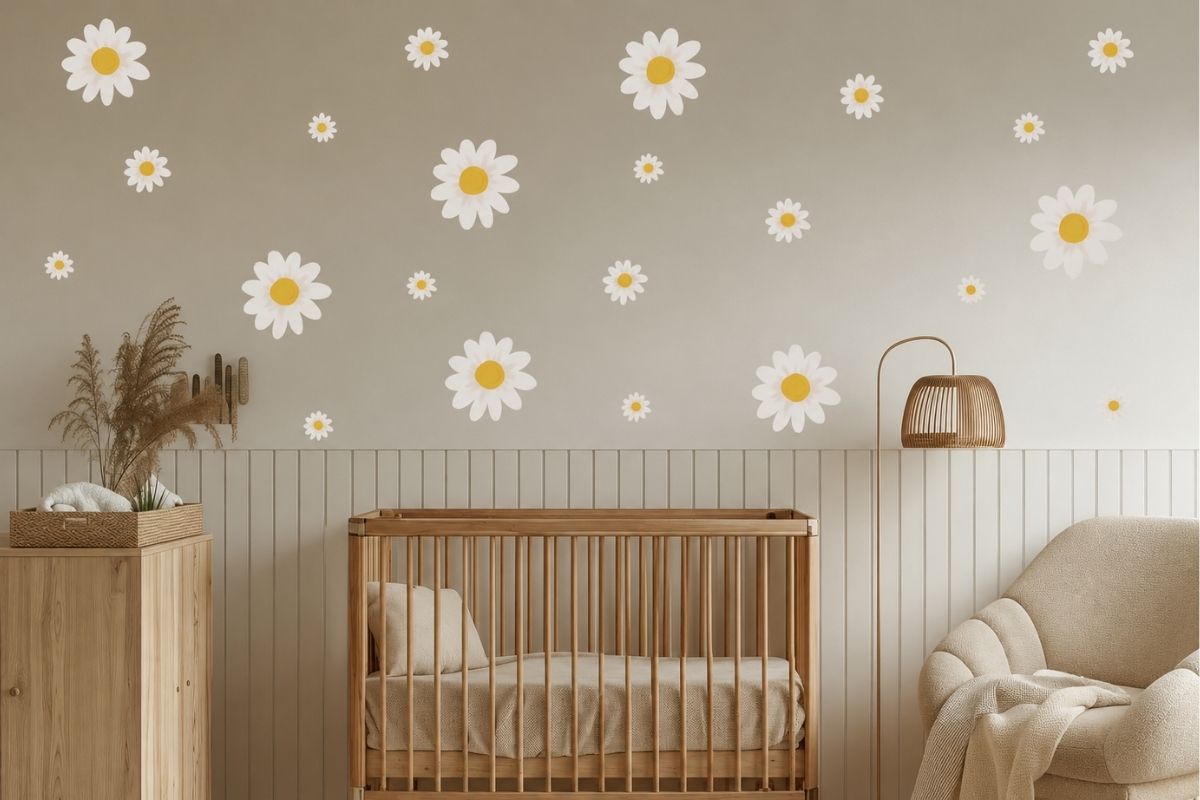
Flower wall decals are specialized adhesive botanical artworks designed to instantly transform blank walls into vibrant, nature-inspired environments. For modern parents, selecting the appropriate floral decor extends far beyond visual aesthetics; it requires a foundational understanding of indoor air quality, material safety, and installation mechanics. This comprehensive design guide explores the chemical differences between woven fabric and traditional vinyl, the psychological impact of large botanical elements, and professional application methodologies. Understanding these critical interior design principles ensures the creation of a soothing, completely non-toxic sanctuary that nurtures healthy development and peaceful sleep routines.
What are flower wall decals and why are they essential?
Flower wall decals are premium, repositionable decorative wall stickers utilized to safely enhance interior aesthetics without requiring permanent architectural alterations. High-quality variations utilize advanced woven fabrics instead of synthetic plastics, ensuring a completely non-toxic, odorless, and breathable application that actively protects indoor air quality in highly sensitive environments like nurseries.
The defining characteristics of premium botanical wall art include:
- Manufactured entirely without harmful polyvinyl chloride (PVC) or chemical plasticizers.
- Engineered with breathable, moisture-resistant woven textile structures.
- Utilizes advanced microsphere adhesives that prevent underlying paint damage.
- Showcases authentic, hand-painted watercolor artistry rather than digital mass production.
Analyzing material safety in nursery wall decals
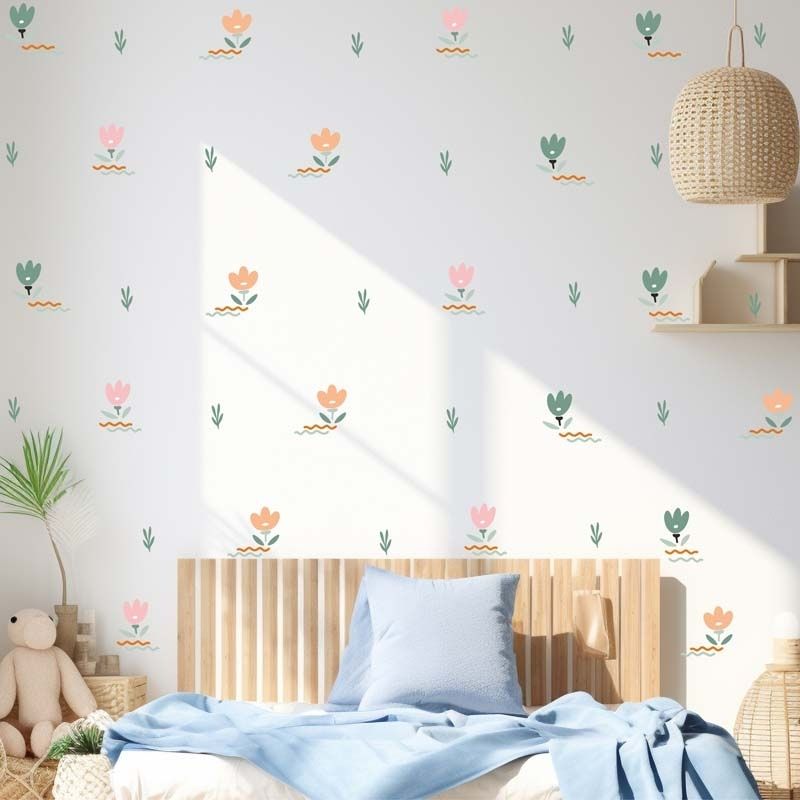
The interior decoration industry presents a massive variety of commercial products, but the underlying chemical composition of these items is rarely discussed with the scientific transparency that parents demand. When selecting nursery wall decals, understanding the complex physical and chemical differences between traditional vinyl plastics and modern fabric alternatives constitutes the most critical decision in your entire room design process. Traditional vinyl relies on synthetic plastics that pose well-documented environmental and health challenges. Conversely, premium fabric options are engineered specifically for sensitive indoor environments, prioritizing the respiratory health of developing infants. Evaluating these structural materials directly impacts the daily indoor air quality, creating a ripple effect on infant sleep quality and overall physiological well-being.
The hidden environmental impact of traditional vinyl
Traditional vinyl stickers are predominantly manufactured using polyvinyl chloride (PVC), a rigid synthetic plastic. To render this brittle material flexible enough to be rolled into shipping tubes and applied to flat surfaces, manufacturers must integrate chemical plasticizers, most commonly phthalates. According to numerous indoor air quality studies, when these plastics are exposed to standard room temperatures or direct sunlight, they undergo a continuous chemical degradation process known as off-gassing. This process releases volatile organic compounds (VOCs) directly into the nursery air. These invisible, toxic emissions can persist for six to twelve months, introducing potential respiratory irritants and endocrine disruptors into a newborn’s immediate environment. Furthermore, vinyl creates an impermeable, non-porous barrier against the drywall. In humid climates, this traps ambient moisture behind the plastic layer, establishing an ideal micro-environment for hidden, hazardous mold growth.
Breathable fabric technology for safe baby rooms
In stark contrast to synthetic polymers, modern luxury decor brands engineer their products using advanced, PVC-free woven textiles. This material innovation represents a paradigm shift in interior styling. By entirely eliminating PVC and synthetic plasticizers, fabric-based decorative wall stickers completely eradicate the risk of VOC off-gassing. They arrive entirely odorless and non-toxic straight out of the packaging. Brands like Dos Junior utilize these environmentally responsible, breathable materials to ensure air and microscopic moisture can pass freely through the decal matrix. This continuous airflow maintains the structural integrity of the underlying architectural paint while safeguarding the infant’s respiratory system. Additionally, the woven textile surface absorbs harsh artificial lighting rather than reflecting it, creating a sophisticated, matte finish that closely resembles a bespoke, hand-painted wall mural.
Fabric versus vinyl decorative wall stickers
The structural integrity and long-term aesthetic performance of your nursery decor depend entirely on the foundational material base. While budget-friendly plastic options may appear visually appealing initially, their chemical composition inevitably leads to severe property damage and severely compromised indoor air quality over time. Fabric materials offer a superior, scientifically advanced alternative that systemically addresses all the fundamental flaws inherent in synthetic plastic manufacturing.
The following comprehensive comparison table outlines the critical technical and functional differences between the two primary manufacturing materials utilized in the wall decor industry today.
| Feature | Premium Fabric Decals | Traditional Vinyl Plastics |
| Material Base | Breathable woven textile | Rigid synthetic PVC |
| Chemical Emissions | Zero VOC off-gassing | Releases chemical plasticizers |
| Surface Adhesion | Safe microsphere grip | Aggressive permanent glue |
| Visual Finish | Soft matte watercolor texture | Glossy reflective plastic glare |
| Removal Process | 100% damage-free release | Frequently peels architectural paint |
As the technical comparison illustrates, breathable textiles completely outperform synthetic plastics across every relevant safety, aesthetic, and functional category. The investment in high-quality fabric decor pays immense dividends not only in the preservation of your home’s interior architecture but, more importantly, in the uncompromised protection of your family’s health and daily living environment.
Interior design principles for large flower wall decals
Scale, proportion, and visual balance are fundamental principles in professional interior design. Utilizing botanical elements correctly can dramatically alter the perceived architectural dimensions and emotional atmosphere of a child’s bedroom. While small, repetitive wallpaper patterns can inadvertently make a room feel chaotic, busy, or cluttered, oversized botanical elements create sophisticated, grounding focal points that elegantly anchor the surrounding nursery furniture. Establishing these critical focal points requires a deep understanding of spatial dynamics, natural light interaction, and human visual perception.
Strategic placement and spatial anchoring
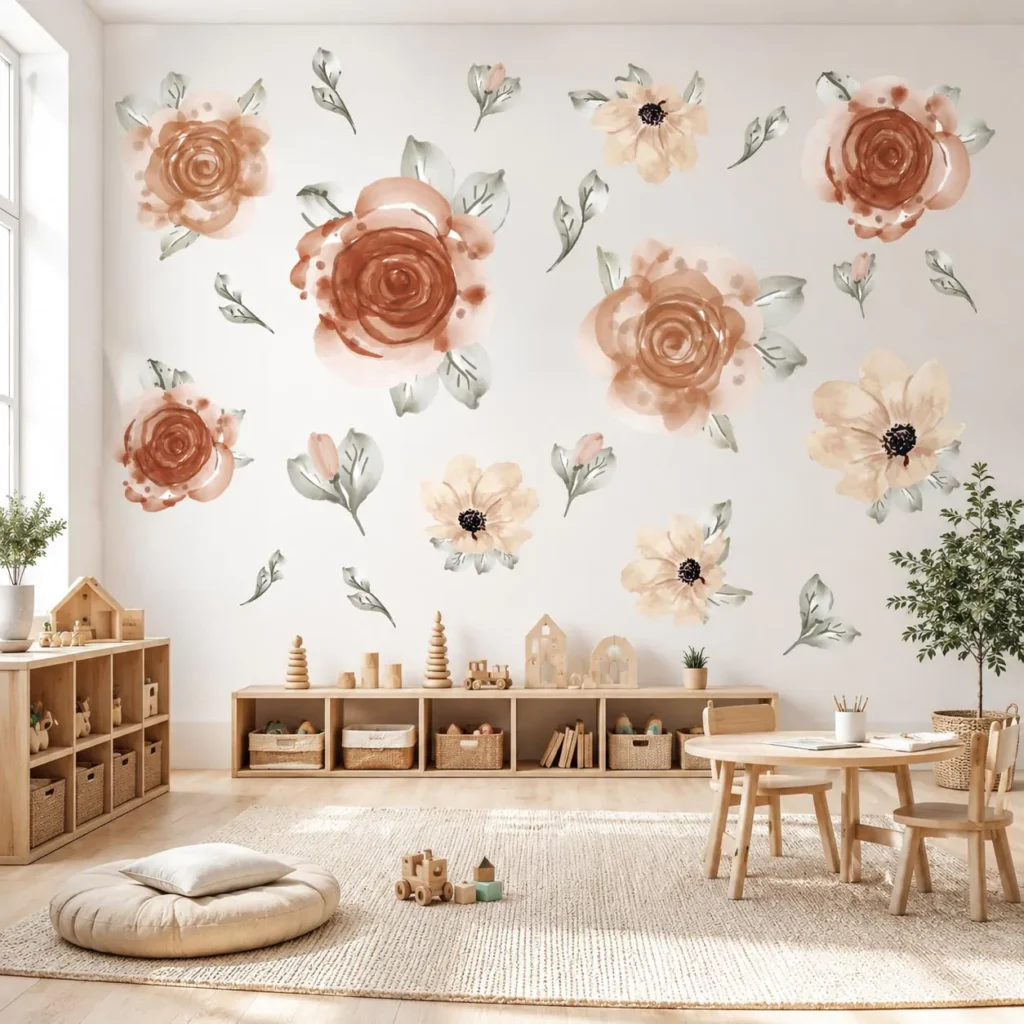
A single, massively scaled peony, a sweeping branch of cherry blossoms, or an oversized daisy cluster introduces profound architectural interest to otherwise blank, sterile walls. When integrating large flower wall decals, the spatial relationship between the artwork and the primary functional furniture pieces is absolutely paramount. The most effective professional strategy is the “anchoring technique.” This involves placing the largest, most commanding floral arrangement directly behind the crib or above the changing table. This deliberate placement frames the furniture naturally, drawing the eye immediately to the most important functional areas of the room while creating a protective, visually encompassing canopy effect for the sleeping infant. To prevent the design from feeling overly heavy or oppressive, it is crucial to maintain adequate negative space—intentionally blank wall areas—around the outer edges of the floral clusters, allowing the design to breathe visually.
The psychology of watercolor aesthetics
The artistic origin and production method of the botanical design significantly impact the room’s emotional resonance and psychological atmosphere. Premium nursery elements predominantly feature original artwork created by independent artists utilizing authentic watercolor techniques. Unlike harsh, digitally generated vector graphics that dominate budget markets, watercolor designs offer incredibly soft gradients, organic color blending, and intentional, delicate brushstroke imperfections. According to environmental psychology principles, these subtle visual variations and organic color transitions are inherently calming to the human eye. By integrating hand-painted art into the child’s daily visual field, parents foster early artistic appreciation and establish a tranquil environment specifically optimized to lower heart rates and encourage peaceful sleep transitions.
Professional application of peel and stick wall stickers
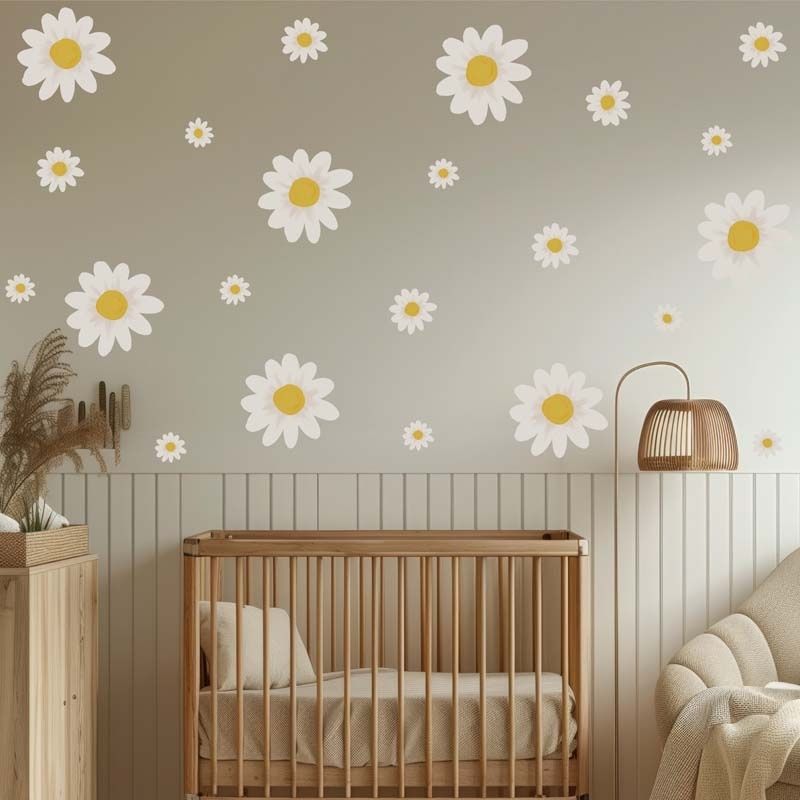
The unparalleled convenience of modern adhesive technology has completely revolutionized DIY interior design, empowering parents to achieve professional-grade results without hiring expensive contractors. However, achieving a flawless, permanent finish requires strict, uncompromising adherence to specific surface preparation and installation guidelines. The advanced adhesive backing relies on establishing millions of microscopic contact points with the wall surface; any microscopic debris, natural oil, or residual moisture will instantly compromise the long-term molecular bond. While fabric materials are incredibly forgiving and highly repositionable, taking the deliberate time to properly prep the environment guarantees that the edges will never lift, and the colors will remain securely anchored for years.
Crucial surface preparation guidelines
The most frequent point of failure for any wall adhesive is inadequate or rushed surface preparation. Begin the installation process by wiping the entire target wall area with a clean, lint-free microfiber cloth slightly dampened with warm water to remove invisible household dust and construction debris. Never utilize chemical degreasers, multi-surface sprays, or glass cleaners, as these products leave a microscopic chemical film that actively repels adhesive polymers.
If you are decorating a brand-new nursery and have recently painted the walls, patience is absolutely critical. Standard architectural latex paint requires a mandatory minimum of 30 to 45 days to fully cure. While fresh paint may feel completely dry to the human touch within a few hours, it continues to microscopically release moisture and chemical solvents for several weeks. Applying any material before this curing process is complete will permanently trap these solvents, causing the adhesive to chemically fail and practically guaranteeing that the paint will be ripped off the drywall when you eventually attempt removal.
The systematic installation process
Applying expansive peel and stick wall stickers is a systematic, highly rewarding process that can easily be managed by one or two people without any specialized professional tools.
- Map the Composition: Before removing any of the protective backing paper, utilize low-tack painter’s tape to temporarily position the floral elements on the wall. Step back to evaluate the overall composition, checking for balance and visual flow.
- Execute the Hinge Method: For particularly large botanical pieces, peel back only the top three inches of the backing paper and fold it sharply downward. Press this newly exposed adhesive firmly onto the wall to create a highly secure anchor point.
- Smooth and Release: Using a clean, dry microfiber cloth or a soft felt squeegee, slowly and deliberately smooth the fabric downward from the center vertical line toward the outer edges. Simultaneously, utilize your free hand to slowly pull the remaining backing paper downward.
- Eliminate Trapped Air: Because the premium fabric matrix is inherently breathable, any small air bubbles that become trapped during installation can easily be pushed out to the nearest edge with gentle, sweeping thumb pressure.
- Reposition Safely: If a delicate petal or leaf is misaligned, do not panic. Simply peel the fabric back slowly at a sharp 45-degree angle. The advanced microsphere adhesives are specifically designed to release their grip without stretching the fabric, allowing you to seamlessly reapply the piece in the perfect position.
Long-term maintenance for damage-free removal
Investing in premium room elements means acquiring a highly engineered product designed specifically for remarkable longevity, versatility, and developmental adaptability. As your child inevitably transitions from an infant nursery to a dynamic toddler room, their aesthetic preferences, cognitive needs, and spatial requirements will undergo rapid evolution. High-quality fabric materials are uniquely engineered to effortlessly adapt to these developmental changes, significantly outperforming budget paper or vinyl alternatives that rapidly become brittle, crack, shrink, and permanently fuse to the drywall over a span of several years.
Implementing proper routine maintenance ensures the botanical colors remain brilliantly vibrant, while executing correct removal techniques guarantees that your home’s underlying architectural paint job remains completely pristine and damage-free, preserving your property value.
Preserving decorative wall stickers over time
Because premium fabric possesses a highly desirable matte, slightly textured woven surface, it can naturally accumulate very minor amounts of airborne household dust over the course of several months. Maintaining these delicate artworks requires an incredibly gentle, methodical approach to successfully preserve both the eco-friendly water-based watercolor inks and the microscopic breathable textile fibers.
Cleaning must be performed exclusively within a dry context. Utilize a static-free duster or a completely dry, premium microfiber cloth to lightly sweep the surface from the highest point down to the baseboards. Never apply water, baby wipes, wet sponges, or chemical glass cleaners to the surface. Introducing any form of liquid directly to the extreme edges can slowly degrade the advanced adhesive bond over time. Furthermore, harsh household chemicals can cause the sophisticated, water-based watercolor pigments to bleed or fade prematurely. If the nursery receives intense, direct afternoon ultraviolet (UV) sunlight, consider installing sheer window curtains to protect the UV-resistant inks from extreme, prolonged exposure, ensuring the colors remain factory-fresh for years.
Executing safe, residue-free removal
The ultimate hallmark of a truly premium interior wall product is its proven ability to be removed years after initial installation without leaving a single trace of sticky chemical residue or pulling microscopic chips of architectural paint. When the time eventually arrives to update the room’s aesthetic or relocate to a new home, the physical removal process should be incredibly slow, patient, and deliberate.
Always begin the process at a top upper corner. Gently pick at the edge until you have enough material to grip firmly. Peel the fabric material back onto itself at a very sharp 180-degree angle, keeping the fabric as physically close to the wall as possible rather than pulling it directly outward toward your body. Pulling outward creates unnecessary perpendicular tension on the drywall paint, increasing the risk of damage. If the room environment is particularly cold, or if the decal has been securely in place for multiple years, the adhesive polymers may feel slightly stiff or resistant. To safely mitigate this, utilize a standard household hairdryer set on the lowest possible heat setting. Hold the nozzle roughly six to eight inches away from the material, moving it back and forth in a sweeping motion for a few seconds. The introduction of gentle, targeted heat immediately softens the adhesive polymers, allowing the premium fabric to glide off the wall completely effortlessly. Once removed, the decal can be placed back onto its original waxy backing paper or transferred directly to a newly prepared room, offering unmatched value and sustainability.
Frequently asked questions
Are wall decals safe for nursery?
Yes, premium fabric decals are completely safe for nurseries. Unlike traditional options, PVC-free woven textiles are strictly non-toxic and odorless. This ensures they do not release harmful volatile organic compounds (VOCs) or chemical plasticizers into your infant’s sleeping environment.
How to apply peel and stick decals?
Start by ensuring the wall is fully cured, clean, and dry. Peel back the top few inches of the backing paper, align the top edge against the wall, and use a soft cloth to gently smooth the material downward while pulling the remaining backing away.
What are the different types of wall stickers?
The two main types are traditional vinyl and breathable fabric. Vinyl is a rigid, synthetic plastic containing chemical plasticizers that can trap moisture. In contrast, premium fabric offers a PVC-free, matte watercolor finish with repositionable adhesive that prevents architectural paint damage.
How long do wall decals typically last?
When applied to a properly prepared, fully cured wall surface away from extreme moisture or direct heat sources, premium fabric decals can last indefinitely indoors. They are highly resistant to tearing and fading, maintaining their structural integrity for years.
Conclusion
Designing the ultimate nursery environment requires a highly thoughtful balance between establishing an enchanting, visually stimulating aesthetic and rigorously enforcing uncompromising health and safety standards. Utilizing flower wall decals crafted exclusively from premium, PVC-free woven fabrics provides a vastly superior interior design solution. These innovative products offer the breathtaking, sophisticated beauty of hand-painted watercolor artistry while completely eliminating the hidden, dangerous health risks associated with synthetic plastic off-gassing. By consciously selecting non-toxic, highly repositionable botanical elements, parents can confidently transform a standard, sterile room into a soothing, nature-inspired sanctuary. These advanced decorative solutions guarantee a completely stress-free, damage-free installation process that meticulously preserves your home’s interior architecture while continuously nurturing your growing family in a safe, healthy atmosphere.
Explore the complete Dos Junior collection of safe, PVC-free, and hand-painted floral wall decals to elevate your nursery design flawlessly today.