

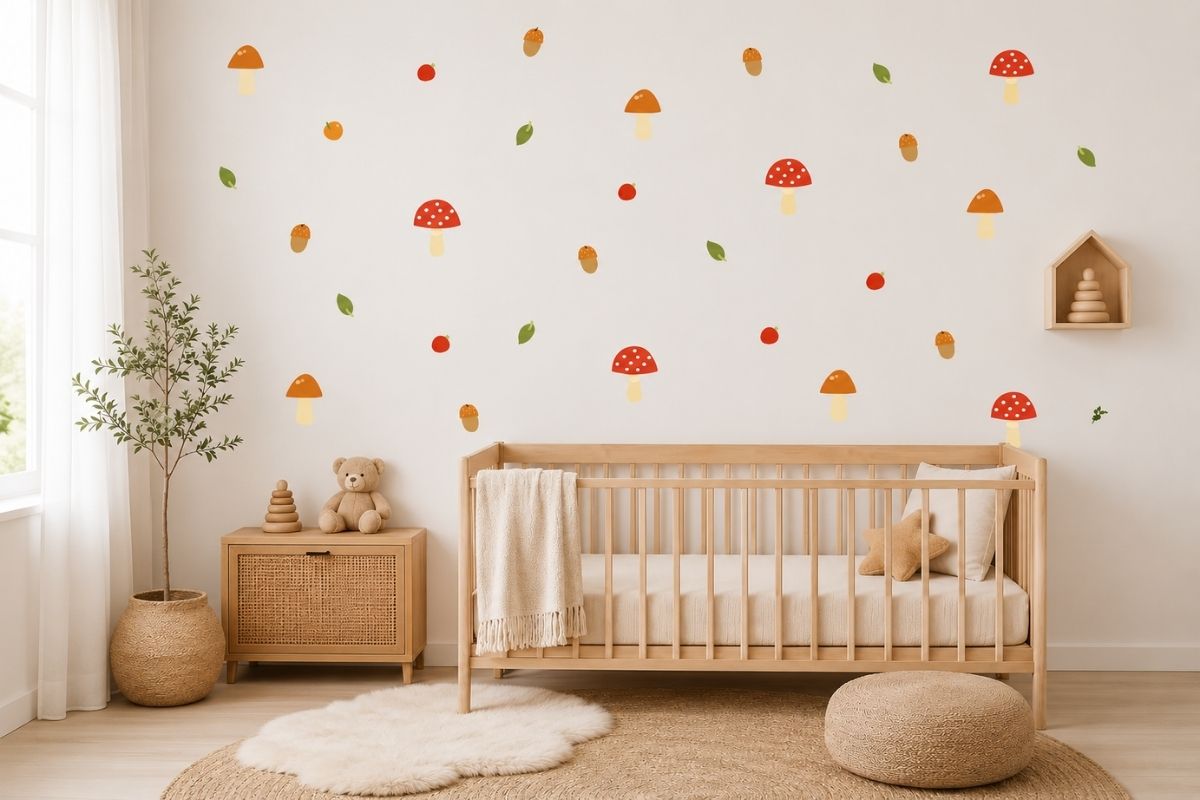
Designing a serene mushroom nursery transforms a standard baby room into an enchanting, nature-inspired cottagecore sanctuary. Modern parents increasingly move away from loud, neon, cartoonish themes in favor of organic botanicals, calming earth tones, and realistic woodland elements. This comprehensive guide explores why the mushroom and cottagecore aesthetic has captured the interior design world, offering architectural layout advice, color psychology insights, and strict material safety standards. You will discover practical methods to style forest motifs, layer natural textures, and select timeless wall art that grows gracefully with your child.
What is a mushroom nursery and why is cottagecore trending?
A mushroom nursery is an interior design concept that centers around botanical fungi motifs, forest ecosystems, and organic woodland elements tailored for a baby’s room. The cottagecore styling trend obsessing modern parents emphasizes a return to nature, craftsmanship, and visual tranquility, creating a peaceful, nostalgic sanctuary that reduces sensory overstimulation for both infants and parents.
- Natural Aesthetics: Prioritize realistic botanical illustrations, muted earth tones, and unpainted timber accents over saturated primary colors and plastic furnishings.
- Sensory Calm: Utilize soft, tactile textures like organic cotton, linen, and woven rattan to foster a grounding, biophilic environment conducive to infant sleep.
- Timeless Longevity: Select sophisticated, text-free mushroom and forest designs that transition effortlessly from a newborn nursery into a toddler and pre-teen bedroom.
How does mushroom nursery decor elevate modern baby rooms?
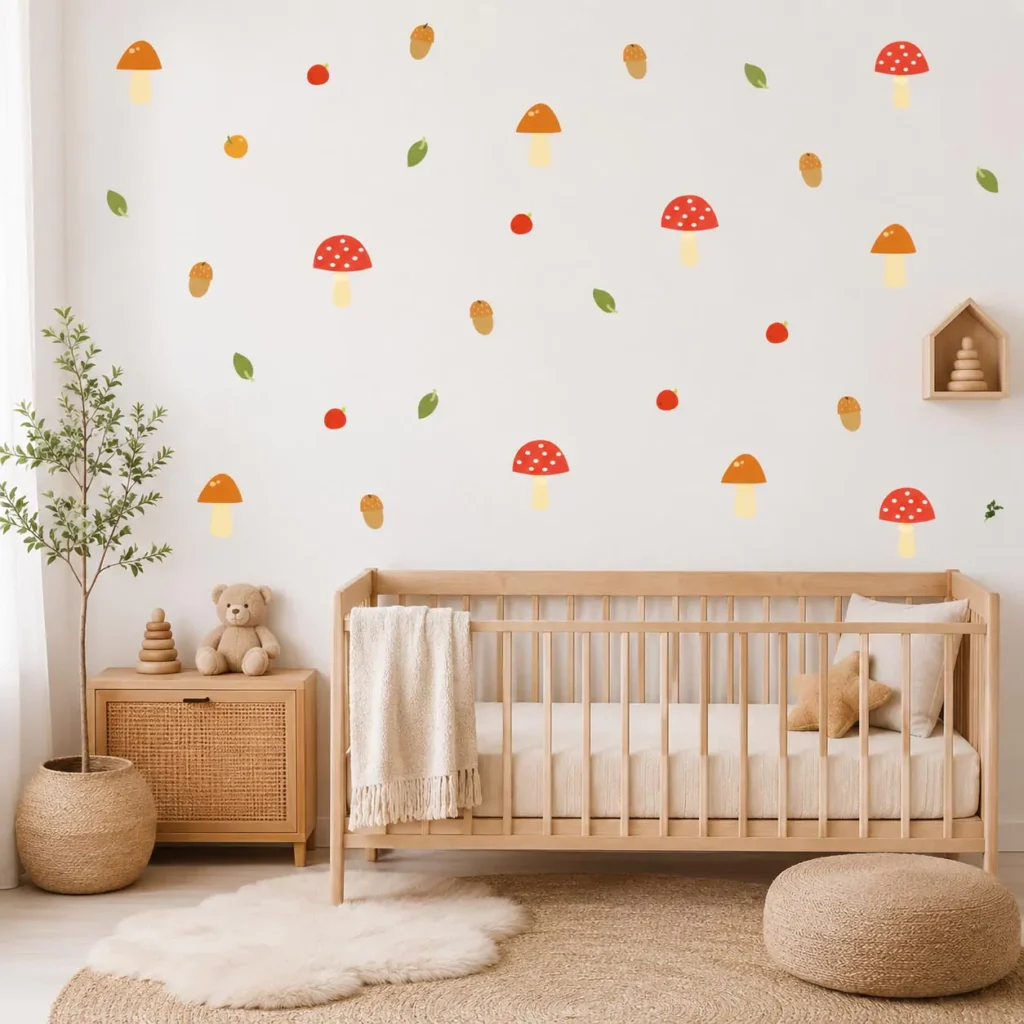
The contemporary approach to decorating a baby’s bedroom prioritizes environmental psychology, visual harmony, and sustainable design principles. Integrating curated mushroom nursery decor allows parents to introduce whimsical charm without sacrificing the sophisticated aesthetic of the modern home. Interior designers observe that infants thrive in spaces that mimic natural outdoor environments, a concept known as biophilic design. By incorporating botanical fungi silhouettes, gentle forest textures, and organic shapes, the bedroom becomes a restorative retreat that buffers against the hyper-digital, fast-paced outside world.
Rather than relying on outdated, highly saturated red-and-white spotted cartoon mushrooms that quickly feel juvenile, modern nursery styling embraces authentic botanical realism. This mature design philosophy utilizes delicate pencil sketch aesthetics, watercolor textures, and structured organic forms. When parents invest in text-free, high-fidelity depictions of forest flora, they establish an environment that respects the child’s developing sensory system while maintaining architectural alignment with the rest of the residence.
Why botanically realistic mushroom decor calms infant senses
During the first 12 months of life, an infant’s neurological and visual systems undergo rapid development. Overly bright, chaotic patterns accompanied by bold typographic text can easily overwhelm a baby’s processing capacity, leading to pre-sleep agitation and sensory fatigue. Utilizing botanically realistic mushroom decor introduces soft, organic geometry and gentle contrast that naturally soothe the developing visual cortex. Scientific research in environmental psychology indicates that exposure to natural forms and muted earth tones reduces cortisol levels and lowers heart rates by up to 28%, creating a biologically optimal environment for deep, restorative sleep cycles.
Transitioning from newborn sanctuary to toddler play space
A significant challenge in children’s interior design is the rapid obsolescence of traditional nursery themes. A room designed around juvenile characters often requires a complete, expensive renovation within 24 to 36 months. The cottagecore mushroom theme bypasses this limitation through inherent versatility. By establishing a neutral foundation of natural wood furnishings, woven textures, and realistic botanical art, the space adapts seamlessly as the child matures. As a crib is replaced by a toddler bed, the underlying woodland narrative remains aesthetically relevant, transforming effortlessly from a tranquil infant nursery into an imaginative, nature-focused exploration room for a growing child.
What are the core elements of woodland nursery decor?
To achieve an authentic cottagecore aesthetic, a room must balance multiple sensory layers rather than relying on a single decorative object. True woodland nursery decor operates as an cohesive ecosystem where wall graphics, textiles, furniture materials, and lighting architecture interact harmoniously. Interior designers break down this design style into foundational pillars that prevent the space from feeling cluttered or costumey.
The architectural backbone of a forest-inspired nursery relies heavily on raw, sustainable materials. Solid hardwood furniture, unbleached organic linen drapery, and hand-woven rattan storage baskets establish an authentic tactile foundation. When introducing decorative accents, every piece should serve a visual or functional purpose that reinforces the connection to the natural world, avoiding plastic synthetics and artificial finishes.
| Nursery Design Layer | Core Cottagecore Material & Element |
| Layer 1: Architectural Foundation | Natural Birch and Walnut Hardwood Furniture |
| Layer 2: Soft Textiles | Certified Organic Cotton and Unbleached Linen Fabrics |
| Layer 3: Visual Wall Art | Realistic, Text-Free Botanical Mushroom and Woodland Decor |
| Layer 4: Ambient Lighting | Warm 2700K Dimmable LED Glow and Low-Voltage Fixtures |
Balancing flora and fauna with woodland animals nursery decor
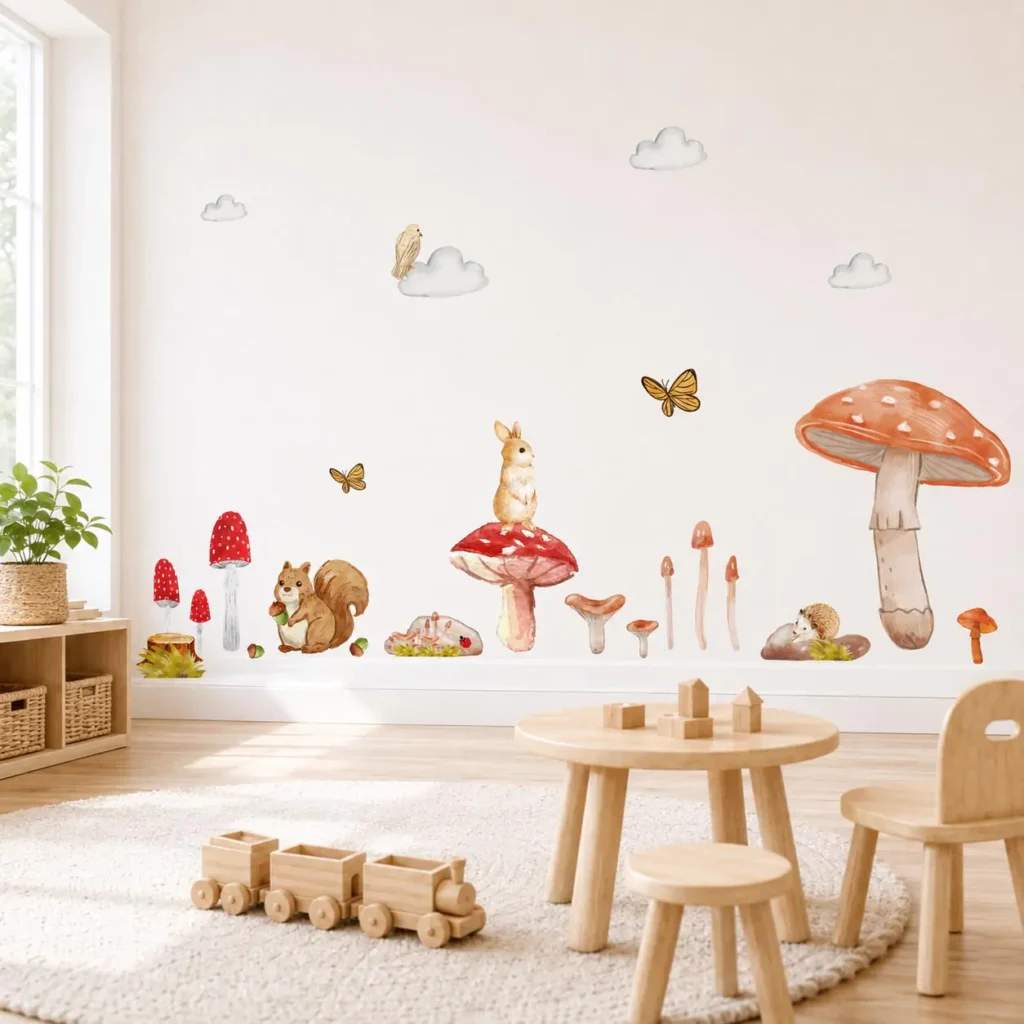
While botanical fungi provide an enchanting visual anchor, integrating woodland animals nursery decor creates a dynamic, storytelling environment. The key to combining mushrooms with animal motifs lies in maintaining artistic consistency. Select depictions of deer, foxes, owls, and hedgehogs that share the same illustrative language as your botanical elements—specifically text-free, hand-drawn, or realistic watercolor aesthetics. Avoiding cartoonish animal caricatures ensures that the flora and fauna coexist peacefully on the wall, establishing a sophisticated woodland tableau that sparks genuine curiosity about wildlife and natural ecosystems.
Layering organic textures with woven baskets and natural linen
Texture is the secret ingredient that transforms a cold, sterile room into a warm cottagecore haven. Incorporating natural storage solutions, such as a sturdy woven mushroom basket, introduces sculptural art while fulfilling essential organizational needs for baby blankets and toys. Supplement these hard woven textures with draped organic linen canopies, brushed cotton crib sheets, and wool or jute area rugs. This intentional layering of organic materials absorbs ambient room noise, improves acoustic comfort by up to 35%, and provides a rich, tactile landscape for a crawling infant to explore safely.
How do you select color palettes for a cottagecore mushroom nursery?
Color selection establishes the psychological baseline of any room. In a cottagecore-inspired space, the palette must draw directly from authentic forest floor ecosystems, botanical pigments, and natural daylight variations. Moving away from rigid, gender-delineated pinks and blues, modern parents embrace gender-neutral, earthy color schemes that foster emotional grounding and visual warmth.
An effective woodland color architecture relies on a dominant neutral backdrop composed of warm taupe, soft ivory, or beige, representing the forest earth and stone. Secondary architectural accents utilize deep vegetal tones like sage green, forest moss, and muted olive. Finally, mushroom-inspired accent colors—such as terracotta, clay, ochre, and warm rust—are introduced through art, bedding, and decorative accessories to provide visual depth without causing chromatic exhaustion.
| Color Tone | Forest Ecosystem Inspiration | Interior Design Function |
| Warm Taupe / Ivory | Limestone & Forest Soil | Serves as the primary wall foundation, reflecting natural light and enlarging the room visually. |
| Sage / Moss Green | Pine Needles & Forest Canopy | Grounds the room with biophilic calm, lowering visual stress and promoting relaxation. |
| Matte Terracotta | Wild Fungi & Clay Earth | Adds warmth and focal contrast when used in wall art or textiles without being jarringly bright. |
| Brushed Ochre | Autumn Leaves & Sunlight | Introduces subtle brightness and energy, perfect for play zones or reading nooks. |
Styling neutral woodland nursery decor girl and boy rooms
The versatility of earthy forest tones makes this theme exceptionally well-suited for gender-neutral spaces or shared sibling bedrooms. When styling neutral woodland nursery decor girl and boy environments, balance the structural weight of the furniture with delicate organic patterns. For instance, pairing a dark walnut crib with sage green walls and linen bedding creates an inherently balanced environment. To introduce subtle personality without breaking the neutral harmony, incorporate natural brass lighting fixtures or hand-carved wooden wall hooks, ensuring the design feels equally tailored and timeless for any child.
Why earth tones promote healthy infant sleep patterns
Color psychology confirms that room chromaticity directly influences circadian rhythm regulation in infants. High-frequency colors like bright red, yellow, and neon blue stimulate the optic nerve, signaling the brain to remain alert and active. Conversely, low-frequency earth tones—such as moss green, terracotta, and warm beige—mimic the natural fading light of dusk in a woodland environment. Surrounding an infant with these muted, organically derived hues encourages the natural secretion of melatonin, assisting ebeveynler in establishing predictable, healthy sleep schedules within the first crucial 6 to 8 months of life.
How do you arrange woodland nursery art and wall decor safely?
Wall decor serves as the visual centerpiece of a cottagecore nursery, but its installation must adhere to strict spatial proportions and pediatric safety standards. Hanging artwork improperly can ruin the architectural harmony of the room and pose physical risks to a curious, growing toddler. Interior architects utilize specific mathematical ratios and zoning strategies when positioning woodland nursery art above key furniture pieces.
When placing decorative pieces above a crib, dresser, or changing console, the bottom edge of the artwork should sit precisely 8 to 12 inches above the top surface of the furniture. This vertical spacing prevents visual crowding while ensuring the artwork remains safely out of reach when an infant eventually stands. Furthermore, maintaining a 60% to 75% width ratio relative to the furniture below ensures the wall decor looks intentionally anchored rather than floating aimlessly across a blank drywall expanse.
Architectural Placement & Height Guide for Woodland & Mushroom Wall Art
| Room Zone & Height | Recommended Art & Layout | Architectural & Ergonomic Purpose |
| Upper Wall Zone (Above 60 inches / Near Ceiling) | Negative Space (Empty Wall) | Leaving breathing room near the ceiling line prevents visual clutter and allows the room to feel taller and more serene. |
| Mid-Wall / Eye-Level Zone (36 to 48 inches from floor) | Woodland & Mushroom Art Prints (Gallery or Solo Display) | Aligns exactly with a developing child’s natural standing eye level, stimulating visual curiosity and cognitive calm without causing neck strain. |
| Lower Anchor Zone (Below 36 inches) | Furniture Baseline (Crib / Changing Dresser) | The furniture acts as the visual foundation. Artwork hung above this zone should sit 8 to 12 inches above the top railing and maintain a 60% to 75% width ratio relative to the furniture to prevent visual crowding. |
Designing a gallery wall with woodland nursery wall decor
Creating a curated gallery wall allows parents to display a varied collection of botanical prints, forest landscapes, and dimensional wood pieces. To execute a flawless gallery layout using woodland nursery wall decor, start by mapping your arrangement on the floor before drilling into drywall. Establish a central anchor piece—such as a large, detailed mushroom illustration—and surround it with smaller complementary prints featuring forest foliage or woodland animals. Keep a consistent 2 to 3-inch gap between frames to maintain breathing room, and utilize uniform frame materials, such as natural birch or matte oak, to unify disparate artistic elements into a cohesive architectural feature.
Utilizing peel-and-stick decals for effortless cottagecore styling
For parents seeking high-impact visual transformation without the permanence of traditional wallpaper or drilling heavy frames, peel-and-stick decals offer a revolutionary solution. When selecting wall graphics for a nursery, prioritize premium woven polyester fabric over calendered PVC vinyl. Woven fabric decals feature a matte, textured finish that flawlessly mimics hand-painted murals while remaining 100% breathable and free of toxic chemical off-gassing. Furthermore, low-tack polyacrylic microsphere adhesives allow parents to reposition complex mushroom and tree layouts multiple times during installation, leaving zero residue or drywall damage when removed years later.
What safety and material standards apply to mushroom decor?
Creating a beautiful nursery is secondary to ensuring the physical and chemical safety of the infant inhabiting the room. Children’s bedrooms are closed environments where indoor air quality can quickly degrade if furniture, paint, and decorative accessories contain volatile industrial chemicals. When sourcing mushroom decor and structural furnishings, strict adherence to environmental and physical safety certifications is mandatory.
- Zero-VOC Finishes: Verify that all wall paints, wood stains, and protective sealants applied to furniture and wall decor are certified 100% VOC-free, preventing the release of formaldehyde, toluene, and benzene into the air.
- Secure Wall Mounting: Any decorative item weighing over 1.5 pounds placed within 36 inches of a crib must be anchored directly into a wooden wall stud or secured using heavy-duty drywall toggle bolts rated for at least 40 pounds.
- Shatterproof Glazing: Absolutely avoid traditional glass framing in a child’s bedroom; always substitute optical-grade, shatterproof acrylic or polycarbonate glazing to prevent severe injury during accidental impacts.
- Cord & Light Safety: Ensure decorative lighting, such as illuminated mushroom nightlights, utilizes cool-touch LED technology operating on low-voltage DC power, with all cords permanently enclosed inside wall-mounted childproof raceways.
Selecting non-toxic organic cotton bedding and fabrics
Infants spend up to 16 hours a day in direct physical contact with their crib bedding and surrounding textiles. Therefore, selecting organic textiles is a critical health investment rather than a mere aesthetic choice. When shopping for mushroom-themed bedding, blankets, and nursing pillows, insist on products bearing the Global Organic Textile Standard (GOTS) or OEKO-TEX Standard 100 certification. These rigorous certifications guarantee that the organic cotton was grown without synthetic pesticides and processed without chlorine bleaches, heavy metals, or toxic azo dyes, protecting your baby’s delicate skin from contact dermatitis and respiratory irritation.
Why synthetic plastics should be avoided in cottagecore rooms
The underlying philosophy of the cottagecore trend is a celebration of authentic, traditional craftsmanship and harmony with nature. Introducing mass-produced synthetic plastics—such as PVC lamps, polyester rugs, or cheap resin mushroom figurines—directly contradicts both the aesthetic integrity and the chemical safety of the room. Synthetic plastics continuously emit microplastics and volatile organic compounds over their lifespan, particularly when exposed to warm sunlight from nursery windows. By strictly curating decor made from raw, renewable materials like sustainably harvested wood, ceramic, cotton, and linen, parents preserve the authentic visual purity of the woodland theme while maintaining pristine indoor air quality.
How can you integrate minimalist brand decor into a forest theme?
Achieving a high-end, designer look in a cottagecore nursery requires restraint. It is easy for a forest theme to become visually overwhelming if every wall and surface is covered in dense patterns and varied colors. The secret to modern interior styling lies in leveraging minimalist design principles to balance intricate botanical themes. By pairing detailed forest elements with clean, text-free architectural decor, you create a refined environment that feels curated by a professional interior designer.
When introducing brand decor into a forest theme, prioritize pieces that emphasize realism, clean geometry, and craftsmanship over loud branding or busy text overlays. Minimalist wall decor acts as a visual anchor, providing resting spaces for the eye amidst organic woodland patterns. Brands like Dos Junior excel in this arena, offering realistic, text-free nature and botanical wall art collections that integrate flawlessly into cottagecore settings. Their commitment to minimalist aesthetics ensures that decorative elements complement rather than compete with the surrounding forest ecosystem, elevating the entire bedroom to a gallery-quality standard.
Balancing intricate forest patterns with clean, text-free wall art
If your nursery design includes a statement wall featuring wallpaper with dense botanical mushrooms and trailing ivy, the surrounding decor must provide visual relief. Hanging complex, multi-colored artwork over an already intricate pattern creates visual friction and cognitive fatigue. Instead, layer clean, text-free wall art with simple silhouettes or monochromatic sketches directly onto patterned backgrounds, or display them on adjacent solid-colored neutral walls. This strategic juxtaposition between intricate woodland detail and minimalist, text-free design establishes a sophisticated architectural equilibrium that feels both calming and deliberately structured.
Creating cohesive visual storytelling from infancy to childhood
The true measure of successful nursery design is how gracefully the room evolves over time. By building your cottagecore nursery around foundational minimalist pieces—such as natural timber framing, neutral organic textiles, and realistic, text-free botanical art—you establish a timeless visual narrative. As your child transitions from infancy to the active toddler and preschool years, juvenile accessories can be retired without disrupting the room’s core design language. The realistic mushroom and woodland artwork continues to serve as an inspiring, mature backdrop for imaginative play, reading, and scientific curiosity, ensuring your financial investment provides enduring value and aesthetic joy for a decade.
Frequently asked questions
How do I make a cottagecore nursery feel modern instead of rustic?
To keep a cottagecore nursery modern, pair natural rustic textures like woven rattan and raw wood with clean, minimalist architectural lines. Utilize matte white or warm taupe walls as a clean backdrop, and select realistic, text-free botanical artwork rather than distressed, vintage-clutter pieces to maintain a sophisticated, contemporary balance.
Are peel-and-stick wallpaper and decals safe for newborn rooms?
Yes, provided you choose premium woven polyester fabric decals rather than traditional PVC vinyl. Fabric decals are free of phthalates, VOCs, and chemical odors, utilizing odorless, water-based adhesives that comply with strict pediatric indoor air quality standards while allowing residue-free removal.
What lighting is best for a mushroom and woodland themed nursery?
Install layered ambient lighting utilizing warm, dimmable LED bulbs rated between 2700K and 3000K. Avoid harsh cool-white or daylight bulbs above 4000K, as they flatten natural wood textures and disrupt an infant’s natural melatonin production during bedtime routines.
How can I add mushroom decor without making the room dark?
Incorporate mushroom motifs through lighter accents, such as ivory-ground botanical wall art, natural wicker baskets, and embroidered organic cotton bedding. Keep the primary walls and large furniture pieces in light, reflective neutral tones like cream, soft beige, or pale sage to maximize natural daylight bounce.
Conclusion
Designing a mushroom nursery inspired by the cottagecore trend is a wonderful way to craft a serene, nature-connected sanctuary for your baby. By moving away from loud, cartoonish graphics and embracing realistic botanical illustrations, grounding earth tones, and organic textures, parents create a peaceful environment that promotes healthy infant sleep and emotional well-being. Prioritizing non-toxic, sustainable materials like woven fabrics, natural timber, and organic cotton ensures your child’s physical health remains protected inside a beautifully styled room.
Whether you are arranging a curated woodland gallery wall, layering natural linen textiles, or designing a space that transitions seamlessly from infancy into childhood, thoughtful restraint is key. Explore premium, text-free botanical designs and elevate your nursery today by discovering the realistic, minimalist collections at dos junior collection.