

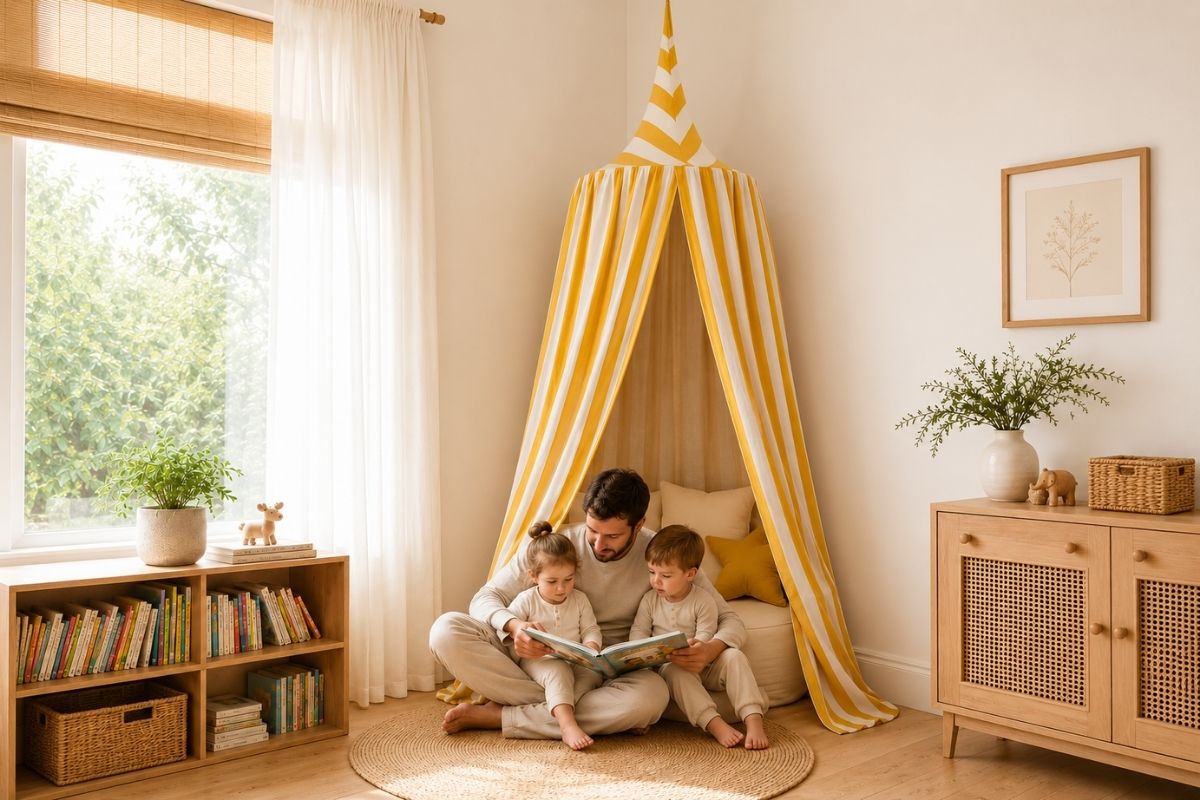
A hanging bed canopy is a suspended fabric drape that instantly transforms a standard sleeping area into a secure, comforting, and visually striking focal point. Integrating a hanging bed canopy elevates standard room decor by providing a cozy, enclosed environment that actively promotes better sleep hygiene and imaginative play. This comprehensive guide details selection criteria, advanced installation mechanics, strict safety protocols, and modern styling techniques to help create the ultimate children’s room aesthetic.
What is a hanging bed canopy?
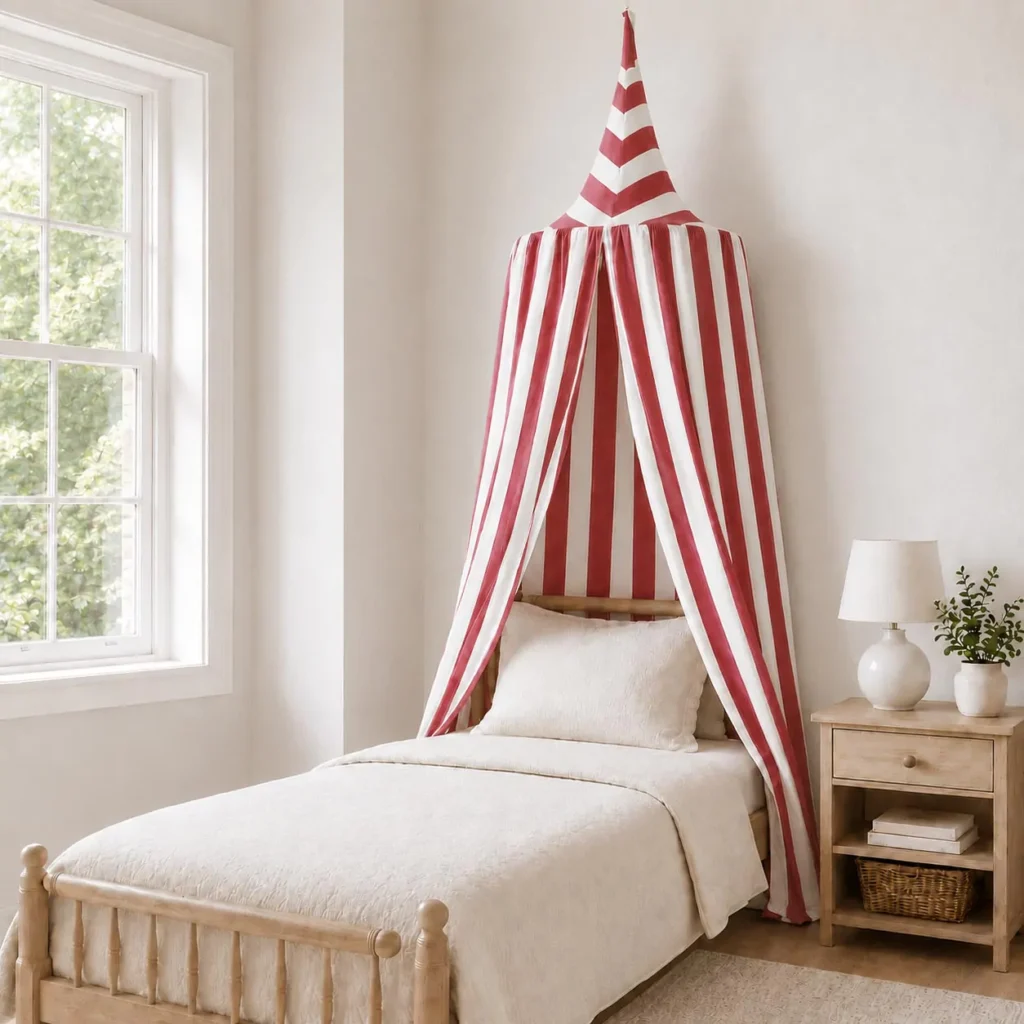
A hanging bed canopy is a ceiling-mounted fabric accessory designed to drape elegantly over a crib, toddler bed, or corner reading nook. It functions as both a decorative architectural element and an environmental modifier that limits visual distractions in a child’s room.
Core advantages include:
- Reduces ambient room light to support natural circadian rhythms.
- Establishes a defined psychological boundary for sleep or quiet time.
- Introduces vertical visual height, making small rooms appear larger.
- Provides a dedicated, distraction-free zone for cognitive development.
How Does a Hanging Bed Canopy Improve Child Sleep Quality?
The integration of specific spatial elements in a child’s bedroom goes far beyond mere aesthetics. Environmental psychology indicates that the physical space surrounding a sleeping child profoundly impacts their neurological ability to transition from a state of wakefulness to deep, restorative sleep. A hanging bed canopy serves as a functional tool in this transition process.
The Psychology of Enclosed Spaces in Early Childhood
Children, particularly toddlers and preschoolers, often experience sensory overload due to the vastness of an open bedroom. From an evolutionary and psychological standpoint, micro-environments or “nooks” provide a primal sense of security. Placing a canopy over crib or a toddler mattress creates a scaled-down, enclosed boundary. This physical boundary signals to the child’s brain that they are in a protected zone, which naturally lowers cortisol (stress hormone) levels. Pediatric occupational therapists frequently utilize tented or draped spaces to help children with sensory processing variations calm their nervous systems before bedtime. The fabric acts as a gentle shield against the stimulating elements of the wider room, encouraging self-soothing behaviors.
Light Filtration, Acoustic Dampening, and Melatonin Production
Beyond psychological comfort, canopy bed hangings physically alter the sleep environment. The human body’s production of melatonin—the hormone responsible for sleep regulation—is highly sensitive to light exposure. Even minor ambient light from streetlamps, hallway fixtures, or early morning sun can disrupt a child’s sleep cycle. High-quality fabric drapes provide a crucial layer of light filtration. While not fully blackout, the diffused light creates a perpetual dusk-like atmosphere within the canopy’s perimeter. Furthermore, draped textiles offer mild acoustic dampening properties. Hard surfaces in modern homes (like hardwood floors and drywall) bounce sound waves, amplifying household noise. The suspended fabric absorbs high-frequency sounds, softening the acoustic landscape and creating a quieter micro-climate conducive to uninterrupted sleep.
What Are the Key Design Elements of a Modern Bed Canopy for Nursery?
Interior design trends for children’s spaces have evolved significantly over the past decade. The industry has moved away from overly busy, heavily branded, and chaotic environments toward tranquil, sophisticated, and minimalist spaces that respect the child’s need for visual calm.
The Shift Toward Minimalist, Text-Free Aesthetics
Modern nursery design prioritizes visual clarity. Professional interior designers actively avoid textiles covered in large typography, cartoonish graphics, or chaotic patterns. A visually cluttered environment can be overstimulating, defeating the purpose of a relaxing bedroom. Instead, the focus has shifted to realistic, text-free designs that utilize high-quality materials and classic geometries. Minimalist aesthetics rely on the texture of the fabric, the elegance of the drape, and the architectural shape of the canopy itself to make a statement. This approach ensures the room remains a serene sanctuary that can easily transition from a baby’s nursery to a young child’s playroom without requiring a complete redesign.
Leveraging Striped Patterns for Visual Depth
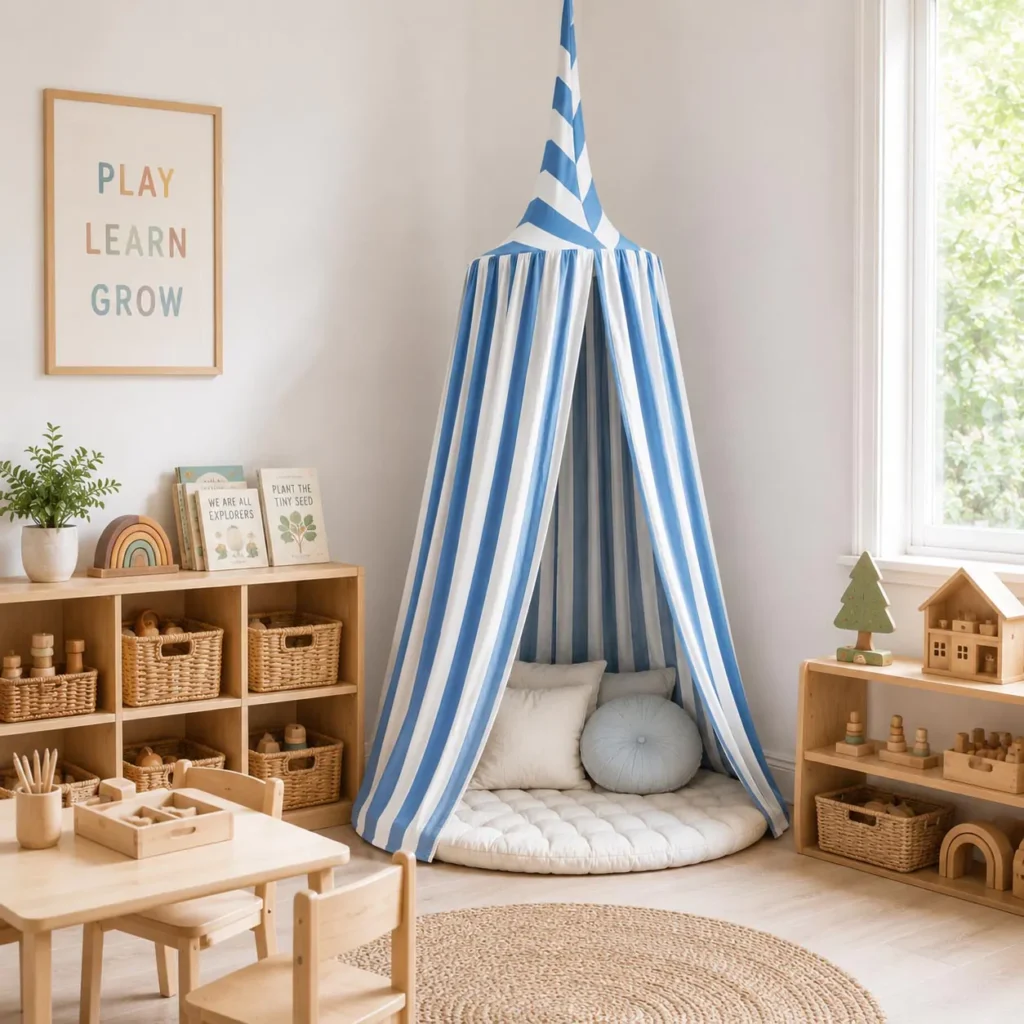
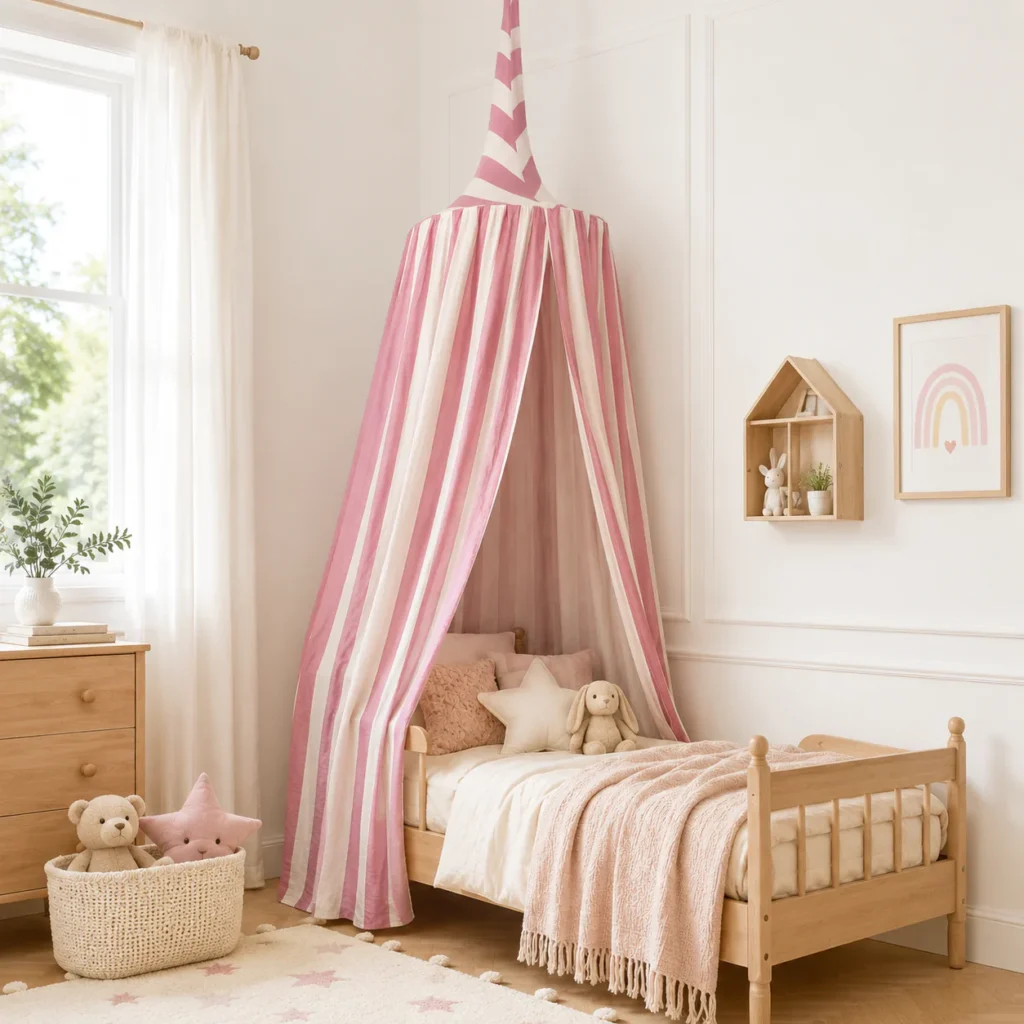
Within this minimalist framework, classic patterns like stripes serve as an exceptionally powerful design tool. Striped kids room canopies introduce dynamic visual interest without creating clutter. Vertical stripes draw the eye upward toward the ceiling, emphasizing the height of the room and making the space feel grander and more breathable. Brands like Dos Junior excel in this arena, offering premium canopy collections that feature clean, text-free, and realistic striped designs. Whether utilizing a calming ocean blue stripe, a vibrant circus red, or a natural forest green, these patterned drapes establish a sophisticated focal point. The stripes provide structural geometry that contrasts beautifully with the soft, organic flow of the fabric, achieving a perfectly balanced aesthetic that appeals to both children and adults.
How to Choose Between Different Crib Canopies and Fabrics?
Selecting the correct material for a bed canopy for nursery requires balancing aesthetic preferences with practical requirements such as airflow, maintenance, and durability. The textile composition directly affects how the canopy hangs, how much light it filters, and most importantly, how safe it is for the child’s environment.
Cotton vs. Linen vs. Synthetic Blends
The market offers a variety of textile options, each with distinct characteristics. Natural cotton is highly breathable, easy to wash, and offers a soft, matte finish that suits almost any decor style. It holds dyes well, ensuring that vibrant striped patterns remain crisp over time. Linen provides a highly textural, slightly rustic appearance with excellent durability, though it is prone to wrinkling and often carries a higher price point. Synthetic blends (such as polyester or chiffon) are lightweight, highly sheer, and generally inexpensive. However, synthetic fabrics tend to trap heat and generate static electricity, making them less ideal for close-quarter sleep environments. For a premium, long-lasting setup, 100% natural cotton or a high-grade cotton-linen blend remains the superior choice for combining structural integrity with environmental safety.
Hypoallergenic Certifications and Airflow Metrics
When evaluating crib drapes, airflow is a critical metric. The fabric must allow sufficient oxygen circulation to prevent stagnant air and heat buildup within the enclosed space. Tightly woven synthetic fabrics can create a greenhouse effect, raising the micro-climate temperature uncomfortably. Natural fibers inherently breathe better. Additionally, parents must consider hypoallergenic properties. Textiles used in children’s rooms should ideally carry OEKO-TEX Standard 100 certification, verifying that every thread, dye, and finish is free from harmful substances and volatile organic compounds (VOCs). Hypoallergenic materials prevent skin irritation and respiratory distress, ensuring the canopy contributes positively to the child’s health.
| Feature | Natural Cotton | Pure Linen | Synthetic Polyester |
| Breathability | Excellent | Exceptional | Poor to Moderate |
| Maintenance | Machine Washable | Requires Care | Easy to Wash |
| Aesthetic Drape | Soft, Structured | Relaxed, Textural | Flimsy, Sheer |
What Are the Exact Installation Steps for a Canopy Over Crib?
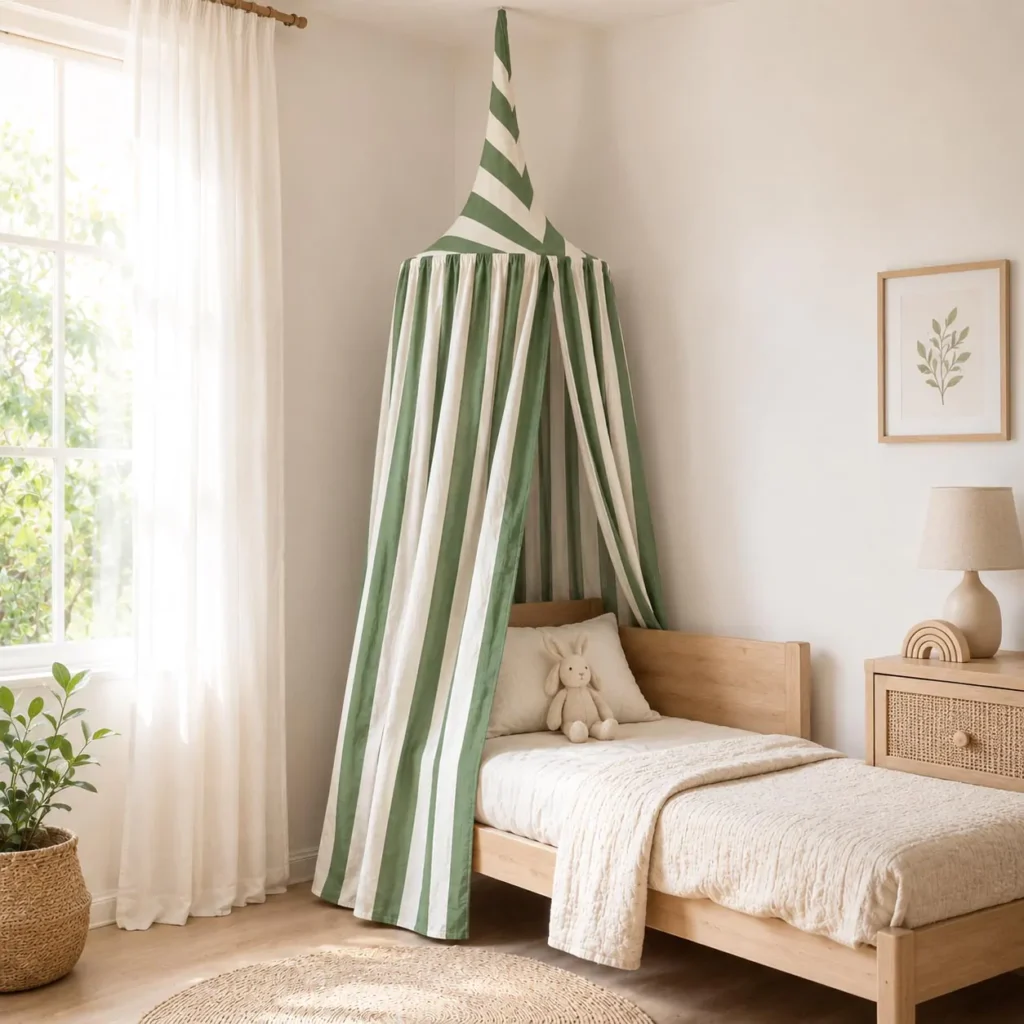
Proper installation is paramount. A beautifully designed nursery canopy tent becomes a hazard if not anchored correctly to the ceiling architecture. Understanding the structural requirements and using the correct hardware ensures the fixture remains safe, even if accidentally tugged by a curious toddler.
Assessing Ceiling Types and Hardware Selection
Before drilling, identify the ceiling material. Most modern residential ceilings are constructed from drywall (gypsum board) attached to wooden joists. For optimal safety, the canopy should be anchored directly into a wooden ceiling joist using a heavy-duty steel hook. If a joist cannot be located in the desired position, high-capacity toggle bolts or specialized drywall anchors rated for at least 50 lbs (22 kg) must be utilized. Never use basic plastic expansion anchors for ceiling-suspended items, as the continuous downward gravitational pull, combined with the fabric’s weight, will eventually cause them to fail. Plaster or concrete ceilings require masonry drill bits and specific lead or expanding concrete anchors to secure the hardware firmly.
The Suspension and Leveling Process
Once the ceiling hook is securely installed, the suspension process begins. Most premium canopies feature a structural internal ring (often made of flexible plastic or lightweight metal) that gives the top its characteristic tent shape. Adjust the suspension ribbon or cord so the canopy hangs at the correct height. The lowest edge of the fabric should gracefully sweep the floor or hover just an inch above it, preventing a tripping hazard while maintaining the enclosed aesthetic. Ensure the internal ring hangs perfectly level to the floor; an uneven ring will cause the fabric to bunch awkwardly on one side, ruining the minimalist, clean lines intended by the design.
How Can a Nursery Canopy Tent Function as a Developmental Tool?
A canopy’s utility extends far beyond the sleeping hours. As children grow, their spatial needs change, and a versatile canopy can be repurposed to support various stages of cognitive and emotional development.
Creating Dedicated Reading Nooks for Literacy
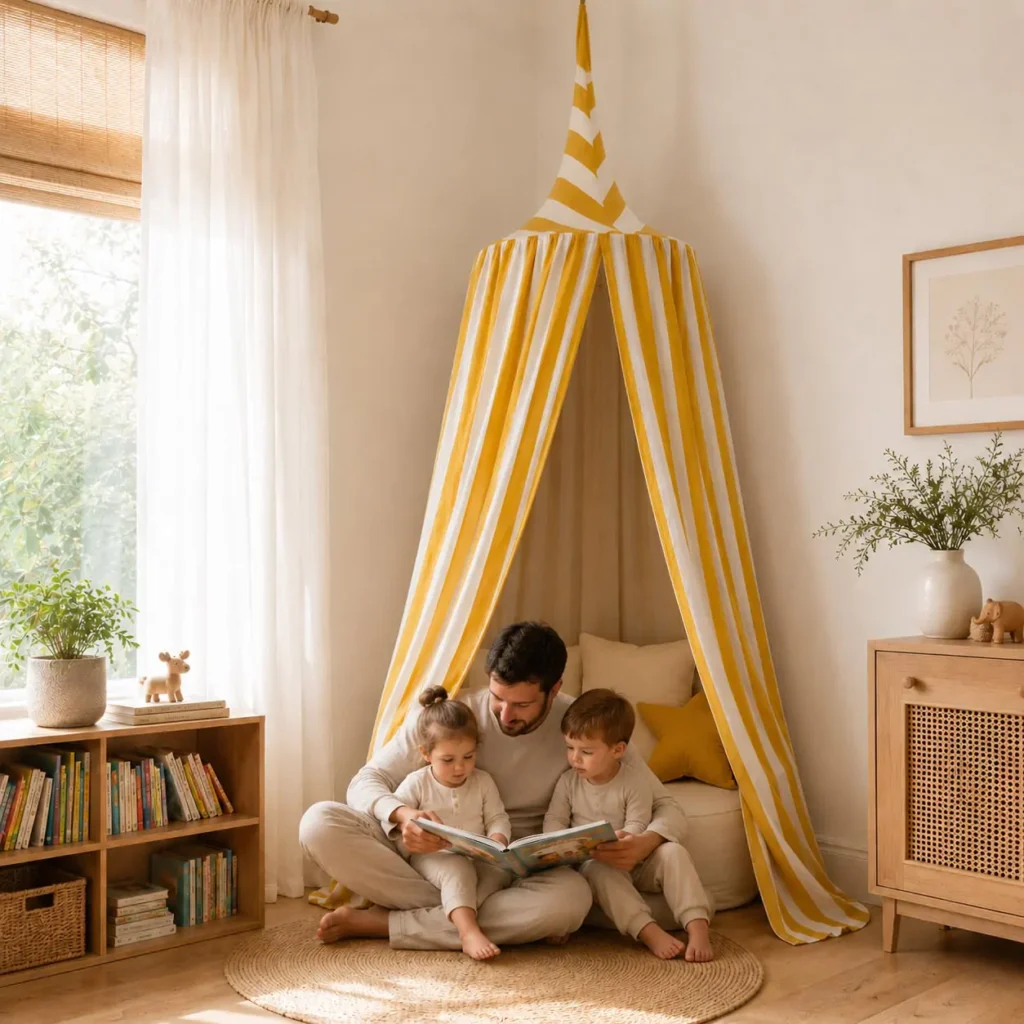
Early childhood educators emphasize the importance of creating dedicated, distraction-free zones for reading to foster early literacy skills. By moving the canopy from above the bed to an empty corner of the room, parents can instantly construct a reading nook canopy. Placing a plush floor mat, an assortment of textured pillows, and a low-level, front-facing bookshelf within the canopy’s perimeter creates a highly inviting literary sanctuary. The physical boundary of the fabric signals to the child that this specific area is reserved for quiet focus and imagination. This spatial definition helps children transition from high-energy active play to focused, cognitive engagement with books.
Fostering Independent Play and Sensory Regulation
Independent play is a crucial developmental milestone, teaching children problem-solving, creativity, and self-reliance. A canopy transformed into a play tent serves as the perfect canvas for imaginative scenarios—it can be a castle, a spaceship, or a hidden cave. More importantly, it serves as a sensory regulation zone. When children feel overwhelmed by household noise, siblings, or emotional distress, having a designated “safe space” they can retreat to is invaluable for emotional self-regulation. The gentle enclosure allows them to process their emotions independently in a secure, calming environment without fully isolating themselves behind a closed bedroom door.
What Are the Crucial Safety Regulations for Crib Drapes?
While a canopy adds undeniable charm, safety must always dictate its placement and usage. Regulatory guidelines and pediatric recommendations provide strict parameters for incorporating suspended fabrics into environments occupied by infants and young children.
Distance from Mattress and Reach Parameters
When utilizing a canopy over a crib for an infant under 12 months, strict spatial parameters must be enforced. The fabric must be pulled taut and secured firmly to the exterior base of the crib or wall, completely out of the infant’s reach. As soon as a baby can pull themselves up to a standing position (typically around 8 to 10 months), any loose fabric draping inside or near the crib presents a significant entanglement and strangulation hazard. For toddlers transitioning to floor beds or standard toddler beds, the canopy should be positioned so that the fabric acts as a tent over the headboard area, rather than hanging loosely over the sleep surface where it could become wrapped around the child during active sleep cycles.
Maintenance, Hygiene, and Fire Safety
Routine maintenance is a critical safety component. Suspended fabrics naturally accumulate household dust, pet dander, and airborne allergens over time. To maintain respiratory health, the canopy must be removed and washed according to the manufacturer’s instructions at least once every two months. Furthermore, verify the fire retardant properties of the textile. Keep all canopies strictly away from heat sources, including space heaters, incandescent light bulbs, and humidifiers. Ensure that any decorative lighting used in conjunction with the canopy (such as fairy lights) utilizes cool-touch LED technology and battery packs that are safely secured outside the child’s operational reach.
Frequently asked questions
Are hanging bed canopies safe for toddlers?
Yes, hanging bed canopies are safe for toddlers when installed correctly. Ensure the hardware is anchored securely into a ceiling joist. The fabric must be positioned outside the immediate sleep surface to prevent entanglement, and cords must be kept strictly out of the child’s reach.
How much does a high-quality nursery canopy cost?
A high-quality nursery canopy typically ranges from $80 to $200. The cost fluctuates based on fabric quality, such as organic cotton or premium linen, hardware durability, and brand reputation. Investing in well-constructed, OEKO-TEX certified materials ensures better longevity and safety.
Can you wash a canopy over crib in a standard machine?
Yes, most premium cotton and linen canopies are fully machine washable. You must first remove the structural internal metal or plastic ring. Wash the fabric on a gentle, cold cycle using mild, hypoallergenic detergent, and hang it to dry to prevent fabric shrinkage.
What is the best fabric for a kids room canopy?
The best fabric is 100% natural, highly breathable cotton or a premium linen blend. These materials ensure proper air circulation, prevent dangerous heat buildup within the enclosed space, and are naturally hypoallergenic, making them the safest choices for a child’s sensitive skin.
Conclusion
Creating a magical, secure, and stylish children’s room is easily achievable with the strategic addition of a hanging bed canopy. From significantly improving sleep quality by filtering harsh light to providing a dedicated psychological space for imaginative play and reading, this simple textile addition offers profound functional benefits. By selecting high-quality, breathable fabrics and ensuring rigorous, safe ceiling installation, you build an environment that nurtures both the child’s development and the home’s interior aesthetic. Whether embracing minimalist stripes or solid calming tones, the right canopy transforms an ordinary room into an extraordinary sanctuary. Explore our premium, text-free designs to elevate your space.