


Organic crib bed sheets provide the safest, most breathable sleep foundation for infants by eliminating exposure to synthetic pesticides, heavy-metal dyes, and dangerous chemical finishes. Because a newborn’s skin is highly permeable and their respiratory system is still developing, the purity of their immediate environment is critical for long-term health. High-quality nursery textiles utilize certified materials and sophisticated, hardware-free designs to mitigate common crib hazards like overheating and choking. This comprehensive guide explores the dermatological benefits of natural fibers, advanced temperature regulation mechanisms, and modern interior design strategies to help parents curate a flawless, toxin-free sanctuary.
What are organic crib bed sheets?
Organic crib bed sheets are specialized nursery linens manufactured from cotton grown strictly without synthetic fertilizers, harmful pesticides, or genetically modified seeds. Unlike conventional textiles, these pure materials are processed without toxic bleaches and finished using certified water-based inks, ensuring absolute chemical neutrality for infant environments.
- Agricultural purity: Cultivated entirely without neurotoxic pesticides or synthetic defoliants.
- Chemical-free processing: Completely devoid of formaldehyde, heavy metals, and phthalates.
- Thermal regulation: Highly breathable cellular structure that actively prevents infant overheating.
- Dermatological safety: Hypoallergenic composition ideal for sensitive, eczema-prone newborn skin.
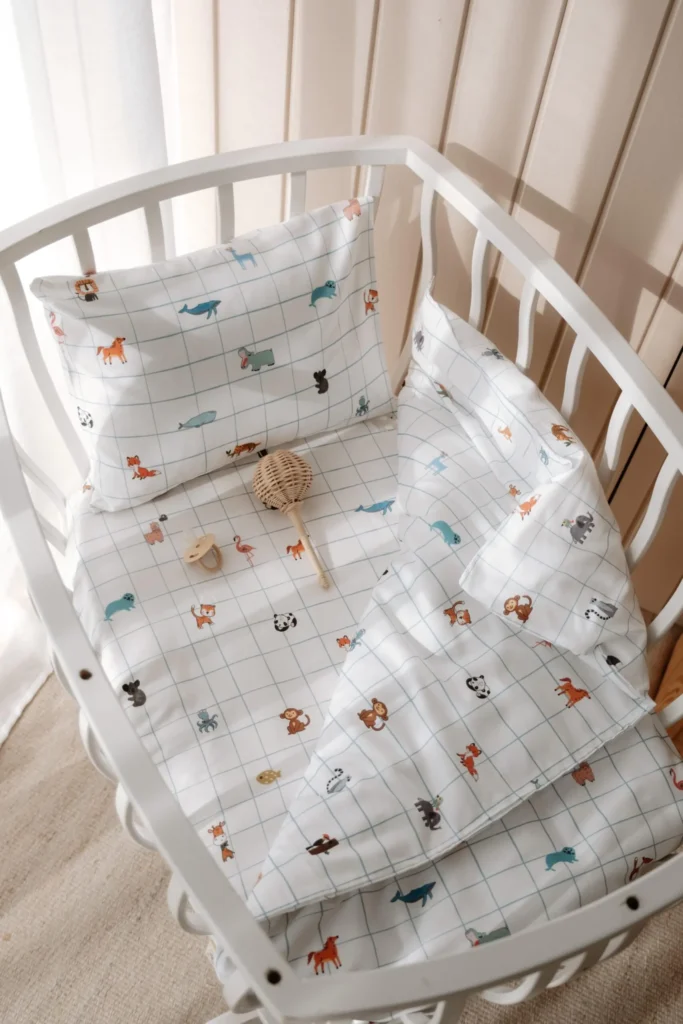
What makes organic crib bed sheets essential for newborn safety?
When evaluating the structural integrity and safety of a nursery, the primary focus must remain on the materials that maintain direct, prolonged contact with the infant. Newborns typically sleep between fourteen and seventeen hours a day. During this extensive resting period, their developing bodies are in continuous physical contact with their mattress coverings. Conventional cotton is routinely cited as one of the most chemically intensive crops globally, often retaining trace amounts of pesticides, chemical softeners, and synthetic flame retardants long after the manufacturing process is complete.
Dermatological studies indicate that infant skin is approximately twenty to thirty percent thinner than adult skin. This physiological thinness results in a significantly higher rate of dermal absorption, meaning that any chemical residue present in standard bedding can easily transfer into the baby’s bloodstream. By rigorously investing in genuine organic crib bed sheets, parents proactively establish an impenetrable barrier against environmental toxins. This conscious material selection effectively neutralizes the risk of contact dermatitis, chronic respiratory irritation, and unknown long-term developmental disruptions caused by continuous low-dose chemical exposure.
The rigorous science behind certified organic textiles
The journey from seed to finished nursery product dictates the ultimate safety profile of the textile. True organic certification requires agricultural fields to be entirely free of prohibited synthetic substances for a minimum of three consecutive years before the first crop is even planted. Furthermore, the harvesting process relies on natural defoliation methods rather than toxic chemical sprays. This meticulous, scientifically monitored agricultural approach ensures that the fundamental fibers comprising the bedding are structurally pure. When these pristine fibers are woven into high-density fabrics, they create a sleep surface that is structurally robust yet microscopically clean, providing an uncompromised foundation for infant health.
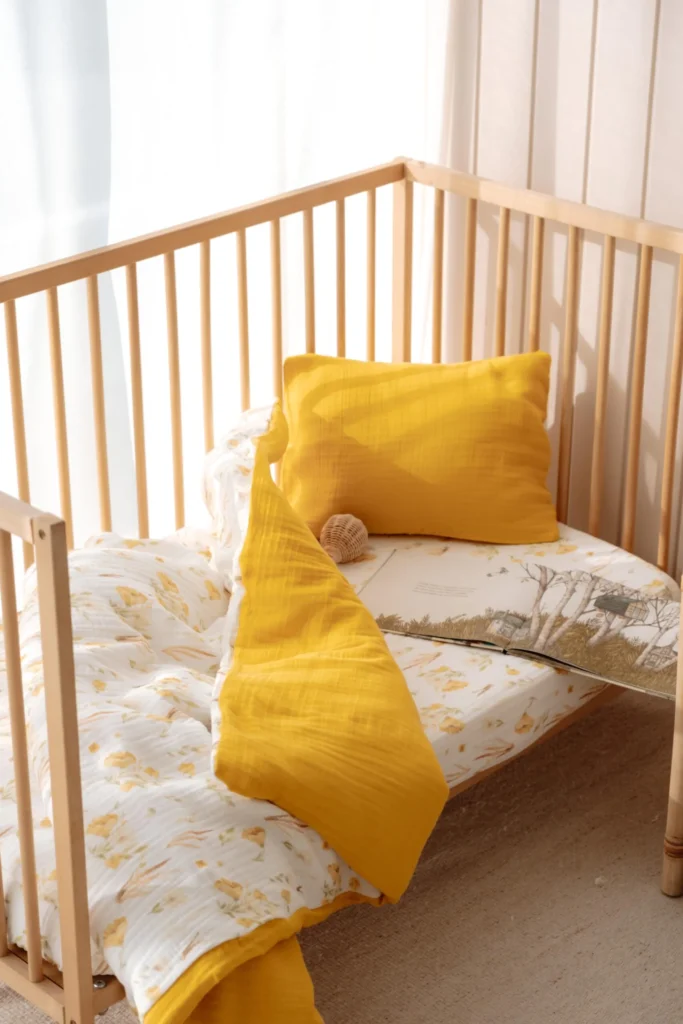
Eliminating heavy metals with certified organic inks
The visual aesthetics of a modern nursery are undoubtedly important, but the chemical composition of the printed designs carries life-or-death implications. Conventional textile printing frequently utilizes plastisol-based inks which contain dangerous phthalates, lead, and other heavy metals to achieve vibrant, long-lasting colors. When infants inevitably mouth, chew, or drool on their bedding, these toxic compounds can be directly ingested. Premium manufacturers circumvent this hazard entirely by utilizing exclusively certified organic inks. These advanced, water-based pigments bind physically to the cotton fibers without the use of toxic solvents, ensuring that beautifully realistic, minimalist designs remain entirely safe for oral contact and long-term dermal exposure.
How to choose organic crib bedding sets for optimal temperature regulation?
A critical, often overlooked aspect of nursery safety is the precise management of the infant’s microclimate. Pediatric sleep guidelines consistently emphasize that infant overheating is a primary environmental risk factor associated with Sudden Infant Death Syndrome (SIDS). Unlike adults, newborns possess immature thermoregulatory systems; they cannot effectively regulate their own core body temperature through efficient sweating or shivering. Consequently, they rely almost entirely on their external environment and the specific thermodynamic properties of their bedding to maintain a safe, stable temperature throughout fluctuating sleep cycles.
Selecting high-quality organic crib bedding sets crafted from specialized weaves is the most effective method for passive temperature regulation. Synthetic fabrics, such as polyester or microfiber, are essentially woven plastics. They inherently trap ambient heat and bodily moisture against the skin, rapidly creating a dangerous, localized greenhouse effect inside the crib. In stark contrast, natural organic cotton acts as a highly efficient, dynamic thermal insulator. It actively wicks moisture away from the infant’s body and allows trapped heat to dissipate seamlessly through its porous cellular structure, ensuring the microclimate remains consistently cool, dry, and safe.
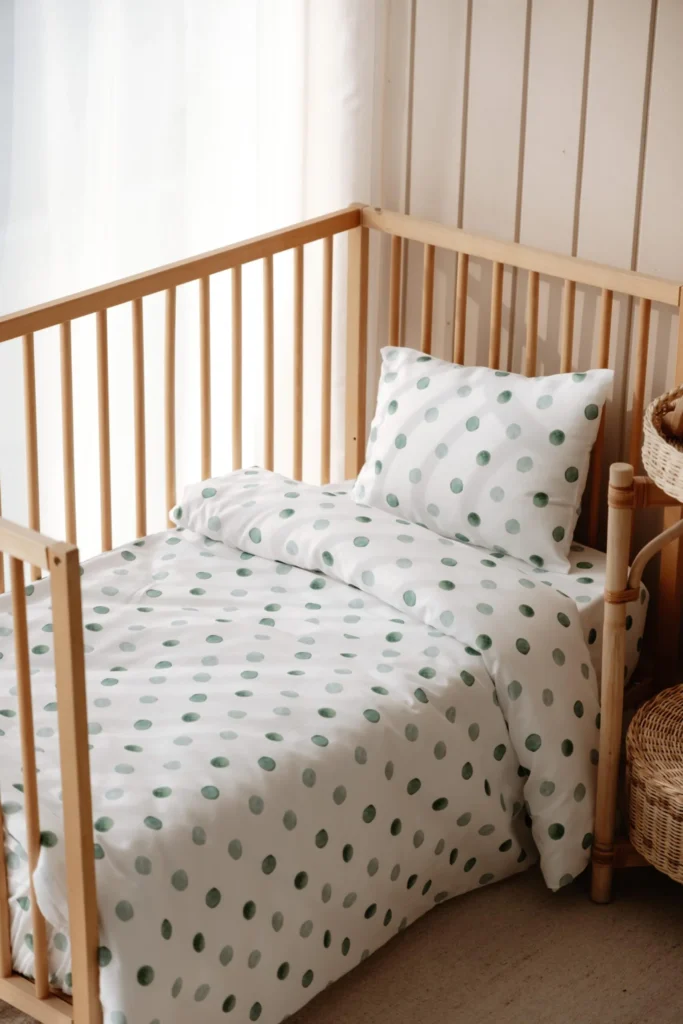
The thermodynamic role of 100% cotton sateen
Not all cotton weaves perform equally regarding breathability and tactile comfort. The sateen weave, characterized by its unique “four-over, one-under” thread structure, provides an exceptionally smooth, frictionless surface that mimics the luxurious feel of high-end silk. However, unlike silk or heavy flannels, 100% cotton sateen maintains the superior breathability required for infant safety. This specific architectural weave allows for continuous micro-ventilation. As the ambient temperature in the nursery fluctuates throughout the night, the sateen fabric dynamically adjusts, pulling excess heat away during warmer hours while retaining just enough ambient warmth during sudden temperature drops in the early morning.
Preventing sleep disruptions through moisture management
Beyond extreme safety concerns, effective temperature regulation is the cornerstone of unbroken, restorative infant sleep. When a baby becomes mildly overheated, the resulting physical discomfort instantly triggers waking cycles, leading to chronic sleep deprivation for both the infant and the parents. The inherent hydrophilic (water-loving) properties of organic cotton allow it to absorb up to twenty-seven percent of its own weight in moisture without feeling physically damp to the touch. This means that normal nocturnal perspiration is rapidly absorbed and evaporated, keeping the baby’s skin perfectly dry and preventing the sudden chills that frequently cause middle-of-the-night crying episodes.
Why button-free and snap-free organic cotton crib bedding sets matter?
When designing a hazard-free nursery, parents must look beyond chemical purity and meticulously evaluate the physical, structural components of the textiles. Many mainstream retail bedding manufacturers incorporate complex fastening systems—such as heavy plastic buttons, metal snaps, extended zippers, or decorative tassels—to secure duvet covers or add perceived visual value. In a crib environment, these hardware additions transition immediately from functional details to severe, life-threatening hazards.
The physical reality of an active infant includes constant kicking, pulling, chewing, and scratching. Over time, repeated washing and mechanical stress can easily loosen the threading that secures a button or degrade the structural integrity of a plastic snap. If a small, hard component detaches inside the crib, it instantly becomes a high-risk choking hazard. Furthermore, exposed metal zipper teeth can easily scratch delicate skin or unexpectedly snag tiny fingers and toes during active REM sleep cycles. Prioritizing an organic cotton crib bedding set that completely eliminates all hard materials is a non-negotiable step in professional nursery childproofing.
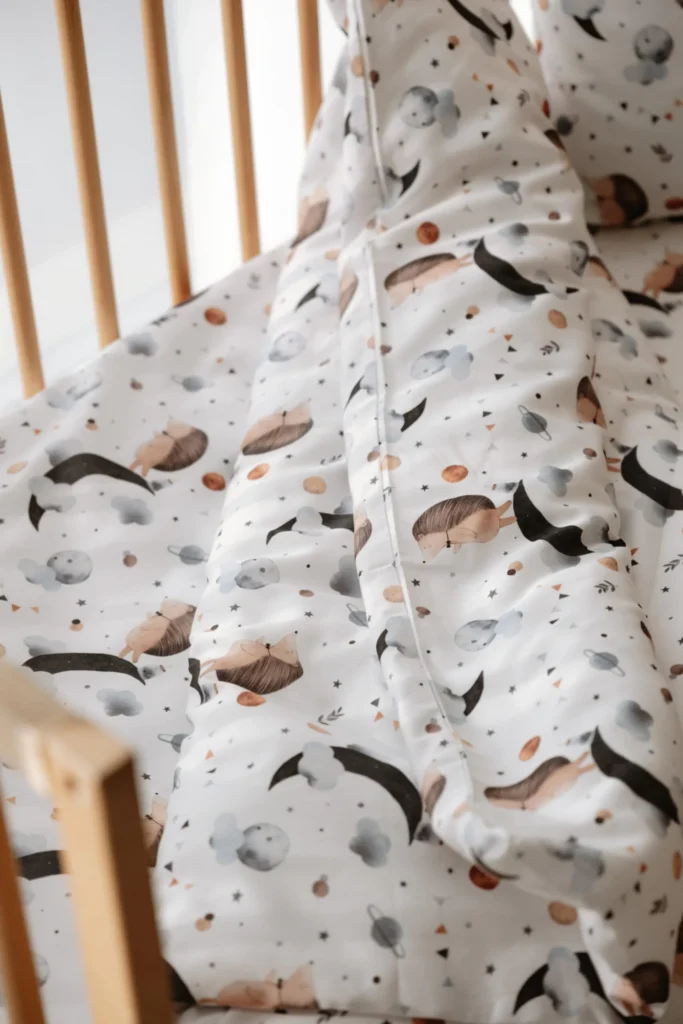
Mitigating choking hazards with minimalist architecture
The safest approach to infant bedding relies on intelligent, minimalist textile architecture rather than mechanical fasteners. Premium safety-focused brands, such as Dosjunior, engineer their duvet covers and pillowcases using deep envelope closures or sophisticated folding techniques. These designs rely entirely on the tension of the overlapping organic fabric to keep the inner duvet perfectly secure. By entirely removing small, detachable parts from the manufacturing equation, parents completely eradicate the risk of hardware-related choking incidents, ensuring the crib remains a secure, strictly soft-surface environment.
The practical durability of hardware-free enclosures
Beyond the critical safety benefits, eliminating buttons and zippers drastically improves the long-term functional durability of the bedding. Hard plastic and metal components are notoriously susceptible to melting, cracking, or warping under the high heat of modern sterilization washers and dryers. Zippers frequently jam or tear the surrounding delicate cotton fibers over time. A purely fabric-based, envelope-style closure experiences zero mechanical failure. This streamlined construction easily withstands years of heavy, high-temperature laundering, ensuring the investment remains pristine and functional for subsequent children.
Mini vs. standard: Sizing your 100% organic cotton crib sheets perfectly
Navigating the exact dimensions of modern nursery furniture is a common point of frustration, yet it is arguably the most important physical safety metric when purchasing textiles. Cribs universally fall into two distinct architectural categories: standard full-size and mini. A standard mattress typically measures 28 by 52 inches. Conversely, a mini crib mattress is designed for compact urban spaces or room-sharing, commonly measuring 24 by 38 inches, or occasionally 20 by 27.5 inches. Attempting to force incorrect dimensions onto a mattress creates an immediate, severe suffocation risk.
When purchasing 100% organic cotton crib sheets, parents must verify the exact inch measurements rather than relying on generic “one size fits all” marketing claims. A sheet that is slightly too large will inevitably bunch up in the center of the mattress. These loose folds of fabric can easily cover a rolling infant’s mouth and nose, dangerously restricting their airway. Conversely, a sheet that is too small will physically warp the mattress edges upwards or forcefully snap off the corners during the night, creating a hazardous entanglement scenario. Precision sizing is the absolute foundation of crib safety.
The critical importance of a tight, elastic fit
The structural integrity of the sheet’s perimeter is just as important as the overall dimensions. High-quality bedding must feature a robust, fully encased continuous elastic band that wraps 360 degrees around the entire bottom edge of the sheet, rather than just elasticized corners. This continuous tension ensures the fabric is pulled drum-tight across the mattress surface, completely eliminating any slack or dangerous wrinkling. The elastic must be industrial-grade, capable of retaining its aggressive “snap-back” memory even after fifty aggressive hot-water wash cycles.
Measuring and sourcing organic mini crib sheets
Because mini cribs vary slightly in their exact dimensions depending on the specific furniture manufacturer, parents must physically measure their mattress depth, width, and length before purchasing. Sourcing proper organic mini crib sheets requires finding dedicated brands that intentionally cut and sew specifically for these compact proportions. The depth of the pocket is particularly crucial; a safe mini sheet should feature a pocket deep enough (usually around 5.9 inches) to wrap completely underneath the bottom of the mattress, ensuring the active weight of the infant cannot accidentally dislodge the corners during heavy movement.
Nursery design: Styling realistic and textless bedding themes
The aesthetic environment of a nursery profoundly influences an infant’s cognitive development and a parent’s psychological baseline. Modern interior design has purposefully shifted away from hyper-stimulating, chaotic, and heavily commercialized cartoon environments. Instead, contemporary styling favors highly sophisticated, organic color palettes and realistic, nature-inspired motifs that promote deep psychological calmness and emotional regulation. Earthy neutrals, soft celestial themes, and muted woodland landscapes have replaced jarring primary colors, creating spaces that feel like high-end architectural sanctuaries rather than cluttered playrooms.
When integrating themed bedding, the visual execution must remain highly refined. Premium designs focus strictly on a minimalist aesthetic, entirely avoiding distracting typography, bold inspirational quotes, or cartoonish anatomical exaggerations. For example, a celestial theme should feature soft, warm neutral bases accented with accurate, hand-painted watercolor depictions of moons, stars, and planetary bodies. By keeping the visual plane textless and uncluttered, the artwork serves as a soothing, sophisticated focal point that naturally blends with natural wood cribs and organic textures, ensuring the room feels thoughtfully curated and timeless.
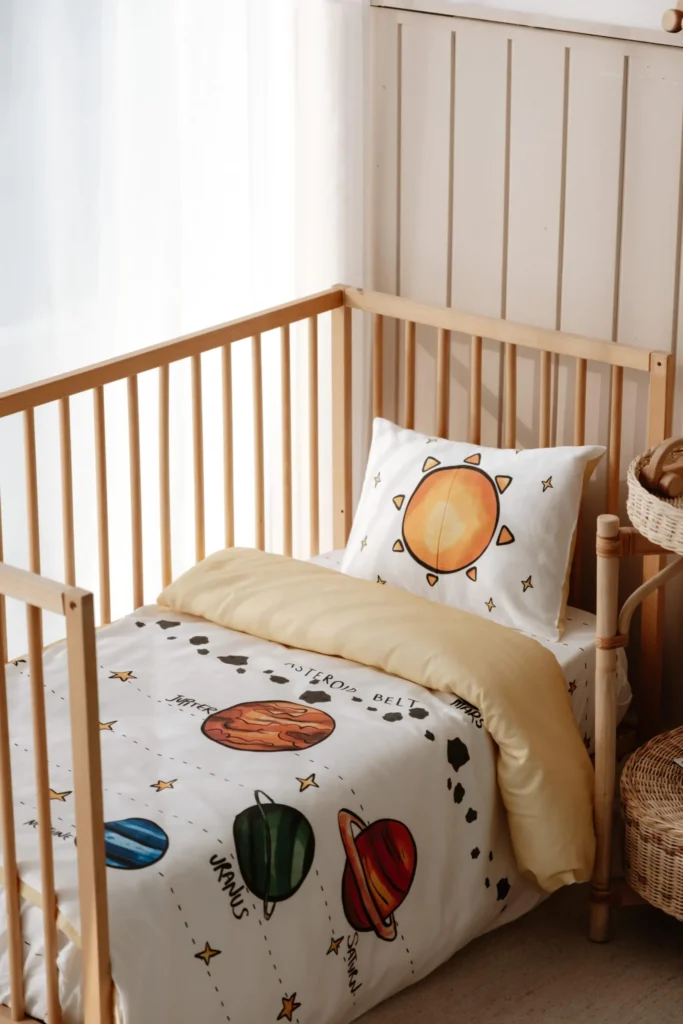
The psychological impact of minimalist celestial motifs
Environmental psychology studies consistently indicate that integrating direct elements of the natural world into interior spaces significantly reduces baseline stress levels. For infants, whose delicate sensory systems are rapidly developing, avoiding cognitive overstimulation before bedtime is paramount. The gentle, textless, and highly realistic depiction of celestial bodies or subtle woodland creatures provides a grounded, organic feel. It actively avoids the high-frequency energy of bright, chaotic patterns, offering instead a calming visual landscape that lowers the resting heart rate and psychologically prepares the child for restorative sleep.
Coordinating a complementary crib skirt
To achieve a truly finished, professional interior design aesthetic, the functional areas surrounding the crib must be addressed. A coordinating crib skirt is an excellent architectural addition that elegantly conceals the often-unsightly structural hardware and under-crib storage bins. When matching a skirt with an organic cotton crib bedding set, designers recommend selecting a solid, muted tone pulled directly from the subtle watercolor patterns of the duvet. While the skirt does not maintain direct contact with the infant, opting for pure organic cotton for all peripheral nursery textiles ensures a cohesive, completely chemical-free micro-environment throughout the entire room.
Long-term maintenance for organic nursery textiles
Investing in premium natural textiles requires an understanding of proper, long-term maintenance protocols. Because genuine organic fibers are never treated with harsh synthetic softeners, chemical wrinkle-releasers, or heavy industrial sizing agents, they behave differently than conventional synthetic blends. While they are exceptionally durable and actually become progressively softer with each wash, improper laundering techniques can prematurely break down the cellular structure of the cotton or degrade the vibrancy of the certified organic inks.
Maintaining a strict, chemical-free laundering routine is the only way to preserve the hypoallergenic integrity of the bedding. Introducing heavily fragranced commercial detergents or synthetic liquid fabric softeners completely negates the purpose of buying organic, as these products coat the breathable cotton fibers in an impenetrable layer of artificial lipids and toxic perfumes. This chemical coating traps heat, ruins the fabric’s natural moisture-wicking properties, and frequently triggers severe contact dermatitis in sensitive infants.
Washing protocols for unadulterated natural fibers
To ensure maximum longevity, organic bedding should be washed on a delicate or normal cycle using cold or lukewarm water. Extreme heat during the washing phase can shock the natural fibers, causing unnecessary shrinkage and premature wear. Parents must utilize only mild, non-biological, fragrance-free detergents specifically formulated for sensitive newborn skin. Furthermore, chlorine bleach and optical brighteners must be strictly avoided, as these aggressive caustic agents structurally obliterate the natural cotton cellulose and severely irritate the baby’s developing respiratory tract.
Preserving organic ink vibrancy over time
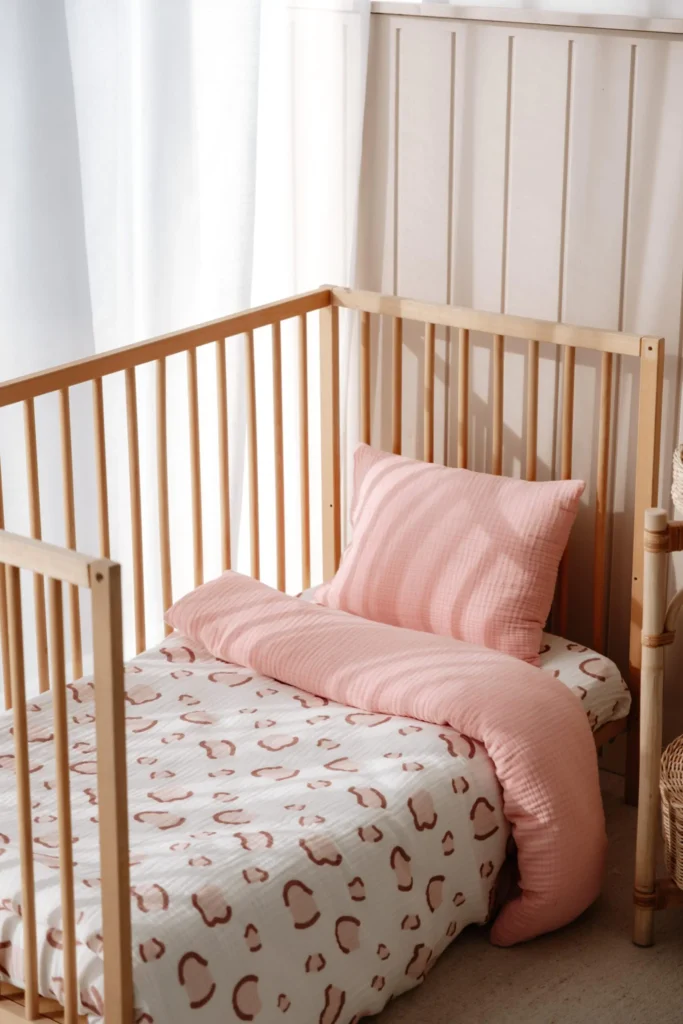
The beautiful, hand-painted watercolor aesthetics achieved with certified organic inks require gentle handling to prevent fading. Because these inks do not utilize toxic chemical binders to fuse with the fabric, they should ideally be line-dried in the shade to preserve their molecular structure and vibrant color gradients. If machine drying is necessary, it must be executed on the absolute lowest tumble-dry heat setting. Removing the bedding from the dryer while it is still a fraction damp and smoothing it by hand over the mattress prevents deep wrinkling, eliminating the need for high-heat ironing that could potentially scorch the delicate artistic prints.
Frequently Asked Questions
Are organic crib bed sheets really necessary for a newborn?
Yes. Because infant skin is highly permeable and their immune systems are still developing, they are exceptionally vulnerable to environmental toxins. Organic sheets completely eliminate prolonged dermal exposure to the synthetic pesticides, heavy metals, and formaldehyde frequently found in conventional, chemically treated cotton bedding.
Will 100% organic cotton crib sheets prevent my baby from sweating?
Yes, pure organic cotton features a highly breathable, porous cellular structure that acts as a dynamic thermal insulator. It actively wicks nocturnal moisture away from the infant’s body and allows trapped heat to dissipate, significantly reducing the risk of overheating and night sweats.
Can I use organic mini crib sheets on a standard crib mattress?
No. Attempting to stretch mini sheets (typically 24×38 inches) over a standard mattress (28×52 inches) will warp the mattress and cause the sheet corners to violently snap off. Incorrect sizing creates immediate, severe entanglement and suffocation hazards inside the crib.
Why are zipperless and button-free duvet covers considered safer?
Hard components like plastic buttons, metal snaps, and zippers represent high-risk choking and scratching hazards if they detach or break during use. Hardware-free designs utilize deep envelope fabric closures, completely eradicating these mechanical risks and ensuring a strictly soft-surface sleep environment.
Conclusion
Designing an impeccable, safe sanctuary for your infant requires uncompromising attention to material purity and structural safety. Premium organic crib bed sheets provide the ultimate foundation for healthy development, offering unparalleled breathability, advanced temperature regulation, and total freedom from toxic agricultural chemicals. By rigorously prioritizing 100% cotton sateen, verifying precise mattress dimensions, and demanding hardware-free construction, parents eliminate severe crib hazards while cultivating a visually stunning, minimalist aesthetic. Investing in certified, artisanal textiles is a profound commitment to your child’s long-term well-being.
Explore our exclusive collection of hardware-free, 100% organic cotton crib bedding sets to build your perfect, toxin-free nursery today.