


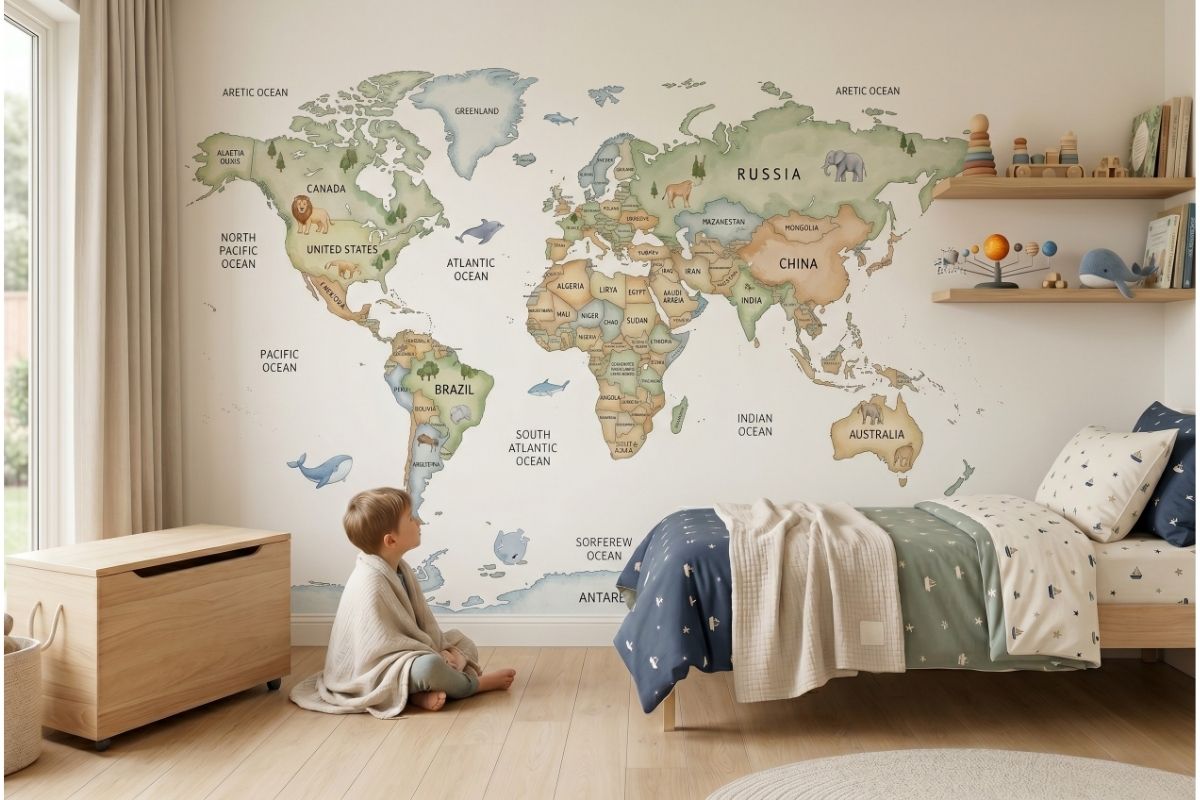
Designing a child’s room is often approached as a purely aesthetic endeavor. Parents spend hours selecting the perfect shade of paint or the cutest furniture. However, developmental psychologists, neuroscientists, and educators argue that the physical environment of a child’s room plays a far more profound role. A nursery or bedroom is a child’s first universe. It is the backdrop against which their earliest cognitive maps are drawn, their sensory preferences are established, and their sense of security is solidified.
At Dos Junior, we championed the concept of “Educational Aesthetics.” This philosophy moves beyond mere decoration, advocating for spaces that actively foster cognitive growth, cultural empathy, and physical well-being. This comprehensive guide explores the science behind room design, the psychological impact of specific themes, and the critical importance of material choices, equipping you to build not just a room, but a sanctuary of exploration.
1. The Neuroscience of Room Design: Stimulation vs. Overload
A child’s brain develops at an astonishing rate during the first few years of life, forming millions of neural connections. The environment heavily influences which connections are strengthened. However, there is a delicate balance between a stimulating environment and an overwhelming one.
The “Clever Room” Principle
Recent neurological studies on classroom and nursery environments have highlighted the dangers of visual overload. Rooms cluttered with excessively bright primary colors and chaotic patterns can bombard a child’s sensory processing system. This overstimulation often leads to heightened cortisol levels, causing anxiety, restlessness, and poor sleep quality.
The Montessori Perspective: Maria Montessori emphasized that a child absorbs their environment completely. A calm, orderly space with purposeful, eye-level artwork allows a child to focus and feel secure. Less is often more, provided that the “less” is highly intentional and meaningful.
Spatial Reasoning and Visual Memory
When you place an educational element, such as a beautifully illustrated world map, on a wall, you are doing more than decorating. You are building spatial reasoning. Spatial thinking—the ability to visualize the locations of objects, shapes, and their relations—is a fundamental cognitive skill linked to later success in mathematics and science. Long before a child can read, they memorize the shapes of continents and the placement of oceans, turning abstract geographical concepts into familiar visual memories.
2. The Psychology Behind Popular Nursery Themes
The theme of a room provides the narrative framework for a child’s imaginative play. Different environments evoke different emotional and cognitive responses.
The Deep Blue: Underwater and Mermaid Sanctuaries
Interior design psychology consistently links blue and teal palettes to physiological calming. These tones can lower heart rates and reduce stress. An underwater theme, complete with coral reefs and marine life, provides a serene atmosphere that perfectly bridges the gap between engaging daytime play and restful nighttime sleep. It also introduces concepts of marine biology and environmental empathy.
The Vastness of Space: Astronauts and Galaxies
Space themes utilizing dark navy backgrounds with stars and planets serve a dual purpose. Aesthetically, dark tones create a cozy, “womb-like” enclosure that promotes the natural production of melatonin, aiding in healthier sleep cycles. Cognitively, the space theme is the ultimate trigger for curiosity. It introduces the concepts of scale, physics, and the unknown, encouraging children to ask “Why?” and “How?”
The Wild Safari: Animals and Nature
Nature-inspired rooms foster a sense of biophilia—an innate human connection to the natural world. Safari or woodland themes introduce children to biodiversity. From a developmental standpoint, animal figures act as early storytelling prompts. A child projecting personalities onto a painted lion or a patterned elephant on their bedding is actively developing language skills and emotional intelligence.
3. The Holistic Narrative: The Synergy of Walls and Textiles
One of the most common mistakes in nursery design is treating walls, furniture, and textiles as isolated elements. A cohesive room requires a holistic narrative. When a child sees a mountain on their wallpaper and feels a corresponding color palette or subtle motif on their blanket, it creates a unified sensory experience.
| Design Element | Role in the Room | Best Practices |
| Wallpaper / Murals | The “Hero” Piece. Establishes the macro environment and scale. | Choose low-contrast, watercolor-style designs. Avoid highly aggressive or neon colors. |
| Bedding / Textiles | The Tactile Anchor. Provides physical comfort and texture. | Do not clone the wall exactly. Use complementary solid colors or subtle, spaced out motifs to balance the wall’s detail. |
| Lighting | The Mood Setter. Dictates the circadian rhythm. | Use warm, dimmable ambient lighting. Avoid harsh overhead fluorescents. |
4. Health, Safety, and the Importance of Material Quality
Educational aesthetics must be built on a foundation of absolute safety. The materials you choose for your child’s room impact their physical health just as much as the visuals impact their minds.
The Superiority of 100% Organic Cotton
A baby’s skin is highly permeable and sensitive. Conventional cotton is often heavily treated with pesticides and chemicals. 100% GOTS-certified Organic Cotton is non-negotiable for premium bedding because:
Temperature Regulation: Organic cotton is naturally breathable. It wicks away moisture, preventing the dangerous overheating that synthetic fabrics or poorly processed bamboo can cause.
Skin Barrier Protection: Free from toxic dyes and synthetic fertilizers, organic cotton dramatically reduces the incidence of eczema, rashes, and allergic reactions.
Durability: Untreated fibers retain their natural strength, meaning the fabric stays soft and intact through countless washes.
Breathable, Low-VOC Wallpapers
Indoor air quality is a critical concern in newly decorated nurseries. Mass-produced wallpapers often release Volatile Organic Compounds (VOCs) that can irritate a child’s respiratory system. Premium educational decor utilizes water-based, non-toxic inks and breathable paper to ensure zero off-gassing, keeping the nursery’s air pristine.
5. Frequently Asked Questions (FAQ)
When investing in holistic, educational room decor, parents often share similar practical concerns. Here are the most common questions answered by interior experts:
Q: What kind of wallpaper is best for a nursery?
The best wallpaper is “scrubbable” or highly washable. Nurseries are high-traffic zones. You need a durable surface that allows you to easily wipe away messes without fading the design. Always ensure it is printed with water-based, low-VOC inks.
Q: I live in a rental. Can I still use themed wallpaper?
Absolutely. High-quality “peel and stick” wallpapers use low-tack adhesives designed specifically for interior walls. When installed and removed correctly, they do not damage the paint, making them perfect for renters or parents who want to update the room as the child grows.
Q: Should the bedding match the wallpaper exactly?
Interior designers recommend coordinating rather than strict matching. Let the wallpaper be the statement piece. The bedding should offer tactile warmth and visual rest. For instance, if you have a detailed Safari wallpaper, opt for organic cotton bedding in a solid earthy tone like sage green or warm beige.
Q: Are educational maps suitable for toddlers, or should I wait until they are older?
It is never too early. While a toddler won’t read the country names, they will absorb the shapes, colors, and animal icons associated with different regions. This early exposure builds a “mental map,” making future geography lessons feel familiar and intuitive rather than intimidating.
Q: How do natural materials impact my baby’s mood?
Natural materials like organic cotton, wool, and wood provide rich, grounding sensory stimulation. Unlike plastics or synthetics, natural textures help regulate a child’s nervous system, contributing to an overall sense of tranquility and emotional safety in their room.
Conclusion: Crafting the Launchpad
A child’s room is their launchpad into the world. By intentionally selecting decor that balances visual engagement with sensory calm, and by insisting on the highest quality organic materials, you are doing much more than interior decorating. You are providing an educational environment that nurtures their mind, protects their body, and inspires their soul. Through the lens of Educational Aesthetics, every wall becomes a story, and every night’s sleep becomes a safe journey into tomorrow.
━━━━━━━━━━━━━━━━━━━━━━
🌿 Ready to build your little explorer’s world?
Discover the full collection and start shopping now at our online store.
👉 Shop the Dos Junior Collection
━━━━━━━━━━━━━━━━━━━━━━