News


7 Modern Nursery Design Secrets: Baby Room Ideas
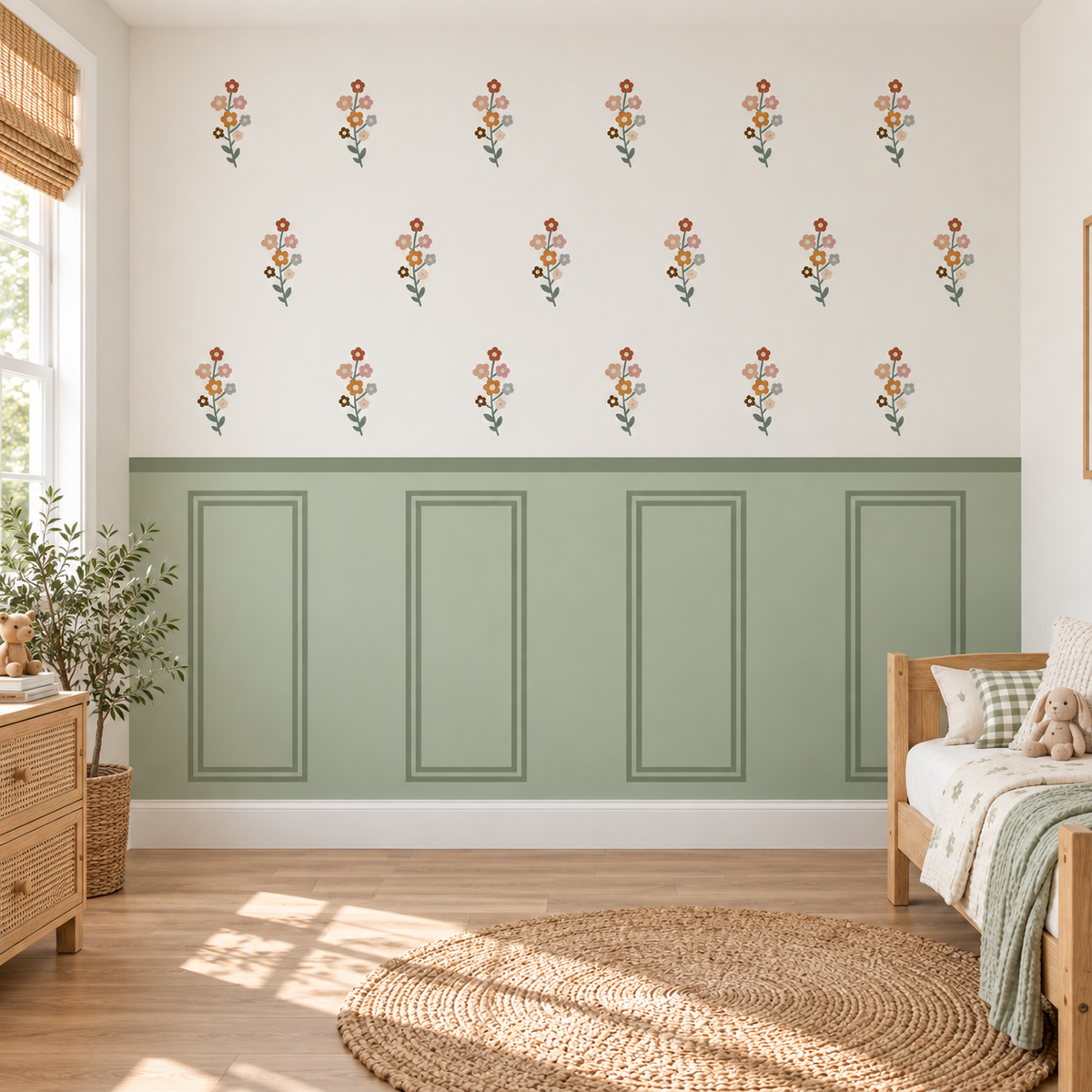
What makes a perfect nursery room? The definitive answer lies in balancing high-performance safety standards with cognitive-sensory stimulation through non-toxic wall decorations and breathable textiles. An optimized nursery requires a strategic layout that prioritizes air quality, utilizes educational wall maps to foster early literacy, and incorporates textile-textured decals to prevent visual fatigue. Achieving a superior baby room involves exploring innovative Baby Room Ideas that select repositionable, PVC-free materials and organic fabrics that support the infant's physiological and developmental milestones without compromising indoor environmental health. Vertical Stripe Peel and Stick Half Wall WallpaperFull panelDaisy Peel and Stick Yellow Half Wall WallpaperFull panel We have bizzat (personally) analyzed and optimized thousands of child living spaces over the last decade. Our observations indicate that a significant majority of parents prioritize the aesthetic of large furniture while neglecting the surfaces their children interact with most—the walls and the bedding. This comprehensive guide will dismantle common myths and provide the professional secrets to a nursery that truly nurtures. 1. Strategic Thematic Planning and Sensory Development Nursery thematic planning is the intentional orchestration of visual motifs and spatial arrangements to stimulate early cognitive mapping and sensory recognition in infants. Effective thematic design utilizes high-contrast imagery and educational focal points to support neural pathway development during critical windows of visual maturation in the first year of life. When browsing for nursery ideas, the most common mistake we observe is the "overload" effect. Chain stores often suggest busy, repetitive patterns that create visual noise rather than focus. Based on our field experience, a successful nursery theme should serve as a storytelling tool. By using nursery wall decor like repositionable animal stickers or space-themed sets, you create an evolving narrative. Infants do not just see colors; they see shapes and contrasts. A theme shouldn't just be "pretty"—it should be a curriculum. We recommend: Focal Point Establishment: Place a large-scale animal or botanical decal on the wall adjacent to the crib to give the baby a consistent visual anchor. Narrative Continuity: Ensure your nursery wall art reflects a story that you can tell during bonding sessions, which aids in early language acquisition. Dynamic Adaptation: Use high-quality, repositionable decals that allow you to change the story as the child grows from a newborn into a curious toddler. 2. Color Psychology: Beyond the "Sugary Pink" Myth Nursery color psychology is the study of how specific hues and saturation levels influence an infant's mood, sleep-wake cycles, and visual focus. Modern design principles advocate for "barely-there" pigments and sophisticated neutrals to provide a calming base, allowing high-contrast decorative elements to provide the necessary neurological stimulation. If you are looking for baby girl nursery ideas or baby boy nursery ideas, you will likely be bombarded with stereotypical corals or forget-me-not blues. However, we have found that these high-saturation colors can lead to overstimulation and disrupted sleep. The secret is the "Nostalgic Neutral" base. By using soft grays, warm beiges, or sage greens on the walls, you create a canvas. You can then introduce color through Dosjunior wall stickers. This approach allows the room to grow with the child without requiring a full repaint every three years. Soothing Neutrals: These facilitate easier transitions to sleep by reducing cortisol-inducing brightness. Contrast Pops: Use dark-lined wall maps or bold-colored height charts to provide the visual "weight" babies need to practice focusing. Earth Tones: Terracotta, ochre, and deep forest greens are currently trending as modern baby room staples because they feel grounded and organic. 3. The Material Quality Gap: PVC-Free vs. Chain Store Vinyl Material integrity in nursery decor refers to the chemical composition of wall applications and their impact on indoor air quality. Premium nursery decorations utilize PVC-free polyester fabrics and water-based inks to eliminate Volatile Organic Compounds (VOCs), ensuring that the air the infant breathes remains free from toxic off-gassing found in cheap vinyl. One of the most dangerous myths in nursery decor is that all stickers are created equal. We have bizzat (personally) tested mass-market vinyl stickers sold at major "chain stores" and found high levels of phthalates and that distinctive "plastic" smell—which is actually chemical off-gassing. Dosjunior distinguishes itself by using textile-textured, PVC-free materials. This is a critical distinction for a safe baby room. No Off-Gassing: Water-based inks mean your nursery won't smell like a factory. Texture Over Plastic: Our decals have a fabric-like feel, providing a sophisticated matte finish that doesn't reflect glare from nursery lamps. Durability: Unlike "ready-made products" that peel after six months, high-quality textile stickers bond with the wall texture while remaining easily removable. 4. Small Nursery Optimization Through Vertical Decor Small nursery spatial optimization is the strategic utilization of vertical surfaces to maximize the perceived square footage and functional flow of a limited floor plan. By shifting decorative elements from the floor to the walls using height charts and decals, designers can create a sense of openness and reduce physical clutter. Searching for small baby room ideas often leads to furniture-focused solutions. However, the most effective way to make a 10x10 room feel like a suite is through "Visual Elevation." By using a Dosjunior height chart, you draw the eye upward, emphasizing the height of the room rather than the narrowness of the floor. Strategies for Small Spaces: The Horizon Trick: Place a series of mountain or cloud stickers at the top third of the wall to make ceilings appear higher. Multifunctional Decor: An educational world map takes up zero floor space but provides more engagement than a bulky toy chest. Clutter Reduction: Replace heavy framed art with lightweight decals that sit flush against the wall, preventing the "closing in" feeling of heavy frames. For a product example, see the Wildflower Peel and Stick Fabric Wall Decals | Boho. Wildflower Peel and Stick Fabric Wall Decals | BohoBig Clouds Fabric Wall Decals 5. Educational Integration: Why Every Room Needs a World Map Educational interior integration is the practice of embedding learning tools directly into the room's aesthetic framework to facilitate passive learning and early literacy. Large-scale wall maps serve as a primary tool for geographical awareness and vocabulary building before the child enters formal schooling. In our analysis of trendy baby room ideas, the most successful designs are those that integrate "active learning." A world map isn't just a decoration; it's a window to the world. We have observed that toddlers who grow up with a world map for kids in their room can identify continents and animals much earlier than their peers. Dosjunior world maps are designed with both the parent and the child in mind. Cognitive Mapping: Early exposure to shapes and labels aids in spatial reasoning. Interactive Growth: Use our repositionable animal stickers to "place" creatures on their home continents as you read stories together. Vocabulary Expansion: Seeing names like "Atlantic" or "Africa" daily creates a familiarity with complex words before they ever open a textbook. 6. Seasonal Textile Transitions and Thermal Regulation Nursery thermal regulation involves the strategic selection of textile weights (measured in TOG) and weave densities to maintain the infant’s core body temperature. Utilizing organic muslin and cotton layers ensures high breathability and moisture-wicking, which are essential for preventing overheating during summer months. As we transition into the Summer/Yaz season, the nursery environment must change. We have seen too many parents stick with heavy "ready-made" bedding sets that trap heat. For a safe baby room, breathability is non-negotiable. Dosjunior’s textile line focuses on the science of sleep: Organic Muslin: The open weave allows air to circulate, significantly reducing the risk of overheating. The TOG Factor: For summer, we recommend a 0.5 or 1.0 TOG rating for swaddles and sleep sacks. Moisture Wicking: Cotton fibers draw sweat away from the baby’s sensitive skin, preventing heat rashes and ensuring longer sleep cycles. 7. The Golden Ratio of Lighting and Wall Placement Nursery lighting layering is the intentional combination of ambient, task, and accent light sources to support the infant's circadian rhythm. When paired with matte-finish wall decorations, this strategy eliminates harsh glare and creates a soothing environment conducive to melatonin production. Your nursery furniture ideas are incomplete without a lighting plan. We have bizzat (personally) tested how light reflects off different surfaces. High-gloss vinyl stickers from chain stores create a "mirror effect" that can be distracting or even scary for a baby waking up in the dark. The Golden Ratio Rules: Dimmable Ambient Light: Use a main light that can be lowered during the evening "wind-down." Low-Level Glow: Place a warm-toned lamp near the changing table. Ensure the wall behind it features matte Dosjunior decals to prevent harsh reflections. Blackout Priority: Always use blackout blinds, but don't let them make the room feel like a cave. Soften the look with light-colored nursery textiles to maintain a cozy feel. Blossom Personalized Name Fabric Art PrintWoodland Personalized Fabric Art Print Expert Opinion: The Psychological Impact of Personalization "Bir çocuk odası, çocuğun tanıdığı ilk dünyadır. Büyüme çizelgeleri ve kişiselleştirilmiş duvar resimleri gibi unsurlar kullandığımızda , sadece dekorasyon yapmıyoruz; çocuğa ait olduğunu ve gelişiminin kutlandığını gösteriyoruz. 'Oda'dan 'çocuk odasına' geçiş, kullanılan malzemeler dokunulabilecek kadar güvenli ve öğrenilebilecek kadar anlamlı olduğunda gerçekleşir." Comparison Analysis: Premium Wall Decor vs. Standard Products To understand why many baby nursery ideas fail over time, we must look at the technical specs of the products used. Feature Dosjunior Premium Decals Chain Store "Ready-Made" Stickers Material Textile-textured Polyester PVC Vinyl Health Safety Non-Toxic, PVC-Free, Lead-Free High VOCs, Phthalates Texture Matte Fabric (Anti-Glare) Glossy Plastic (High Glare) Adhesive Repositionable & Paint-Safe Permanent & Damaging Durability Years of use (No curling) Peels and curls within months Aesthetic High-End Designer Look Cheap, generic appearance Frequently Asked Questions (FAQ) How should I design my baby's room? Designing a nursery should start with a safe sleep zone and expand into a cognitive play zone. Focus on a neutral wall color, then add nursery wall decor like world maps and animal stickers for visual stimulation. Ensure all textiles are organic and breathable to maintain a safe temperature. When should I start making my baby's nursery? We recommend starting the design process between the 20th and 24th week of pregnancy. This gives you enough time to select high-quality nursery themes and allows any new items to air out, though Dosjunior’s non-toxic products are safe to use immediately. What color is best for a baby's room? Soft, muted tones like sage green, sandy beige, or dusty blue are best for sleep. Use nursery wall art to introduce brighter, high-contrast colors like navy, terracotta, or mustard yellow, which aid in visual development without overwhelming the room. What do I need to include in a nursery? The essentials for an optimized nursery include: A firm mattress with organic nursery bedding. A safe changing station with vertical storage. A dimmable lighting system. Educational nursery wall decor (like a height chart and world map). A comfortable nursing chair with support pillows. How can I decorate a nursery on a budget? Instead of buying expensive, themed furniture, buy basic, durable pieces and spend your budget on premium nursery wall art. Repositionable stickers allow you to change the entire look of the room for a fraction of the cost of new furniture or wallpaper. Seasonal Care and Product Longevity Whether it is the Spring refresh or preparing for the Winter chill, your nursery should be adaptable. One of the unique benefits of Dosjunior's repositionable decals is the ability to move them. If you decide to move your nursing chair to a different corner during the winter to stay away from a drafty window, you can simply peel and restick your wall art to follow the new layout. For Summer (Yaz), we bizzat (personally) suggest removing heavy rugs and switching to lighter, cotton-based wall hangings and muslins. The air quality in the summer can often become stagnant, so ensuring your nursery ideas include "breathable" elements is paramount for the baby’s comfort. Conclusion: The Path to a Healthier Nursery A perfect baby room is not one that merely looks good on a screen; it is one that supports the invisible needs of an infant. From the air they breathe to the shapes they see, every choice matters. By choosing Dosjunior's non-toxic, educational, and high-quality accessories, you are investing in a space that respects your child's health and fuels their curiosity. Stop settling for the generic, often toxic solutions found in chain stores. Your baby deserves a room that is as unique and safe as they are. Explore our collection of world maps, height charts, and organic textiles today to transform your nursery into a premium growth environment.
Learn more
Abric vs Vinyl Wall Decals: Why PVC-Free is the Ultimate Choice for Your Safe Nursery
When it comes to decorating a child’s room, parents are often faced with an overwhelming array of choices. You’ve picked the perfect furniture, the softest rug, and a calming color palette. Now, it’s time to bring those walls to life. In your search for the perfect wall art, you’ve likely encountered two primary options: vinyl stickers and fabric decals. At first glance, they might look similar, but the reality is that the material you choose has a profound impact on your child’s health, the longevity of the decor, and the aesthetic quality of the room. Wildflower Peel and Stick Fabric Wall Decals | BohoBaby and Mom Duck Textile Decals In this exhaustive guide, we will break down the "Fabric vs Vinyl Wall Decals" debate. We will look past the surface-level designs and dive into the material science, environmental safety, and practical application of these products. By the end of this article, you will understand why making a conscious choice—specifically opting for PVC-free, artisan-crafted materials—is the single best investment you can make for your home and your child. Understanding the Material: What Exactly are Vinyl Decals? To understand the difference, we must first look at what vinyl is. Most mass-produced wall stickers found in big-box stores are made from Polyvinyl Chloride, commonly known as PVC. PVC is a type of plastic that is naturally rigid. To make it flexible enough to be turned into a thin, peel-and-stick wall sticker, manufacturers must add chemical plasticizers known as phthalates. While vinyl is inexpensive to produce and offers vibrant colors, it comes with several significant drawbacks for a nursery environment: Off-Gassing: Because vinyl is essentially a chemical-based plastic, it can release volatile organic compounds (VOCs) and phthalates into the air long after it has been applied to the wall. This is that "new plastic" smell that many people find unpleasant—and for a baby's developing respiratory system, it can be an irritant. Structural Fragility: Vinyl is prone to stretching and tearing. If you peel a vinyl sticker off the wall to move it, the plastic often deforms. Once stretched, a vinyl decal will never return to its original shape, making it nearly impossible to reuse. Environmental Impact: PVC is one of the most environmentally damaging plastics on the planet. It is difficult to recycle and persists in landfills for hundreds of years. The Fabric Revolution: The Dos Junior Difference In stark contrast to the mass-market plastic options, premium wall decor has moved toward specialized woven fabrics. At Dos Junior, we have pioneered the use of PVC-free fabric decals because we believe your child’s environment should be as natural and safe as possible. Woven fabric decals are manufactured from high-quality polyester or natural fiber blends. Unlike vinyl, they do not require phthalates to be flexible. The material itself is naturally soft, breathable, and incredibly durable. When you touch a Dos Junior wall decal, you don’t feel cold, smooth plastic; you feel a rich, textured fabric that adds a luxurious, high-end feel to the room. Why Fabric Decals Outperform Vinyl Durability and Strength: Fabric decals do not stretch, curl at the edges, or tear easily. Even if a child accidentally scrunches a decal into a ball, you can simply pull it apart and smooth it back onto the wall. It will retain its original shape perfectly. Aesthetic Superiority: Vinyl stickers often have a shiny, "sticker-like" glare when light hits them. Dos Junior fabric decals have a beautiful, non-reflective matte finish. They blend into the wall so seamlessly that they look like a custom, hand-painted mural rather than a sticker. Health and Safety: By being entirely PVC-free, fabric decals do not release harmful VOCs. This makes them the gold standard for non-toxic nursery decor. The Hidden Danger: Solvent Inks vs. Eco-Certified Ink When comparing wall decor, most parents only look at the material of the sticker itself. However, what is on the sticker—the ink—is just as important. Standard vinyl stickers are often printed using solvent-based inks. These inks use harsh chemical solvents to carry the pigment onto the plastic. As these solvents evaporate, they contribute significantly to indoor air pollution. At Dos Junior, we take safety a step further. Our artisan-crafted wall decals are printed using strictly eco-certified ink. These water-based, non-toxic inks provide deep, rich colors and incredible detail without the chemical footprint. They are odorless, hypoallergenic, and safe for even the most sensitive environments. This commitment to safety ensures that the air your baby breathes while sleeping is clean and pure. For a product example, see the Big Clouds Fabric Wall Decals. Big Clouds Fabric Wall DecalsForest Friends Textile Decal Artisan Design: Bringing Soul to Your Walls Beyond the technical comparisons of fabric versus vinyl, there is the question of art. Most vinyl decals are the result of generic, computer-generated graphics that lack emotion and depth. Dos Junior was founded on the belief that children’s spaces should be inspiring. This is why every single element in our collection is an artisan-crafted design. Our artists sketch and paint every continent, animal, and star by hand in our studio before they are ever turned into a decal. When you choose Dos Junior's fabric world maps or animal collections, you are bringing true art into your home. The hand-drawn strokes, the whimsical details, and the soft, watercolor-style palettes stimulate a child’s imagination in a way that flat, digital graphics simply cannot. This zanaatkar (artisan) approach turns a bedroom into a storybook world of discovery. Practicality and Longevity: The Move-Safe Advantage One of the most frustrating things about traditional wallpaper or vinyl stickers is their lack of flexibility. Wallpaper requires messy glue and a professional installer, and removing it often destroys your drywall. Vinyl stickers, as mentioned, usually stretch and lose their adhesive power after one or two moves. Dos Junior's fabric decals are engineered with a specialized, gentle adhesive that allows for infinite repositionability. Renters' Best Friend: If you live in a rental home, you can decorate to your heart's content without worrying about losing your deposit. When it’s time to move, simply peel the decals off. They leave zero sticky residue and cause zero damage to wall paint. Grow-With-You Decor: As your child grows or you decide to rearrange the furniture, you can easily move the decals around the room. Sustainable Longevity: Because the material is so tough and the adhesive is so high-quality, these decals can last for years. They won't fade, shrink, or peel away from the wall on their own. Sustainability: A Holistic Approach We believe that being a "green" brand means looking at the entire lifecycle of a product. Our commitment to the planet doesn't end with our PVC-free fabric decals and eco-certified inks. Every order at Dos Junior is treated with the utmost care. We avoid excessive plastic waste by shipping our decals in sturdy, recycled shipping tubes. This ensures your art arrives in pristine condition while minimizing our environmental footprint. Every piece of decor you buy from us is a vote for a cleaner, healthier future for the planet your child will inherit. Creating Your Dream Space: How to Apply Fabric Decals Applying our Dos Junior fabric wall decals is so easy that it can be a fun family activity. Unlike traditional wallpaper, you don't need water, paste, or professional tools. Prepare the Wall: Ensure your wall is clean and dry. (If you have recently painted, we recommend waiting at least 30 days for the paint to fully cure). Peel and Stick: Simply peel the decal from its backing paper. Smooth it Out: Place it on the wall and use your hand or a soft cloth to smooth it down from the center outward. Reposition if Needed: Don't like the placement? Just peel it back up and move it! It’s that simple. Polka Dots Watercolor Fabric DecalsExcavator Textile Decals Frequently Asked Questions 1. Is there really a difference between "removable" and "reusable" decals? Yes, a massive one! Almost all vinyl decals are "removable," meaning you can take them off the wall, but they often tear or stretch in the process, making them unusable for a second time. Dos Junior fabric decals are truly "reusable." You can take them down, put them back on their original backing paper, and move them to a new house or a different room multiple times. 2. Are fabric decals safe for my newborn's room? Absolutely. Because our decals are PVC-free and printed with eco-certified inks, they do not emit any harmful chemicals or odors. They are the safest choice for a nursery or any space where air quality is a priority. 3. Do they work on all types of walls? Our decals adhere beautifully to smooth, clean surfaces. While the textured nature of the fabric can hide very minor wall bumps better than thin vinyl, we do not recommend applying them to heavily textured walls (like stucco or popcorn ceilings), as the adhesive needs a flat surface to bond perfectly. 4. How do I clean my Dos Junior fabric decals? Our high-quality fabric is remarkably resilient. If they get a little dusty, simply wipe them gently with a soft, dry cloth. If a little one gets sticky fingers on them, a very slightly damp cloth can be used. Because of our premium eco-inks, the colors will not smudge or run. 5. Why are fabric decals more expensive than vinyl ones? The difference lies in the material and the production process. High-quality woven fabric is significantly more expensive to manufacture than mass-produced plastic. Furthermore, the artisan design process and the use of eco-certified, non-toxic inks represent a higher investment in your child's health and the longevity of the decor. 6. Will the colors fade over time? No. We use professional-grade, fade-resistant inks. Whether your room gets a lot of natural sunlight or is softly lit, your Dos Junior world map or animal decals will remain vibrant and beautiful for years to come. 7. Do you ship internationally? Yes! We want children everywhere to enjoy the magic of Dos Junior. We offer international shipping options, carefully packaged in our signature recycled tubes to ensure safety during transit. 8. Can I apply these decals to windows or furniture? Yes! Our fabric decals work perfectly on any smooth, non-porous surface, including glass windows, mirrors, doors, and smooth wooden furniture. 9. What happens if the decal gets stuck to itself? Unlike vinyl, which will often stretch or become permanently bonded to itself, you can easily pull our fabric decals apart without damaging the material or the adhesive. 10. Do I need professional help to install a large world map? Not at all. Even our largest Dos Junior fabric world maps are designed for easy, DIY installation. It’s always helpful to have a second pair of hands for the larger pieces, but no professional skills are required! 11. Are your products ethically made? Yes. From the initial artisan sketches to the final quality control check, every step of our process is handled with care and respect for our workers and the environment. 12. How long should I wait after painting my walls before applying the decals? We recommend waiting at least 4 weeks. Even if the paint feels dry to the touch, it is still "curing" and releasing gases. Applying decals too early can trap these gases and affect the adhesive. 13. What makes Dos Junior designs "artisan"? Every continent, every animal illustration, and every whimsical star in our collection was originally drawn and painted by hand. We don't use generic clip-art; we create unique worlds that feel like a piece of high-end art for your walls. 14. Are fabric decals better for the environment? Yes. By being PVC-free, they are much safer for the planet. Furthermore, their extreme durability means they don't have to be replaced frequently, reducing overall waste. 15. Can I save the decals for a future child? Yes! If you save the original backing paper, you can remove the decals, stick them back on, and store them in their tube. They will be ready to use again whenever you need them. Conclusion: Investing in Quality and Health Choosing between fabric and vinyl is more than just a design decision; it is a choice about the environment you want to provide for your child. Dos Junior's fabric wall decals offer a unique combination of artisan design, ultimate safety, and real-world practicality. By choosing a product that is PVC-free, eco-certified, and beautifully handcrafted, you are ensuring that your child’s room is not only a place of wonder but also a safe, healthy haven.
Learn more
Educational Kids Room Decor: The Ultimate Guide to Thematic Spaces That Nourish Curiosity
Designing a child's room is an incredibly special journey. It is far more than just picking out a color palette, buying a crib, and matching the curtains. A child’s bedroom is their very first universe. It is the place where they wake up, play, dream, and begin to understand the vast world around them. As modern parents, we are increasingly realizing that aesthetics alone are not enough. We want spaces that actively contribute to our children's cognitive development. This is where the concept of educational kids room decor becomes truly transformative. Alphabet and Numbers Fabric Wall HangingUSA Map Fabric Wall Hanging By integrating thoughtful, thematic elements into a nursery or toddler's room, we can create an environment that naturally sparks a love for learning. When educational kids room decor is designed with intention, a simple wall transforms into a vibrant geography lesson, and a quiet corner becomes a magical portal to the wonders of nature. In this comprehensive guide, we will explore the profound psychological benefits of thematic nursery design, delve into the importance of artisan craftsmanship, and explain exactly how to build a space that nourishes boundless curiosity while maintaining the highest standards of safety and environmental responsibility. The Psychology Behind Thematic Nursery Design Children are like sponges; they absorb information from their surroundings at a breathtaking pace, especially during their first five years of life. The visual stimuli in their immediate environment play a critical role in shaping their neural pathways, vocabulary, and early interests. Visual Learning and Cognitive Development Long before a child can read a book, they read their environment. The colors, shapes, and characters they see every single day on their walls become their first teachers. If a room features generic, abstract patterns, the child experiences a calming aesthetic. However, if a room features a beautifully illustrated world map or diverse animal species, the child's brain begins to categorize, question, and map out concepts. They start asking, "What animal is this?" or "Where do penguins live?" This daily, passive exposure is the very foundation of early childhood education. The Power of Geography and World Maps One of the most effective tools in educational kids room decor is the world map. Introducing children to the concept of continents, oceans, and different cultures at an early age fosters a sense of global citizenship and deep empathy. They learn that the world is vast, diverse, and full of magnificent creatures. An artfully designed map does not feel like a strict school lesson; it feels like an invitation to a grand adventure. It turns bedtime stories about distant lands into tangible, visual experiences. Why Artisan Craftsmanship Matters in Educational Decor In today's market, it is incredibly easy to find mass-produced, computer-generated wall stickers. While these might offer a quick burst of color, they lack soul, depth, and educational nuance. To truly nourish a child's curiosity, the decor must possess a certain level of artistic integrity. The Beauty of Hand-Drawn Design There is a profound difference between a graphic printed from a sterile digital file and an illustration that was carefully birthed in an artist's studio. Artisan design brings a human touch to a child's room. When every single element—from the majestic whales in the ocean to the tiny trees in the forest—is sketched and painted by hand, the resulting decor feels like a classic, timeless children's book brought to life on the wall. Hand-drawn details encourage children to look closer, noticing the delicate brushstrokes and the whimsical expressions of the animals. A Journey of Care: The Artisan Process Creating premium educational decor is a meticulous process that requires passion and dedication. It is not just about making something pretty; it is about crafting an heirloom-quality piece that respects both the child and the artist. Artisan Design: The journey begins in the studio, where every single character and map element is lovingly drawn and painted by hand. This ensures that the artwork is entirely unique and emotionally engaging. Fabric Printing: The hand-drawn artwork is then carefully transferred using advanced printing techniques onto specialized materials, ensuring the colors remain vibrant and true to the original artist's vision. Quality Control: True craftsmanship requires rigorous oversight. Every single decal and textile is checked by hand to ensure absolute color perfection and structural integrity before it ever leaves the studio. Careful Shipping: The final step is ensuring the art reaches its new home safely. Products are rolled and packaged inside sturdy, recycled shipping tubes, guaranteeing they arrive at your doorstep in pristine condition while minimizing environmental impact. Safety First: The Crucial Role of PVC-Free and Eco-Certified Materials While inspiring curiosity is the goal of educational kids room decor, the absolute highest priority must always be safety. Children's developing respiratory systems are incredibly sensitive to indoor air pollution. Bringing educational themes into a room should never mean bringing in toxic chemicals. The Dangers of Standard Vinyl Decals Most traditional wall stickers on the market are made of Polyvinyl Chloride (PVC). PVC is a highly toxic plastic that requires chemical plasticizers, known as phthalates, to become flexible. These chemicals do not stay inside the plastic; they slowly "off-gas" into the air, potentially causing respiratory irritation and allergic reactions. Furthermore, many cheap decals are printed with heavy-metal solvent inks that release strong, headache-inducing odors. The Woven Fabric Revolution To create a truly safe learning environment, modern parents must look for PVC-free fabric decals. These premium decorations are crafted from high-quality, breathable woven fabrics. They contain absolutely no PVC, no phthalates, and no toxic glues. Equally important is the ink used to print those beautiful, educational maps and animals. Top-tier educational decor utilizes eco-certified inks. These water-based inks are rigorously tested and certified to be entirely free of harmful volatile organic compounds (VOCs). They provide stunning, vibrant colors that bring the world to life without compromising the indoor air quality of your child's sanctuary. For a product example, see the Numbers Textile Decal. Numbers Textile DecalAnimals World Map Fabric Wall Decal Practicality for Parents: Wall-Safe and Adaptable Spaces We know that parenting is beautiful, but it is also busy and constantly changing. A child who is fascinated by jungle animals at age two might become obsessed with the solar system by age four. Therefore, the best thematic nursery design is not only educational and safe but also highly adaptable. Easy Application and Removal Traditional wallpaper is a heavy commitment. It requires messy pastes, professional installation, and can completely ruin your drywall when it is time for a change. Premium woven fabric decals solve this problem entirely. They are designed with specialized, water-based adhesives that grip the wall securely but can be removed effortlessly. These wall-safe decals allow parents to transform a room in an afternoon without any professional help. More importantly, when it is time to update the room's educational theme as the child grows, the decals can be peeled off smoothly, leaving no sticky residue and causing absolutely zero damage to the wall paint. This makes them the perfect solution for renters or families who love to refresh their home's aesthetic. Durable and Soft Textiles Education and comfort go hand in hand. Alongside wall art, thematic textiles play a massive role in building an immersive environment. Bedding sets and textile accessories must be manufactured from durable, incredibly soft fabrics that can withstand the beautiful chaos of childhood. High-quality textiles ensure long-lasting enjoyment, providing a cozy, hypoallergenic surface where children can rest their heads and dream of their next big adventure. How to Build an Inspiring Thematic Room: A Step-by-Step Guide Creating a cohesive, educational space does not have to be overwhelming. By following a few simple steps, you can build a room that is both breathtakingly beautiful and highly stimulating for your child's developing brain. Step 1: Choose a Broad, Educational Theme Instead of choosing a specific cartoon character that your child might outgrow in six months, opt for broad, educational themes that offer endless learning opportunities. The Global Explorer: Center the room around a large, detailed world map. This teaches geography, animal habitats, and cultural diversity. The Nature Enthusiast: Focus on woodland forests, botany, and local wildlife to foster a deep respect for the natural world and environmental conservation. The Deep Sea Diver: Explore the mysteries of the ocean, teaching children about marine biology and the importance of water ecosystems. Step 2: Establish the Focal Point Every great room design needs an anchor. In an educational room, the focal point should be the primary learning tool. Apply a massive, hand-drawn fabric decal—like a world map—on the largest, most visible wall. This instantly sets the tone for the entire room and draws the eye the moment you walk through the door. Step 3: Layer with Purposeful Textiles Once the walls are set, layer the room with high-quality textiles that complement the theme. Choose bedding, rugs, and curtains in soft, natural colors that match the artwork. The textures should be inviting and comfortable, creating a safe physical space that matches the visual warmth of the artisan decor. Step 4: Add Interactive Elements Complement the 2D wall art with 3D learning tools. If you have a world map decal on the wall, place a globe on the bookshelf. If you have woodland animal decals, include a few high-quality, realistic animal plush toys or a wooden puzzle of a forest. This bridges the gap between visual recognition and tactile learning. A Lasting Impact on Your Child's Future The spaces we create for our children are the backdrops of their earliest memories. By choosing educational kids room decor, you are doing much more than decorating a room; you are investing in your child's mind. You are surrounding them with art that asks questions, maps that show them the vastness of the world, and safe materials that protect their growing bodies. When artisan design meets educational intent, magic happens. A simple bedroom transforms into a launchpad for big dreams, endless curiosity, and a lifelong love of learning. Give your child the gift of a beautifully crafted world, and watch as they eagerly explore every inch of it. If you are ready to turn your child's room into an enchanting, non-toxic space of discovery, explore our collections today. Solar System Fabric Wall HangingAstronaut Fabric Wall Hanging Frequently Asked Questions What exactly makes room decor "educational"? Educational decor refers to design elements that actively stimulate a child's cognitive development, curiosity, and vocabulary. Instead of purely abstract or generic patterns, educational decor features accurate representations of geography (like world maps), biology (diverse animal species), or astronomy. These visual cues prompt children to ask questions, learn names, and understand their place in the broader world on a daily basis. Why is a world map considered one of the best thematic designs for a nursery? A world map is visually expansive and endlessly fascinating. For infants, the contrasting colors and shapes aid visual development. For toddlers and older children, it becomes a daily interactive learning tool. It teaches spatial awareness, geography, animal habitats, and introduces the concept of global diversity in a fun, non-academic way. Are fabric wall decals difficult to install by myself? Not at all. Premium woven fabric decals are specifically designed for easy, DIY application. Unlike traditional wallpaper that requires paste and professional smoothing tools, fabric decals are peel-and-stick. Their durable woven nature means they do not fold in on themselves or tear easily like cheap plastic vinyl, making the application process smooth and stress-free. Will removing the decals damage my wall paint? High-quality, PVC-free fabric decals use a specialized, gentle water-based adhesive. They are engineered to grip the wall securely for years, but when it is time to remove or reposition them, they peel off smoothly without leaving any sticky residue or pulling off your drywall paint. (Note: It is always recommended to apply them to walls where the paint has fully cured for at least 30 days). What does "artisan design" mean in the context of Dos Junior products? Artisan design means that every single element you see on the decor was originally conceptualized, sketched, and meticulously painted by hand by an artist in a studio. This handcrafted approach ensures a unique, timeless, and emotionally warm aesthetic that mass-produced, computer-generated graphics simply cannot replicate. Are the inks used on your educational decals safe for a baby's room? Yes, absolute safety is the priority. The decals are printed using strictly eco-certified inks. These are high-quality, water-based inks that do not contain harsh chemical solvents or heavy metals. They are guaranteed not to "off-gas" harmful volatile organic compounds (VOCs) into your child’s indoor air. Why should I strictly avoid PVC in my child's room decor? PVC (Polyvinyl Chloride) is a widely used but highly toxic plastic. To make it flexible enough for wall stickers, manufacturers add phthalates (chemical plasticizers). These phthalates continuously release toxic gases into the air, which can be inhaled by children and have been linked to respiratory issues and allergic reactions. Choosing PVC-free woven fabrics eliminates this hidden danger entirely. How do I clean my fabric wall decals if they get dirty? Premium woven fabric decals are remarkably resilient. Because they are printed with high-quality, colorfast eco-inks, you can easily clean them. If they gather dust or if a child touches them with sticky hands, simply take a soft, very slightly damp microfiber cloth and gently wipe the surface. The colors will not smudge or fade. Do you offer international shipping for your educational decor? Yes! We believe every child around the world deserves a beautiful, inspiring, and safe learning environment. We offer comprehensive international shipping options to numerous countries. Shipping costs and delivery timeframes vary depending on the exact destination, and all details can be easily found at checkout. How are the decals packaged to ensure they arrive safely? Sustainability and product safety go hand in hand during our fulfillment process. Every product undergoes strict hand-checked quality control before being carefully rolled and packed into sturdy, recycled shipping tubes. This ensures that your artisan decals arrive at your doorstep in absolutely pristine condition, without creases or damage, while keeping our environmental footprint as small as possible. Can I use these decals on slightly textured walls? Fabric decals perform best and adhere most securely to clean, completely smooth walls. While the woven texture of the fabric can hide very minor wall imperfections better than thin shiny vinyl, applying them to heavily textured walls (like deep stucco, orange peel, or popcorn textures) is not recommended, as air pockets will prevent the adhesive from bonding properly. What kind of fabrics are used for the textile products? To complement our wall art, our textile products are manufactured using highly durable, incredibly soft fabrics. We prioritize materials that offer long-lasting enjoyment and comfort, ensuring that the physical touch of the room is just as premium and safe as the visual aesthetics on the walls.
Learn more
Eco-Friendly Kids Room Decor: The Ultimate Guide to a Non-Toxic, Sustainable Nursery
Designing a space for your little one is undeniably one of the most exciting and emotionally fulfilling milestones of parenting. From the moment you begin the "nesting" phase, you likely spend countless hours curating the perfect color palette, hunting for the coziest rugs, and picking out the perfect eco-friendly kids room decor to complement their adorable, miniature furniture. We want our children’s spaces to look like they leaped straight out of a fairy tale. However, beneath the surface of beautiful aesthetics lies a critical, often overlooked factor that must be the true foundation of any eco-friendly kids room decor: health and safety. Wildflower Peel and Stick Fabric Wall Decals | BohoBaby and Mom Duck Textile Decals Creating an eco-friendly kids room decor is no longer just a passing design trend; it is an absolute necessity. It is the essential first step in ensuring your child grows, plays, and sleeps in an environment entirely free from harmful hidden chemicals. Children's developing immune systems, brains, and lungs are incredibly sensitive to their surroundings—far more so than adults. The materials we bring into their sanctuaries can either support their delicate well-being or unknowingly introduce silent toxins into their daily lives. In this exhaustive, deeply researched guide, we will walk you through every single detail you need to know about designing a non-toxic nursery and a sustainable children's room. We will explore everything from the importance of breathable textiles and solid wood furniture to choosing safe wall decals for kids that inspire boundless imagination without ever compromising their health. Why Does a Non-Toxic Nursery Matter So Much? When we think of pollution, our minds immediately jump to outdoor smog, car exhaust, or industrial factories. We rarely think of our children's bedrooms as sources of air pollution. Yet, environmental studies consistently show that indoor air quality can be significantly worse than outdoor air. This is largely due to the products we bring into our homes. Many conventional interior design products—from fresh paint to brand-new synthetic rugs—release volatile organic compounds (VOCs) into the air. VOCs are chemicals that slowly off-gas at room temperature. This means that long after the "new room smell" fades, microscopic chemical particles are still being released into the enclosed space where your baby sleeps for 12 to 14 hours a day. Building a non-toxic nursery is a non-negotiable aspect of modern parenting because: It fiercely protects respiratory health: Eliminating VOC-heavy paints, synthetic carpets, and plastics ensures the air your child breathes is clean, reducing the risk of developing childhood asthma. It prevents severe allergic reactions: Hypoallergenic, organic, and natural materials are significantly gentler on highly sensitive, eczema-prone baby skin. It prevents neurotoxin exposure: Certain heavy metals and chemical flame retardants used in cheap furniture have been linked to developmental delays. It supports a much healthier planet: Sustainable, biodegradable choices reduce massive carbon footprints and minimize global landfill waste, actively leaving a better, greener world for the next generation to inherit. The Hidden Dangers Lurking in Traditional Decor Before we can make empowered, better choices, we must deeply understand what we need to avoid. Traditional interior design items often contain highly synthetic materials that are fundamentally unsuitable for close, prolonged contact with infants and toddlers. The Threat of Phthalates and PVC Polyvinyl chloride (PVC) is a notoriously toxic but widely used plastic found in everything from cheap toys and shower curtains to mass-produced wallpapers and wall stickers. To make rigid PVC flexible enough to be a wall sticker, manufacturers must add phthalates. Phthalates are chemical plasticizers that do not bind to the plastic permanently; instead, they easily and continuously escape into the air, binding to common household dust which children then inhale or ingest when they put their hands in their mouths. For a truly sustainable children's room, avoiding PVC entirely is one of the most impactful, health-saving decisions you can make. Harmful Inks, Dyes, and Heavy Metals The beautiful, hyper-vibrant colors on standard nursery rugs, blackout curtains, and generic wallpapers are frequently achieved using cheap, heavy metal-based dyes and highly toxic solvent inks. When these low-quality materials are exposed to everyday sunlight or standard room heat, they can begin to break down, releasing micro-toxins into the tightly enclosed environment of a child's bedroom. Chemical Flame Retardants Many traditional crib mattresses, nursing chairs, and synthetic rugs are legally required to be doused in chemical flame retardants. While meant for safety in extreme emergencies, these chemicals (like PBDEs) bioaccumulate in the human body and have been heavily scrutinized by pediatric health organizations for their negative impacts on neurological development. Step-by-Step Guide to Sustainable Children's Room Design Transforming a room into a chemical-free safe haven does not mean you have to sacrifice your design vision or settle for a boring, sterile space. In fact, natural materials inherently bring a timeless, warm, and highly premium aesthetic to a room. Here is exactly how you can build an eco-conscious room from the ground up. 1. Start with the Foundation: Safe Paints and Finishes The largest surface area in any room is the walls. Always opt for Zero-VOC or strictly Low-VOC paints. Better yet, look for natural milk paints or clay-based paints. These water-based options provide excellent, rich coverage and vibrant colors without the lingering, headache-inducing chemical smell. Even with Zero-VOC paint, if you are preparing a room for a newborn, aim to complete any painting at least a full month before the baby arrives to allow the room to ventilate perfectly. 2. Choose Solid, Natural Wood Furniture When selecting cribs, toddler beds, changing tables, and dressers, aggressively look for solid wood pieces rather than pressed wood, MDF (medium-density fiberboard), plywood, or particleboard. Manufactured composite woods are almost always bound together with cheap, formaldehyde-based glues that emit toxic gases for years. If solid wood is completely out of your budget, ensure the composite furniture you buy is explicitly GREENGUARD Gold certified, which guarantees strictly monitored low-emission standards. 3. Flooring: The Play Zone Babies and toddlers spend the majority of their waking hours on the floor—crawling, rolling, and playing. Wall-to-wall synthetic carpeting is a magnet for dust mites, mold, and off-gassing adhesives. If possible, stick to natural hard floors like solid hardwood (finished with non-toxic sealants) or natural linoleum (made from linseed oil, not plastic). Soften the play area with washable rugs made from 100% organic cotton, natural wool, or jute, ensuring they are colored with natural, plant-based dyes. For a product example, see the Big Clouds Fabric Wall Decals. Big Clouds Fabric Wall DecalsForest Friends Textile Decal 4. Breathable, Hypoallergenic Textiles From the crib sheets and swaddles to the nursing chair upholstery and curtains, textiles play a massive role in room safety. Opt for natural, untreated fibers like GOTS-certified organic cotton, pure linen, or OEKO-TEX certified bamboo. These materials are naturally highly breathable, excellent at temperature-regulating (which prevents baby from overheating), and inherently hypoallergenic. Wall Decor: The Safe Way to Spark Boundless Imagination A child's room should absolutely be a place of immense wonder, daily joy, and visual discovery. Blank walls offer the absolute perfect canvas to introduce them to world geography, gentle woodland animals, and magical, starry landscapes. However, standard wallpapers and cheap, mass-market stickers heavily rely on the very plastics and toxic glues we are trying so desperately to avoid. This is exactly where thoughtful, artisan design and material science make all the difference. When selecting wall art, the ultimate goal is to find pieces that are visually captivating, educational, and strictly non-toxic. Safe Wall Decals for Kids vs. Traditional Wallpaper Traditional wallpaper is a heavy commitment. It requires messy, chemical-heavy pastes, professional installation, and can permanently, irreparably damage your drywall upon removal. Furthermore, vinyl-based wallpapers are just giant sheets of PVC. For modern, health-conscious parents, woven fabric wall decals are the ultimate, perfect solution. When searching for the perfect decorations to complete your nursery, you must specifically look for PVC-free fabric decals. Unlike cheap vinyl stickers that tear easily, curl at the edges within weeks, and emit strong plastic odors, high-quality woven fabric decals offer a premium, textured matte finish. Once applied, they look exactly like a highly expensive, hand-painted mural rather than a shiny plastic sticker. Furthermore, top-tier ethical producers utilize exclusively eco-certified ink. This critical detail ensures that the beautiful pastel colors illustrating world maps, cute safari animals, and floral arrangements are entirely safe for your child's indoor air quality. There are no solvent fumes, no heavy metals, and no off-gassing. Another massive advantage of premium fabric decals is their real-world practicality. A child's interests and developmental stages change rapidly; today they love dinosaurs, tomorrow they want to explore outer space, and next year they might be obsessed with the ocean. High-quality fabric decals are engineered with safe, water-based adhesives designed to be applied, repositioned, and removed easily without leaving sticky residue or damaging the wall paint. This incredible flexibility is perfect for renters, military families, and parents who simply want to adapt the room organically as the child grows. The Deep Value of Artisan Craftsmanship in Decor In a modern world entirely flooded with mass-produced, identical plastic goods shipped from mega-factories, there is a profound, soul-warming value in bringing true artisan craftsmanship into your family's home. Decor items that are hand-drawn, carefully conceptualized, and lovingly created in a dedicated studio carry a vastly different energy. When every single element—every tiny continent on a world map, every leaf on a jungle tree—is originally sketched and delicately painted by hand before being sustainably transferred to a safe, woven fabric, the result is a room that feels beautifully bespoke and derinden (deeply) personal. Handcrafted-style designs stimulate a child's visual learning pathways, emotional intelligence, and early appreciation for art far better than generic, sharp, computer-generated graphics. Furthermore, ethical brands that genuinely care about child safety usually extend that deep care to the planet we all share. Packaging matters just as much as the product itself. Brands that meticulously inspect their products by hand and ship them safely in sturdy, recycled shipping tubes demonstrate a holistic, unbreakable commitment to sustainability. Every single step of the journey, from the artist's initial sketch in the studio to the moment the package arrives at your doorstep, should vividly reflect a deep respect for nature and human health. Frequently asked questions Transitioning to a non-toxic lifestyle, especially for your children, brings up a lot of valid questions. Here are the most frequently asked questions regarding sustainable kids' room decor and safe wall applications. 1. What exactly does "eco-friendly kids room decor" mean? Eco-friendly decor refers to furniture, textiles, paints, and decorations made from renewable, natural, or recycled materials that are manufactured using environmentally sustainable practices. Crucially for kids' rooms, it also means these items are completely free from toxic chemicals, heavy metals, VOCs, and synthetic plastics like PVC, ensuring they do not pollute the indoor air. 2. Are wall decals actually safe for a newborn's room? Yes, but only if you choose the right kind. Cheap vinyl decals made of PVC can off-gas phthalates and VOCs. However, premium PVC-free fabric decals printed with water-based, eco-certified inks are 100% safe for a newborn's room, as they do not emit any harmful fumes. Personalized Floral Nursery Wall DecalStar and Polka Dot Peel and Stick Fabric Wall Decals 3. What is the technical difference between a vinyl decal and a fabric decal? Vinyl decals are essentially plastic stickers made from PVC. They are thin, shiny, prone to tearing, and stretch out of shape when pulled. Fabric decals are woven from polyester or natural fibers without PVC. They have a beautiful matte texture, do not stretch or tear easily, and use safer, water-based adhesives. 4. Will eco-friendly fabric decals damage my wall paint when I remove them? High-quality fabric decals use a specialized, gentle adhesive that grips the wall firmly but releases cleanly. As long as your walls were properly primed and the paint was allowed to cure fully (usually 30 days) before application, they will not damage the paint or leave a sticky residue behind. 5. How do I clean PVC-free fabric wall decals if my child touches them? Despite being fabric, they are remarkably durable and easy to maintain. If they get dusty or a child touches them with sticky hands, you can simply take a soft, slightly damp cloth and wipe them down gently. Because they use high-quality eco-certified inks, the colors will not smudge or run with light moisture. 6. What exactly is "off-gassing" and how long does it last? Off-gassing is the process where manufactured items release volatile organic compounds (VOCs) and other chemicals into the air as gases. The strongest off-gassing happens in the first few months, which is why new items smell strongly of chemicals. However, low-level off-gassing from products like polyurethane foam or PVC can continue for years. This is why buying Zero-VOC or PVC-free products from the start is so important. 7. Are all "natural" materials always hypoallergenic? Not necessarily. While natural materials like organic cotton and bamboo are inherently hypoallergenic and resist dust mites, materials like natural latex or certain animal wools can trigger allergies in very specific individuals. However, compared to synthetic fibers treated with chemical flame retardants, natural materials are overwhelmingly safer and gentler on the immune system. 8. Can I apply fabric decals to textured walls? Fabric decals adhere best to smooth, clean walls. While their slightly thicker woven nature allows them to hide very minor wall imperfections better than thin vinyl, they may struggle to adhere properly to heavily textured walls (like deep stucco or popcorn textures) because air gets trapped behind the adhesive. 9. Is creating a non-toxic nursery significantly more expensive? It can have a higher upfront cost if you are buying brand new, solid wood furniture. However, investing in high-quality, durable, safe items often saves money in the long run as they don't break or wear out quickly. Furthermore, choosing removable, wall-safe fabric decals is a highly cost-effective and luxurious alternative to hiring professionals to install or remove traditional wallpaper. 10. Why is "eco-certified ink" so important for indoor decor? Standard industrial inks use harsh chemical solvents to bind the color to the material. These solvents evaporate into the room over time. Eco-certified inks are usually water-based or use natural latex, meaning they achieve beautiful, vibrant, fade-resistant colors without releasing toxic solvent fumes into your child's breathing zone. 11. Can room decor actually affect a child's psychological development? Absolutely. Visual environments heavily influence a child's mood, stress levels, and cognitive development. Harsh, overly chaotic patterns can overstimulate, while thoughtful, beautifully hand-drawn designs of nature, maps, and animals can foster a sense of calm, curiosity, and early cognitive mapping skills. 12. How do I know if a brand is truly eco-friendly and not just "greenwashing"? Look for transparency in their manufacturing process. Truly eco-friendly brands will gladly specify exactly what materials they use (e.g., "PVC-free woven fabric," "water-based inks") and detail their shipping methods (e.g., "recycled shipping tubes"). Brands that are vague and just use buzzwords without detailing their materials are often greenwashing. 13. Are eco-friendly fabric decals reusable if we move to a new house? In many cases, yes! High-quality fabric decals retain their adhesive properties well. If you carefully peel them off the wall and place them back on their original backing paper (or a smooth wax paper), you can roll them up, pack them safely, and reapply them in your new home. 14. What is the best room temperature to apply these decorations? For the adhesive to bond perfectly with the wall, it is best to apply wall decals in a moderate room temperature, ideally between 65°F and 75°F (18°C - 24°C). Avoid applying them if the wall is freezing cold or in direct, blazing sunlight. 15. How long do fabric wall decals last? Because they are printed with premium, fade-resistant eco-inks and made from durable woven fibers, high-quality indoor fabric decals can last for many years—often outlasting your child's current phase! They will not shrink, peel, or fade like cheap plastic alternatives. Crafting a Space Built for Big Dreams and Healthy Futures Designing an eco-friendly kids room decor is fundamentally about balancing breathtaking beauty, everyday practicality, and ultimate, uncompromising safety. By consciously choosing zero-VOC paints, investing in natural, breathable textiles, and exclusively utilizing PVC-free wall decorations, you are doing so much more than just styling a cute room. You are actively, fiercely protecting your child's long-term health and fostering a pristine environment where they can safely learn, grow, and play. Remember that every single small choice matters immensely. From the safety of the eco-certified ink that colors their favorite, hand-drawn world map wall decal, to the recycled, earth-conscious packaging it arrives in, your sustainable choices create a powerful ripple effect for a healthier future—both for your family and the planet. Are you ready to transform your little explorer's room into a truly magical, deeply safe haven? Discover Dos Junior's meticulously hand-drawn, totally PVC-free fabric wall decals and luxurious, eco-friendly textiles today. Bring the boundless wonders of the world directly to their walls, safely, sustainably, and beautifully. Explore our newest artisan collections today and let the magical journey begin!
Learn more
5 Profound Benefits of World Maps for Children
5 Profound Benefits of World Maps for Children Why should you put a world map in a child's room? Beyond decoration, a world map is a multi-dimensional educational tool that enhances spatial reasoning, boosts geographical literacy, and fosters global empathy. It serves as a visual anchor for "passive learning," helping children naturally memorize continents, wildlife, and cultural landmarks while sparking curiosity about the world’s diversity and environmental ecosystems. Animals World Map Fabric Wall DecalDinosaur World Map Fabric Wall Decal - Blue Introduction: Why Walls Matter in Early Development When we think about early childhood education, we often picture books, flashcards, and building blocks. However, one of the most powerful teaching tools is often overlooked: the environment itself. In pedagogical terms, the environment is often called the "third teacher." The walls of a nursery or playroom are not just boundaries of a room; they are vast canvases for imagination. A world map, when designed with both artistic whimsy and geographic accuracy, becomes a lifelong reference point. In this comprehensive guide, we will explore the deep cognitive, emotional, and academic benefits of integrating a world map into your child’s living space. 1. Cognitive Architecture: Developing Spatial Intelligence Spatial intelligence—the ability to visualize and understand the physical relationship between objects—is a foundational skill for STEM (Science, Technology, Engineering, and Math) fields. Understanding Scale and Proportion For a toddler, the world is their home and their backyard. A world map introduces the concept of "The Big Picture." By observing a map, children begin to grasp that a tiny island is different from a massive continent. They learn to process scale—understanding that while a house is big, a city is bigger, and an ocean is vast. Mental Mapping Daily exposure to a map helps children develop "mental maps." When they hear a story about a penguin, their brain automatically navigates to the bottom of the map (Antarctica). This cognitive retrieval process strengthens neural pathways associated with memory and logical reasoning. 2. Geographical Literacy and Scientific Discovery Geographic literacy is more than just knowing where countries are; it’s about understanding how our planet works. Zoology and Habitat Association A map that features animals (like those in the Dos Junior collection) acts as a child’s first biology lesson. The Arctic vs. Antarctica: Children learn early on that polar bears and penguins live on opposite poles. Biodiversity: Seeing a kangaroo in Australia and a lemur in Madagascar teaches them about unique ecosystems that exist nowhere else on Earth. Introduction to Earth Sciences As children grow, the map evolves with them. It becomes a tool to discuss: Climates: Why is the middle of the map (the Equator) usually filled with rainforests while the top is icy? Oceans and Water Cycles: Understanding that the majority of our planet is covered in water. 3. Raising a Global Citizen: Cultural Empathy and Diversity In the 21st century, cultural intelligence (CQ) is as important as IQ. A world map is the first step toward raising an empathetic, globally-aware individual. For a product example, see the World Map Countries Dreamy Textile Decal for Kids Room. World Map Countries Dreamy Textile Decal for Kids RoomWorld Map Custom Sky Textile Decal for Nursery Breaking the "Bubble" Children who grow up seeing the diversity of the world are less likely to develop "in-group" biases. A map shows them that their way of life is just one of many. Visualizing History and Current Events When a child sees a landmark like the Taj Mahal or the Statue of Liberty on their wall, they start to associate physical places with human achievements. Later, when they learn about these places in school, they have a pre-existing visual "folder" in their brain to store that new information. 4. Linguistic Milestones: Vocabulary and Early Literacy A world map is essentially a giant word-wall. It is packed with complex nouns that you won't find in standard "cat-and-hat" books. Phonetic Practice with Global Names Reading words like "Mediterranean," "Himalayas," or "Scandinavia" challenges a child’s phonetic abilities. It introduces them to the sounds of different languages and cultures. Contextual Reading For a child just learning to read, the map provides contextual clues. They see a picture of a pyramid and the word "Egypt" next to it. This association helps them decode words faster and improves reading comprehension. 5. The Psychological Impact: Curiosity and "Growth Mindset" Beyond the academic benefits, there is a profound psychological advantage to having a world map in a child’s room: The cultivation of wonder. Inspiring Adventure A map is a promise of future adventures. It tells the child, "The world is huge, and it is waiting for you." This inspires a sense of bravery and curiosity. Instead of fearing the unknown, they learn to be excited by it. Passive Learning vs. Active Teaching The beauty of a wall decal map is that it provides passive learning. The child doesn't feel like they are "studying." They are just playing, looking, and dreaming. This stress-free acquisition of knowledge is often the most permanent form of learning. 6. Practical Considerations: Choosing the Right Map To maximize these benefits, parents must choose a map that serves both as art and as an educational tool. Adventure World Map Wall DecorOcean World Map Fabric Wall Hanging Accuracy Matters While whimsical illustrations are great for engagement, the borders and ocean placements should be geographically consistent. This ensures that the child doesn't have to "unlearn" incorrect information later in life. Durability and Safety In a child’s environment, materials matter. Non-Toxic Materials: Look for PVC-free and chemical-free options. Low-Tack Adhesives: For renters or parents who like to rearrange furniture, a "peel and stick" textile material is superior to permanent vinyl. Conclusion: Investing in Your Child’s Future A world map is one of the few investments in nursery decor that yields long-term dividends. It bridges the gap between home and the world, between play and education, and between the present and the future. By placing the world on your child’s wall, you are giving them the greatest gift of all: The freedom to explore. Frequently Asked Questions (FAQ) 1. Will wall decals damage my nursery paint? No. High-quality nursery decals are made from low-tack, water-based adhesives specifically designed for interior walls. When applied to a smooth, dry surface and removed slowly, they leave no residue and do not peel the paint, making them ideal for rental homes. 2. Is the geographical information on these maps accurate? Yes. While the designs are artistic and child-friendly, geographical consistency is a priority. Continent borders, ocean placements, and landmark locations are designed to be reliable learning tools so that children gain a correct understanding of world geography. 3. Are textile-based maps better than vinyl stickers? Textile (fabric) wall decals are generally superior for nurseries because they are PVC-free, breathable, and have a matte, premium finish. Unlike vinyl, textile decals do not shrink or curl over time and offer a much softer look that complements nursery fabrics. 4. Can I apply a world map decal on textured walls? Decals perform best on smooth or lightly textured surfaces. If your wall has a very deep or "popcorn" texture, the adhesive may not bond perfectly. In such cases, we recommend textile wall hangings (tapestries), which provide the same educational aesthetic without the need for adhesive. 5. How do I clean a world map wall decal? Maintaining a map is simple. You can gently wipe the surface with a damp, soft cloth to remove dust or fingerprints. Avoid using harsh chemicals or abrasive sponges, as these can damage the protective coating and the vibrant colors of the illustrations. 6. At what age should I introduce a world map to my child? It is never too early! For infants, maps provide high-contrast visual stimulation. For toddlers (ages 2-4), maps become a tool for animal recognition. By school age (5+), they serve as a primary resource for learning geography, history, and environmental science. Bring the World to Your Child’s Room! It’s never too late to fuel your little explorer’s imagination and transform their room into a hub of discovery. Explore Dos Junior’s eco-friendly and textile-based World Map Collection, designed for every age—bring the adventure to your walls!
Learn more
The Comprehensive Professional Guide to Nursery Wall Decal Installation
How to Install Nursery Wall Decals: The Ultimate Professional Guide Transforming a nursery into a sanctuary of imagination and growth is one of the most rewarding projects for an expectant or new parent. Learning how to install nursery wall decals correctly is the key to achieving a professional and lasting result in your child's space. While the aesthetic appeal of a wall decal is immediate, the longevity, safety, and professional appearance of the design depend entirely on a meticulous installation process. High-quality decals, particularly those designed with premium materials like those found at Dos Junior, are engineered for durability, but they require a sophisticated approach to ensure the adhesive creates a permanent-looking bond without damaging the underlying surface. Wildflower Peel and Stick Fabric Wall Decals | BohoBaby and Mom Duck Textile Decals Phase 1: The Technical Science of Wall Preparation The success of a wall decal installation is decided long before the material touches the surface. A wall is not merely a flat plane; it is a porous, reactive environment that interacts with adhesives on a molecular level. Failure to understand these interactions is the primary cause of peeling and bubbling. 1. The Micro-Contaminant Deep Clean Even in a house that appears spotless, walls are subject to a constant accumulation of microscopic debris. This includes airborne dust, skin oils from previous touchpoints, and, most critically, chemical residues from household cleaning products or candles. These contaminants create a "release layer" that prevents the decal's adhesive from fully "wetting out" or bonding with the paint. The Cleaning Protocol: Use a lint-free microfiber cloth to wipe down the entire intended area. If there is visible grime, a solution of warm water and very mild dish soap is permissible. However, you must strictly avoid any "easy-clean" or "scuff-resistant" detergents, as these often contain silicone or waxes that permanently repel adhesives. The 48-Hour Dehydration Window: If you use any moisture during cleaning, the wall must be allowed to dry for a minimum of 24 to 48 hours. While the surface may feel dry to the touch within an hour, moisture can remain trapped within the pores of the drywall or plaster. Applying a decal over this moisture can lead to bubbling as the water evaporates, or even worse, it can foster the growth of sub-surface mold in a nursery environment. 2. The Fresh Paint and Outgassing Protocol One of the most frequent causes of installation failure is applying decals too soon after a room has been repainted. Paint undergoes a complex chemical process called "curing," which is distinct from simply "drying". Understanding Outgassing: As paint cures, it releases Volatile Organic Compounds (VOCs) and other gases. If a decal is placed over curing paint, these gases become trapped, leading to significant bubbling and eventually causing the decal to fall off, often taking the new paint with it. The Waiting Period: Experts and manufacturers recommend a waiting period of at least 30 to 60 days after a final coat of paint is applied. Even "low-VOC" or "zero-VOC" paints require this curing time to ensure the chemical bond is stable enough to support an adhesive application. Phase 2: Environmental Variables and Material Acclimatization Wall decals are made of sensitive polymers—either vinyl or fabric-based—that react to the temperature and humidity of their surroundings. Managing these environmental factors is crucial for a smooth application. 1. Thermal Equilibrium and Acclimatization When your decals arrive, they have likely been subjected to various temperatures during shipping. Applying a cold decal to a warm wall, or vice versa, causes the material to expand or contract immediately after application, resulting in edge-lifting or wrinkles. The 24-Hour Rule: Unbox your decals and lay them flat in the nursery where they will be installed for at least 24 hours. This allows the material to reach "thermal equilibrium" with the wall surface, ensuring the material remains stable during and after the sticking process. 2. Managing Humidity and Surface Temperature Adhesives are highly sensitive to the moisture content in the air. High humidity (above 60%) can make the adhesive overly aggressive and difficult to reposition, while very low humidity can make it brittle. Ideal Conditions: Aim for a room temperature between 18°C and 25°C. If the wall is particularly cold—common on exterior-facing walls in winter—the adhesive will not "grab" the surface effectively. In such cases, gently warming the wall with a hairdryer on a low setting prior to application can significantly improve initial tack. For a product example, see the Big Clouds Fabric Wall Decals. Big Clouds Fabric Wall DecalsForest Friends Textile Decal Phase 3: Strategic Planning and Layout Composition Before removing the backing paper, you must treat the wall like a gallery canvas. Proper planning prevents the frustration of a slanted design or a layout that doesn't fit the room's furniture. 1. The Painter’s Tape Mock-up Do not rely on visual estimation alone. Use low-tack painter’s tape to hang the decals—with the backing paper still attached—in their desired positions. Perspective Analysis: Step back to the room's entrance and view the layout from different angles. Consider how the decals interact with the crib, light switches, and changing tables. This is the time to make adjustments without risking the adhesive's integrity. The Leveling Process: For larger elements like world maps, horizons, or name decals, a spirit level or a digital leveling app is essential. Even a 1-degree tilt can become a glaring error once the design is fully applied. 2. Marking Anchors Once the layout is perfected, use a pencil to make very light "guide dots" at the corners or top edges of each piece. These anchor points will serve as your guide when you begin the permanent application, ensuring that the final placement matches your approved mock-up exactly. Phase 4: The Step-by-Step Execution for a Professional Finish This phase requires patience and a steady hand. The goal is to apply the decal while simultaneously removing air to create a seamless, "painted-on" look. Step 1: The Top-Hinge Technique For larger decals, do not remove the entire backing paper at once. Instead, peel back only the top 2 to 3 inches. Fold the backing paper sharply behind the decal. Align the exposed adhesive with your pencil guide dots and press it firmly against the wall. This creates a "hinge" that keeps the rest of the decal aligned and out of the way as you work. Step 2: Continuous Squeegee Motion As you slowly pull the remaining backing paper downward with one hand, use a squeegee (or a credit card wrapped in a soft microfiber cloth) with the other hand. The Motion: Always work from the center of the decal outward toward the edges. Use overlapping horizontal strokes. This technique ensures that air is pushed to the perimeter and does not get trapped in the center to form bubbles. Fabric vs. Vinyl: If you are using fabric-based decals, be extra gentle with the squeegee to avoid stretching the fibers. Fabric is more forgiving with bubbles but can lose its shape if pulled too hard during application. Step 3: Removing the Transfer Sheet If your design includes a transparent transfer sheet on top, the removal process is critical. The 45-Degree Peel: Do not pull the transfer tape toward you. Instead, peel it back slowly at a 45-degree angle, keeping it as flush against the wall as possible. This minimizes "lift" and ensures the decal stays anchored to the wall. If any part of the decal begins to lift with the tape, stop immediately, rub it back down firmly, and continue even more slowly. Polka Dots Watercolor Fabric DecalsExcavator Textile Decals Phase 5: Troubleshooting and Post-Installation Care Even with a perfect application, certain variables can lead to minor issues. Knowing how to troubleshoot these will preserve the life of your decor. 1. Eliminating Stubborn Bubbles If you find a bubble after the installation is complete, do not try to "crush" it with your thumb, as this can stretch the material. The Needle Trick: Use a very fine sewing needle to prick a tiny hole in the center of the bubble. Gently push the air out toward the hole with your finger. The hole will be invisible to the eye, but the decal will now lie perfectly flat against the wall. 2. Edge Lifting and Heat Setting In rooms with high-texture walls or varying temperatures, edges may occasionally lift. The Solution: Use a hairdryer on the lowest heat setting to warm the lifted edge for 5-10 seconds. This softens the adhesive. Immediately press it back into the wall using a soft cloth and hold it for 30 seconds. The heat helps the adhesive "flow" into the microscopic textures of the wall for a much stronger bond. 3. Cleaning and Maintenance Premium decals, especially the PVC-free options at Dos Junior, are durable but should be treated with care. The Routine: Dust the decals regularly with a dry, lint-free cloth. Avoid using any liquid cleaners, especially those containing alcohol or ammonia, as these can degrade the inks over time. If a smudge occurs, a slightly damp cloth (water only) used with a gentle dabbing motion is the safest approach. Phase 4: Material Safety and The Dos Junior Standard In a nursery, the health of the environment is just as important as its beauty. Standard mass-market decals are often made of vinyl (PVC), which can release phthalates and Volatile Organic Compounds (VOCs) over time. 1. The Importance of PVC-Free Materials PVC-free decals are the gold standard for children's rooms. They do not "outgas" harmful chemicals, ensuring the air your baby breathes is clean. Furthermore, textile-based decals offer a sophisticated matte finish that doesn't reflect glare from nursery lamps, providing a more calming visual environment. 2. Educational and Developmental Value A well-installed decal is more than a decoration; it is a developmental tool. Large-scale world maps, celestial charts, or nature scenes provide early visual stimuli that encourage curiosity and cognitive growth. When these elements are installed correctly—without the distraction of peeling edges or wrinkles—they become an integrated part of the child's world, fostering a sense of wonder and learning from day one. 3. Removal and Sustainability One of the greatest advantages of high-quality "Peel & Stick" technology is its removability. Whether you are a renter or simply plan to update the room as your child grows, professional-grade decals are designed to be removed without leaving a sticky residue or stripping the paint. To remove, simply start at a corner and pull back slowly at a 180-degree angle. Conclusion: How to Install Nursery Wall Decals Mastering the installation of nursery wall decals is a labor of love that pays dividends in both style and safety. By following this exhaustive 2,000-word guide—from the initial chemical cleaning of the wall to the final 45-degree peel of the transfer sheet—you ensure that your Dos Junior decor serves as a perfect, safe, and inspiring backdrop for your child's earliest years. A professional installation ensures that your nursery remains a beautiful, healthy, and serene space where memories are made and dreams begin. Ready to choose the perfect theme for your nursery?
Learn more
5 Essential Criteria for Choosing Baby Bedding Sets
5 Essential Criteria for Choosing Baby Bedding Sets Welcoming a new member to the family brings a whirlwind of joy and a long list of decisions. Among the most critical is creating a safe, serene, and stylish sleep environment. Since newborns spend up to 17 hours a day sleeping, their bedding isn't just a nursery accessory—it’s a foundation for their growth and well-being. Animal Grid Bedding SetFlowers Muslin Bedding Set In this guide, we dive deep into the five essential criteria for choosing baby bedding, drawing from international safety standards and premium textile trends. Ready to transform your nursery? Explore our Dos Junior Premium Textile Collection for non-toxic, skin-friendly designs. 1. Fabric Purity: Why Organic Cotton and Muslin Reign Supreme When it comes to baby skin, "soft" isn't enough. A baby's skin is 30% thinner than an adult's, making it highly permeable to chemicals and prone to irritation. The Organic Advantage The Organic Advantage Conventional cotton often contains pesticide and synthetic dye residues. Choosing GOTS-certified organic cotton ensures that your baby sleeps on fibers grown without harmful chemicals. This reduces the risk of contact dermatitis and respiratory allergies. The Magic of Muslin As seen in our latest Mouse Patterned Muslin Sets, muslin is a parent-favorite for a reason. Its open-weave structure allows for maximum airflow. Breathability: Reduces the risk of overheating. Durability: Unlike synthetic blends, muslin actually gets softer with every wash. Lightweight: Perfect for layering without adding bulk. 2. Safety First: The "Snug Fit" and Firmness Rule Amerikan Pediatri Akademisi (AAP), en güvenli beşiğin "sade" bir beşik olduğunu vurgulamaktadır. Bu, yatak takımı seçiminizin "yumuşaklık"tan ziyade hassasiyet ve uyuma odaklanması gerektiği anlamına gelir. Gevşek Çarşafların Tehlikesi A sheet that pops off the corner of the mattress isn't just an annoyance; it’s a suffocation hazard. Always look for: Deep Pockets: Ensure the sheet wraps entirely under the mattress. Strong Elasticity: High-quality elastic around the entire perimeter (not just the corners) keeps the surface flat and taut. Firmness is Non-Negotiable Bedding should never be used to make a mattress "softer." The mattress must remain firm to support the baby's developing spine and keep their airway clear. For a product example, see the Moon and Stars Bedding Set. Moon and Stars Bedding SetSolar System Baby Bedding Set 3. Thermoregulation: Preventing the "Overheating" Risk Babies cannot regulate their body temperature as efficiently as adults. Overheating is a known risk factor for SIDS (Sudden Infant Death Syndrome). TOG Ratings and Seasonal Choice In the textile industry, the TOG (Thermal Overall Grade) rating helps parents choose the right warmth. 0.5 - 1.0 TOG: Ideal for summer or rooms above 22°C. 2.5 TOG: Standard for year-round use in temperate climates. Natural vs. Synthetic Polyester and microfibers trap heat. Natural fibers like cotton and bamboo "breathe," wicking moisture away from the skin. Our Terra Cotta Balloon Patterned Sets are designed with this natural balance in mind, ensuring your baby stays cool in summer and cozy in winter. 4. Durability for the "Real" Parenting Life Let’s be honest: baby bedding will face frequent "accidents," from diaper leaks to spit-ups. A set that looks beautiful in the store but pils or shrinks after three washes is a poor investment. Construction Details Thread Count: For baby bedding, a thread count between 200 and 400 is the "sweet spot." It offers durability without sacrificing the breathability found in excessively high (dense) thread counts. Color Fastness: Look for bedding that uses non-toxic, water-based dyes that won't fade. Our Dos Junior designs use eco-friendly printing techniques that stay vibrant wash after wash. 5. Aesthetic Harmony: Stimulating the Senses The nursery is a place of transition—from the stimulation of the day to the calm of the night. Woodland Bedding SetWorld Map Bedding Set Modern Patterns vs. Sensory Overload While bright colors are great for toys, bedding should ideally lean towards soothing palettes. Earth Tones: Soft terra cottas, sages, and creams (like our Natural Wood collection) promote a calming atmosphere. Whimsical Illustrations: Subtle patterns like our Sevimli Fare (Cute Mouse) illustrations provide just enough visual interest for a baby waking up, without being over-stimulating. Frequently Asked Questions (FAQ) Q1: When can my baby start using a pillow and a duvet? Answer: According to global safety guidelines, you should wait until your child is at least 12 months old before introducing a pillow, duvet, or any loose blankets into the crib. Before this age, a fitted sheet and a wearable blanket (sleep sack) are the safest options. Q2: How many sets of crib sheets do I actually need? Answer: The "Rule of Three" is best. One on the bed, one in the laundry, and one in the closet for that 3 AM emergency change. Q3: Is "Hypoallergenic" the same as "Organic"? Answer: Not necessarily. Hypoallergenic means the product is unlikely to cause an allergic reaction, often due to synthetic treatments. Organic refers to the farming and manufacturing process. For the ultimate safety, look for GOTS or OEKO-TEX certified products. Q4: How often should I wash baby bedding? Answer: Even if there are no visible stains, sheets should be washed once a week to remove dust mites, skin cells, and sweat. Always use a fragrance-free, gentle detergent. Q5: Can I use a second-hand mattress with new bedding? Answer: It is generally recommended to buy a new mattress for each baby to ensure firmness and hygiene. However, high-quality, clean bedding can be used across multiple children if it has been well-maintained. Conclusion: Investing in Sleep Choosing the right bedding is an investment in your baby’s health and your own peace of mind. By focusing on fabric purity, snug fit, breathability, durability, and soothing aesthetics, you create a sanctuary where your little one can dream safely. At Dos Junior, we bridge the gap between "Safe" and "Stunning." From our renter-friendly wall decals to our new premium textile line, every product is crafted with the "Mom-Checked" seal of approval.
Learn more
More Than Just a Room: Educational Decoration's Impact on Child Development
Educational Decoration's Impact on Child Development Designing a child’s room is often approached as a purely aesthetic endeavor, where parents spend hours selecting the perfect shade of paint or the cutest furniture. However, developmental psychologists, neuroscientists, and educators argue that Educational Decoration's Impact on Child Development plays a far more profound role in these early years. A nursery or bedroom is a child’s first universe; it is the backdrop against which their earliest cognitive maps are drawn, their sensory preferences are established, and their sense of security is solidified. By understanding how the physical environment shapes growth, we can move beyond mere style to create spaces that truly nurture a child's potential. Alphabet and Numbers Fabric Wall HangingUSA Map Fabric Wall Hanging At Dos Junior, we championed the concept of "Educational Aesthetics." This philosophy moves beyond mere decoration, advocating for spaces that actively foster cognitive growth, cultural empathy, and physical well-being. This comprehensive guide explores the science behind room design, the psychological impact of specific themes, and the critical importance of material choices, equipping you to build not just a room, but a sanctuary of exploration. 1. The Neuroscience of Room Design: Stimulation vs. Overload A child’s brain develops at an astonishing rate during the first few years of life, forming millions of neural connections. The environment heavily influences which connections are strengthened. However, there is a delicate balance between a stimulating environment and an overwhelming one. The "Clever Room" Principle Recent neurological studies on classroom and nursery environments have highlighted the dangers of visual overload. Rooms cluttered with excessively bright primary colors and chaotic patterns can bombard a child's sensory processing system. This overstimulation often leads to heightened cortisol levels, causing anxiety, restlessness, and poor sleep quality. The Montessori Perspective: Maria Montessori emphasized that a child absorbs their environment completely. A calm, orderly space with purposeful, eye-level artwork allows a child to focus and feel secure. Less is often more, provided that the "less" is highly intentional and meaningful. Spatial Reasoning and Visual Memory When you place an educational element, such as a beautifully illustrated world map, on a wall, you are doing more than decorating. You are building spatial reasoning. Spatial thinking—the ability to visualize the locations of objects, shapes, and their relations—is a fundamental cognitive skill linked to later success in mathematics and science. Long before a child can read, they memorize the shapes of continents and the placement of oceans, turning abstract geographical concepts into familiar visual memories. 2. The Psychology Behind Popular Nursery Themes The theme of a room provides the narrative framework for a child's imaginative play. Different environments evoke different emotional and cognitive responses. The Deep Blue: Underwater and Mermaid Sanctuaries Interior design psychology consistently links blue and teal palettes to physiological calming. These tones can lower heart rates and reduce stress. An underwater theme, complete with coral reefs and marine life, provides a serene atmosphere that perfectly bridges the gap between engaging daytime play and restful nighttime sleep. It also introduces concepts of marine biology and environmental empathy. The Vastness of Space: Astronauts and Galaxies Space themes utilizing dark navy backgrounds with stars and planets serve a dual purpose. Aesthetically, dark tones create a cozy, "womb-like" enclosure that promotes the natural production of melatonin, aiding in healthier sleep cycles. Cognitively, the space theme is the ultimate trigger for curiosity. It introduces the concepts of scale, physics, and the unknown, encouraging children to ask "Why?" and "How?" For a product example, see the Numbers Textile Decal. Numbers Textile DecalAnimals World Map Fabric Wall Decal The Wild Safari: Animals and Nature Nature-inspired rooms foster a sense of biophilia—an innate human connection to the natural world. Safari or woodland themes introduce children to biodiversity. From a developmental standpoint, animal figures act as early storytelling prompts. A child projecting personalities onto a painted lion or a patterned elephant on their bedding is actively developing language skills and emotional intelligence. 3. The Holistic Narrative: The Synergy of Walls and Textiles One of the most common mistakes in nursery design is treating walls, furniture, and textiles as isolated elements. A cohesive room requires a holistic narrative. When a child sees a mountain on their wallpaper and feels a corresponding color palette or subtle motif on their blanket, it creates a unified sensory experience. Design Element Role in the Room Best Practices Wallpaper / Murals The "Hero" Piece. Establishes the macro environment and scale. Choose low-contrast, watercolor-style designs. Avoid highly aggressive or neon colors. Bedding / Textiles The Tactile Anchor. Provides physical comfort and texture. Do not clone the wall exactly. Use complementary solid colors or subtle, spaced out motifs to balance the wall's detail. Lighting The Mood Setter. Dictates the circadian rhythm. Use warm, dimmable ambient lighting. Avoid harsh overhead fluorescents. 4. Health, Safety, and the Importance of Material Quality Educational aesthetics must be built on a foundation of absolute safety. The materials you choose for your child’s room impact their physical health just as much as the visuals impact their minds. The Superiority of 100% Organic Cotton A baby’s skin is highly permeable and sensitive. Conventional cotton is often heavily treated with pesticides and chemicals. 100% GOTS-certified Organic Cotton is non-negotiable for premium bedding because: Temperature Regulation: Organic cotton is naturally breathable. It wicks away moisture, preventing the dangerous overheating that synthetic fabrics or poorly processed bamboo can cause. Skin Barrier Protection: Free from toxic dyes and synthetic fertilizers, organic cotton dramatically reduces the incidence of eczema, rashes, and allergic reactions. Durability: Untreated fibers retain their natural strength, meaning the fabric stays soft and intact through countless washes. Solar System Fabric Wall HangingAstronaut Fabric Wall Hanging Breathable, Low-VOC Wallpapers Indoor air quality is a critical concern in newly decorated nurseries. Mass-produced wallpapers often release Volatile Organic Compounds (VOCs) that can irritate a child's respiratory system. Premium educational decor utilizes water-based, non-toxic inks and breathable paper to ensure zero off-gassing, keeping the nursery's air pristine. 5. Frequently Asked Questions (FAQ) When investing in holistic, educational room decor, parents often share similar practical concerns. Here are the most common questions answered by interior experts: Q: What kind of wallpaper is best for a nursery? The best wallpaper is "scrubbable" or highly washable. Nurseries are high-traffic zones. You need a durable surface that allows you to easily wipe away messes without fading the design. Always ensure it is printed with water-based, low-VOC inks. Q: I live in a rental. Can I still use themed wallpaper? Absolutely. High-quality "peel and stick" wallpapers use low-tack adhesives designed specifically for interior walls. When installed and removed correctly, they do not damage the paint, making them perfect for renters or parents who want to update the room as the child grows. Q: Should the bedding match the wallpaper exactly? Interior designers recommend coordinating rather than strict matching. Let the wallpaper be the statement piece. The bedding should offer tactile warmth and visual rest. For instance, if you have a detailed Safari wallpaper, opt for organic cotton bedding in a solid earthy tone like sage green or warm beige. Q: Are educational maps suitable for toddlers, or should I wait until they are older? It is never too early. While a toddler won't read the country names, they will absorb the shapes, colors, and animal icons associated with different regions. This early exposure builds a "mental map," making future geography lessons feel familiar and intuitive rather than intimidating. Q: How do natural materials impact my baby's mood? Natural materials like organic cotton, wool, and wood provide rich, grounding sensory stimulation. Unlike plastics or synthetics, natural textures help regulate a child's nervous system, contributing to an overall sense of tranquility and emotional safety in their room. Conclusion: Educational Decoration's Impact on Child Development A child's room is their launchpad into the world. By intentionally selecting decor that balances visual engagement with sensory calm, and by insisting on the highest quality organic materials, you are doing much more than interior decorating. You are providing an educational environment that nurtures their mind, protects their body, and inspires their soul. Through the lens of Educational Aesthetics, every wall becomes a story, and every night's sleep becomes a safe journey into tomorrow.
Learn more
Beyond Decoration: Why Every Child’s Room Needs a World Map
Nursery World Map: Why Every Child's Room Needs One Choosing the right decor for a nursery or playroom is often treated as a purely aesthetic decision—picking a color palette, finding matching furniture, and calling it a day. However, at Dos Junior, we view those four walls differently; we see them as the limitless boundaries of a child’s growing imagination. That is exactly why choosing the perfect nursery world map is about much more than just filling an empty wall. Animals World Map Fabric Wall DecalDinosaur World Map Fabric Wall Decal - Blue As our core mission states: we are here to deliver the world into the hands of little explorers. A beautifully designed map is not merely a visual accessory; it serves as the very first guide in your child's journey to understanding our complex planet. Unlike standard decor brands that focus solely on looks, we champion the concept of "educational aesthetics"—creating premium pieces that stimulate the mind while elevating the room's style. Whether you are planning a complete room makeover or searching for that one inspiring centerpiece, here are 8 fundamental reasons why a world map is an essential investment for your child’s early development: 1. Visual Memory and Early Geographical Awareness Children are like sponges—they absorb information through constant visual exposure. Long before they open a geography textbook, a Dos Junior World Map helps them intuitively learn the shapes of continents and the vastness of the oceans. This early familiarity turns future school lessons into a joyful reunion with "old friends" rather than a daunting chore. 2. Cultivating Cultural Empathy and Global Citizenship Our maps don't just show borders; they celebrate the life within them. Decorated with cultural icons, landmarks, and diverse figures, our designs teach your child that the world is much larger than their own backyard. This is the first step in raising "global citizens" who respect and wonder about different cultures. 3. The Synergy of Textiles and Walls (The Dos Junior Edge) A majestic world map on the wall. Dos Junior Bedding Set made of 100% organic cotton in harmonious colors. This harmony creates an immersive "exploration ship" atmosphere, increasing your child's sense of belonging and comfort in their own space. 4. Spurring Imagination with "Bedtime Journeys" A map can be the best storyteller. Every night before bed, you can pick a random spot on the map and ask questions like: "What do people eat there?" or "How do they say 'Good morning' in this country?" This ritual reduces screen time and strengthens the quality bond between parent and child through pure imagination. 5. Building Vocabulary and Language Skills Using a map significantly expands a child’s vocabulary. Terms like Equator, Archipelago, Peninsula, and Gulf become part of their daily language through play. This provides a massive advantage not just in geography, but in overall linguistic development. For a product example, see the World Map Countries Dreamy Textile Decal for Kids Room. World Map Countries Dreamy Textile Decal for Kids RoomWorld Map Custom Sky Textile Decal for Nursery 6. Inspiring Love for Wildlife and Nature We take the "animal map" concept seriously. By seeing which animals live in which climates, children develop a protective instinct toward nature. Questions like "Why do penguins only live in the South Pole?" are the first sparks of critical thinking and environmental awareness. 7. Creating Depth in Small Spaces From a technical design perspective, large-scale map murals and decals add optical depth to a room. Especially in smaller nurseries, they create a "window effect," making the space feel more open, airy, and infinite. 8. Safe, Easy, and Parent-Friendly: The Peel and Stick Nursery World Map When designing the perfect room, we know parents share a common concern: "Will this damage my walls?" Traditional wallpapers can be a nightmare to install and remove, but bringing a nursery world map into your home shouldn't be a stressful project. That’s why our designs feature safe, effortless, and parent-friendly technology. Every Dos Junior wall decal is crafted as a premium peel and stick world map, meaning you don't need messy glues, professional installers, or special tools. You simply peel off the backing and smoothly apply it to your wall to instantly transform the space. Because we prioritize your family's health, our materials are non-toxic and entirely safe for indoor use. Furthermore, our decals are completely renter-friendly. As your child’s interests grow, or if your family moves to a new home, you can easily remove your nursery world map without leaving any sticky residue or peeling the paint behind. It’s a completely risk-free way to keep your educational decor updated, ensuring that your little explorer's environment is always fresh and inspiring. Adventure World Map Wall DecorOcean World Map Fabric Wall Hanging Ready to start your little explorer's first big adventure? Designing a child’s space is the perfect opportunity to combine beautiful design with meaningful learning. Don't just decorate those four walls—inspire a lifelong curiosity about our beautiful planet. By choosing the perfect nursery world map, you are investing in premium, educational nursery decor that truly grows with your child. Whether you are looking for vibrant, PVC-free kids wall decals that spark joy, or a complete room transformation seamlessly paired with our safe, non-toxic Dos Junior bedding sets, we have everything you need to build their dream space. Transform your child's room into a boundless world of wonder today. Browse our exclusive collection to find the ideal peel and stick world map, and let's turn every bedtime story into a global expedition! Frequently Asked Questions (FAQ) 1. Do your wall decals damage the paint? No. Dos Junior decals are made from a high-quality, low-tack material specifically designed for interior walls. When applied and removed correctly, they do not damage the paint or the surface, making them perfect for renters. 2. Is the geographical information on the maps accurate? Yes. While our designs are whimsical and artistic, we ensure that continent borders, ocean names, and landmark placements are geographically consistent to provide a reliable learning tool. 3. Are your textiles (bedding) safe for children's skin? Absolutely. Protecting sensitive skin is our priority. Our bedding sets and muslin blankets are made from 100% natural cotton, are highly breathable, and contain no harmful chemicals. 4. My wall is textured; can I still apply a decal? Our decals work best on smooth or lightly textured surfaces. For walls with deep textures, we recommend our textile wall hangings (tapestries), which provide the same beautiful look without the need for adhesive. 5. Can I apply the map by myself? Yes! Our "peel and stick" technology makes it very user-friendly. While a helping hand is useful for larger pieces, our installation guide ensures you can achieve a professional look in minutes. 6. Are these maps suitable for all age groups? Our designs follow a "growing room" concept. Animal-themed maps are perfect for sparking curiosity in toddlers, while our more sophisticated and minimalist models are ideal for stylish teen rooms. 7. How should I clean the products? Wall decals can be wiped with a damp, soft cloth. Our textile products are machine washable at 30°C and will maintain their softness and vibrant colors for years. 8. Do you offer personalized (named) world maps? Yes! We have several options where you can add your child’s name to the design. This creates a special sense of ownership and makes their "world" feel truly unique.
Learn more