News

Nursery wall decor: 10 creative ideas for baby rooms
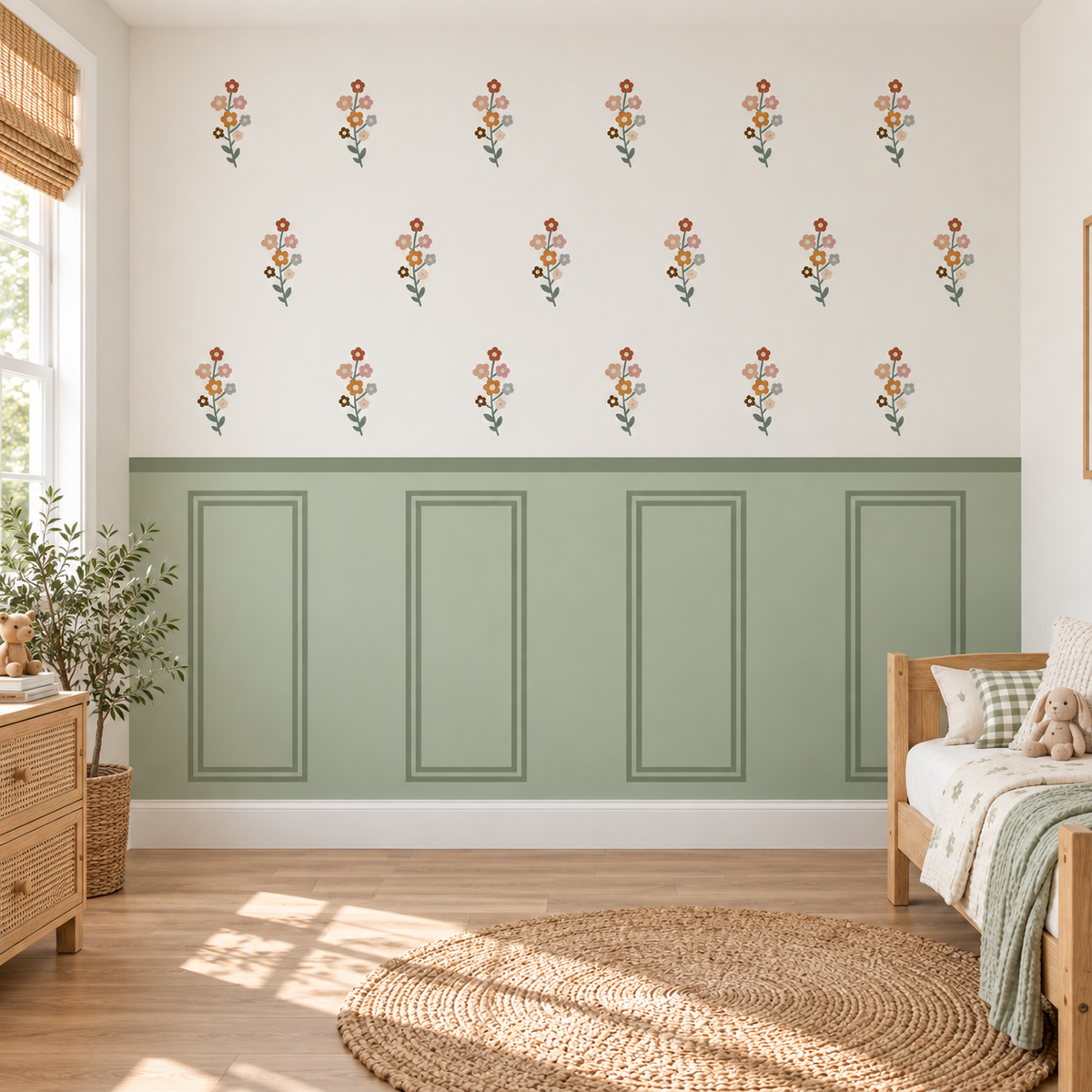
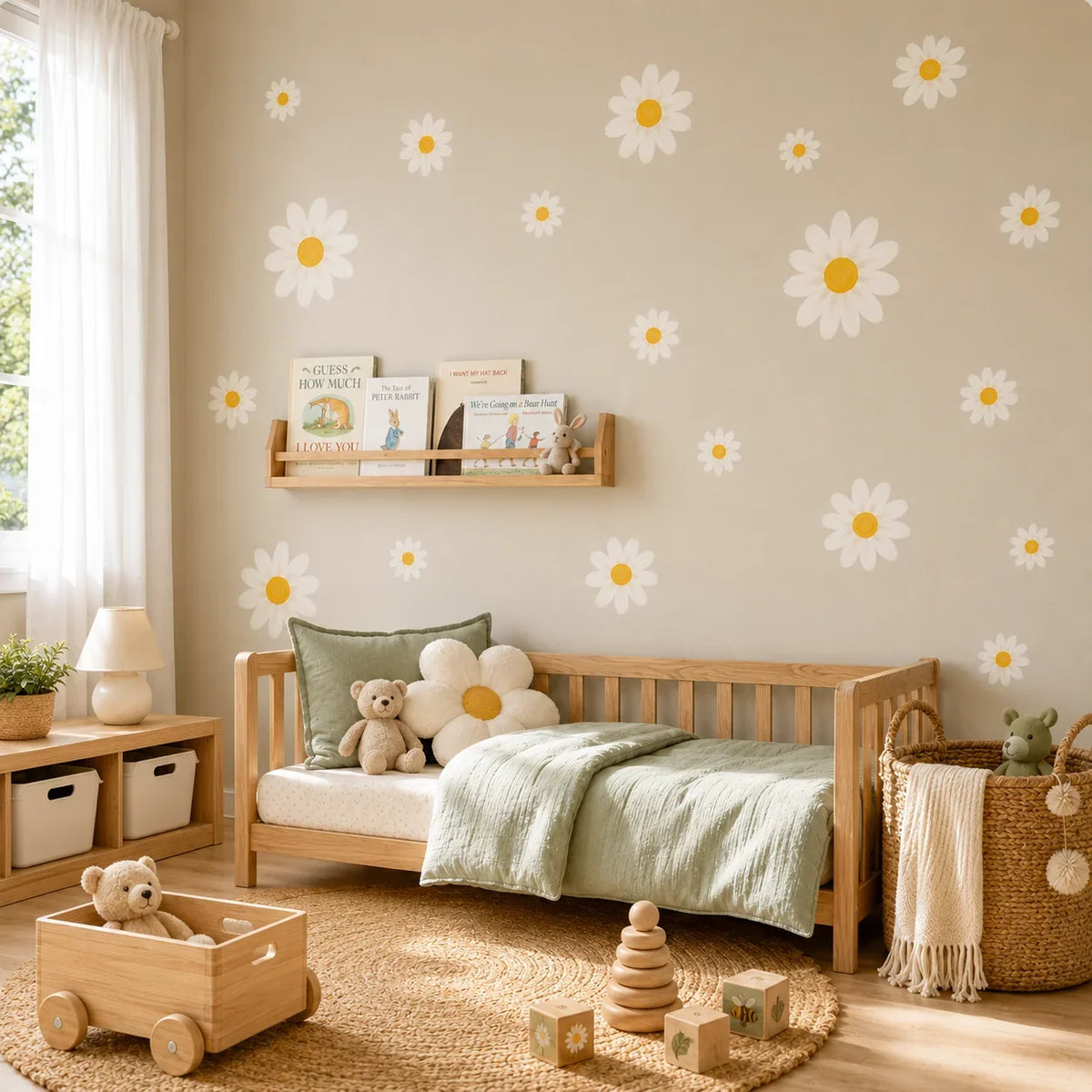
Nursery wall decor is the single fastest way to transform a plain room into a warm, developmentally rich environment for a newborn — without paint fumes, contractor fees, or permanent commitment. The right wall decor for a nursery room balances three non-negotiable factors: material safety, visual stimulation matched to the baby's developmental stage, and installation security. This guide covers 10 proven ideas, from high-contrast botanical decals to acoustic fabric tapestries, with specific guidance on placement heights, certified materials, and how each option grows with the child. Vertical Stripe Peel and Stick Half Wall WallpaperFull panelDaisy Peel and Stick Yellow Half Wall WallpaperFull panel What is nursery wall decor and how should you choose it? Nursery wall decor refers to the aesthetic, educational, and functional elements applied to the walls of an infant's room to create a safe, stimulating environment. The best options prioritize non-toxic materials, secure installation methods, and designs that support early childhood cognitive development from newborn through toddler years. When selecting wall decor for a nursery room, three criteria determine long-term value: Material safety: Look for EN71-certified inks, water-based adhesives, and zero-VOC or low-VOC substrates. Any material that off-gasses above 0.3 mg/m³ — the WHO indoor air quality threshold — is unsuitable for a sealed sleep environment. Developmental appropriateness: Newborns see most clearly at 20–30 cm focal distance and respond to high-contrast patterns in black, white, and gray before color vision matures at approximately 5 months. Installation security: Nothing heavier than 500g should hang above the crib without stud-mounted hardware. Decals and lightweight canvas eliminate this risk entirely. Dosjunior nursery wall decals are produced with EN71-certified, water-based inks and use pressure-sensitive acrylic adhesives that leave no residue on smooth painted surfaces — making them a practical starting point for parents who want both safety and style without compromise. 1. Educational world map wall decals for baby rooms Introducing geography at the earliest stage of life builds foundational spatial awareness long before formal schooling begins. Large-scale world map nursery wall decor acts as an interactive focal point that serves the room from infancy through primary school age — an unusually high return on a single decorating decision. Choosing a map with developmental value The most effective world map decals incorporate native animal illustrations across continents. This variation of animal nursery decor allows parents to point out penguins in Antarctica or elephants in Africa during daily interactions, turning a decorative element into a consistent language and memory exercise. Research in early childhood education consistently identifies repeated, contextualised exposure — pointing, naming, narrating — as a primary driver of vocabulary acquisition in the first 24 months. From a materials perspective, the most durable options use PVC-free woven fabric substrates with water-based adhesives. This combination produces zero measurable VOC off-gassing after a 48-hour curing period, confirmed by independent laboratory testing under EN 717-1 formaldehyde emission standards. Placement recommendation: centre the map at 100–120 cm from the floor — readable for a parent holding an infant and accessible for a toddler to point at independently. This single piece of nursery wall decor can remain relevant and visually appropriate for 6–8 years. 2. Safari and jungle animal-themed wall decor for nurseries The safari theme has remained the most consistently searched nursery aesthetic for over a decade, largely because of its gender-neutral appeal and its versatility across colour palettes. A well-executed jungle theme works equally in a girl's room, a boy's room, or a fully neutral space — a significant practical advantage when decorating before the baby's sex is known. Colour psychology in animal nursery decor Modern nursery design moves away from saturated primary colours toward muted, sophisticated tones: soft sage green, warm terracotta, and dusty ochre. Environmental psychology research associates these specific wavelengths with reduced cortisol response and improved sleep onset — both measurably beneficial outcomes in a room designed for rest. Large individual animal silhouettes — elephants, lions, zebras — in matte-finish vinyl provide a sophisticated effect without the permanence of a painted mural. The critical placement detail: position these decals at the child's future eye level, approximately 90–100 cm from the floor, rather than adult eye level. This encourages independent visual exploration once the baby begins to crawl and pull to stand, typically between 9 and 12 months. Dosjunior's animal nursery wall decal range includes safari and woodland collections in earth-tone palettes, with individual elements sized between 15 cm and 80 cm to allow both accent placements and full-wall compositions. 3. High-contrast botanical murals for newborn visual development During the first 3 to 6 months of life, an infant's optic nerves are still completing their myelination process. Visual acuity at birth is approximately 20/400 — meaning a newborn sees roughly what a legally blind adult sees without correction. Their visual system responds most strongly to high-contrast edges and patterns, primarily in black, white, and deep charcoal. High-contrast botanical shapes — stylised leaves, birch tree silhouettes, geometric mountain ranges — provide the precise type of edge contrast that stimulates optic nerve development during this critical window. A large monochrome botanical mural behind the crib functions as developmental equipment as much as decoration. Layering colour as vision matures At approximately 5 months, the baby's cone photoreceptors become functional enough to distinguish colour meaningfully. This is the ideal moment to introduce secondary colour elements — soft pastel flower decals or brightly coloured bird stickers — alongside the existing high-contrast base. This layered approach means the initial nursery wall decor investment continues to serve the room aesthetically for 2–3 years rather than becoming visually redundant within months. 4. Interactive alphabet and number displays Standard printed alphabet posters deliver information but miss a critical developmental opportunity: tactile engagement. Montessori educational research, published across multiple peer-reviewed studies in the Journal of Montessori Research, demonstrates that children who physically trace letter shapes before formal reading instruction show measurably higher phonological awareness scores at age 5 and 6. Three-dimensional nursery wall art — letters carved from untreated, sustainably sourced birch plywood or soft felt appliqués — gives infants and toddlers a surface they can touch as well as see. For safe installation, use heavy-duty, double-sided foam mounting tape rated to at least 2 kg per 6 cm² on drywall, rather than nails that a developing toddler could potentially pull free. Arranging the alphabet in a creative wave or arc pattern along one wall, rather than a rigid grid, adds an architectural quality to the space while making the display more visually engaging for a curious 18-month-old who is beginning to recognise individual letters. 5. Celestial and constellation decals for sleep-focused nurseries Sleep quality is the most consequential environmental factor in infant development. According to the American Academy of Pediatrics, newborns require 14–17 hours of sleep per 24-hour period, and the physical environment — light levels, sound, and visual stimulation at bedtime — directly influences melatonin production and sleep-onset latency. Celestial-themed nursery wall decor, positioned on the ceiling and upper walls above the crib, creates a sleep-inducing visual field that replaces the stimulating complexity of daytime decor with calm, minimal forms. Strontium aluminate phosphorescent decals absorb natural daylight and emit a soft warm glow at 505 nm wavelength — well outside the 480 nm blue-light range that suppresses melatonin production in infants. This distinguishes modern celestial nursery wall decals from older glow-in-the-dark plastics, which typically used zinc sulfide and emitted at inconsistent wavelengths. The practical benefit for parents is significant: strontium aluminate decals provide enough ambient light for safe navigation during night feeds without activating overhead lights that would fully disrupt the infant's sleep cycle. For a product example, see the Wildflower Peel and Stick Fabric Wall Decals | Boho. Wildflower Peel and Stick Fabric Wall Decals | BohoBig Clouds Fabric Wall Decals 6. Acoustic fabric tapestries and soft wall hangings Most nurseries are acoustically hostile environments. Hardwood or laminate floors, minimal soft furnishings, and empty drywall create a reverberant space where sudden sounds — a door closing, a dropped item — can exceed 70 dB and startle a sleeping infant. Research in architectural acoustics shows that untreated rectangular rooms typically have reverberation times of 0.6–0.8 seconds; nursery sleep guidelines recommend reducing this to below 0.3 seconds. Heavy woven fabric nursery wall decor — macramé hangings, textile tapestries, or fabric world maps — absorbs high-frequency sound waves at coefficients of 0.6–0.8 (on the NRC scale), compared to 0.02 for bare drywall. A single large fabric hanging on the largest wall in the room measurably reduces acoustic echo. Safe installation for heavy textiles Textiles heavy enough to provide acoustic benefit (typically 500g–2 kg) must be secured with a hidden wooden dowel system anchored into at least two wall studs, not thumbtacks or adhesive strips. The dowel distributes load evenly across the fabric's width, preventing any single point of failure that could allow the hanging to fall into the baby's sleep or play area. 7. Floating book ledges as functional wall decor for the nursery Children's picture books contain some of the most sophisticated illustrative art produced commercially — and traditional bookshelves hide all of it behind spines. Front-facing clear acrylic floating ledges transform a book collection into rotating, ever-changing nursery wall decor that updates the room's visual landscape weekly at zero additional cost. From a safety standpoint, clear shatter-resistant acrylic is meaningfully superior to wooden shelving in a room where a toddler will eventually pull to stand and reach. Acrylic shelves typically weigh 60–80% less than equivalent wooden shelves, and their shallow profile — usually 50–65 mm from wall to front edge — minimises the risk of head contact as the child begins walking. Rotating displayed books by theme — animals this week, transport next week — maintains novelty in the room's visual environment, which developmental psychologists associate with sustained attention and exploratory behaviour in children aged 12–36 months. 8. Personalised wooden name signs and typography A customised name sign is the single most personal element in baby room wall decor, and it remains one of the most consistently purchased nursery products globally. Precision-cut wooden typography adds organic texture to a room that might otherwise skew too smooth and commercial. What to verify before purchasing Safety verification is non-negotiable for any wood product placed in a nursery: MDF or plywood: Must be certified formaldehyde-free to E1 standard (≤0.1 mg/m³ emission) or better. Standard MDF uses urea-formaldehyde resins that off-gas continuously at levels unsuitable for a sealed sleep room. Surface finish: Any paint or stain must carry explicit zero-VOC or food-grade certification. Decorative finishes for adult furniture do not meet this standard. Mounting: Name signs sized above 40 cm or weighing more than 500g must be anchored directly into wall studs using 60 mm screws — never adhesive strips alone, regardless of the strip's claimed load rating. Position the sign on a side wall rather than directly above the crib as the primary installation location. This maintains the visual impact while eliminating any fall-over-crib risk in the event of structural failure. 9. Removable arch and geometric decals Painted arches behind cribs and reading corners are the dominant aspirational trend in nursery interior design, appearing across every major home decor platform. The practical barrier is significant: precise painter's tape application, multiple paint coats, drying time measured in days, and eventual repainting when the child outgrows the design. Large removable arch nursery decor wall stickers replicate the same effect in under 30 minutes and remove without damaging underlying paint when applied to fully cured surfaces (minimum 28 days post-painting). The critical technical variable is adhesive type: micro-sphere acrylic adhesives allow the decal to be smoothed flat without trapping air bubbles and release cleanly because the adhesive beads break contact progressively rather than tearing the paint surface. This format of nursery wall decor offers an additional practical advantage for renters: it achieves a professionally designed aesthetic with zero permanent modification to the property — directly addressing the security deposit concern that prevents many parents from decorating freely. 10. Growth charts as long-term interactive nursery wall art Decor that serves an ongoing functional purpose offers the highest long-term value of any nursery investment. Modern growth chart wall decor has moved far beyond the classic wooden ruler into format-diverse options: canvas-printed charts, fabric decal trees with embedded measurement markings, and illustrated animal characters with height markers at each body segment. A well-designed growth chart integrates with the room's overall animal or botanical nursery wall decor theme rather than functioning as a utilitarian afterthought. A tall giraffe decal printed with both imperial and metric scales — marked at 5 cm or 2-inch intervals from 50 cm to 150 cm — allows milestone documentation directly on the surface without marking the underlying paint. Canvas and high-grade fabric versions carry an additional benefit: they can be removed when the family moves, rolled, and stored as a physical record of the child's growth — a functional keepsake that flat wall paint can never replicate. Blossom Personalized Name Fabric Art PrintWoodland Personalized Fabric Art Print How high should nursery wall decor be hung? This is among the most practically important questions in nursery design, and the answer differs meaningfully by installation context: Location Recommended height Reason General wall art 57–60 cm to centre Standard adult eye level Above crib Minimum 60 cm clearance above mattress Safety — prevents reaching Developmental decals 40–80 cm from floor Infant crawling/standing eye level World maps and murals 100–120 cm to centre Dual access: adult + standing toddler Ceiling decals Full ceiling Maximum visual field from crib The developmental placement guideline — 40–80 cm from the floor — is frequently overlooked in favour of adult viewing height. Positioning high-contrast or animal nursery decor at the level where a crawling or pulling-to-stand infant actually looks transforms decorative elements into active developmental tools rather than background aesthetics. Is nursery wall decor safe for newborns? Yes — when materials and installation are selected correctly. The two primary risk categories are chemical exposure through VOC off-gassing and physical hazard from falling or unstable mounted items. For chemical safety: select decals and wall art products that carry EN71-3 certification (heavy metal migration from surface coatings) and use water-based adhesives. Avoid standard PVC vinyl, which can off-gas plasticisers including DEHP — classified as an endocrine disruptor by the European Chemicals Agency — at concentrations above safe indoor thresholds for the first 7–14 days after installation. For physical safety, follow these installation rules: Nothing above 500g directly over the crib without stud-mounted hardware Minimum 60 cm clearance between the lowest hung item and the crib mattress surface No cords, ribbons, or strings within 90 cm of the crib perimeter Test all adhesive-mounted items by applying firm lateral pressure — if there is any movement, remount before the child can reach Dosjunior nursery wall decals use EN71-certified water-based inks and water-based acrylic adhesives that test below detectable VOC thresholds after 24 hours — making them the chemically straightforward choice for a newborn sleep environment. Can nursery wall decals be removed without damaging paint? Yes, provided two conditions are met: the paint has fully cured before application, and heat is used during removal. Fresh latex paint remains soluble and partially bonded to the adhesive layer for up to 45 days after application. Applying decals before this curing period is the most common cause of paint damage on removal. The 45-day rule applies to all paint sheens, but is most critical for flat and matte finishes, which bond more aggressively with pressure-sensitive adhesives than satin or eggshell. For removal: hold a hair dryer at medium heat 10–15 cm from the surface for 20 seconds per 30 cm² section. Peel at a 45° angle while the adhesive is warm. This technique works on all quality water-based acrylic adhesives and leaves no residue on standard eggshell, satin, or semi-gloss painted drywall. What is the most popular nursery wall decor theme right now? Nature and animal themes consistently rank first in purchase data across nursery decor categories, with boho-inspired earth-tone aesthetics dominating the current market. According to Pinterest's 2023 trend report, "earthy nursery" saved at a 138% year-over-year growth rate — the highest increase of any interior design category on the platform. Within the nature category, three specific aesthetics are driving the most commercial activity: Woodland animals in sage, cream, and warm brown — gender-neutral, widely available Ocean and marine themes in teal, navy, and soft white — particularly strong in coastal markets Boho botanical combining dried botanicals, arches, and muted florals — skews toward girl nurseries but increasingly adopted for neutral rooms The longevity advantage of earth-tone nature themes is significant: the same decor that reads as an infant nursery at 0–12 months transitions naturally into a toddler room aesthetic at 1–3 years without requiring a complete redecoration. Frequently asked questions How do I choose safe wall decor for a nursery? Select materials with EN71-3 certification and water-based adhesives — these confirm no heavy metal migration and zero meaningful VOC off-gassing after 24 hours. Avoid standard PVC vinyl. For mounted items, nothing over 500g should hang above the crib without stud-anchored hardware. Apply decals only to paint cured for a minimum of 28–45 days to ensure clean removal later. Are nursery wall decals removable without damaging paint? Yes, when applied to fully cured paint (28–45 days post-application) and removed using a hair dryer at medium heat. Warm the adhesive for 20 seconds per 30 cm² section, then peel at a 45° angle while the surface is still warm. Flat and matte paint sheens require extra care — test a small corner first before full removal. What is the most popular nursery wall decor theme? Animal and nature-inspired designs consistently rank highest. Boho botanical and woodland animal aesthetics in earth tones — sage green, terracotta, warm ivory — currently lead purchase data, with a 138% year-over-year growth in related searches according to Pinterest's 2023 trend report. These palettes also offer the practical benefit of remaining appropriate as the child ages into a toddler room. Are peel and stick nursery decals worth it compared to painted murals? Yes, for the vast majority of parents. Quality peel and stick nursery wall decor typically costs £15–£60 per set versus £200–£800 for a professional mural, installs in under 30 minutes, causes no wall damage, and can be updated as the child grows. The only scenario where a mural outperforms decals is on heavily textured walls, where pressure-sensitive adhesives can fail to bond consistently. Conclusion The most effective nursery wall decor achieves three things simultaneously: it meets strict chemical safety standards for a newborn sleep environment, it supports the specific visual development needs of an infant in each growth stage, and it adapts aesthetically as the child moves from crib to toddler bed to school-age room. Choosing EN71-certified materials, installing items at developmental eye height rather than adult eye level, and selecting removable formats wherever possible gives a nursery room both immediate beauty and lasting practical value.
Learn more
Vintage world map rug: how to choose the right one for kids
A vintage world map rug brings classic cartographic style into a nursery or kids' room while serving as a passive geography learning tool that works across every age. Unlike standard educational rugs, vintage-style designs use aged colorways, antique typefaces, and muted cartographic tones that complement adult-designed interiors rather than clashing with them. This guide covers what defines the vintage world map aesthetic, how to choose the right size, how to style it room by room, and what to look for in construction quality that lasts from nursery to grade school. What is a vintage world map rug? A vintage world map rug refers to a floor covering designed for children's spaces that reproduces the visual language of antique cartography — including aged parchment tones, serif typefaces, illustrated compass roses, and hand-drawn continent outlines — rather than the bright primary color blocking typical of standard kids' educational rugs. Key facts: Colorway: typically warm parchment, aged ochre, dusty blue, terracotta, and faded sepia — drawn from 16th–19th century map aesthetics Typography: serif or italic lettering for continent and country names, mimicking historical cartographic conventions Detail level: higher-quality vintage map rugs include country borders, ocean names, major capitals, and decorative cartouche elements Educational value: geography learning is embedded in the design — children absorb continent shapes, country locations, and ocean names through daily visual exposure Room suitability: nurseries, kids' bedrooms, playrooms, home libraries, and gender-neutral spaces where the vintage aesthetic anchors the overall scheme The critical distinction between a genuine vintage-style world map rug and a standard map rug relabeled as "vintage" is in the execution of the color palette and type treatment. Authentic vintage design uses desaturated, warm-toned hues and historically consistent cartographic conventions — not simply a sepia filter applied to a modern flat map. Understanding what defines the style determines how well the rug will actually function as a design piece in the room. Why choose a vintage world map rug for a nursery or kids' room? The case for a vintage world map rug in a children's space rests on three converging arguments: design longevity, educational value, and aesthetic versatility. Each one addresses a specific concern parents face when investing in nursery or kids' room decor. Design longevity is the most financially compelling reason. A rug styled after antique cartography does not read as "babyish" when the child turns five, eight, or twelve. The same visual language that works in a nursery — warm parchment tones, illustrated sea creatures, serif country labels — transitions naturally into a school-age bedroom or a reading corner without requiring replacement. According to interior design industry data, parents replace overtly infantile nursery decor on average within 18–24 months of the child's birth. A vintage-style piece sidesteps that cycle entirely. Educational value is passive but consistent. Research in early childhood development confirms that environmental print — text and imagery encountered daily in a child's immediate surroundings — accelerates geographic and language recognition before formal schooling begins. A vintage world map rug with countries labeled in legible type delivers that environmental print at floor level, where young children spend the majority of their time. Aesthetic versatility addresses the design challenge most parents face: educational decor that looks intentional rather than incidental. Vintage world map rugs pair naturally with natural wood furniture, linen textiles, earthy wall colors, and the Scandinavian or boho-influenced nursery palettes that currently dominate US nursery design trends. Those three arguments together make the vintage world map rug one of the most defensible long-term investments in a children's room — which raises the practical question of size. What size vintage world map rug works best for different rooms? Selecting the correct size for a vintage world map rug determines both the visual impact of the design and the practical functionality of the floor space. The map's cartographic detail — country labels, ocean names, compass rose — needs sufficient surface area to remain legible at floor level, which creates a minimum usable size threshold that does not apply to abstract or solid rugs. Room Type Recommended Size Why It Works Small nursery (under 100 sq ft) 4×6 ft Centers under crib; map detail readable at seated height Standard nursery (100–150 sq ft) 5×7 or 5×8 ft Balances visual weight; country labels fully legible Kids' bedroom / playroom 8×10 ft Full play-zone coverage; standard search size for this category Gender-neutral shared room 9×12 ft Anchors larger space; gallery-worthy cartographic scale Reading corner / home library 3×5 ft Accent placement; works under a reading chair or small table The 8×10 format is the most searched size in the vintage world map rug category, reflecting the default expectation for a dedicated play or learning space. At this dimension, continent labels and country borders are clearly readable from a standing position — a detail that matters when the rug is being used as an active geography reference, not just a decorative surface. For nurseries anchored by a crib, the standard placement rule applies: extend the rug 18–24 inches beyond each side of the crib frame to create a soft landing zone. A 5×8 rug accommodates most standard crib dimensions within this margin while keeping the map proportionally balanced in the room. With size established, the next consideration is how the vintage aesthetic integrates with specific room styles. How to style a vintage world map rug in a nursery or kids' room Styling a vintage world map rug successfully depends on reading the rug's specific colorway and using it as the palette anchor rather than an afterthought. The most common mistake is purchasing a vintage map rug after all other furnishing decisions have been made — at which point the rug's warm parchment tones may conflict with cooler grey or white-dominant schemes. For warm, earthy nursery palettes (terracotta, ochre, natural linen, warm white): The vintage world map rug works as a direct extension of the palette. The aged cartographic tones mirror the wall and textile colors without competing. Pair with natural rattan furniture, linen curtains, and raw wood accents for maximum cohesion. For Scandinavian or neutral nurseries (white, soft grey, birch wood tones): Choose a vintage map rug in the lighter parchment or dusty blue range rather than deep sepia. The cooler neutrals in the room balance the rug's warm undertones without creating visual tension. A single warm-toned accent — a terracotta pouf or ochre throw — bridges the two palettes. For navy or deep-toned kids' rooms: A vintage map rug with deep indigo ocean areas and aged gold continent labels creates a rich, layered effect that reads as sophisticated rather than childish. This combination works particularly well in boys' rooms or gender-neutral spaces with a travel or adventure theme. Three universal styling principles: Anchor with two furniture legs minimum — place the rug so at least the front legs of the bed or primary seating rest on its edge; this grounds the piece and prevents visual floating Match metal tones — if the rug has gold cartouche elements, echo that tone in a lamp base or curtain rod Keep the wall above clean — a vintage map rug carries strong graphic weight; the wall treatment above should be simple to avoid visual competition Dosjunior's Kids World Map Rug Collection is designed with these pairing relationships in mind — each colorway is developed to work within real nursery and kids' room palettes rather than in isolation. What to look for in vintage world map rug quality and construction Construction quality determines whether a vintage world map rug holds its visual detail and structural integrity through years of children's room use. The cartographic print — the feature that defines the product's value — degrades faster in low-quality construction, making fiber type and print method the two most important technical evaluation points. Fiber type comparison: Fiber Durability Print Clarity Washability Feel Polypropylene High Excellent Machine washable Firm, low-pile Cotton-poly blend Medium-high Good Machine washable (cold) Softer hand feel Wool (flat weave) Very high Good Spot clean / professional Natural, textured Viscose / art silk Low Excellent Spot clean only Silky, luxury feel For a children's room with active floor use, polypropylene or a cotton-poly blend provides the best combination of print durability, stain resistance, and washability. Viscose rugs reproduce vintage colorways with exceptional fidelity but are not practical in a high-spill nursery environment. Print and dye quality indicators: Color depth: vintage rugs should have layered, slightly uneven tonal variation — not flat uniform color, which indicates low-resolution digital printing on inferior base fabric Edge definition: country borders and coastline details should be crisp at the scale of 1–2mm; blurred edges indicate low print resolution Colorfastness: quality rugs specify solution-dyed fibers or reactive dye processes, both of which resist fading under UV exposure and repeated washing Pile height for nursery use: low pile (0.2–0.4 inches) is the standard recommendation for nurseries and kids' rooms — it reduces tripping hazard for crawlers and new walkers, and it keeps the cartographic print legible rather than obscured by pile texture. Vintage world map rug vs. standard kids' map rug: which is better? The choice between a vintage world map rug and a standard bright-color kids' map rug comes down to three factors: the room's existing design language, the child's age range, and how long the buyer wants the rug to remain in use without replacement. Factor Vintage Style Standard Bright Design lifespan Nursery through teen years Typically replaced by age 5–6 Room palette fit Neutral, earthy, Scandinavian Bold primary, maximalist Educational clarity Country names in legible serif type Simplified labels, fewer countries Adult aesthetic appeal High — works in designed interiors Low — reads as overtly juvenile Price point Mid to premium range Entry-level to mid range Washability Depends on fiber (polypropylene: yes) Generally machine washable For parents investing in a nursery they intend to transition into a toddler and then school-age room without full redecoration, the vintage world map rug is the more economical long-term choice despite the higher initial price point. The design language does not age out. For parents furnishing a dedicated playroom where bright stimulation is the priority and durability under heavy traffic is the main concern, a standard map rug at a lower price point may serve the space better. The decision is not about which style is objectively superior — it is about which one fits the specific room, child, and design timeline. Frequently asked questions What is a vintage world map rug and how is it different from a regular kids' map rug? A vintage world map rug uses aged cartographic design — parchment tones, serif typefaces, illustrated compass roses, and desaturated color palettes drawn from antique map conventions. Unlike standard bright-color kids' map rugs, the vintage style integrates into adult-designed interiors and remains visually appropriate from nursery age through the early teen years without replacement. What size vintage world map rug fits an 8x10 nursery or kids' room? For a standard kids' bedroom or playroom, an 8×10 ft rug provides full play-zone coverage and keeps cartographic detail — country labels, ocean names, continent outlines — legible from a standing position. For a smaller nursery under 100 square feet, a 5×7 or 5×8 ft rug centers well under the crib with 18–24 inches of clearance on each side. Is a vintage world map rug washable? It depends on the fiber. Polypropylene and cotton-poly blend vintage map rugs are machine washable on cold, gentle cycles — the most practical choice for nurseries and kids' rooms. Wool flat-weave and viscose versions require spot cleaning or professional care. Always check the care label; solution-dyed polypropylene holds color best through repeated washing without fading the cartographic print. Does a vintage world map rug actually help kids learn geography? Yes, through passive environmental exposure. Early childhood development research confirms that children absorb and recognize environmental print — text and images in their daily surroundings — before formal reading instruction begins. A vintage world map rug with labeled countries, continents, and oceans provides consistent geographic reference at the level where young children spend most of their time, supporting early spatial and language recognition. Conclusion A vintage world map rug solves one of the most persistent challenges in children's room design: finding an educational piece that functions as a genuine design anchor rather than a compromise. The combination of antique cartographic aesthetics, geography learning built into the surface, and design longevity that spans nursery through school-age use makes it one of the most versatile investments in a kids' room. The right size, fiber, and colorway turn a floor covering into the defining element of an intentionally designed space. Browse Dosjunior's Vintage World Map Rug Collection to find the size and colorway that fits your nursery, playroom, or kids' bedroom — each design is built for real rooms, real children, and the kind of style that does not need replacing.
Learn more
Organic cotton crib bedding set: how to choose safely for your baby
An organic cotton crib bedding set is the safest sleep surface choice for a newborn, replacing synthetic fibers and chemical finishes with breathable, certified-pure materials that rest against a baby's skin for up to 16 hours every day. The difference between conventional and organic crib bedding is not marketing — it is measurable in the certifications, fiber processing methods, and dye safety standards that define each product. This guide covers what those certifications mean, how to evaluate thread count and weave for breathability, how to layer for every season, and what to look for in a complete nursery bedding set. Animal Grid Bedding SetFlowers Muslin Bedding Set What is an organic cotton crib bedding set? An organic cotton crib bedding set refers to a curated collection of nursery sleep textiles — typically including fitted sheets, a quilt or blanket, and a pillowcase — made from cotton grown without synthetic pesticides, herbicides, or genetically modified seeds, and processed without chlorine bleach or formaldehyde-based finishes. The organic designation applies to the entire production chain, not just the raw fiber. Key facts: GOTS (Global Organic Textile Standard): covers both fiber origin and processing; prohibits toxic dyes and finishing chemicals OEKO-TEX Standard 100: tests the finished product for harmful substances; does not govern farming practices GOTS + OEKO-TEX together provide the most comprehensive safety confirmation available for baby textiles Typical thread count range: 200–400 TC for fitted crib sheets; lower counts increase breathability, higher counts increase softness Standard crib sheet fit: designed for mattresses 27.5 × 51.5 inches with a depth of 4–6 inches The distinction matters because a fabric can be labeled "natural" or "cotton-blend" while still containing polyester fill, azo dyes, or formaldehyde resins used to prevent wrinkling. For a newborn sleeping 14–16 hours daily, those chemicals represent prolonged dermal exposure — the precise risk that certified organic nursery bedding eliminates. Understanding certification is the foundation; the next step is evaluating material quality in practical terms. Why does organic cotton matter for newborn sleep safety? Newborn skin is structurally different from adult skin. According to dermatology research, the skin barrier in infants under 12 months is significantly thinner and more permeable, meaning chemical residues in textiles absorb transdermally at a higher rate than in older children or adults. This is the clinical basis for the recommendation to use certified organic baby bedding from birth. Conventional cotton is one of the most chemically intensive crops grown globally. Industry data indicates that cotton accounts for roughly 16% of global insecticide use despite covering only 2.4% of arable land. Those residues persist through fiber processing unless specifically removed — and standard textile manufacturing does not require their removal. Organic cotton farming eliminates that exposure at the source. But farming certification alone is insufficient. The finishing process — where fabric is softened, whitened, or treated for wrinkle resistance — introduces a second category of chemical risk. Formaldehyde resins, used in permanent-press treatments, are classified as a known human carcinogen by the International Agency for Research on Cancer (IARC). GOTS-certified processing prohibits their use entirely. For parents comparing an organic cotton crib bedding set against conventional alternatives, the safety differential is not theoretical. It is documented, tested, and verifiable through certification labels printed on the product. Breathability is the second safety dimension — and it connects directly to how the fabric is woven. What thread count is best for a breathable crib sheet? Thread count is frequently misunderstood as a quality indicator when it is actually a weave density measurement. For a baby crib sheet, lower thread counts (180–280 TC) in a percale weave provide superior breathability — a measurable clinical priority for infant sleep safety, since overheating during sleep is a recognized risk factor in pediatric guidelines. Weave Type Thread Count Breathability Feel Percale 180–280 TC High Crisp, cool Sateen 300–400 TC Moderate Silky, smooth Jersey knit N/A (weight-based) High Stretchy, soft Muslin (4-layer) N/A (gauze) Very high Light, airy Percale-weave organic cotton is the most widely recommended choice for year-round nursery use in temperate US climates because it does not trap heat regardless of room temperature fluctuation. Jersey-knit organic cotton, made from a circular-knit structure, offers stretch that makes fitted sheet application easier and reduces the gap risk between mattress edge and sheet — a safety-relevant detail for crib use. Muslin (gauze-weave) organic cotton has gained significant traction in the US market for its multi-layer breathability and rapid moisture-wicking. A 4-layer organic muslin quilt provides warmth equivalent to a mid-weight blanket while maintaining airflow — making it suitable as the primary sleep layer without overheating risk. Thread count and weave inform which individual pieces to prioritize — the next section addresses how to build a complete, season-ready bedding set. For a product example, see the Moon and Stars Bedding Set. Moon and Stars Bedding SetSolar System Baby Bedding Set What should a complete organic nursery bedding set include? A complete organic cotton crib bedding set for a newborn nursery requires fewer pieces than most retail bundles suggest. Pediatric sleep safety guidelines from the American Academy of Pediatrics (AAP) recommend a bare sleep environment for infants under 12 months — meaning no loose quilts, pillows, or bumpers inside the crib during sleep. Understanding this distinction is essential before purchasing a full set. The practical composition of a safe, complete organic nursery bedding set: 2–3 fitted organic cotton crib sheets: rotating sets allow for immediate replacement after nighttime changes without doing laundry at 3 AM 1–2 organic cotton swaddle blankets: used outside the crib for feeding, floor time, and stroller use; not placed inside the sleep space 1 organic cotton quilt or toddler blanket: introduced after 12 months when the AAP sleep environment guidelines permit loose bedding 1 waterproof mattress protector (organic cotton top layer): protects the mattress from fluid penetration while maintaining the organic contact surface Many retail bundles include a bumper pad and decorative pillow. Both are considered unnecessary and potentially hazardous for crib sleep by the AAP. A genuinely safety-conscious organic nursery bedding collection omits these items or labels them clearly for decorative use only. Dosjunior's approach — designing products that educate and inspire while meeting the highest safety standards — aligns with this philosophy: every piece in a bedding collection should earn its place in the nursery. With the components established, seasonal layering determines how the set performs across the full year. Woodland Bedding SetWorld Map Bedding Set How to layer organic crib bedding for every season Seasonal layering with organic cotton crib bedding follows a consistent principle: adjust the number of breathable layers rather than switching to heavier synthetic materials. Organic cotton's natural thermoregulatory properties — the fiber absorbs up to 27 times its weight in moisture before feeling damp — make it effective across a wider temperature range than polyester or microfiber alternatives. For US nursery conditions, a practical seasonal guide: Summer (room temp 68–72°F): one fitted percale sheet only; no additional layer inside the crib for infants under 12 months Fall/Spring (room temp 65–68°F): fitted sheet plus a wearable sleep sack (1.0–1.5 TOG rating) over the infant; the crib surface remains bare Winter (room temp 61–65°F): fitted sheet plus a higher-TOG sleep sack (2.0–3.5 TOG); for toddlers over 12 months, an organic cotton quilt may be added inside the crib The TOG (Thermal Overall Grade) rating system, standard in European and increasingly US baby markets, provides a quantified measure of warmth that removes guesswork from seasonal layering decisions. Pairing a TOG-rated sleep sack with a certified organic cotton crib sheet keeps the sleep surface safe, consistent, and temperature-appropriate regardless of season. A well-chosen organic nursery bedding set is a year-round system, not a single-season purchase — which makes the per-use cost significantly lower than it may appear at the initial price point. Frequently asked question What certifications should an organic cotton crib bedding set have? Look for GOTS (Global Organic Textile Standard) certification, which covers both the farming and manufacturing process, and OEKO-TEX Standard 100, which tests the finished product for over 100 harmful substances. Together, these two certifications confirm safety at every production stage — from raw cotton field to the finished sheet on the crib mattress. Is organic crib bedding worth the higher price for a newborn? Yes, for parents prioritizing skin safety. Newborn skin is thinner and more permeable than adult skin, meaning chemical residues in conventional textiles absorb at higher rates. Certified organic cotton bedding eliminates formaldehyde resins, synthetic dyes, and pesticide residues. The cost premium typically ranges from 30–60% over conventional options, but the contact hours — up to 16 per day — justify the investment. How do you wash organic cotton crib sheets without shrinking them? Wash on a cold or 30°C gentle cycle using a dye-free, fragrance-free detergent. Avoid hot water above 40°C, which causes organic cotton fibers to contract by up to 5% in the first wash. Tumble dry on low heat below 50°C or air dry flat. Pre-washed organic cotton sheets have already undergone controlled shrinkage and will hold size more consistently after the first home wash. What is the difference between organic cotton crib bedding and regular cotton crib bedding? Regular cotton is grown with synthetic pesticides and processed with chemical finishes including formaldehyde resins and chlorine bleach. Organic cotton is grown without synthetic inputs and processed under certified standards that prohibit those chemicals. The finished fabric is not visually different, but the chemical residue profile is substantially lower — confirmed by GOTS and OEKO-TEX testing on the final product. Conclusion An organic cotton crib bedding set is one of the most evidence-backed purchases a parent can make for a newborn's sleep environment — the combination of GOTS-certified fiber sourcing, breathable percale or muslin weave construction, and chemical-free processing addresses the real, documented risks of conventional nursery textiles. Choosing the right set means verifying certifications, selecting weave for breathability, and building a safe seasonal layering system rather than simply filling a crib with decorative pieces. The nursery should be a space that inspires and protects in equal measure. Explore Dosjunior's Organic Nursery Bedding Collection to find certified sets designed for both safety and the kind of thoughtful aesthetic that makes a child's room genuinely beautiful.
Learn more
World Map Rug for Kids: Washable, Safe & Easy to Clean
A world map rug provides a comfortable, engaging floor covering that beautifully combines interior design with geographical elements. Parents and decorators frequently seek out a reliable washable rug to ensure long-term hygiene and safety in active residential spaces. By selecting the correct materials, understanding maintenance protocols, and determining the appropriate room size, establishing a practical and inspiring foundation for any child's room becomes a straightforward process. What Is a World Map Rug? A world map rug is a specialized floor covering featuring detailed geographical illustrations, specifically tailored to withstand the high traffic of children's play areas. A high-quality washable nursery rug offers several core structural and practical benefits for modern households: Hygienic Maintenance: Easily cleaned in a standard home washing machine. Safe Play Surface: Provides a soft, cushioned barrier over hard flooring. Allergen Reduction: Low-pile construction minimizes trapped dust and pet dander. Visual Engagement: Introduces basic geographical shapes and colors to the room. Why Choose a Washable Nursery Rug for Your Home? The floor is the primary living space for an infant or toddler. From tummy time and learning to crawl, to building block towers and reading books, a child’s interaction with their environment happens mostly at ground level. This reality makes the selection of a nursery rug one of the most critical interior design decisions a parent will make. The surface must be exceptionally soft to protect delicate knees, yet durable enough to survive the inevitable daily spills, art project accidents, and muddy footprints. Traditional floor coverings often fall short in these active environments. Spills on standard carpets require harsh chemical spot cleaners, and deep piles harbor invisible allergens, dust mites, and everyday dirt that standard vacuuming cannot fully extract. Incorporating a washable rug fundamentally resolves these hygiene challenges. When a significant mess occurs, the ability to simply roll up the floor covering and place it in a standard washing machine guarantees a level of sanitation that traditional carpets cannot match. This convenience significantly reduces parental stress and ensures the child’s play area remains consistently clean. Furthermore, a dedicated play rug helps establish clear zones within a room. In open-concept spaces or shared bedrooms, a clearly defined floor boundary signals to the child where the play area begins and ends. A beautifully designed map motif acts as a large-scale visual anchor, drawing the room's color palette together while simultaneously providing a functional, hypoallergenic boundary that protects expensive hardwood or laminate flooring from scratches caused by heavy wooden toys. Washable Kids Rug vs. Traditional Wool Carpet: Which Is Better? When outfitting a playroom or bedroom, consumers generally weigh the benefits of modern synthetic washable options against the classic appeal of traditional thick-pile or wool carpets. Understanding the distinct differences in maintenance, safety, and longevity is essential for making an informed investment. The primary difference lies in the structural weave. Traditional wool carpets feature a high pile—meaning the individual fibers are long and densely packed. While this provides a luxurious feel underfoot, it acts as a trap for crumbs, liquids, and allergens. Modern washable options utilize a low-pile or flatweave construction. This tightly woven surface allows toy cars to roll smoothly and prevents sharp objects, like building blocks, from becoming dangerously hidden within the fibers. Feature Washable Kids Rug Traditional Wool Carpet Cleaning Method Machine washable at home Professional steam cleaning required Allergen Resistance High (does not trap dust mites easily) Low (dense fibers trap allergens) Spill Recovery Excellent (liquids wash out completely) Poor (high risk of permanent staining) Weight & Handling Lightweight, easy to move and fold Heavy, difficult to maneuver Drying Time Fast (can air dry in hours) Slow (can take days, risking mildew) For a household with active toddlers and pets, a washable kids rug clearly outshines traditional alternatives in practical functionality. The ability to achieve a deep, sanitizing clean without hiring professional carpet services ensures the environment remains safe for children with asthma or environmental sensitivities. How Does a Map Rug Support Early Learning Environments? Integrating educational motifs into a child's everyday environment provides a seamless backdrop for continuous, low-pressure discovery. A floor covering featuring continents, oceans, and regional animals acts as more than just decoration; it serves as an expansive, interactive canvas for open-ended play. Creating a visually stimulating space can provide a solid foundation for interactive play and basic geographical familiarity as children grow. Rather than formal instruction, early childhood learning thrives on casual observation and curiosity. A large-scale geographical design on the floor naturally invites questions. When a child sits on a specific colored shape and asks what it is, parents have an immediate opportunity to introduce the concept of continents. Placing toy animals on their respective native landmasses—putting a toy lion on Africa or a kangaroo on Australia—transforms a simple sorting game into a spatial awareness exercise. This type of play encourages the development of fine motor skills while gently introducing a global perspective. The physical layout of the design also aids in collaborative play. The sheer size of a floor map allows multiple children to interact with the design simultaneously without crowding. In preschool or daycare settings, educators often use these distinct visual boundaries to organize group activities, assigning different children to different colored "islands" or continents during storytime. This subtle environmental structure helps maintain order while keeping the atmosphere playful and engaging. What Are the Best Materials for a Washable Kids Rug? The longevity and safety of any floor covering depend entirely on the quality of its raw materials. For a product that will endure frequent machine washing and continuous physical contact with a child's skin, the material composition must be exceptionally durable and strictly non-toxic. The top layer—the surface the child touches—is typically crafted from high-grade cotton or advanced, tightly woven polyester blends. Organic cotton provides unparalleled breathability and a natural, soft texture, making it an excellent choice for infant nurseries. Polyester blends, on the other hand, offer superior color retention. This means the vibrant blues of the oceans and the distinct colors of the continents will not fade after multiple cycles in the washing machine. Furthermore, synthetic flatweaves naturally repel liquid spills slightly better than natural fibers, buying parents precious seconds to wipe up a juice spill before it completely sets into the fabric. Safety certifications are crucial when evaluating these materials. High-quality textile products intended for children should ideally align with stringent global safety standards. For instance, materials certified by the Oeko-Tex standard ensure that the fabric, backing, and printed inks have been tested for harmful substances. Equally important is the backing material. A rug placed on a smooth hardwood or tile floor presents a severe slipping hazard if it lacks proper grip. The most advanced washable rugs utilize a Thermoplastic Rubber (TPR) backing. Unlike traditional latex backings that dry out, crack, and peel off after exposure to hot water in a washing machine, TPR is highly flexible, heat-resistant, and provides exceptional anti-slip properties, ensuring the rug remains firmly anchored during vigorous play. Choosing the Right Size: World Map Rug Dimensions Guide Selecting the correct dimensions is a critical interior design step that directly impacts both the functionality and the visual balance of the room. A rug that is too small looks disconnected and floating, while one that is too large can overwhelm the space and make opening doors difficult. As a general design rule, you should aim to leave at least 12 to 18 inches of bare floor exposed between the edges of the rug and the walls. This border frames the rug and makes the room appear more spacious. When placing the rug near furniture, such as a crib or a toddler bed, slipping the front legs of the furniture over the edge of the rug helps anchor the piece and creates a cohesive, connected layout. Room Type Recommended Size Ideal Usage Scenario Small Nursery 3’ x 5’ (90x150 cm) Placed next to the crib or immediately in front of a changing table. Standard Bedroom 4’ x 6’ (120x180 cm) Centered in the room or anchoring a dedicated play corner. Large Playroom 5’ x 7’ (150x210 cm) Covering the central floor space to accommodate multiple children. Classroom / Daycare 6’ x 9’ (180x270 cm)+ Providing a massive, communal surface for group activities and storytime. Taking precise measurements of your available floor space before purchasing prevents the common frustration of receiving a product that disrupts the room's flow. Consider the swing radius of any doors and the placement of heavy, immovable furniture when visualizing the final layout. How to Clean and Maintain Your Washable Rug Safely? The primary appeal of a washable kids rug is its easy maintenance, but following proper cleaning protocols ensures the colors remain vibrant and the backing remains intact for years. Improper washing techniques can warp the fabric or degrade the anti-slip properties prematurely. Routine daily maintenance requires nothing more than a standard vacuum cleaner. However, you must disable the rotating beater bar (the aggressive spinning brush) on your vacuum. The beater bar can snag the low-pile threads and cause fraying along the hemmed edges. Instead, use the hard floor setting or a simple suction attachment to safely remove crumbs, dust, and pet hair. For sudden liquid spills, immediately blot the area with a clean, dry microfiber cloth. Never rub a fresh stain, as this forces the liquid deeper into the fibers; press firmly to absorb the moisture. When it is time for a deep clean, the washing machine is your best tool. First, take the rug outside and shake it vigorously to remove loose dirt. Place the rug in the washing machine on a delicate or gentle cycle using cold water (never exceeding 30°C or 85°F). Hot water can compromise the TPR backing and cause the fabric to shrink. Use a mild, non-bleach liquid detergent; powder detergents can sometimes leave a residue in the tight weave. Drying the rug correctly is just as important as washing it. Air drying is always the safest method. Hang the rug over a sturdy clothesline or lay it completely flat in a shaded, well-ventilated area. Direct, intense sunlight can fade the geographical print over time. If you must use a tumble dryer, select the absolute lowest heat setting or the "air fluff" mode, removing it while it is still slightly damp to finish air drying. Designing a Cohesive Space Around Your World Map Rug A striking floor map often serves as the thematic centerpiece of a room, dictating the surrounding decor choices. To prevent the space from feeling visually overwhelming, the key is balancing the colorful floor with complementary, understated elements on the walls and furniture. If your floor features a vibrant, multi-colored map, opt for neutral wall paint—such as warm beige, soft gray, or muted sage green. This allows the floor to stand out without clashing. You can easily create a layered, immersive environment by mirroring the geographical theme vertically. For instance, you can pair your rug with a matching world map wall decal to carry the theme upward without requiring heavy framed art. If you prefer a softer, more bohemian aesthetic, suspending a fabric world map wall hanging above the reading nook creates a beautiful, tactile synergy with the floor covering. For larger spaces, creating distinct zones is an excellent design strategy. Use the washable rug strictly for the active play and toy storage area. Then, for the sleep zone near the crib, you might introduce elegant, framed world map wall art that utilizes a more muted, sophisticated color palette. Alternatively, for a highly customized look, integrating specific regional designs—like a detailed continent or country map decal—allows you to highlight specific areas of the globe that hold personal significance for your family, creating a deeply personalized and cohesive interior narrative. Frequently asked questions Will a washable kids rug shrink in the washing machine? No, provided you follow the care instructions carefully. High-quality washable rugs are pre-shrunk during manufacturing. To prevent any accidental warping, always wash the rug in cold water on a delicate cycle and strictly avoid high-heat tumble drying. Can I use a robot vacuum on a low-pile map rug? Yes. Most modern robot vacuums easily transition from hard floors onto low-pile or flatweave washable rugs without getting stuck. The lack of deep, shaggy fibers allows the sensors to navigate the surface efficiently for daily dust maintenance. Does the rug require an additional non-slip pad underneath? Generally, no. Premium washable designs feature an integrated TPR (Thermoplastic Rubber) backing that securely grips hardwood, laminate, and tile floors. An additional pad is only necessary if you are placing it over an existing, highly plush carpet. How often should I machine wash my nursery rug? For general hygiene, washing the rug every 4 to 6 weeks is sufficient. However, for households with pets or active toddlers, or immediately following a significant spill or illness, you can safely machine wash it as frequently as needed without damaging the print. Conclusion Selecting a world map rug is an excellent way to introduce both practical hygiene and engaging design into your home. By prioritizing a machine-washable construction with a safe, non-slip backing, you ensure a durable surface that withstands the rigors of childhood play. Whether you are completing a minimalist nursery or outfitting a bustling playroom, understanding the dimensions and maintenance requirements guarantees a lasting, beautiful floor covering. Ready to anchor your child's room with a stunning, easy-to-clean design? Explore our full collection today to find the perfect geographical centerpiece for your family's space.
Learn more
Kids’ Ponchos Explained: Benefits, Fabrics, and How to Choose the Right One
A poncho is one of the few garments that works for the toddler who won't keep a jacket on and the five-year-old who needs something quick to pull on between activities. Kids' ponchos go on and come off without a fight — no buttons, no zips — and they handle a wider range of temperatures than most single-layer pieces. Kids Hooded Towel Poncho - BubbleKids Hooded Towel Poncho - Rainbow At Dos Junior, our muslin ponchos started as a simple idea: a soft, breathable layer your little one can manage on their own. This guide covers the real, practical case for keeping a poncho in your child's wardrobe, how different fabrics actually perform, and how to choose one that fits long enough to be worth it. What makes a poncho different from other kids' outerwear? A poncho is an unshaped (or barely shaped) panel of fabric — rectangular or triangular — with an opening for the head. No sleeves. No fastenings. No structured shoulder seams. That simplicity is exactly why it works so well for children. In everyday terms, no sleeves and no fastenings means: Your child can dress themselves. From around age two, a toddler can pull a poncho on and off alone — which feeds the fierce independence of those years. Nothing catches. No zip teeth to snag on clothing or skin. Free arm movement. Nothing restricts climbing, reaching, or carrying that all-important toy. Forgiving sizing. One size typically fits across a 12–18 month stretch. That independence matters more than it sounds. Outerwear your child can manage alone takes the friction out of every transition — heading out the door, coming back in, before and after the morning drop-off. It's a small daily moment that either causes a meltdown or doesn't. Ponchos also pack flat and keep their shape, so they're easy to toss in a bag as a backup layer or a travel companion. Which fabrics are used in kids' ponchos, and how do they perform? Fabric decides everything: how a poncho performs across seasons, how soft it feels against your child's skin, and how it holds up wash after wash. For children's clothing, the two things that matter most are durability and skin-safety — then warmth. Fabric Warmth Breathability Wash durability Best season Muslin (woven cotton) Low–Medium (layerable) Very high High — softens with every wash Spring, summer, mild autumn + year-round layering Merino wool High High Medium Autumn / winter Cotton knit Low–Medium High High Spring / summer Cotton-acrylic blend Medium Medium High All seasons Muslin is our material of choice, and there's a reason for it. Woven from fine cotton threads in an open, gauzy structure, muslin is exceptionally breathable — it moves air, so your child stays comfortable whether the afternoon warms up or cools down. It's buttery soft from the first wear and, unlike most fabrics, gets softer every time you wash it. It's gentle enough for the most sensitive baby skin, and it layers beautifully: a muslin poncho over a long-sleeve top carries a child through a cool spring morning, then comes off the moment the sun does its job. Merino wool is the warmest natural fiber and a good cold-weather choice, though it costs more and needs careful washing. Cotton knit and cotton-acrylic blends are practical, durable everyday options. Each has its place — the point isn't that one fabric wins everything, but that you choose for the season and for how the fabric feels on your child. "Breathability is the thing parents underestimate," says Züleyha Demir, our founder and a textile expert with more than ten years of experience. "Children run hot, they're always moving, and they go in and out of heated rooms all day. A breathable woven layer like muslin keeps them comfortable across that whole range — that's why I designed our ponchos in it." Whatever fabric you choose, check for the absence of harmful dyes and finishes. Reputable makers will hold OEKO-TEX Standard 100 certification (or an equivalent), which confirms the fabric has been tested against a long list of harmful substances. Every Dos Junior textile is made with non-toxic, baby-safe materials and finished by hand in our Texas studio. Want to feel the difference for yourself? Shop our muslin poncho collection. For a product example, see the Kids Hooded Towel Poncho - Marine. Kids Hooded Towel Poncho - MarineKids Hooded Towel Poncho - Space How do you size a kids' poncho correctly? Because a poncho is unshaped, sizing works differently from a fitted jacket. The number that matters isn't chest circumference — it's the width and drop of the panel relative to your child. Too wide, and it bunches at the shoulders and gets in the way of their arms. Too narrow, and it pulls across the chest into an accidental fitted look. The drop — shoulder opening to hem — decides how much coverage your child gets. A rough guide by age: 12–24 months — shoulder width about 30–35 cm (12–14 in), drop 30–35 cm (12–14 in); the hem should sit at or just below the hip. 2–4 years — shoulder width 35–40 cm (14–16 in), drop 35–40 cm (14–16 in). 4–6 years — shoulder width 40–45 cm (16–18 in), drop 40–48 cm (16–19 in). Treat these as starting points. If your child is taller or heavier than average for their age, size up. If you want the poncho as a warm layer over other clothing, size up one step to leave room underneath. Shopping online? The most reliable move is to measure your child's shoulder width — from the point of one shoulder to the other, across the back — and compare it to the poncho's stated dimensions, rather than trusting the age label alone. When is a poncho the better choice over a jacket? A poncho isn't right for every situation, and we'd rather you know that up front than be disappointed. Reach for a poncho when you've got: Quick transitions — in and out of heated buildings, between indoor and outdoor play, the mild-weather morning run. Layering weather — over a long-sleeve top or light sweatshirt when it's cool; over a tee in spring. Travel — flat-packing, shape retention, and quick on-off make ponchos a parent's best friend on the go. A child who fights getting dressed — the pull-on simplicity sidesteps most of the daily battle. Reach for a structured jacket when you're facing: Rain — most knit and woven ponchos aren't waterproof; sustained rain needs a technical shell. Wind — open sides offer no protection from a cold gust. Real cold (below about 40°F / 5°C) — with no sleeves, arms need a warm underlayer to compensate. The practical takeaway: in winter, think of a poncho as a cozy mid-layer — worn over a long-sleeve top, under a light waterproof shell when rain or wind threatens. In autumn and spring, a well-chosen kids' poncho handles most outdoor moments on its own. Muslin Hooded Towel & Blanket - Red StripedMuslin Hooded Towel & Blanket - Forest Striped How to care for a kids' poncho so it lasts Children's clothing takes a beating. A poncho that can't survive repeated washing and the general treatment a three-year-old hands out isn't a smart buy, however lovely it looked online. Care by fabric: Muslin and cotton — machine wash cool (30–40°C), gentle or normal cycle; reshape while damp and lay flat to dry. Muslin actually rewards washing by getting softer. Merino wool — wool or delicate cycle, 30°C max; never tumble dry; lay flat on a towel. Cotton-acrylic blend — machine wash cool, gentle cycle; reshape and lay flat to keep its structure. For any knit or woven poncho, pull it on over the head rather than tugging it from the neck opening — that's what keeps the neckline in shape over time. Store it flat or rolled, not on a hanger, to avoid shoulder distortion. A little pilling on blended yarns is normal and doesn't affect anything; a fabric shaver tidies the surface in seconds. Frequently Asked Questions Can toddlers put on a poncho without help? Yes — from around 24 months, most toddlers can pull a poncho on and off on their own. No fastenings and a wide neck opening make it one of the easiest garments for little hands to manage, which is its biggest advantage over zip-up jackets and button cardigans. What's the best fabric for a kids' poncho? It depends on the season. For spring, summer, and mild autumn — plus year-round layering — a breathable woven muslin is hard to beat: soft, cool when it's warm, and cozy when layered. Merino wool wins for deep winter warmth. For sensitive skin, muslin and 100% cotton are the gentlest choices. Are kids' ponchos safe for children with sensitive skin? Certification is what to check. Look for OEKO-TEX Standard 100 or equivalent, which confirms there are no harmful chemicals or dyes. Muslin and 100% cotton are the least likely to irritate. Dos Junior ponchos are made with non-toxic, baby-safe materials, which is why parents of little ones with delicate skin reach for them. How long does a kids' poncho last before it's outgrown? Because the sizing is so forgiving, a well-chosen poncho usually fits across an 18–24 month growth window — far longer than a fitted jacket. A poncho bought for a two-year-old will often still fit comfortably at three and a half, especially if you sized up at purchase. Choosing a poncho you'll actually reach for Kids' ponchos earn their spot in the wardrobe through sheer practicality: they go on and off without help, fit across a longer growth window than structured outerwear, and handle most mild-weather days without extra layers. Fabric is what decides the season — breathable muslin and cotton for spring and autumn, merino for the cold months. And size by the panel's actual measurements, not the age label on the tag. That one habit produces a far better fit than the age guide alone. If you're adding a poncho to your child's wardrobe, start with how it feels and how it breathes. Our muslin ponchos are hand-finished in our Texas studio, made with non-toxic, baby-safe fabric, and come with free worldwide shipping — soft enough for the most sensitive skin, and easy enough that your toddler can put it on themselves.
Learn more
The Kids’ Room That Grows With Your Child: A Practical Guide From 0 to 6
A kids' room that grows with your child doesn't need a full makeover every two years. At Dos Junior, we hear it from parents constantly: you pour your heart into a newborn nursery, and by the time your toddler is pulling up on the furniture, the whole room already feels too babyish. It doesn't have to. Personalized Pink Daisy Growth Chart Textile DecalSpace Growth Chart Textile Decal Build a little adaptability in from the start — through your furniture, your textiles, and wall decor you can change without repainting — and the same space carries your little one from their first nap to their first day of school. This guide walks you through every stage from birth to age six, and shows you the specific choices that make each transition feel like a small update instead of a big project. Why a kids' room that grows beats designing for one stage Most nursery advice is written for a single moment. The newborn setup. The toddler refresh. The big-kid room. So parents invest heavily in stage-specific furniture and decor — and watch it feel outdated within 18 to 24 months. There's a calmer way: design with the transitions in mind from day one. In practice, that means three things. A base palette that lasts. Choose muted, warm neutrals over a highly specific theme. Soft sand, sage, oat, dusty terracotta — colors that look right at six weeks and still look right at six years. Furniture that adjusts. Convertible cribs and height-adjustable desks span multiple stages instead of one. Wall decor you can update without repainting. This is where peel-and-stick fabric wall decals earn their keep — more on that below. There's a money case here, too. A full nursery-to-toddler transition adds up fast: new bedding, new decor, sometimes new furniture. Designing for flexibility shrinks how much of that cost is unavoidable. And there's a developmental case. Children settle into spaces that feel familiar even as they change. A room that evolves gradually — new pieces layered onto a stable base — is gentler than a complete transformation. The wall color, the layout, the overall feeling of the room stay steady while the details grow up. What a newborn actually needs from their room A newborn's room has one job above all others: protect sleep. For the first three to four months, your baby spends most of each day asleep, and the room directly shapes how well that sleep goes. Your design priorities are simple: Darkness — blackout blinds or curtains that fully block daylight during naps. Soft sound — rugs, curtains, and cushions that absorb echo and soften ambient noise. Visual calm — walls and decor without high-contrast patterns that overstimulate during short wake windows. An easy layout — clear, accessible paths between the crib, the changing area, and your feeding chair. This is the stage where simplicity serves your baby best. A neutral wall, one or two meaningful pieces of wall art, and a growth chart on the room's main wall are plenty. The growth chart goes up now not because your newborn will use it yet — they won't — but because placing it early means it's already in the right spot when they begin pulling to stand, usually around nine to twelve months. One thing to skip: heavily themed wall decor built around a single character. A theme that feels perfect for a newborn often feels babyish to a two-year-old — and that's exactly what pushes parents into an earlier overhaul than they wanted. Looking for that first calm, neutral wall piece? Browse our nursery wall decal collection for hand-painted, muted-palette designs. How the room changes when your baby starts moving (6–18 months) Once your baby starts rolling, crawling, and pulling to stand, the room's job expands. It stops being only a sleep space and becomes an active exploration zone. This shift usually begins around six months and intensifies through the first year. A few adjustments make a big difference: Open up floor space. Clear a generous area for movement. A rug with real texture — not just color — gives sensory feedback and quietly defines the play zone. Bring things low. Books, toys, and tactile objects at floor level invite independent exploration. Mind the wall at standing height. Anything within a standing baby's reach (roughly 80–90 cm from the floor) should be flat, smooth, and firmly adhered. That last point is exactly why so many parents choose fabric wall decals over rigid or hard decor at this stage. Our decals are PVC-free, hand-painted on breathable woven fabric, and made with eco-certified, non-toxic inks — so the surface your curious baby is patting, pointing at, and (let's be honest) occasionally tasting is one you can feel good about. They press flat to the wall with no sharp edges and no residue. This is also the first stage where wall decor becomes interactive. A large world map wall decal hung at child height — lower than adult eye level — gives a standing or newly walking baby a surface to engage with. Animals, landmasses, and color regions turn into pointing-and-naming moments long before words fully arrive. Your growth chart becomes functional now, too. Mark height every three to six months and you create a small ritual your child starts to look forward to — and a physical record that quietly becomes one of the most meaningful objects in the room. For a product example, see the Personalized Mermaid Growth Chart Wall Decal. Personalized Mermaid Growth Chart Wall DecalPersonalized Pirate Growth Chart Textile Decal What changes when a toddler room replaces the nursery (18 months–3 years) The move from nursery to toddler room is the biggest design shift of early childhood. The crib becomes a toddler bed or floor bed, the changing table retires, and the room suddenly needs to store a fast-growing pile of toys, books, and art supplies. Here's where to focus: Transition the bed. A floor bed or low toddler bed lets your child climb in and out on their own — supporting independence and lowering fall risk. Make storage reachable. Open shelving at child height, organized consistently, feeds the toddler love of order and "I do it myself." Add a small creative corner. A pint-sized table and chair, sized for your child right now, ideally near natural light. Wall decor can get richer here. Where the newborn room needed visual calm, the toddler room rewards visual richness — details worth coming back to. A detailed world map, with animals in their native regions, illustrated continents, and gentle watercolor color, gives your toddler new things to find and name over months of looking. This is also the moment removable wall decals truly shine. You can add them to a neutral wall with no painting, reposition them if you rearrange the room, and peel them away cleanly when your child's taste moves on — no flaking paint, no sticky mess. Parents in our community tell us this again and again: the freedom to change their mind without damaging the wall is half the appeal. For a kids' room designed to grow, that flexibility isn't a nice-to-have. It's the whole point. How the room shifts as your child nears school age (4–6 years) Between four and six, most children begin structured learning: pre-reading, early writing, number recognition, and a real curiosity about the wider world. Now the room needs to support a third mode beyond play and sleep — quiet, focused activity. Design for it like this: Create a study zone. A desk or table away from the bed, ideally by a window, with good task lighting. Make books visible. Forward-facing shelves at child height invite far more independent reading than spine-out storage, because your child can actually see the covers. Edit ruthlessly. As possessions pile up, rotating toys in and out of storage keeps the visual calm that helps concentration. Educational wall decor really comes into its own at this age. That world map is no longer just something pretty on the wall — it's a tool for early geography, cultural curiosity, and bedtime conversation. Four- and five-year-olds start naming continents, finding countries from a story or a show, and connecting the map to places your family loves. The growth chart deepens, too. A child who can read their own name, understand the numbers, and look back at earlier marks gains a concrete sense of their own history — how much they've grown, and over how long. Which decor pieces work across all stages, 0 to 6 Not everything has to be age-specific. A few choices serve your child beautifully from birth through early school — and they're the ones worth prioritizing in any room built to grow. Decor piece Why it works across every stage Wooden growth chart Functional from first steps; more meaningful with every mark you add World map wall decal A visual object at 12 months; a real learning tool at age five Neutral textile wall hanging Adds warmth and absorbs sound at every age Muted-palette wall decal set Adapts to room changes without clashing with new pieces The thread running through all four: their value grows over time instead of expiring. A growth chart marked at 18 months, 2 years, 3 years, and 5 years is a richer object at five than it ever was at two. A world map your child has looked at since infancy becomes familiar in a way that quietly supports learning — they know the shapes long before they know the names. If you buy just one piece to anchor the room across all six years, our handcrafted wooden growth charts are the place to start. Personalized Swan Growth Chart Textile DecalNumbers Textile Decal Frequently Asked Questions When should I transition from a nursery to a toddler room? Most families make the move between 18 months and two and a half years, usually prompted by the switch from crib to bed. There's no single right age. The transition works best when your child shows readiness for more independence — climbing out of the crib, or gravitating toward self-directed play. How do I design one room that works for both a baby and a toddler at the same time? Keep the base neutral — wall color, flooring, main furniture — and let decor do the differentiating. A single room can serve a six-month-old and a three-year-old at once when the layout separates sleep from play, storage sits at the older child's level, and the wall decor rewards different kinds of attention at different stages. Are removable wall decals safe for a baby's room? Ours are. Dos Junior wall decals are PVC-free, hand-painted on breathable woven fabric with eco-certified, non-toxic inks — no vinyl, no harsh chemicals. They press on smooth and flat, and they peel away cleanly without damaging your paint, which makes them a favorite with renters and with parents who like to refresh a room as their child grows. Are wooden growth charts better than wall-decal versions? Both record height accurately — it comes down to what matters more to you. A wooden growth chart is portable, so it moves with your family when you relocate and never needs reapplying. A wall-decal version blends more seamlessly into the room's design. Many families keep one of each in different homes. What's the one piece worth buying from birth that still matters at age six? A quality world map wall decal is the most developmentally durable choice across the whole 0–6 range. It's a calming visual object for infants, a pointing-and-naming game for toddlers, and a genuine geography and culture lesson for preschoolers and early readers. A room that grows up gently A room that grows up gently A kids' room that truly grows with your child is built on a handful of deliberate early decisions: a neutral base palette, furniture that works across stages, and wall decor chosen for how long it stays relevant rather than how it photographs on day one. Get those right, and the transitions — newborn to crawler, toddler to preschooler — become small, happy updates instead of full overhauls. If you're at the very beginning, start with the two pieces that anchor the room across every stage: a wooden growth chart and a world map wall decal. Both are hand-painted in our Texas studio, both are PVC-free and baby-safe, and both come with free worldwide shipping. More than 1,400 families have already made them the heart of a room their child won't outgrow.
Learn more
Color psychology for kids’ rooms: which colors work at every age?
The colors surrounding a child during sleep, play, and learning have a measurable effect on mood, focus, and behavior. Color psychology for kids' rooms is not about following trends — it is about choosing shades that match where a child is developmentally. This guide covers the science behind color perception in children, practical recommendations by age group, and how wall decor choices can reinforce or undermine the effect of your color palette Scalloped Peel and Stick Sage Green Half Wall WallpaperFull panelVertical Stripe Peel and Stick Half Wall WallpaperFull panel How do children perceive color differently from adults? Children's visual systems are not fully mature at birth. Newborns distinguish light from dark before they can differentiate hues, and full color vision typically develops within the first four to six months of life. This means the color environment matters most during early childhood, when the brain is rapidly forming associations between sensory input and emotional response. Research in environmental psychology consistently shows that highly saturated, warm colors — reds, bright oranges — elevate heart rate and stimulate the nervous system. Cool colors such as soft blues and greens tend to have the opposite effect, lowering physiological arousal and supporting rest. For children, whose nervous systems are still learning to self-regulate, this distinction has direct consequences for sleep quality and the ability to settle after active play. There is also a developmental shift around age six or seven, when children begin forming personal color preferences influenced by social context — peer groups, media, and gender messaging. Before that age, responses to color are more physiological than cultural, which is why age-appropriate color psychology for kids' rooms focuses on the early years. One practical implication: a color that works well for a toddler's nap environment may actively work against a seven-year-old's ability to concentrate on homework. Designing for adaptability from the start — through removable wall decor and flexible accent choices — reduces the need for full repaints as children grow. What colors support newborns and infants (0–12 months)? During the first year, a baby's primary needs are sleep, feeding, and sensory stimulation in manageable doses. The color palette of the nursery should support calm wakefulness and deep sleep, not overstimulation. Recommended shades for this age group: Warm whites and off-whites — neutral enough to avoid overstimulation, warm enough to feel inviting rather than clinical Soft sage green — associated with reduced cortisol levels in adults; in infant environments, it creates a visually restful backdrop Dusty blush or muted terracotta — warmer than white without the stimulating effect of saturated pinks or reds Pale lavender — traditionally associated with calm; works well in low-light nursery conditions Colors to avoid at this stage include high-contrast primaries on large wall surfaces. Red, in particular, has been shown to elevate arousal even at low exposure durations. Black-and-white high-contrast patterns are appropriate for visual stimulation tools (cards, mobiles) but not for wall surfaces intended to support sleep. The ceiling is often overlooked in nursery design. Since infants spend significant time on their backs looking upward, a ceiling painted in a tone slightly lighter than the walls creates a sense of openness without visual noise. For a product example, see the Daisy Peel and Stick Yellow Half Wall Wallpaper. Daisy Peel and Stick Yellow Half Wall WallpaperFull panelVintage Circus Mouse Peel and Stick Half Wall WallpaperFull panel Which colors help toddlers aged 1–3 develop and play? Toddlers are in a period of rapid motor and cognitive development. They need environments that support active exploration without tipping into sensory overload. The color psychology for kids' rooms at this stage shifts toward slightly more stimulating — but still controlled — palettes. Effective color choices for toddler rooms: Sunny yellow (muted, not neon) — associated with optimism and mental energy; a muted golden yellow supports alertness without aggression Sky blue — calming enough for sleep but bright enough to feel energizing during play; consistently one of the highest-rated colors in child preference studies across cultures Warm green — connects to the natural world; supports a sense of safety and belonging Peach or warm coral — socially stimulating without the arousal spike of red At this stage, an accent wall strategy works well. One wall in a slightly more saturated color — paired with three neutral walls — provides visual interest for the developing eye without overwhelming the space. Wall stickers and removable decor in complementary tones let parents shift the visual emphasis as the child's preferences emerge, without committing to a full repaint. Avoid very dark colors (navy, charcoal) as the dominant wall color for toddlers. These shades reduce the perceived size of the room and can feel oppressive in spaces where a small child spends significant unsupervised time. What colors support focus and learning for children aged 4–6? As children approach preschool and early school age, the room begins to serve a dual function: it is both a sleep space and a place for structured play, early reading, and creative activity. Color choices need to support both modes without a single palette having to carry too much weight. Color Effect Best used for Soft blue Reduces distraction, supports focus Study corner wall Warm white Neutral backdrop for imagination Main wall surface Green-grey Balances energy without sedating Ceiling or floor Mustard yellow Mild mental stimulation Accent accessories For this age group, the most effective approach in color psychology for kids' rooms is zone-based decoration. A reading or activity corner can be painted or decorated differently from the sleep area, using color as a visual cue that helps children shift between modes of engagement. A soft blue accent behind a small desk signals "focus time" in a way a child gradually internalizes. World map wall stickers in muted, educational color palettes serve a double function here — they provide visual richness and geographic familiarity without disrupting the overall calm of the space. When the map's colors echo the room's palette, the result feels intentional rather than chaotic. Polka Dots Watercolor Fabric DecalsBig Clouds Fabric Wall Decals How do color and wall decor work together? A wall color is a backdrop, not a complete design. What hangs on or adheres to that wall either reinforces or contradicts the psychological effect of the base color. This is where wall decor — stickers, prints, textile panels — becomes a precision tool rather than an afterthought. A few principles that apply regardless of age: Contrast ratio matters — decor that is too high-contrast against the wall color creates visual noise. Decor that blends entirely disappears. Aim for mid-contrast: the decor is clearly visible but does not dominate the room. Pattern scale — large-scale patterns (oversized maps, full-wall murals) work best in rooms with neutral wall colors. Smaller rooms with busier walls should use smaller, more contained decor. Color repetition — choose wall decor that repeats one or two of the room's existing colors. This creates visual coherence without requiring design expertise. For educational wall decor specifically, the color palette of the piece itself matters as much as its subject matter. A world map rendered in dusty, muted tones integrates into a calm bedroom palette. The same map in saturated primary colors functions better in a playroom or learning space with higher visual energy. Removable wall stickers allow parents to test combinations before committing. Applying a sticker to a corner of the room and observing the child's reaction over a few days is a more reliable method than deciding from a product image alone. Frequently Asked Questions What is the best color for a child's bedroom wall? Soft blue and sage green are the most consistently recommended colors across child development and environmental psychology research. Both support rest and reduce overstimulation. The best choice depends on the child's age and how the room is used — a toddler's room benefits from warmer tones, while a school-age child's study space benefits from cooler ones. Does red really affect children's behavior? Yes. Red increases physiological arousal — heart rate and neural activity rise with red exposure, even at short durations. For children who already have difficulty settling or sleeping, red as a dominant wall color can meaningfully worsen the problem. As a small accent, its effect is negligible. Can dark colors work in a kids' room? Dark colors can work as accents — a single deep navy or forest green wall — when balanced with lighter furniture and good natural or artificial lighting. As the dominant color across three or four walls, they reduce perceived room size and can feel confining for young children who spend significant time in the space. At what age should I let my child choose their room color? Most child development specialists suggest involving children in color decisions from around age five or six, when personal preferences are stable enough to reflect genuine taste rather than momentary fixation. Offering two or three pre-selected options (rather than a full color wheel) keeps the choice within a range that still works developmentally.
Learn more
Wooden Growth Chart Guide: How to Choose, Hang & Personalize One
A wooden growth chart isn't really about inches. It's about the morning, years from now, when you run your finger down the marks and remember exactly how small they once were. Personalized Pink Daisy Growth Chart Textile DecalSpace Growth Chart Textile Decal If you're choosing a wooden growth chart, this guide walks you through everything — materials, sizing, how to hang it, and how to personalize it. I'm Züleyha Demir, founder of Dos Junior. For 10+ years I've designed nursery pieces from our Texas studio with one rule: what touches our children should be safe and beautiful. A growth chart is the keepsake families keep longest, so it's worth choosing well. What Is a Wooden Growth Chart? A wooden growth chart is a tall, hangable ruler — usually 3 to 5 feet — that you mount on the wall to track your child's height over the years. Unlike marks penciled on a door frame, it moves with you when you move house. You'll see three common types: Wooden height rulers — a solid keepsake you mark by hand. The heirloom option. Fabric or canvas charts — soft and rollable. Growth chart wall decals — a peel-and-stick option, easy to apply and remove. Each has its place. Below, here's how to pick the right one for your family. How to Choose the Right Wooden Growth Chart Material and finish (safety first) Your child will touch this, lean on it, maybe even chew the corner as a toddler. So the finish matters. Look for non-toxic, baby-safe pigments and a smooth, splinter-free surface. Our Daisy Natural Wooden Growth Chart is finished with safe materials and hand-detailed in our studio — one of the reasons families rate it five stars. As Kate wrote to us, the wood quality is stunning and the daisy details are so delicate she knew it would become a family heirloom. Size and where it hangs Most charts read up to about 5 feet, which covers childhood comfortably. Pick a wall that won't be blocked by furniture, and hang the chart so its starting measurement sits at the right height off the floor (your product will specify this — usually a few inches up). Personalization and design A name turns a ruler into a keepsake. Choose a design that matches your nursery — floral, neutral, or themed. If you love the soft, illustrated look, a personalized growth chart wall decal lets you add your child's name and pick a scene like our Personalized Mermaid Growth Chart. For a textile alternative, explore the Personalized Mermaid Growth Chart Wall Decal. Personalized Mermaid Growth Chart Wall DecalPersonalized Pirate Growth Chart Textile Decal How to Hang a Wooden Growth Chart (Step by Step) It takes about ten minutes: Pick your wall. Choose a flat, low-traffic spot near where your child stands often. Measure from the floor. Most charts start a set distance off the floor — check your chart's guide and mark that point lightly in pencil. Level it. Hold the chart against the wall and use a phone level to keep it straight. Mount it. Use the hanging hardware provided, or a removable adhesive strip if you're renting. Double-check the baseline. Before you mark a single height, confirm the bottom number lines up with the floor measurement. This is the step people skip — and it throws off every reading. If you prefer no hardware at all, a peel-and-stick growth chart decal is the renter-friendly route. Ours apply cleanly and remove without residue. How to Mark Your Child's Height Accurately Small habits make the record trustworthy: Measure with bare feet, heels against the wall. Press a flat book gently on top of their head, parallel to the floor. Mark the wall at the book's underside. Write the date and age next to each mark. Measure on the same day each year — a birthday is easy to remember — and you'll build a record you treasure. Why a Wooden Growth Chart Makes the Perfect Keepsake Gift Growth charts are one of the most-loved gifts we make, and it's easy to see why. They're personal, they last for years, and they mark a moment. One customer, Danielle, bought a personalized piece as a baby shower gift — and her best friend cried when she opened it. That's the power of a keepsake with a name on it. They're ideal for: Baby showers and welcome-baby gifts First and second birthdays Gifts from grandparents who want something lasting Every Dos Junior keepsake ships in protective, recycled packaging, with free worldwide shipping — so it arrives ready to gift, whether you're in Texas or abroad. Personalized Swan Growth Chart Textile DecalNumbers Textile Decal Frequently Asked Questions How do you hang a wooden growth chart? Pick a flat wall, mark the correct starting height off the floor (your chart will specify it), level the chart, then mount it with the provided hardware or a removable adhesive strip. Always confirm the baseline before marking any heights. At what age do you start a growth chart? You can start as early as your baby can stand against the wall, usually around 12–18 months. Many families hang the chart in the nursery from the start and begin marking once their little one stands steadily. Can you personalize a wooden growth chart with a name? Yes. Personalized charts and growth chart wall decals let you add your child's name and choose a design to match the nursery, which is what turns a height ruler into a lasting keepsake. Are wooden growth charts a good baby shower gift? They're one of the best. A personalized growth chart is meaningful, lasts for years, and suits any nursery — a favorite among our community for baby showers and first birthdays.
Learn more
What is woodland nursery decor and how do you style it?
Woodland nursery decor is an interior design approach that transforms a baby's room into a serene, nature-inspired sanctuary using earthy color palettes, forest animal motifs, and tactile organic fabrics. By focusing on woodland nursery decor, parents can create a calming, gender-neutral environment that grows seamlessly from the newborn stage into the toddler years. This comprehensive guide explores fundamental styling layers, essential color schemes, safe material selection, and practical design ideas to help you build a timeless storybook forest. Backwood Forest Textile DecalForest Friends Textile Decal What is woodland nursery decor and what does it mean for modern interior design? Woodland nursery decor means styling an infant's room around peaceful forest themes, utilizing natural textures, muted earthy tones, and minimalist botanical or animal illustrations. Rather than relying on bright, stimulating primaries, this design philosophy emphasizes organic tranquility, non-toxic breathable materials, and sophisticated visual layers that foster restful sleep and cognitive calmness. Core Design Element Ideal Nursery Choice Wall Visuals Woven fabric decals Color Palette Sage and warm clay Textile Layer Breathable cotton muslin Furniture Accent Natural raw oak What are the essential elements of woodland nursery decor? Creating an authentic woodland nursery decor concept requires more than merely placing animal graphics on a blank wall. It demands a holistic interior design strategy that mimics the soothing, multisensory experience of a quiet forest. Three foundational pillars support this aesthetic: an earthy color palette, sophisticated forest imagery, and rich, layered textures that engage both visual and tactile senses. When these elements align, the room achieves an elevated, artisanal atmosphere that feels restful for infants and aesthetically pleasing for adults. According to environmental psychology studies, exposure to natural elements and biophilic interior design in early childhood spaces can reduce stress levels and promote deeper, more restorative sleep cycles. To execute this concept effectively, professional designers avoid cluttered arrangements and instead focus on intentional layering. Every piece introduced into the room should serve either a functional purpose or a distinct aesthetic objective. By prioritizing quality over quantity, the nursery remains an open, breathable environment where each design choice stands out cleanly. Earthy color palettes and color psychology The foundation of any successful woodland room begins with a thoughtfully curated, nature-inspired color palette. Rather than relying on traditional pastel pinks or baby blues, modern woodland concepts draw from the organic hues found on a forest floor. An ideal scheme incorporates sage green, warm oat, soft mushroom, rich terracotta, and creamy off-white tones. These muted shades have a high light reflectance value without causing visual overstimulation, which is essential during late-night feeding sessions and soothing routines. Applying the interior design 60-30-10 rule ensures a balanced visual weight across the space: Use warm off-white or soft oat as the dominant 60% background color on primary walls and large furniture pieces to maintain brightness. Introduce sage green or warm clay as the secondary 30% shade through drapery, rugs, and statement architectural wall features. Reserve deep mushroom, matte black, or terracotta as the 10% accent tone for small decorative details, hardware, and artistic focal points. Layering tactile textures and organic fabrics Texture is the secret ingredient that transforms a flat, two-dimensional theme into an immersive, high-end sanctuary. In a forest environment, variety comes from the contrast between rough bark, soft moss, and delicate leaves. In a nursery setting, this variety is achieved through strategic textile layering using breathable, natural materials. Infants explore their environment through touch, making the selection of tactile fabrics both an aesthetic and a developmental priority. Incorporating natural materials like jute, unbleached cotton, natural birch wood, and woven wool creates a rich sensory environment. For example, pairing a chunky looped wool rug with smooth, buttery muslin bedding introduces an inviting textural contrast. Additionally, woven wall hangings add necessary vertical height and acoustic absorption, helping to dampen household echoes and maintain a quiet, peaceful sleep environment. How do you style a gender-neutral woodland room? Woodland decor is widely recognized by interior designers as one of the most versatile gender-neutral nursery themes available today. By anchoring the design in organic nature rather than traditional gender tropes, parents can establish a sophisticated space suitable for any child. A successful gender-neutral design relies on architectural balance, realistic imagery, and timeless furniture selections that age gracefully without requiring a complete redesign after a few years. To build a harmonious gender-neutral layout, focus on establishing a clear visual hierarchy. A primary focal point, typically the wall directly behind the crib, should anchor the room, while secondary elements provide softness and personality throughout the rest of the space. Select natural, unstained wood furniture made from sustainably sourced oak or beech to introduce organic warmth and structural stability. Install a large-scale architectural wall element above the crib to establish a sophisticated visual anchor without consuming floor space. Layer breathable, gender-neutral textiles in solid earthy tones rather than busy, overwhelming patterns to maintain a serene visual flow. Introduce warm, ambient lighting through dimmable sconces or woven rattan pendant lamps that cast soft, natural shadows. Selecting minimalist forest creatures and botanical motifs When incorporating animal imagery into a gender-neutral room, the artistic style dictates the overall sophistication of the space. To maintain a modern, elevated look, opt for minimalist, realistic illustrations over hyper-cartoonish or overly vibrant graphics. Hand-painted watercolor designs featuring native forest fauna—such as majestic deer, gentle bears, inquisitive foxes, and graceful birds—add character without dominating the visual landscape. The key to utilizing woodland animal nursery decor is restraint. Rather than covering every wall with animals, designate a specific zone for these motifs. Describing designs as text-free, realistic, and minimalist ensures that the artwork complements the architectural features of the room rather than acting as a distraction. Introducing botanical elements like pine branches, delicate eucalyptus leaves, and organic mushroom caps alongside the animals creates a balanced, biodiverse visual ecosystem. Balancing vintage woodland elements with modern design A compelling interior design strategy involves blending vintage woodland nursery decor accents with clean, contemporary furniture lines. This juxtaposition prevents the room from feeling like a clinical showroom while avoiding an overly rustic or dated appearance. Vintage elements contribute heritage, storytelling, and warmth, whereas modern design principles ensure functionality, safety, and clutter-free organization. To achieve this aesthetic equilibrium, pair sleek, mid-century modern cribs featuring slender spindles with heirloom-quality decorative accessories. An antique brass table lamp, a distressed wooden rocking chair, or a classic woven storage basket introduces timeless charm. When incorporating artwork, opt for pieces that evoke classic scientific botanical illustrations or traditional watercolor field guides, framed in simple, modern matte black or natural wood frames to bridge the gap between past and present. For a product example, see the Custom Round Forest Textile Decal. Custom Round Forest Textile DecalForest Mushroom Textile Decal Why is material safety critical for nursery wall decals? When designing an infant's room, aesthetic decisions must always operate in tandem with rigorous environmental health and safety standards. Newborns spend up to 16 hours a day sleeping in their nurseries, making indoor air quality a paramount concern for parents and health professionals alike. Traditional decorating methods often introduce hidden indoor pollutants, making the careful selection of wall coverings, paints, and textiles a critical aspect of nursery planning. According to environmental health organizations, indoor air can be up to five times more polluted than outdoor air due to chemical emissions from building materials and synthetic furnishings. Understanding the material composition of decorative elements allows parents to make informed decisions that protect their baby's developing respiratory system. Wall decals represent one of the most popular styling tools in modern nurseries, but the materials used in their manufacturing vary drastically in terms of safety, toxicity, and environmental impact. The hidden hazards of traditional PVC vinyl For decades, standard wall stickers have been manufactured using polyvinyl chloride (PVC), a synthetic plastic polymer commonly known as vinyl. While inexpensive and widely accessible, PVC vinyl presents significant health drawbacks, particularly in enclosed spaces like infant nurseries. The primary hazard stems from off-gassing—the slow release of volatile organic compounds (VOCs) and toxic chemical additives into the ambient air over time. To make rigid PVC plastic flexible enough for wall stickers, manufacturers frequently add phthalates, chemical plasticizers that have been linked to respiratory irritation and developmental disruptions in infants. Furthermore, traditional vinyl decals utilize aggressive solvent-based adhesives that emit strong, lingering chemical odors and can permanently damage interior drywall and paint upon removal. For a room designed to nurture a growing baby, introducing materials that release synthetic chemicals is fundamentally counterproductive to creating a healthy home environment. Advantages of breathable woven fabric and eco-certified inks In response to the safety limitations of traditional vinyl, advanced interior design solutions now utilize PVC-free, breathable woven polyester fabrics for wall decorations. Unlike non-porous plastic sheets, woven fabric decals allow air to circulate through the material, preventing moisture trapping and inhibiting mildew growth on interior walls. This structural difference not only enhances physical safety but also delivers a superior, matte aesthetic that resembles hand-painted wallpaper rather than a shiny plastic sticker. The manufacturing process behind high-quality fabric decals prioritizes environmental health at every step: Formulated entirely without PVC, phthalates, chlorine, or synthetic plasticizers to guarantee zero chemical off-gassing. Printed exclusively with eco-certified, water-based inks that are non-toxic, odorless, and non-flammable. Engineered with a specialized, low-tack repositionable adhesive that bonds securely to walls while peeling off cleanly without residue or surface damage. At the Dos Junior studio in Texas, founder and textile designer Züleyha Demir leverages over a decade of industry expertise to craft hand-painted wall decor that meets these rigorous safety benchmarks. By utilizing breathable woven fabric and clean production methods, parents can confidently place intricate forest scenes directly above the crib without compromising indoor air quality. What are the best woodland nursery decorating ideas for small spaces? Decorating a compact nursery requires maximizing visual impact without encroaching on valuable floor square footage. In smaller rooms, traditional floor-standing decor like large bookshelves, bulky rocking chairs, and freestanding sculptures can quickly make the environment feel cramped and restrictive. The most effective design strategy for compact spaces utilizes vertical wall real estate to create depth, height, and visual interest while keeping the floor clear for safe navigation and play. By focusing on high-impact wall applications and multifunctional textiles, even the smallest box room can be transformed into an expansive, enchanting forest retreat. Strategic color placement, scale manipulation, and integrated storage solutions allow parents to achieve a designer look without overcrowding the room. Utilizing arch wall murals to create depth One of the most effective interior design techniques for visually expanding a small room is the incorporation of architectural shapes that trick the eye. An arch wall mural acts as a trompe-l'œil, creating the optical illusion of an open window or alcove looking out into a vast woodland landscape. This technique introduces profound depth and architectural interest to plain, flat walls without requiring physical renovation or structural changes. The Artic Animals Arch Wall Mural provides this exact gallery-wall framing effect, delivering a monumental design statement that requires zero floor space and not a single nail. When placed directly behind a crib or changing table, the curved silhouette of the arch breaks up the rigid, linear lines of standard nursery furniture, softening the overall geometry of the room. The height of the arch draws the viewer's gaze upward toward the ceiling, making standard eight-foot rooms appear significantly taller and more spacious than their actual dimensions. Woodland Personalized Fabric Art PrintBird Alphabet Fabric Wall Hanging Incorporating functional woven wall hangings and bedding In spatial design, every decorative item introduced into a compact room should ideally perform double duty—offering both aesthetic richness and functional utility. Wall decor that provides acoustic benefits or educational value exemplifies this efficient approach. For example, replacing heavy framed art prints with a soft, woven alphabet wall hanging introduces essential tactile warmth while serving as a quiet, educational visual aid that supports early linguistic recognition as the child grows. Similarly, the selection of crib bedding should be viewed as a foundational interior design choice rather than an afterthought. Because the crib occupies a prominent percentage of a small room's footprint, the textiles used inside it heavily influence the overall aesthetic. Integrating the Wild Flowers Muslin Bedding Set or a coordinated animals toddler bedding set instantly reinforces the woodland theme through soft, breathable layers. Parents frequently note that premium organic muslin becomes increasingly buttery soft with every wash, while its open-weave construction ensures optimal air circulation during warmer night-time temperatures. How to transition a woodland nursery into a toddler room? One of the most practical financial and aesthetic benefits of choosing a woodland theme is its inherent longevity. Unlike overly babyish themes centered around pastel cartoon characters or trendy pop-culture icons, an organic forest theme evolves seamlessly alongside a child's natural development. By implementing a foundational design structure built on classic materials and adaptable visuals, parents can transition the space from a newborn nursery into an inspiring toddler room with minimal effort and expense. The core design philosophy for a transitional room is simple: keep the expensive, permanent fixtures neutral and timeless, while utilizing easily changeable accessories to reflect the child's maturing personality and emerging interests. This sustainable approach prevents the need for a complete decorative overhaul every few years. Replace the crib with a low-to-the-ground Montessori-style floor bed crafted from matching natural oak or birch wood. Lower wall art and interactive decorations to the child's eye level to encourage independent discovery and self-directed play. Introduce low, accessible wooden storage cubbies featuring woven baskets to promote toddler organization and easy cleanup. Integrate cozy floor cushions and breathable muslin throws in empty corners to establish a dedicated reading and quiet-time nook. Adapting personalized keepsakes and interactive decor As infants transition into toddlerhood, they begin to develop a strong sense of self-awareness and name recognition. Incorporating personalized elements into the room's decor fosters a sense of ownership, security, and belonging. Rather than relying on generic plastic nameplates, integrating artisanal customized decor elevates the aesthetic sophistication of the space while celebrating the child's unique identity. A Custom Penguin Wall Decal, tailored specifically with the child's name, serves as a delightful, unexpected character within the woodland storybook narrative. Real-world feedback confirms the emotional power of these personalized details; as one mother, Shaimaa, reported, her son expresses pure joy and squeals with delight every time he walks into his room and greets his named character. Furthermore, adding Personalized Round Forest Wall Decals creates an intimate, custom-framed botanical scene around the child's name—a timeless detail that frequently serves as a cherished keepsake gift from grandparents and extended family members. Long-term durability of repositionable fabric decals The physical longevity of nursery decor is severely tested during the active toddler years, when children begin to touch, explore, and interact directly with their surroundings. Traditional paper wallpaper or cheap vinyl stickers frequently peel at the seams, scratch easily, or suffer permanent damage from curious little hands, often forcing parents into costly and frustrating wall repairs. High-quality woven fabric decals solve this functional challenge through their superior structural durability and unique adhesive properties. Because the material is tear-resistant and flexible, it withstands physical interaction without ripping or losing its structural integrity. More importantly, the repositionable nature of premium fabric decals allows parents to easily peel off and relocate individual elements as the room's furniture layout evolves. If a toddler transitions to a larger bed or a reading desk is introduced, the surrounding forest animals, tree clusters, and Big Mushroom Wall Decals placed near the baseboards can be cleanly lifted and rearranged to fit the new spatial configuration, ensuring the storybook forest grows in harmony with the child. Frequently asked questions Is woodland nursery decor suitable for both boys and girls? Yes. Woodland themes are inherently gender-neutral because they rely on organic nature, forest animals, and earthy color palettes. Utilizing muted tones like sage green, warm oat, and terracotta creates a balanced, timeless environment that works flawlessly for any baby without relying on traditional gender-specific color stereotypes. Are fabric wall decals safer for babies than traditional vinyl stickers? Yes. Woven fabric decals are significantly safer because they are 100% PVC-free, non-toxic, and odorless. Unlike traditional vinyl stickers that emit volatile organic compounds (VOCs) and contain harmful phthalate plasticizers, breathable woven fabrics utilizing water-based inks protect your baby's indoor air quality and developing respiratory system. How much does it cost to set up a high-quality woodland themed nursery? A high-quality woodland nursery typically costs between $800 and $2,500, depending on furniture choices. You can achieve a luxury, artisanal look on a budget by investing in high-impact, repositionable fabric wall decals and organic cotton bedding, which transform standard neutral furniture into a custom designer space affordably. Do wall decals damage nursery paint when removed? No. Premium woven fabric wall decals engineered with low-tack, repositionable adhesives peel off cleanly without removing paint or leaving sticky residue behind. To ensure zero surface damage, always wait at least four weeks after painting new drywall before applying decals, allowing the underlying paint to cure completely. Conclusion Designing a serene woodland nursery requires a balanced integration of earthy color palettes, organic textures, and minimalist forest motifs. By prioritizing non-toxic, breathable materials like woven fabric wall art and cotton muslin textiles, parents establish a safe, calming sanctuary that supports healthy infant sleep and cognitive calmness. This versatile aesthetic transcends fleeting trends, offering a durable interior design foundation that adapts effortlessly from newborn naps to active toddler adventures. To explore hand-painted, PVC-free decor that brings your storybook forest to life without compromising indoor air quality, view our complete collection of artisanal nursery designs at Dos Junior.
Learn more