A space themed nursery can feel imaginative without becoming dark, crowded, or overstimulating. The key is to combine a soft color palette with carefully chosen celestial details, such as stars, moons, planets, and rockets. A single statement wall can establish the theme, while comfortable furniture, layered lighting, and practical storage keep the room functional for everyday care.


Whether you prefer a dreamy moon-and-stars nursery or a playful solar system design, these space themed nursery ideas will help you create a room that feels welcoming now and can evolve as your child grows.
What Makes a Great Space Themed Nursery?
A successful space themed nursery balances three elements: a recognizable celestial theme, a calm visual environment, and a practical layout. You do not need to cover every wall with planets or choose dark blue furniture to make the theme recognizable.
Start with one focal point, such as a galaxy-inspired accent wall or a collection of celestial artwork. Build the rest of the room around a limited color palette and repeat a few shapes or colors throughout the space.
For example, a cream-colored nursery with dusty blue accents, small golden stars, and a moon illustration can feel just as space-inspired as a room featuring navy wallpaper and colorful planets.
The best approach is to choose a design that suits your available space, existing furniture, and preferred style rather than purchasing every space-themed accessory you find.
Space Themed Nursery Ideas for Every Style
Space nursery decor can take several directions, from understated and sophisticated to bright and adventurous. Choosing one main style before shopping helps create a cohesive result.
1. Create a Soft Celestial Nursery
A soft celestial nursery uses gentle colors, delicate shapes, and minimal decoration to create a dreamy atmosphere.
Begin with warm white, cream, or pale beige walls. Introduce moons, stars, and subtle constellation patterns through artwork or a carefully selected accent wall.
Dusty blue, muted gold, and soft gray make effective accent colors. Natural wood furniture can add warmth without competing with the celestial theme.
For a cohesive look, choose one or two repeating motifs rather than combining every available planet, rocket, and constellation design.
This style is particularly useful if you want a nursery that can later transition into a more neutral children's bedroom.
2. Design a Modern Galaxy Nursery
A modern galaxy nursery makes a stronger visual statement through deeper colors and simplified shapes.
Consider a navy or midnight-blue accent wall paired with white furniture, warm wood, and restrained metallic details.
You can introduce stars and planetary illustrations without covering the entire room in bold patterns.
To prevent the design from feeling too dark, keep the remaining walls lighter and use several lighting options for different activities.
A galaxy theme works especially well when the dramatic colors are concentrated in one area instead of repeated on every surface.
3. Build a Playful Solar System Nursery
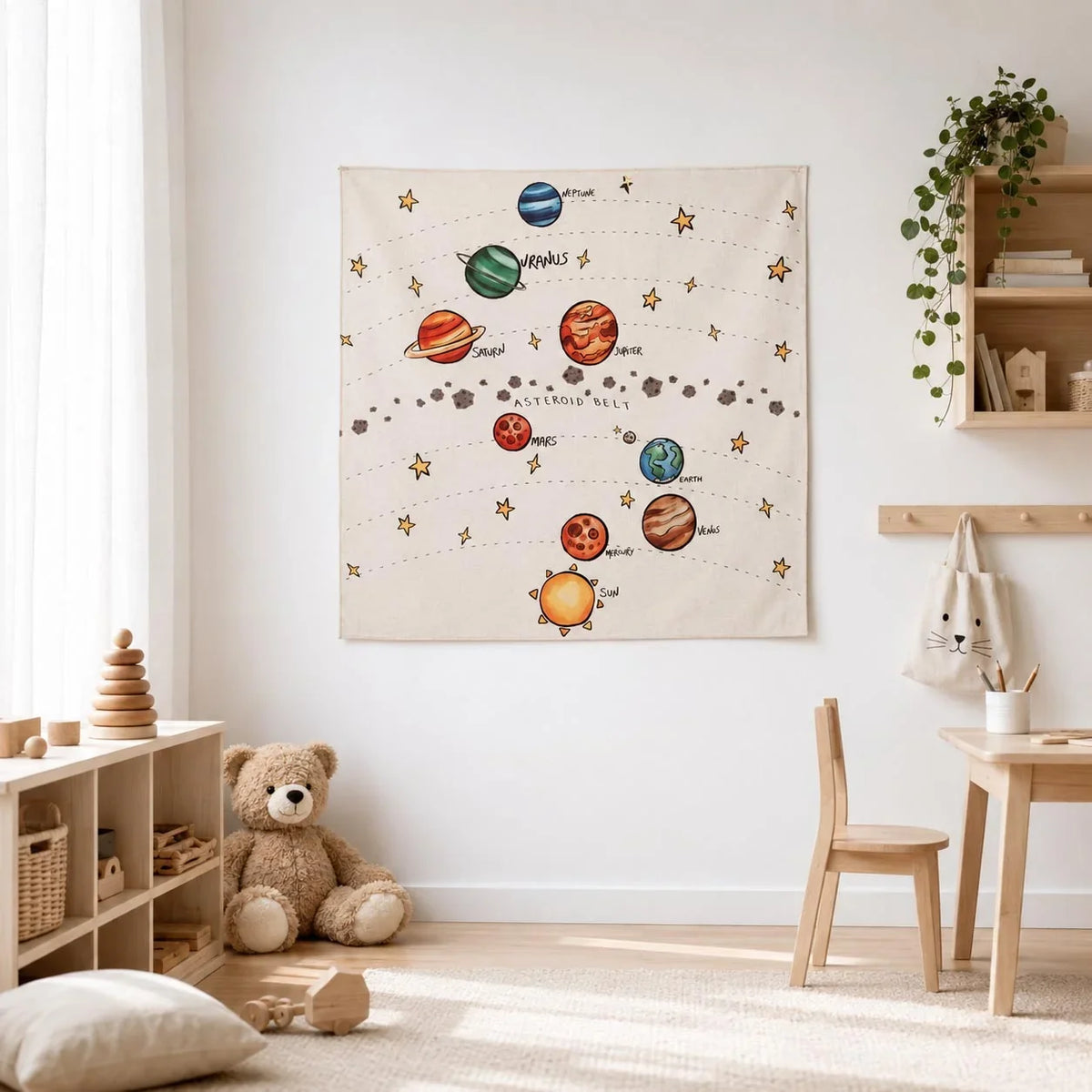
A solar system nursery introduces recognizable planets, rockets, and space exploration imagery.
A planetary wall display can become the room's focal point, while books and age-appropriate educational materials can extend the theme as your child grows.
Choose a consistent illustration style. Mixing realistic planet photography with cartoon rockets and highly decorative celestial patterns may make the room feel visually disconnected.
If educational accuracy matters to you, check planetary names, order, and representations before selecting artwork.
This design can grow naturally from a baby's room into a toddler's or school-age child's bedroom.
4. Try a Gender-Neutral Space Nursery
Space is a versatile nursery theme because its colors and imagery do not need to follow traditional pink-or-blue conventions.
Try sage green with cream and muted yellow, or combine warm beige with terracotta and dusty blue.
A moon illustration, understated stars, and simple wooden furniture can create a welcoming design for any child.
Rather than organizing your decisions around whether the room is intended for a boy or girl, focus on the mood you want to create: peaceful, playful, modern, or adventurous.
5. Mix Space Decor with Another Theme
A space themed nursery does not have to be exclusively about astronomy.
You can combine celestial imagery with woodland animals, dinosaurs, or a gentle adventure theme. A dinosaur-and-planets design, for example, may appeal to a child long after the nursery stage.
The important consideration is visual consistency. Select a shared color palette and limit the number of prominent patterns.
If two themes compete for attention, make one the primary concept and use the other as a subtle accent.
 How to Choose a Space Nursery Color Palette
Color plays a major role in determining whether a space-themed room feels peaceful or energetic.
Dark colors can create an immersive galaxy effect, but they are not necessary for a successful space nursery. Light, warm palettes can convey the same theme through carefully chosen artwork.
| Nursery Style | Main Colors | Accent Colors | Overall Look |
|---|---|---|---|
| Soft celestial | Cream, warm white | Dusty blue, muted gold | Gentle and timeless |
| Modern galaxy | Navy, pale gray | White, silver | Dramatic and contemporary |
| Playful solar system | Light blue, off-white | Yellow, terracotta | Colorful and adventurous |
| Earthy space | Beige, sage | Rust, charcoal | Warm and understated |
When choosing colors, consider the room's natural light, flooring, and existing furniture.
A small room with limited daylight may benefit from lighter walls and a single dark accent. A larger, bright nursery can often accommodate deeper colors without feeling enclosed.
Practical tip: Choose two main colors and one accent color before selecting decorative accessories. This makes it easier to evaluate whether a new item belongs in the room.
Galaxy Wallpaper and Space Nursery Wall Decor Ideas
Wall decoration is one of the most effective ways to establish a space theme without replacing furniture.
A thoughtfully designed wall can introduce the entire concept while leaving the rest of the room simple and flexible.
6. Create a Galaxy Accent Wall
A galaxy accent wall can serve as the room's primary design feature.
Consider a navy background with delicate stars, a subtle constellation pattern, or illustrated planets against a light-colored surface.
You do not need to decorate every wall. In many rooms, a single accent wall provides enough visual interest.
Choose a wall that can be appreciated from different parts of the room without requiring decorations to hang directly over the crib.
7. Choose Space Themed Nursery Wallpaper
Space themed nursery wallpaper can introduce a complete visual story, from distant stars to illustrated solar systems.
Before selecting wallpaper, consider three factors:
-
Pattern scale: Small repeated stars often feel more subtle than oversized planetary graphics.
-
Color intensity: A high-contrast galaxy print can dominate a compact room.
-
Surface compatibility: Installation and removal requirements depend on the wallpaper material, adhesive, and existing wall finish.
If you expect to redecorate as your child grows, review the product's removal instructions before installation.
Wallpaper marketed as removable is not automatically guaranteed to come off every painted surface without damage.
8. Add Moon, Star, and Planet Wall Art
Celestial wall art is a flexible alternative to a fully patterned wall.
Choose artwork that matches the room's palette and illustration style. A set of coordinated planet prints, a large moon illustration, or a simple constellation design can communicate the theme without overwhelming the space.
For a more refined look, repeat one accent color across several pieces.
Position framed or mounted decorations securely and away from the baby's sleep area. Avoid heavy or breakable items in locations where they could fall into the crib.
For a product example, see the Solar System Fabric Wall Hanging.


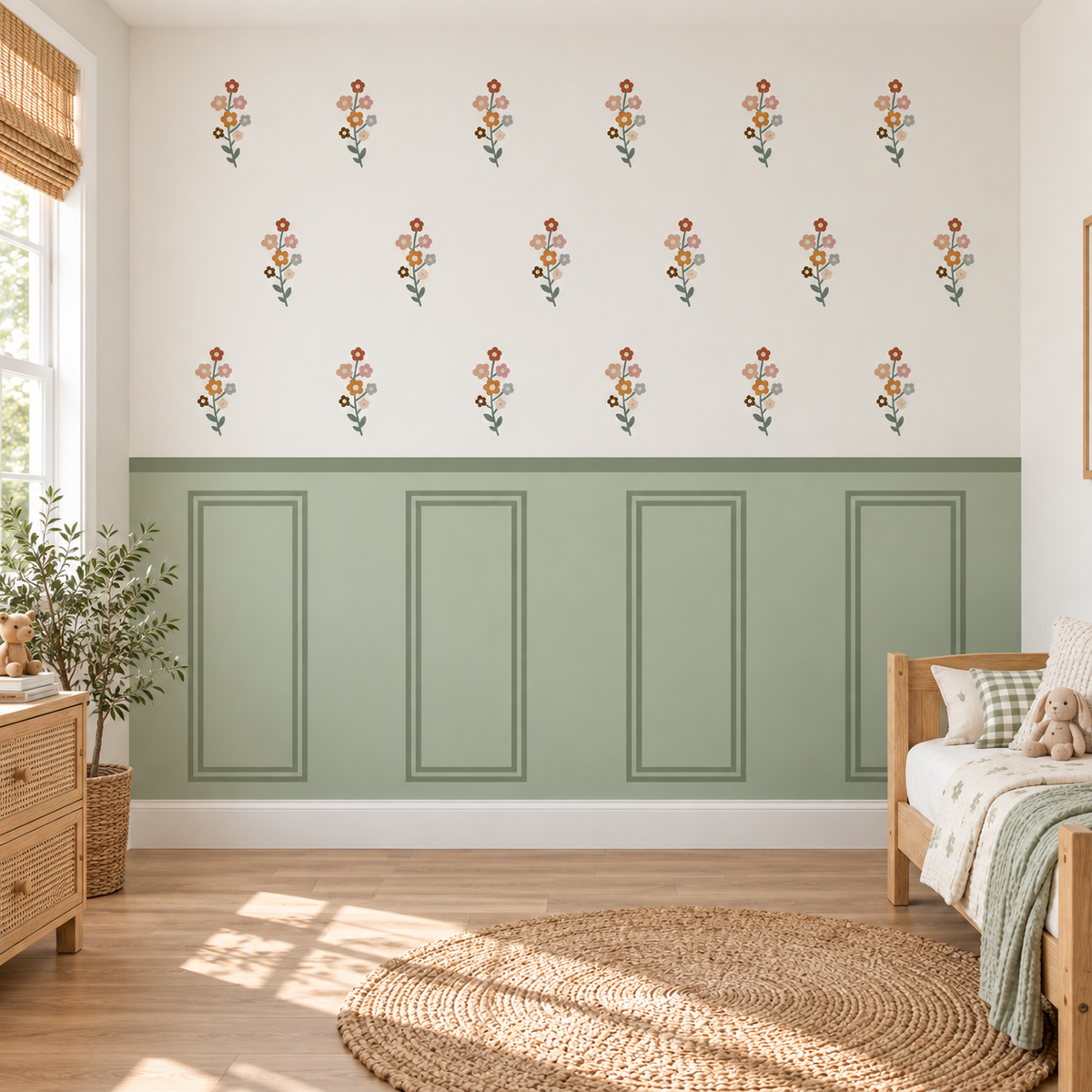
9. Use Wall Decals for a Flexible Design
Wall decals can create a space-inspired focal point without requiring a complete room makeover.
Stars, moons, rockets, and planetary motifs can be arranged into a custom composition, depending on the product's intended installation method.
A few scattered stars may suit a minimalist nursery, while a coordinated solar system arrangement can create a more playful atmosphere.
Always check the decal manufacturer's guidance for compatible wall finishes, paint curing requirements, and removal.
If you plan to change the design later, our guide to how to remove wall decals without damaging paint explains the precautions to consider before removing adhesive decorations.
How to Design a Small Space Themed Nursery
A small nursery does not need many decorations to feel complete. In fact, limiting the number of focal points often creates a more cohesive result.
10. Make One Wall the Focal Point
Choose one wall for your main space-themed feature.
It might contain a restrained galaxy pattern, a moon illustration, or a carefully arranged group of stars.
Keep the surrounding walls relatively simple. This creates visual contrast without making the room feel crowded.
A light background with a few well-placed celestial elements can be especially effective in narrow rooms.
11. Choose Furniture That Supports the Layout
Before buying decorative pieces, decide where the crib, changing area, and storage furniture will go.
The crib should have an appropriate location away from window-covering cords and other hazards. Furniture placement should prioritize safety and access rather than symmetry.
Use furniture with a consistent finish to keep the room visually connected.
White or natural wood furniture works with many celestial palettes and can remain useful even if the decorative theme changes.
12. Use Vertical Storage Carefully
Wall shelves and tall storage units can help keep everyday items organized without taking up too much floor space.
However, storage should never compromise safety.
Secure furniture according to the manufacturer's instructions, use appropriate wall anchors, and keep shelves and stored objects away from locations where items could fall into the crib.
Reserve easily accessible storage for everyday essentials and place decorative displays where they will not create hazards.
Lighting Ideas for a Calming Galaxy Nursery
Lighting should support nighttime care, daytime activities, and the overall atmosphere of the room.
A nursery does not need elaborate projectors or bright decorative lamps to feel space-inspired.
13. Use Gentle, Adjustable Lighting
Consider layered lighting rather than relying on one bright overhead fixture.
A suitable ceiling light can illuminate the room during cleaning and daytime activities. A separate, low-level light may be useful during nighttime feeds or diaper changes.
Choose fixtures designed for the room's intended use, and keep electrical cords and lamps out of a child's reach.
Avoid assuming that any particular decorative light will improve infant sleep. Sleep patterns depend on many factors beyond room aesthetics.
14. Add Celestial Lighting Details
A moon-shaped lamp or star-inspired fixture can reinforce the theme when installed and used safely.
Choose products with appropriate electrical safety information and follow their installation instructions.
If using a star projector, consider brightness, placement, cord safety, and whether the light is suitable for use around infants.
Decorative lighting should complement a safe sleep environment rather than introduce unnecessary stimulation or hazards.
15. Balance Daylight with Window Coverings
Window coverings can help manage daylight and privacy while supporting the room's color scheme.
A navy or cream curtain with a subtle celestial motif can extend the design beyond the accent wall.
For nursery safety, choose cordless window coverings or products that meet applicable safety requirements. Keep cords, fabric, and other reachable materials away from the crib.
Functional Space Nursery Decor That Grows with Your Child
A nursery is easier to maintain when decorative pieces also support everyday activities.
The most useful space-themed rooms combine a clear visual concept with practical furniture and storage.
16. Introduce Space-Themed Books
Books about the moon, stars, astronauts, and planets can reinforce the theme without permanently changing the room.
Display a small selection on a securely installed shelf away from the crib.
As your child grows, these books can become part of age-appropriate reading and learning activities.
Choose materials suitable for your child's developmental stage, and keep books and loose items out of an infant's sleep space.
17. Add a Subtle Celestial Rug
A rug with small stars or a restrained planetary pattern can connect the room's furniture and color palette.
Choose an appropriate size and a surface that is practical to maintain.
Consider how the rug sits on the flooring and whether its edges could create a tripping hazard.
A rug can contribute to the overall design without requiring additional decorative objects near the crib.


18. Make Storage Part of the Theme
Storage baskets and organizers can support the room's aesthetic while keeping supplies accessible.
For example, natural woven baskets may complement a soft celestial design, while simple navy storage boxes can work in a modern galaxy room.
Prioritize sturdy construction and practical placement.
Keep small detachable pieces, cords, and other potential hazards out of a child's reach.
19. Plan for the Toddler Years
One advantage of a space theme is its ability to evolve with your child's interests.
A subtle moon-and-stars nursery can gradually incorporate more detailed planetary illustrations, astronomy books, and age-appropriate educational displays.
You can update artwork and accessories while keeping the main furniture and wall colors.
This approach reduces the need for a complete redesign as the room transitions from nursery to children's bedroom.
How to Keep a Space Themed Nursery Safe
Safety should guide every decorating decision, particularly around the crib.
The American Academy of Pediatrics recommends a firm, flat sleep surface with a fitted sheet and no loose blankets, pillows, stuffed toys, bumpers, or other soft objects in an infant's sleep space.
Decorative quilts, pillows, and themed blankets may appear in nursery inspiration photographs, but they should not be presented as items to place in a baby's crib during sleep.
Keep Hanging Decorations Away from the Crib
Avoid placing heavy frames, mirrors, shelves, hanging textiles, or other objects above the crib where they could fall into the sleep area.
Wall decor should be installed according to the manufacturer's instructions and positioned with the child's current and future reach in mind.
Do not assume that a lightweight decoration is automatically safe if it can detach, fall, or become accessible to the baby.
Be Careful with Mobiles and Suspended Objects
A space-themed mobile may look attractive, but it requires particular attention to installation, reach, and age-related safety guidance.
Follow the product manufacturer's instructions and remove or relocate a mobile when the child reaches the specified developmental stage or can access it.
Never treat a mobile as an essential sleep accessory.
Secure Furniture and Manage Cords
Anchor furniture where required, keep electrical cords out of reach, and avoid placing the crib near window-covering cords.
Choose lighting and decorative accessories appropriate for the room, and reassess the setup as your child becomes more mobile.
A nursery that is safe for a newborn may need adjustments once the child begins reaching, crawling, standing, and climbing.
Choose Wall Decorations Based on Verified Product Information
When selecting wallpaper, decals, or other decorative materials, review the manufacturer's information about intended surfaces, installation, maintenance, and removal.
Do not assume that terms such as natural, fabric-based, PVC-free, removable, or non-toxic establish that a product is suitable for every nursery application.
Material claims and certifications should be evaluated for the specific product.
For additional guidance, consult current safe-sleep recommendations from the American Academy of Pediatrics and the U.S. Consumer Product Safety Commission.
How to Create a Cohesive Space Nursery Without Overdecorating
The easiest way to maintain a calm, coordinated design is to make each decorative choice serve a purpose.
Begin with a single visual concept and build outward:
-
Choose a theme: Soft celestial, modern galaxy, or playful solar system.
-
Set the palette: Select two main colors and one accent.
-
Plan the furniture: Prioritize safe placement and daily functionality.
-
Create a focal point: Use one accent wall or a coordinated wall-art arrangement.
-
Add functional details: Introduce lighting, storage, and practical textiles.
-
Review safety: Check every item near the crib, windows, and changing area.
If the room begins to feel crowded, remove decorative elements rather than adding more.
A few well-chosen details can communicate the theme more effectively than a large collection of unrelated accessories.
Frequently Asked Questions
What colors work best for a space themed nursery?
Navy, dusty blue, cream, warm white, sage green, and muted gold all work well in a space themed nursery. The best combination depends on the room's natural light and the atmosphere you want to create. Light palettes can feel airy and understated, while darker accent walls create a more dramatic galaxy-inspired appearance.
Can a space themed nursery be gender-neutral?
Yes. Space-themed rooms can use celestial imagery and versatile colors without relying on traditional gender-specific palettes. A combination of cream, sage, dusty blue, and warm wood can create a neutral design. Moons, stars, planets, and rockets can also be adapted to different illustration styles and age groups.
Is galaxy wallpaper a good choice for a small nursery?
Galaxy wallpaper can work well in a small nursery when used thoughtfully. A single accent wall or a pattern with restrained colors may create visual interest without overwhelming the room. Consider the scale of the print, the amount of daylight, and the surrounding furniture before choosing a bold design.
What is the safest way to decorate the wall near a baby's crib?
Keep the crib area free from decorations that could fall into the sleep space or become accessible to the baby. Avoid hanging shelves, heavy frames, loose textiles, or suspended objects over the crib. Follow the manufacturer's instructions for any wall treatment and consult current infant safe-sleep guidance when planning the room.
How can I update a space nursery as my child grows?
Start with flexible furniture and a color palette that will remain suitable beyond infancy. Later, introduce age-appropriate astronomy books, more detailed planetary artwork, or new accessories that reflect your child's interests. Keeping the main room design simple makes these updates easier without requiring a complete renovation.
Final Thoughts: Make Your Space Nursery Both Imaginative and Practical
The most successful space themed nursery ideas combine visual imagination with everyday functionality. Whether you choose a soft celestial palette, a dramatic galaxy wall, or playful solar system artwork, begin with a clear design concept and build the room around it.
Use wall decor to establish the theme, select lighting and storage for practical needs, and keep the baby's sleep environment free from decorative hazards. With a thoughtful layout and a few coordinated details, a space-inspired nursery can remain welcoming and adaptable as your child grows.
Explore Dos Junior for children's room decor inspiration, and review individual product details before choosing decorations for your space.